

The Hardest Room in the World
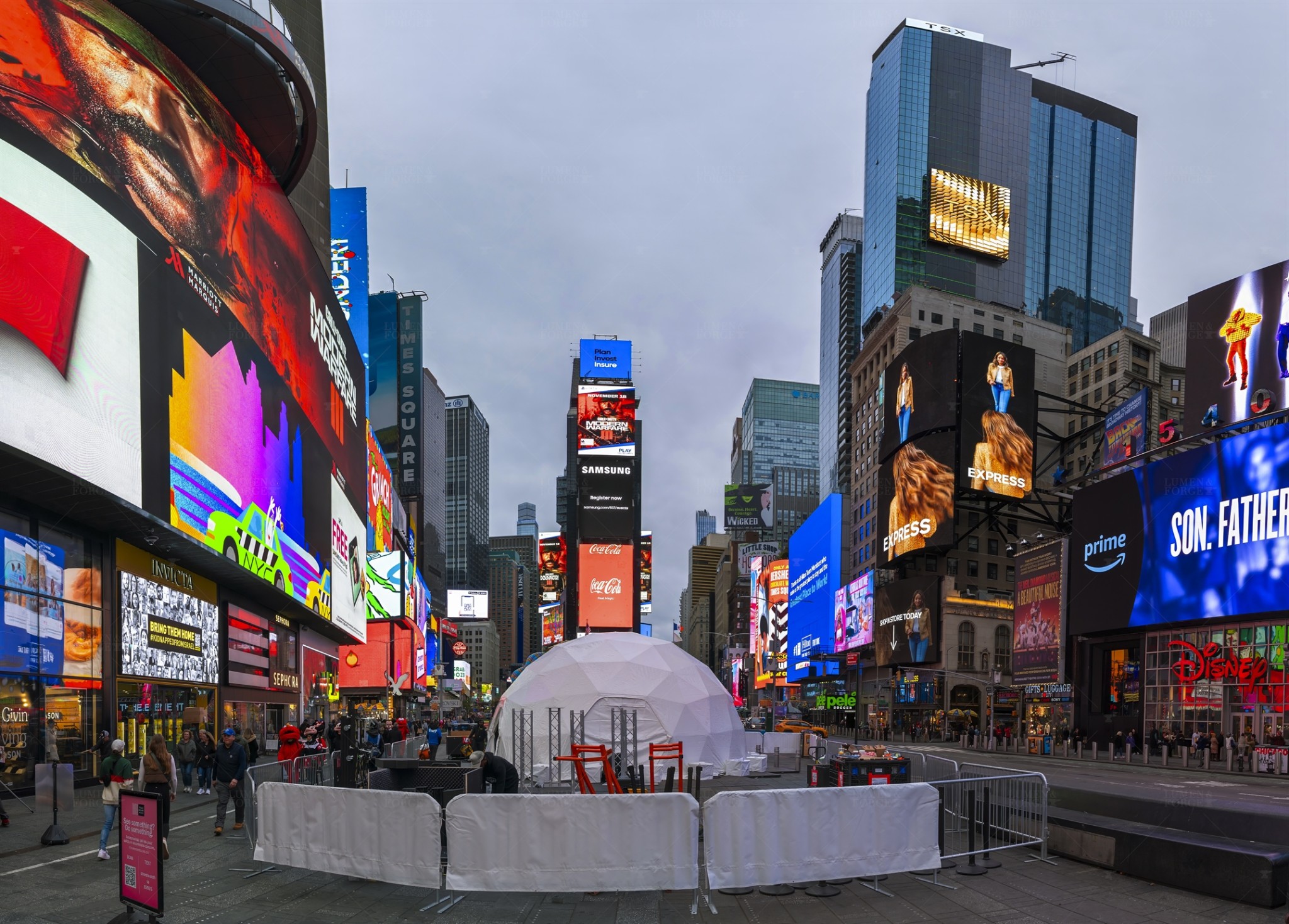
New York is the most saturated attention market on earth. It is a city where the audience for any brand experience includes the people who invented brand experience, where a facade competes with a hundred thousand square feet of surrounding signage, and where the default response to a new installation is to keep walking. Standing out here is not a matter of budget alone. It is a matter of building something that is genuinely worth stopping for. At Lumen and Forge, we build projection mapping experiences that earn that stop.
Whether you are producing a Fashion Week presentation in Chelsea or the Meatpacking District, a large-scale installation at the Javits Center, a product launch in a SoHo flagship, a corporate experience at Hudson Yards or the Seaport, or a waterfront activation at the Brooklyn Navy Yard, our team brings the creative vision and the technical infrastructure to execute at the level this city requires. New York does not grade on effort.
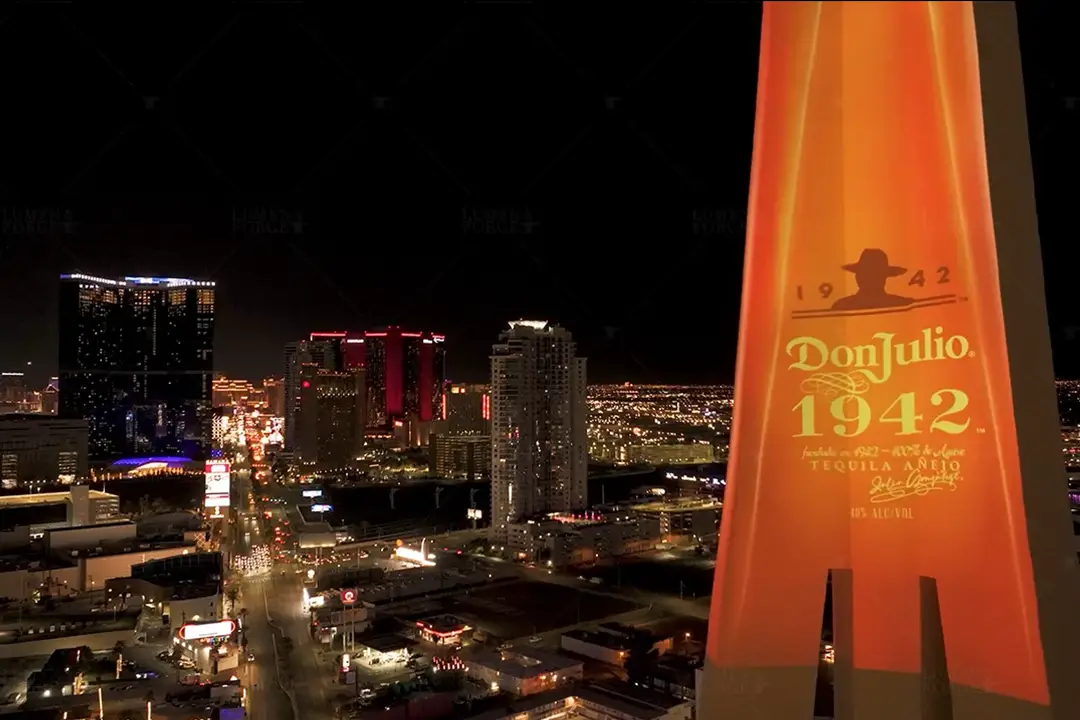
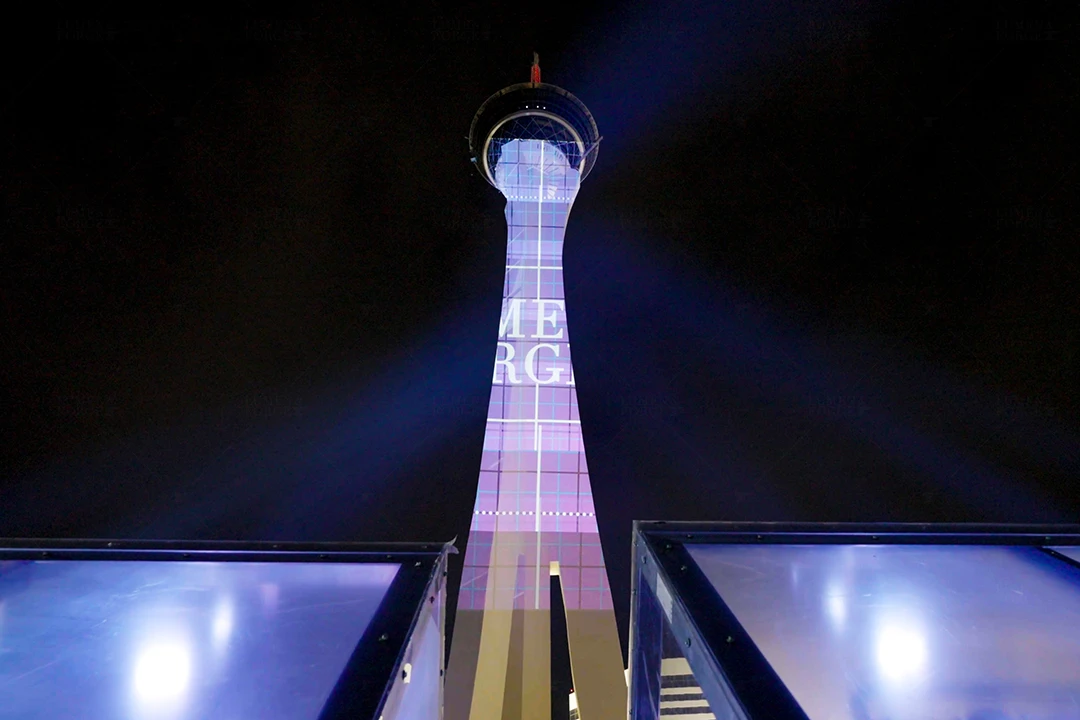
Take A Closer Look
A Deeper Look Into Animation & Visual Story Telling
A Deeper Look Into
Projection Mapping
Projection Mapping: Turning Any Surface Into a Story
Projection mapping is the practice of projecting precisely calibrated video content onto three-dimensional surfaces, turning buildings, objects, and environments into dynamic visual displays that appear to move, transform, and come alive. Unlike standard projection onto a flat screen, projection mapping software accounts for the exact geometry of whatever surface it is being applied to, so the content wraps accurately around every edge, angle, and architectural detail.
New York's building stock is arguably the richest projection surface inventory in the world. The cast-iron facades of SoHo, the setback masonry of prewar Midtown towers, the glass volumes of Hudson Yards, the industrial brick of the Brooklyn Navy Yard, the vaulted interior of Grand Central's Vanderbilt Hall, and the raw column-free spans of Manhattan's West Side event venues each demand a different technical approach. Working at this level in New York is less about having the biggest projectors and more about knowing which surface will actually hold an image and how to light it.
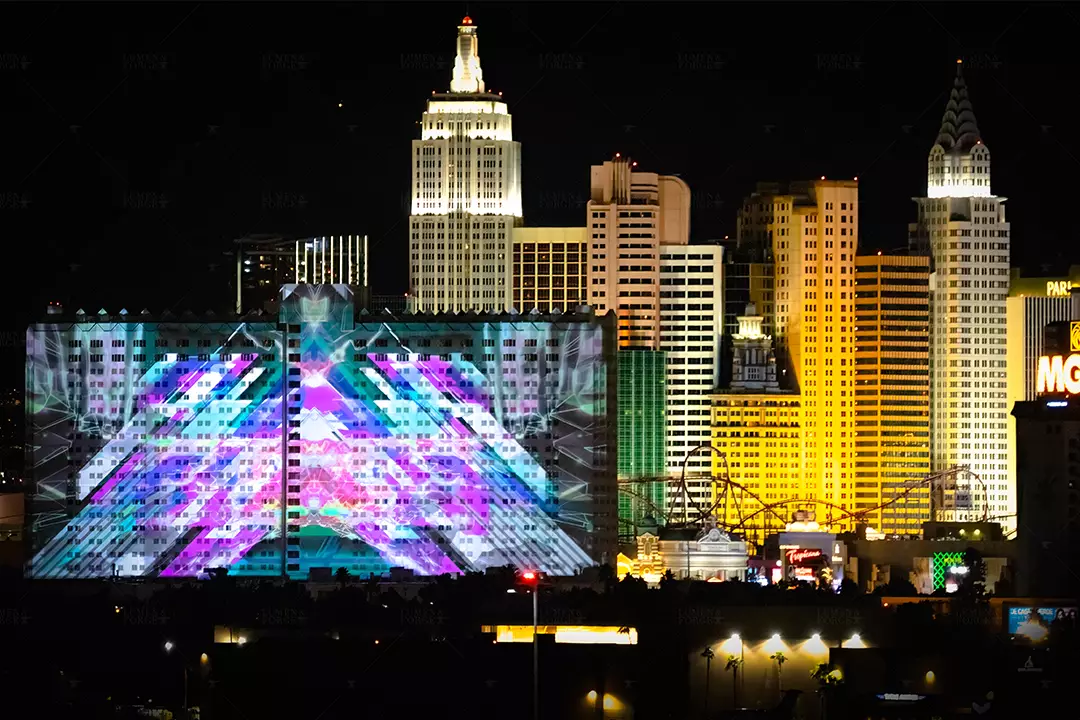
Building and Architectural Projection
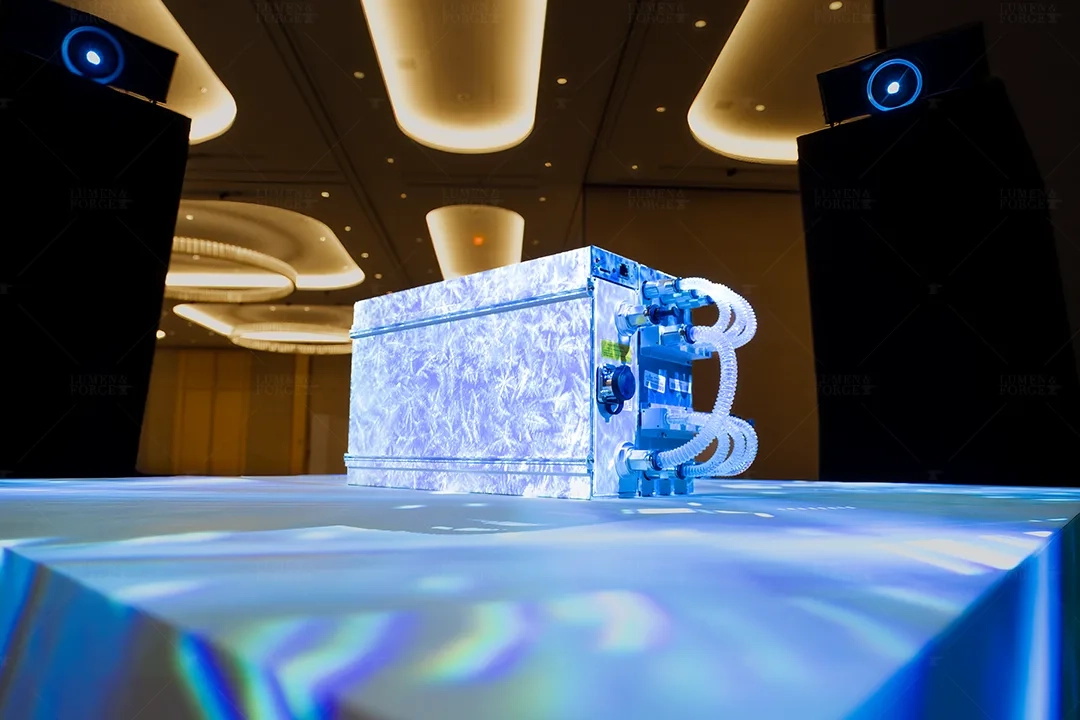
Object and Product Projection Mapping
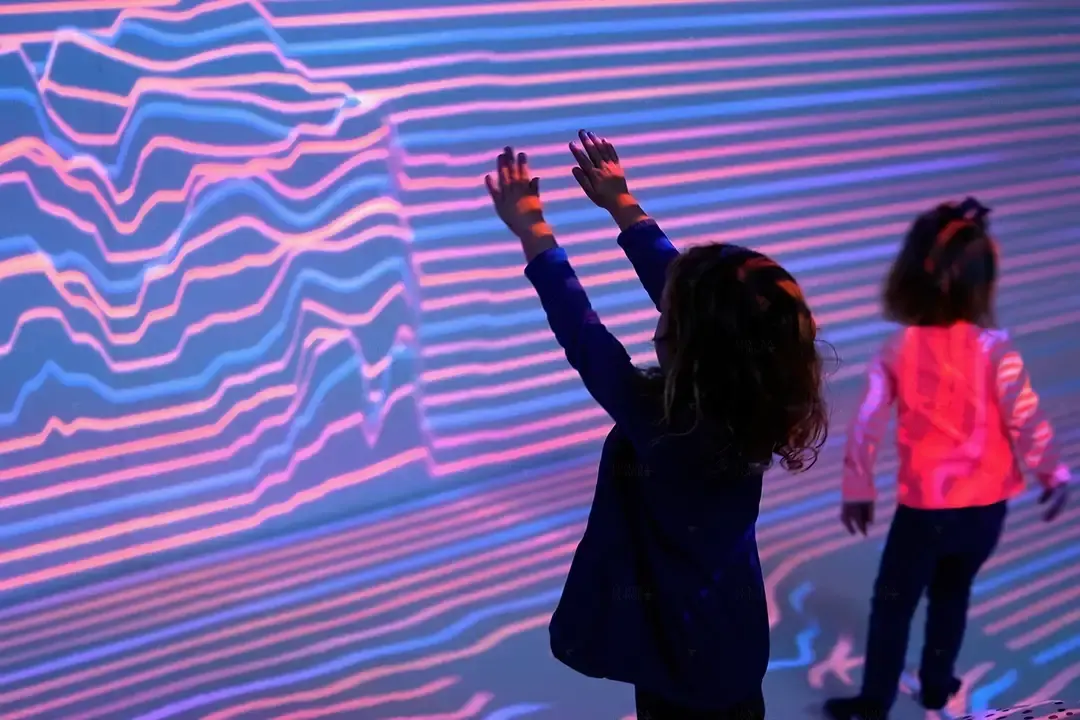
Interactive Projection
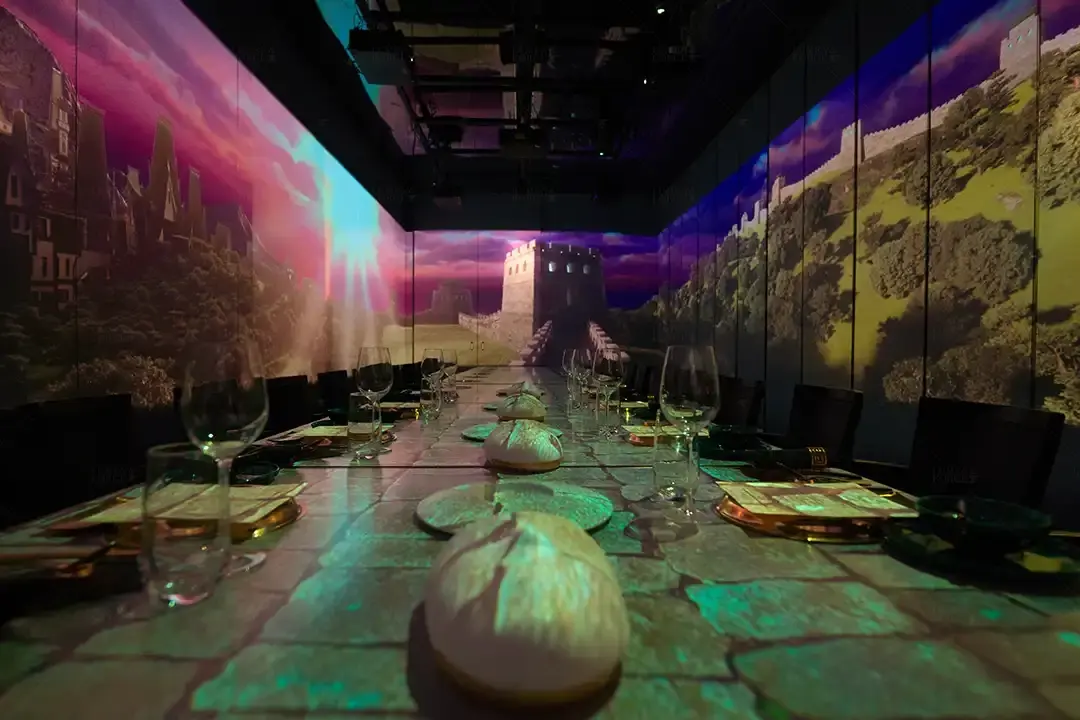
Room and Environment Mapping
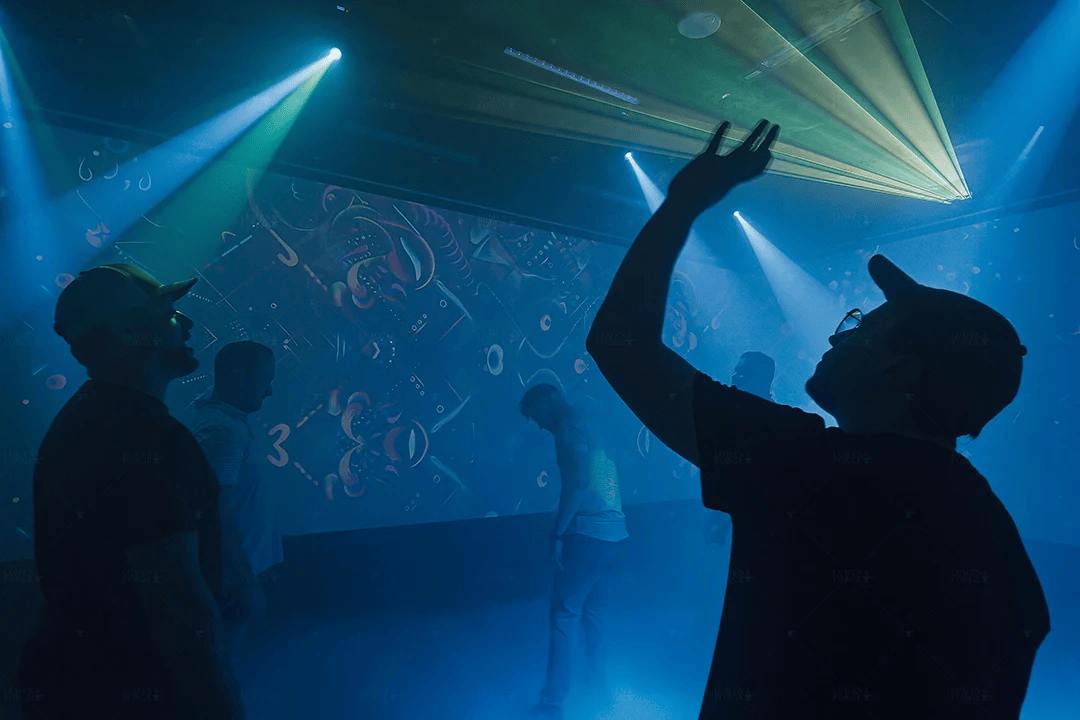
Dome Projection
Why New York Demands Projection Mapping
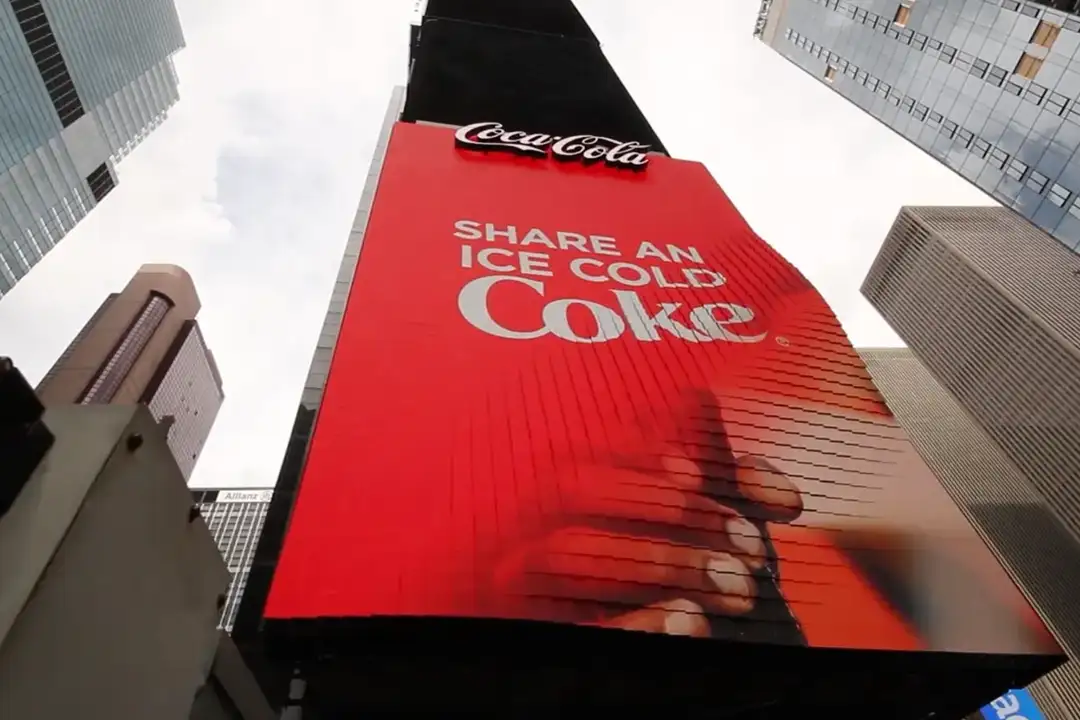
New York concentrates more competing brand messages per square foot than any other city on the planet. The consequence is that conventional formats have almost no marginal effect here. A screen is background. A booth is furniture. What actually stops a New York crowd is a transformation of something they already know, and that is precisely the effect projection mapping produces. When a building the audience has walked past a thousand times begins to move, the city's baseline indifference breaks.
Some of the most compelling opportunities in New York include:
New York Fashion Week in February and September: Twice a year, the global fashion industry compresses into a handful of Manhattan blocks, and the presentations that get remembered are the ones that reimagine the room rather than simply staging a runway inside it. Environment mapping and object projection are among the most effective tools available for a house that needs its collection to be the second thing people talk about after the space itself.
The Javits Center and the national trade show calendar: The Javits Center hosts the New York International Auto Show, New York Comic Con, and a continuous slate of major national trade events. Large-scale projection mapping inside this building transforms standard booth and stage setups into destination-level brand environments that pull traffic from across the floor.
The holiday retail season on Fifth Avenue, in SoHo, and across Midtown: New York's November through January retail window is the most valuable seasonal attention environment in the country, and large-format facade projection has become an established part of how flagship retailers and luxury houses mark it. Early winter sunsets also mean a facade show can run through the entire evening shopping period.
Brooklyn's waterfront and industrial venue district: The Brooklyn Navy Yard, Greenpoint, Williamsburg, and Red Hook offer column-free industrial volumes, raw brick and steel surfaces, and Manhattan skyline backdrops, with load-in conditions that are dramatically easier than anything in Midtown. For ambitious large-format work, Brooklyn is frequently the smarter production decision.
Hudson Yards, the Seaport, and the new waterfront developments: New York's recently built districts were designed around public plazas, sightlines, and programmable open space in a way that older parts of the city were not. That makes them unusually accommodating for large-scale outdoor projection, with the audience density that only New York supplies.
Climate Week, the UN General Assembly, and the fall corporate calendar: September and October bring an extraordinary concentration of global corporate, policy, and media activity to New York. Brand and institutional activations during these weeks reach a decision-making audience that is not assembled in this configuration anywhere else in the world.
Lumen and Forge in New York
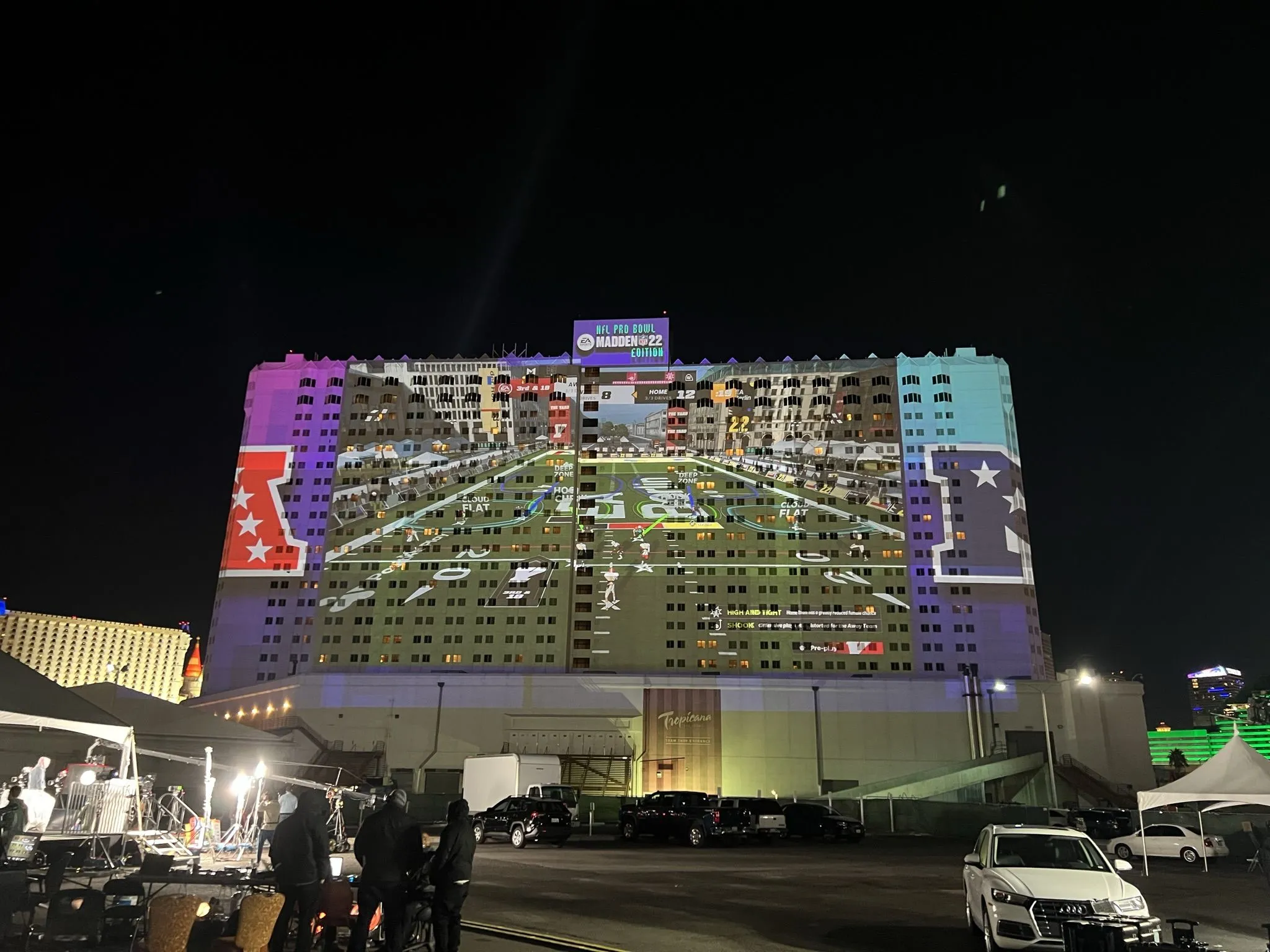
Lumen and Forge brings over 15 years of experience producing large-scale projection mapping and immersive experiences for globally recognized brands, and a portfolio built specifically on high-pressure, high-visibility production. We delivered a full building projection for Nike and Air Jordan at NBA All-Star Weekend, produced large-scale experiences for Toyota, McLaren, and Mastercard, set the world record for the largest video game screen at the Tropicana, and built the Beneath the Blue 360-degree dome for National Geographic. Our team operates comfortably inside the constraints that define New York production, including union labor environments, restricted load-in windows, and venues where you get one night to get it right.
Who We Work With in New York
The range of clients who come to us for projection mapping in New York reflects the industries that make this city their global headquarters:
Fashion and luxury houses: New York Fashion Week, flagship openings, showroom presentations, and seasonal campaigns create a continuous demand for visual work that communicates craft and creative ambition to an audience of editors, buyers, and consumers who evaluate presentation as closely as product.
Financial services and fintech: New York's financial sector produces client summits, product launches, and corporate milestone events at a scale and frequency unmatched anywhere. Projection mapping gives institutional communication a visual register that a keynote deck cannot reach.
Media, advertising, and publishing: The agencies, networks, publishers, and platforms headquartered here produce upfronts, launches, industry events, and award programs for audiences that assess production quality professionally. That is a demanding room and an ideal one.
Technology and consumer electronics: Product launches, developer events, and consumer activations in New York reach national media and a dense, early-adopting consumer base in a single production.
Real estate developers and building owners: New York's development cycle generates tower launches, leasing campaigns, sales gallery experiences, and building opening events. Projection mapping is uniquely suited to marketing a building, because it can use the building itself as the medium.
Sports and entertainment properties: Madison Square Garden, Barclays Center, Yankee Stadium, Citi Field, the US Open at Flushing Meadows, and the year-round concert calendar generate high-profile moments where immersive brand experience production has a natural place.
Ready to Make New York Stop and Look?
New York is the hardest audience in the world and, for exactly that reason, the most valuable one to win. An installation that works here works anywhere, and the media, industry, and consumer attention that follows a successful New York activation reaches well beyond the five boroughs.
We start with a conversation about your vision, your venue, and your timeline. From there, we develop a clear and detailed proposal covering exactly what we will create, how it will look, and what it will cost.
Contact us today and tell us about your New York project.
Frequently Asked Questions: Projection Mapping in New York
Standard projection displays a flat image on a flat screen or white wall. Projection mapping uses specialized software to warp, align, and calibrate video content so it fits precisely onto any three-dimensional surface, whether that is a building exterior, a custom sculpture, a vehicle, or an entire room. The software accounts for every edge, angle, and curve, so the content appears to belong to the object itself rather than simply being cast onto it. In a city with as much visual competition as New York, that difference determines whether anyone looks up.
Yes, though New York is one of the more technically demanding outdoor projection markets in the country. Ambient light in the busiest corridors is extreme and requires substantially higher brightness than a comparable installation elsewhere. Narrow streets compress throw distances and limit projector placement. Winter cold affects equipment and crew, while early winter sunsets extend the usable show window considerably. Every project begins with a detailed site survey that establishes what is actually achievable at your specific location before any creative is developed.
The Javits Center offers the largest interior volumes in the city. Cipriani, Gotham Hall, the Skylight venues, Pier 17 and the Seaport, The Shed at Hudson Yards, and Grand Central's Vanderbilt Hall are strong Manhattan options. Across the river, the Brooklyn Navy Yard's Duggal Greenhouse and the industrial spaces of Greenpoint, Williamsburg, and Long Island City offer column-free volumes and load-in conditions that are far easier to work with. For outdoor work, the Meatpacking District, Hudson Yards, the Seaport, and the Brooklyn waterfront are among the most workable.
New York Fashion Week in February and September, the holiday retail season from November through January, the New York International Auto Show and New York Comic Con at the Javits Center, Advertising Week, Climate Week and the UN General Assembly period in September, the Tribeca Festival, and the year-round slate of product launches, upfronts, and corporate summits that define the New York calendar are all strong contexts for projection mapping activations.
We work closely with clients to navigate the requirements specific to their venue and activation type. New York involves more overlapping approvals than any other market we operate in. Depending on the location, a project may require coordination with the Mayor's Office of Media and Entertainment, the Department of Transportation for street or sidewalk use, the Parks Department for park property, the relevant Business Improvement District, and the building owner or management company. Landmarked facades carry additional restrictions. New York is also a union production market, and we account for union labor requirements throughout our production planning.
Pricing depends on the scale of the surface, the complexity of the content, the duration of the event, equipment requirements, and production staffing. New York-specific factors include union labor, permitting, restricted overnight load-in windows, street closure costs where applicable, and the higher projector brightness that the city's ambient light frequently requires. All of these are accounted for transparently in our proposals, and we provide itemized quotes so you know exactly where your budget is going. Contact us for a custom estimate.
For most New York projects, a minimum of 90 days of lead time is recommended, which is longer than we advise in most markets. Permitting timelines, building owner approvals, union crew scheduling, and venue availability all move slowly here, and the city's peak periods, including Fashion Week and the fall corporate season, create significant competition for every one of those resources. For activations tied to a marquee date, engaging six months or more in advance is not excessive.
Standard projection mapping refers broadly to fitting content accurately to any surface. 3D projection mapping specifically focuses on creating a three-dimensional illusion, designing content so that surfaces appear to physically transform, gain depth, and move toward or away from the viewer. Both are part of what Lumen and Forge delivers, and the right approach depends on your surface, your creative goals, and your audience. On New York's heavily articulated prewar facades, the three-dimensional approach has exceptional material to work with.
In addition to projection mapping, we offer dome projection for fully immersive 360-degree spherical experiences, event and project design for end-to-end production planning, and animation and visual storytelling for original content creation. Many of our New York clients combine projection mapping with one or more of these services into a single integrated production. We are a full-service immersive experience company, and the strongest work we build is conceived as a whole from the first conversation.
Do you have more questions?
Didn't find what you were looking for? Our team is happy to walk you through your project and answer anything else