

Chicago Builds Big, So Its Projections Should Too
Chicago is a projection mapping market built on volume and variety. McCormick Place hosts trade shows and conventions on a scale few venues can match, while Navy Pier, the Merchandise Mart and the riverfront give brands landmark surfaces that already carry an audience. Add Millennium Park, Jay Pritzker Pavilion and Grant Park, and you have a downtown where large public gatherings are routine rather than exceptional.
The calendar is just as dense. The Chicago Auto Show fills McCormick Place in February, EXPO CHICAGO takes over Navy Pier in April, Lollapalooza draws crowds to Grant Park in early August, and the Magnificent Mile Lights Festival kicks off the holiday season in November. Sports and culture anchor the rest of the year at Soldier Field, the United Center, Wrigley Field, Rate Field, the Art Institute of Chicago, the Field Museum and the Griffin Museum of Science and Industry.
That mix attracts the industries we build for: trade shows and conventions, financial services and trading, food and beverage brands, healthcare and medical associations, architecture and design, professional sports franchises, and retail along the Magnificent Mile. Each needs a different kind of surface, scale and story.
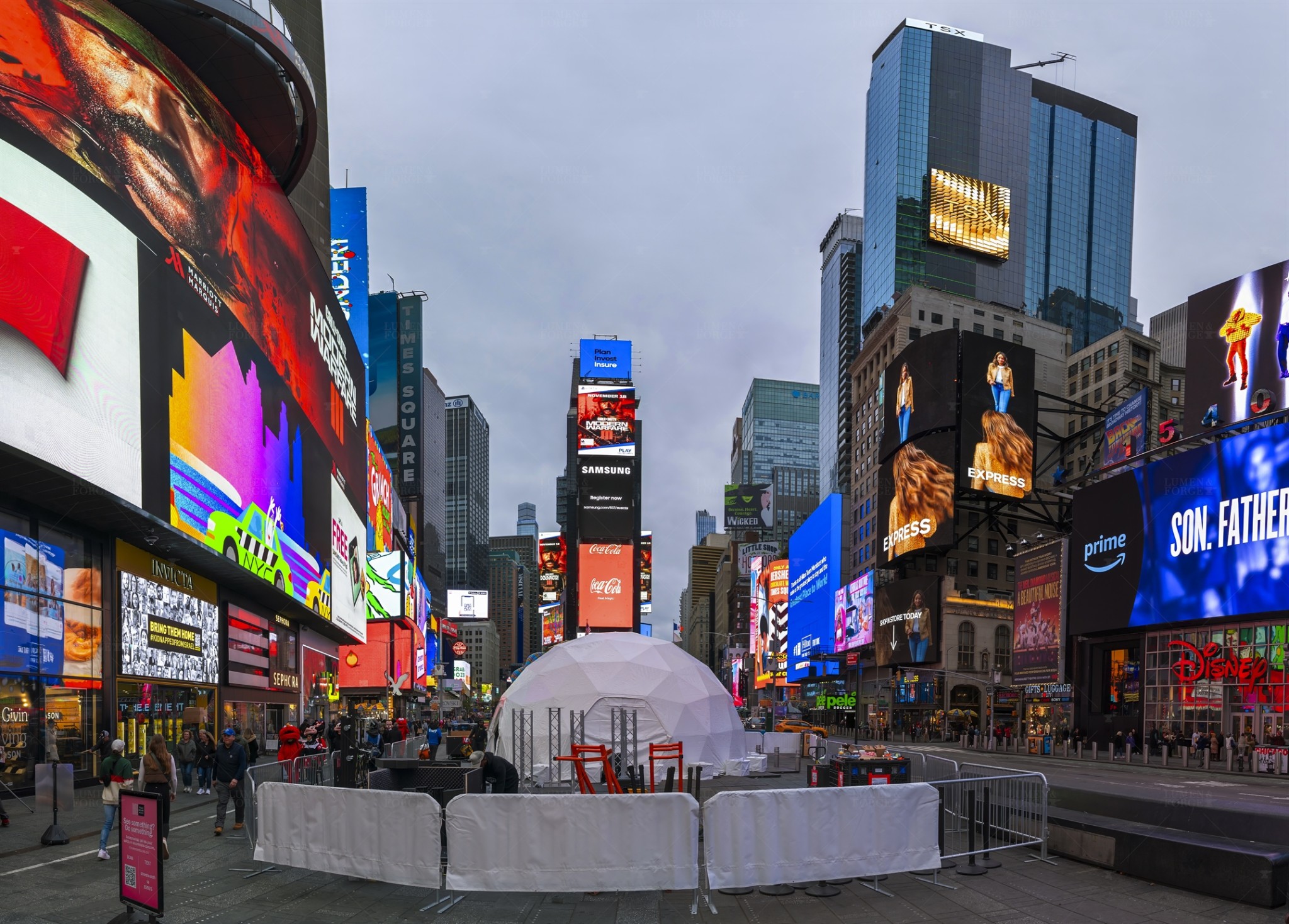
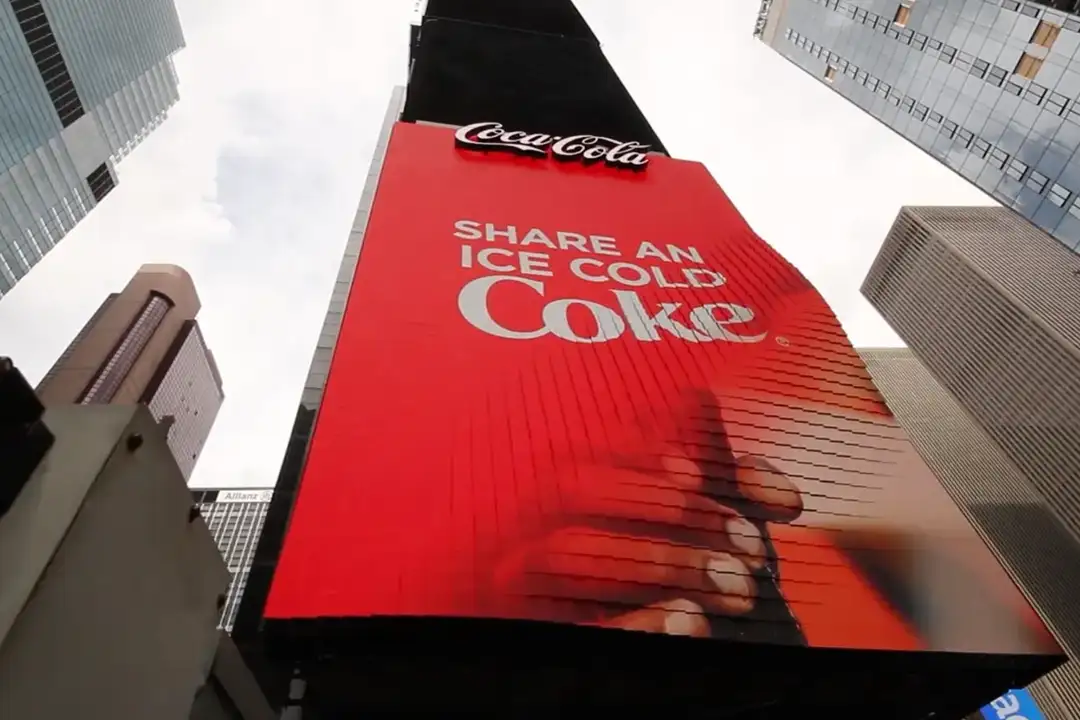
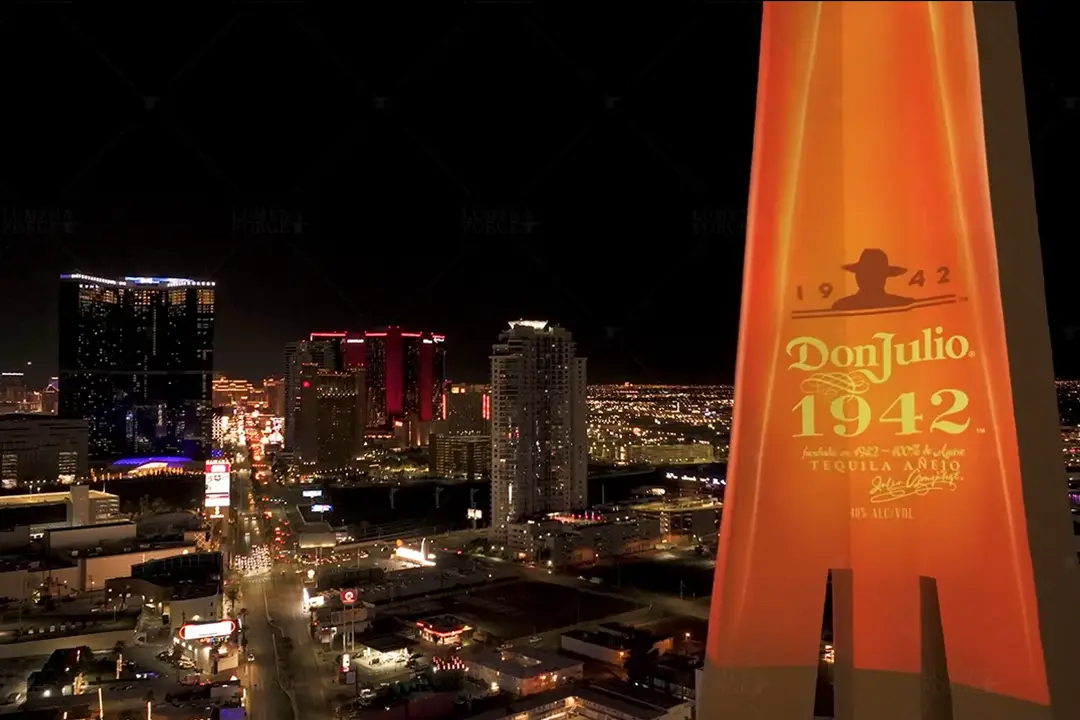
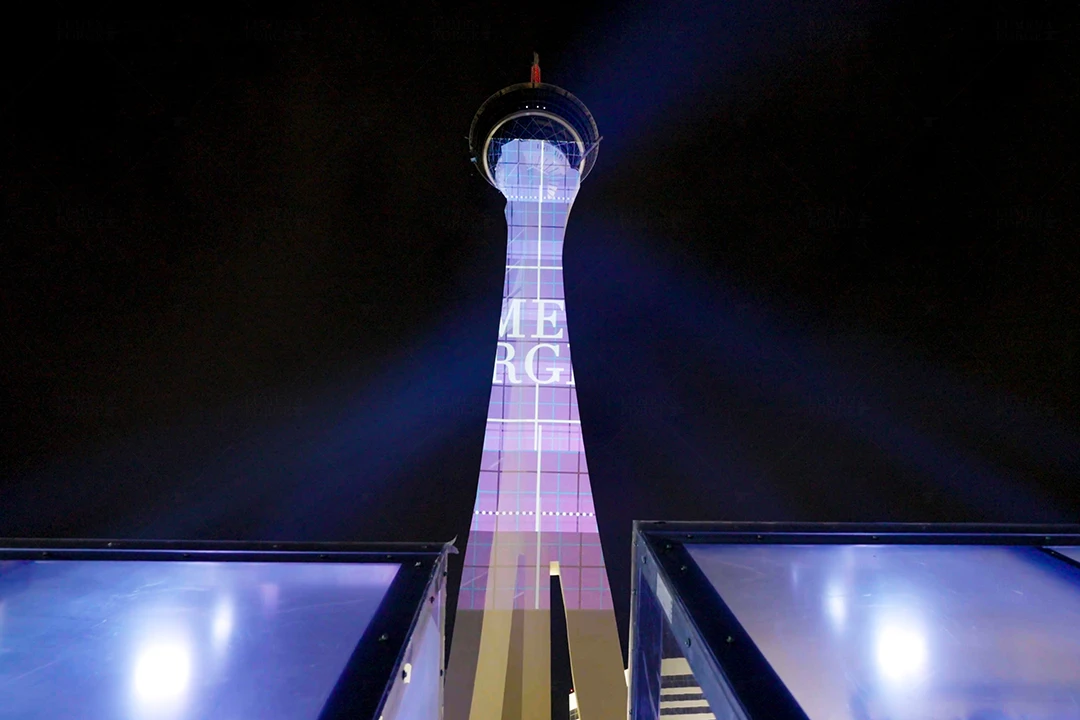
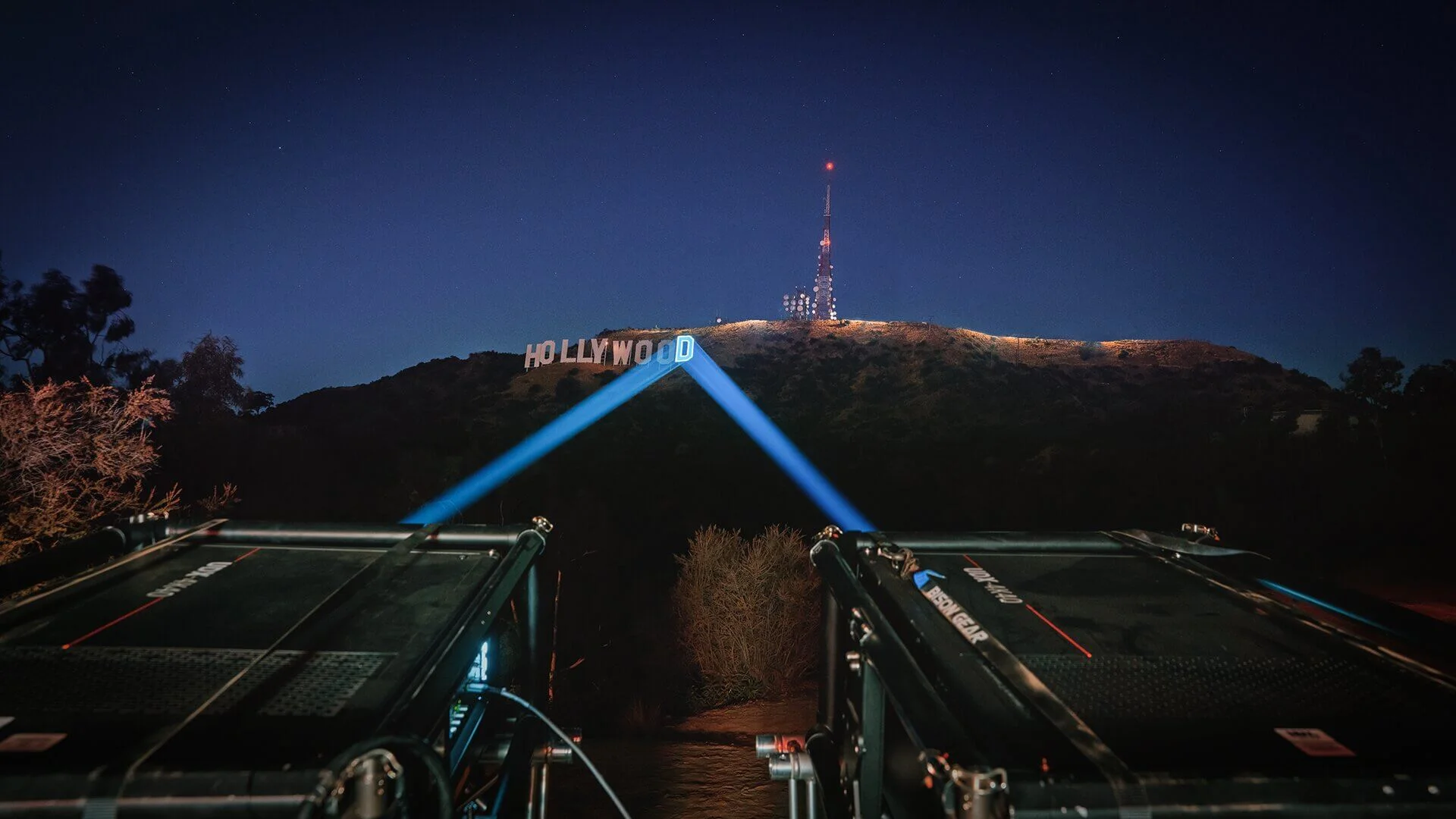
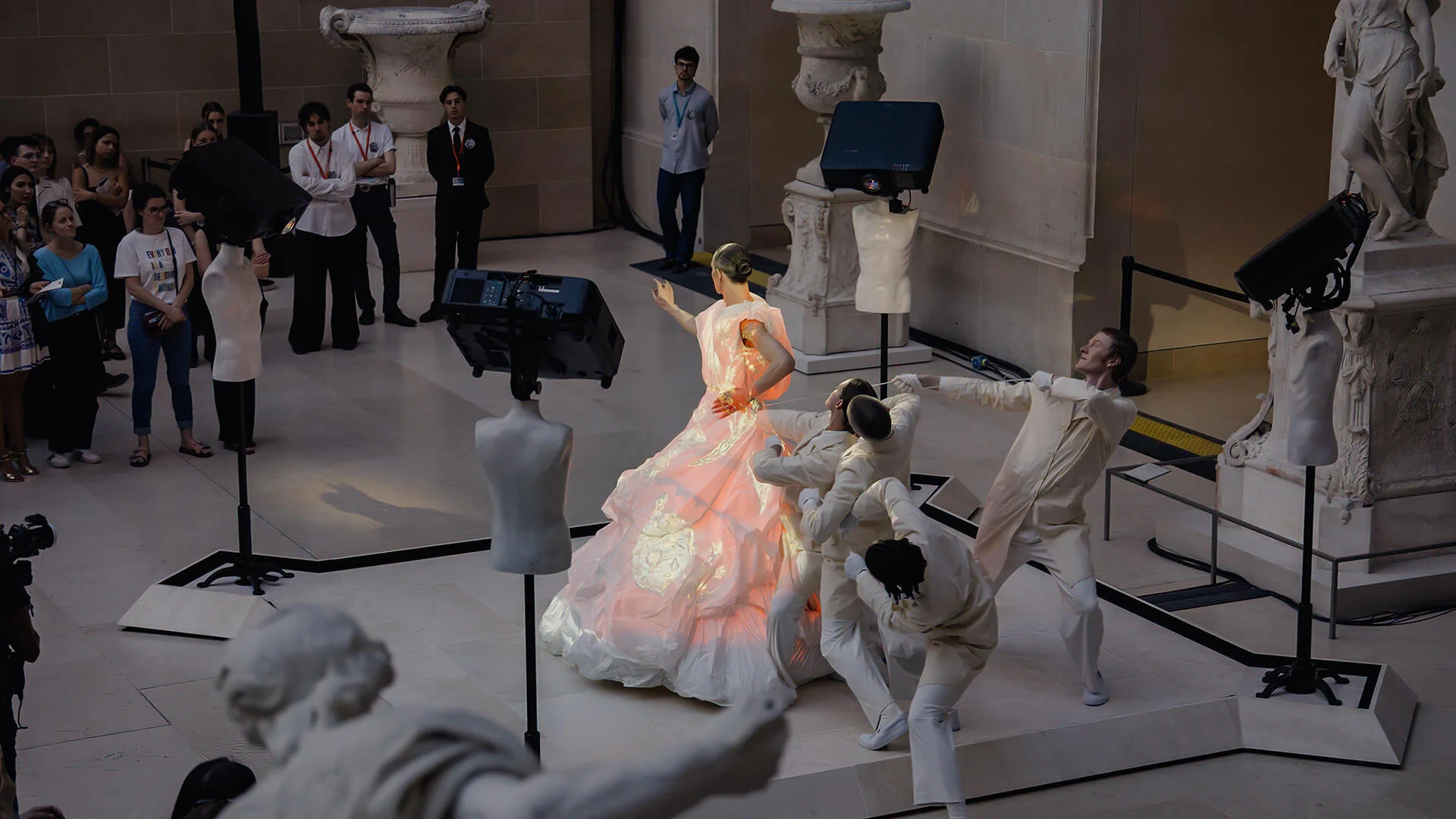
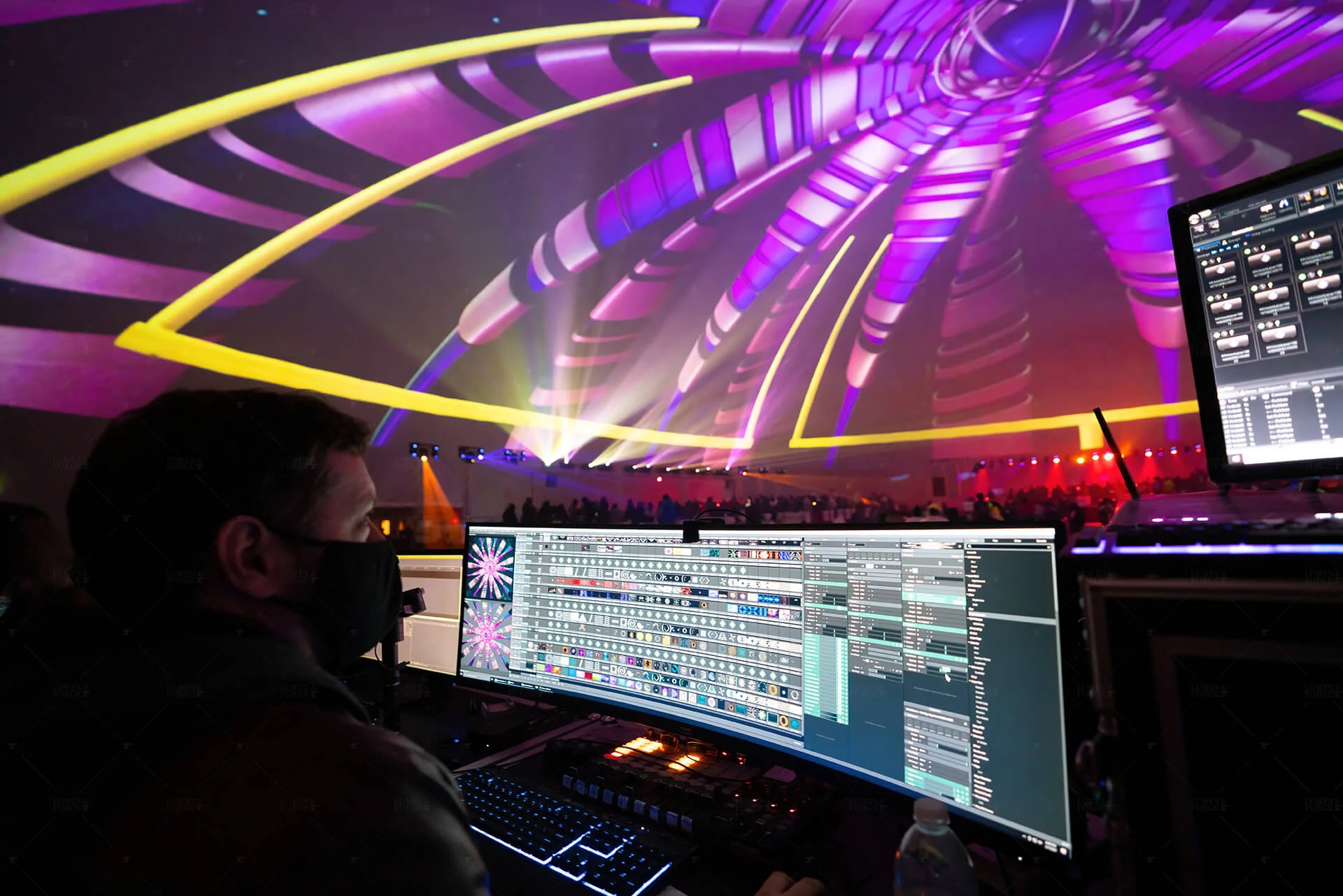
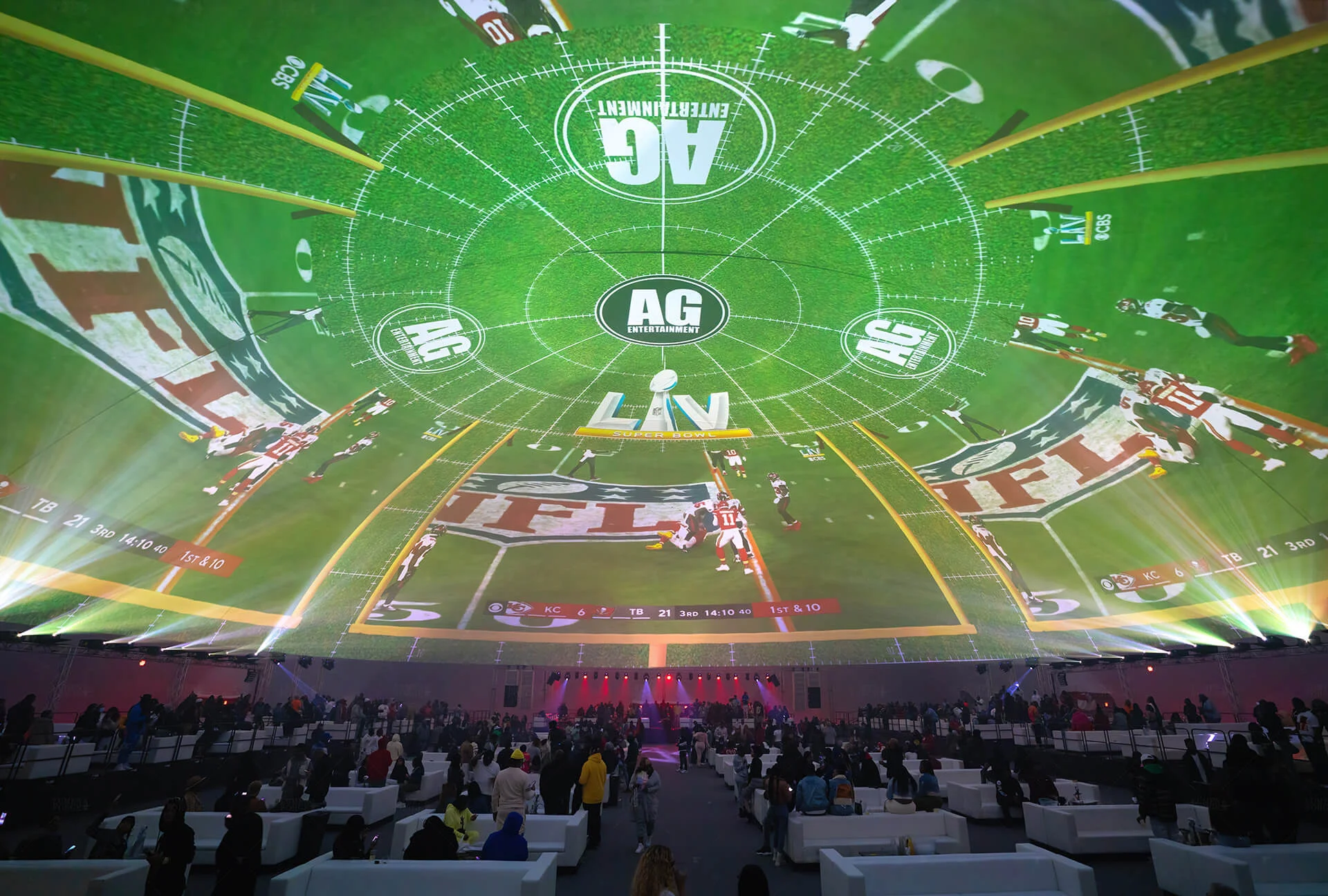
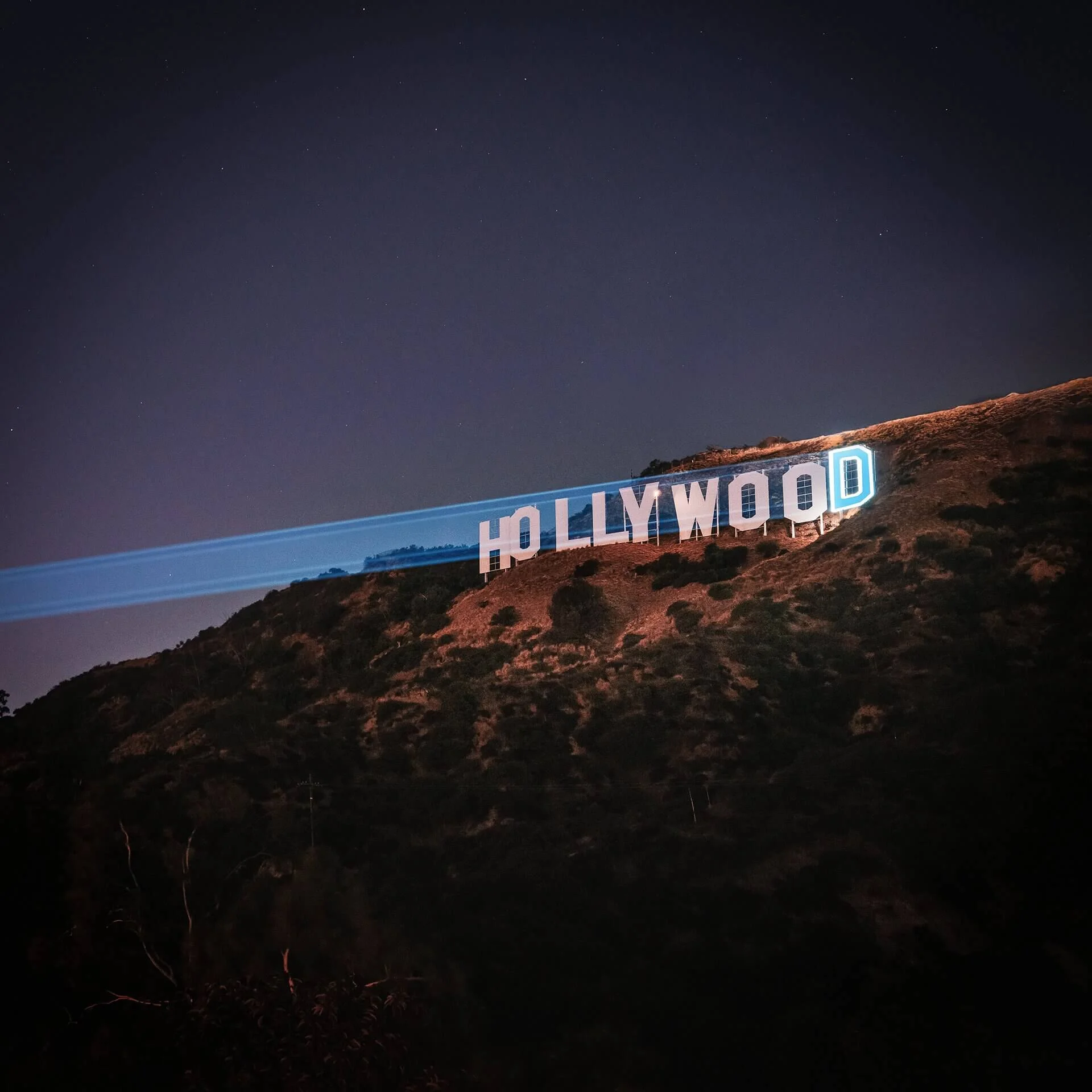
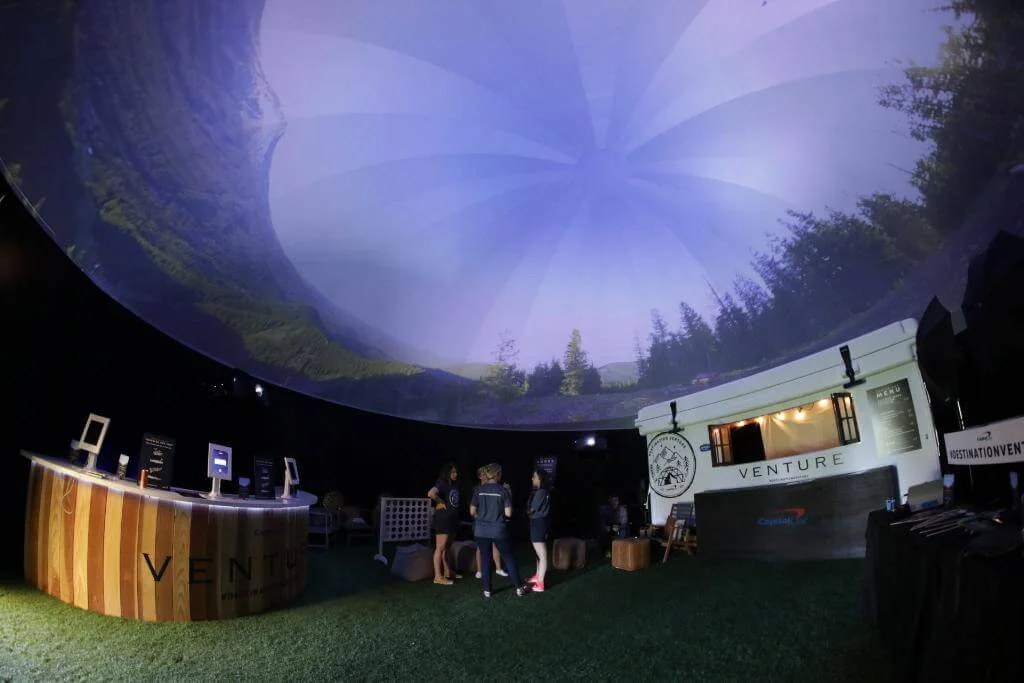
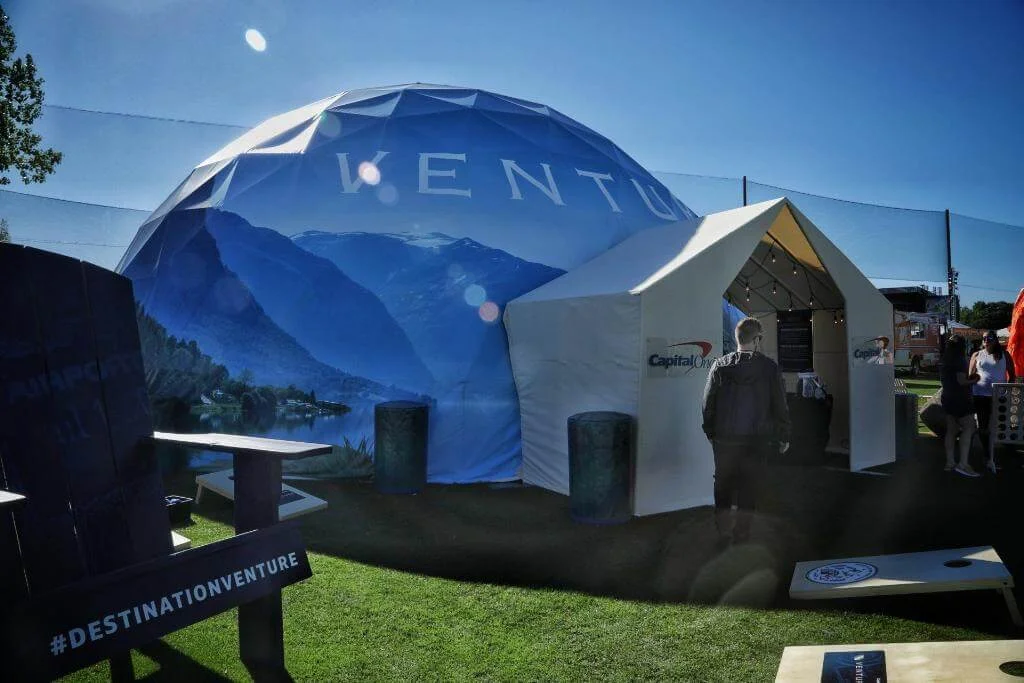
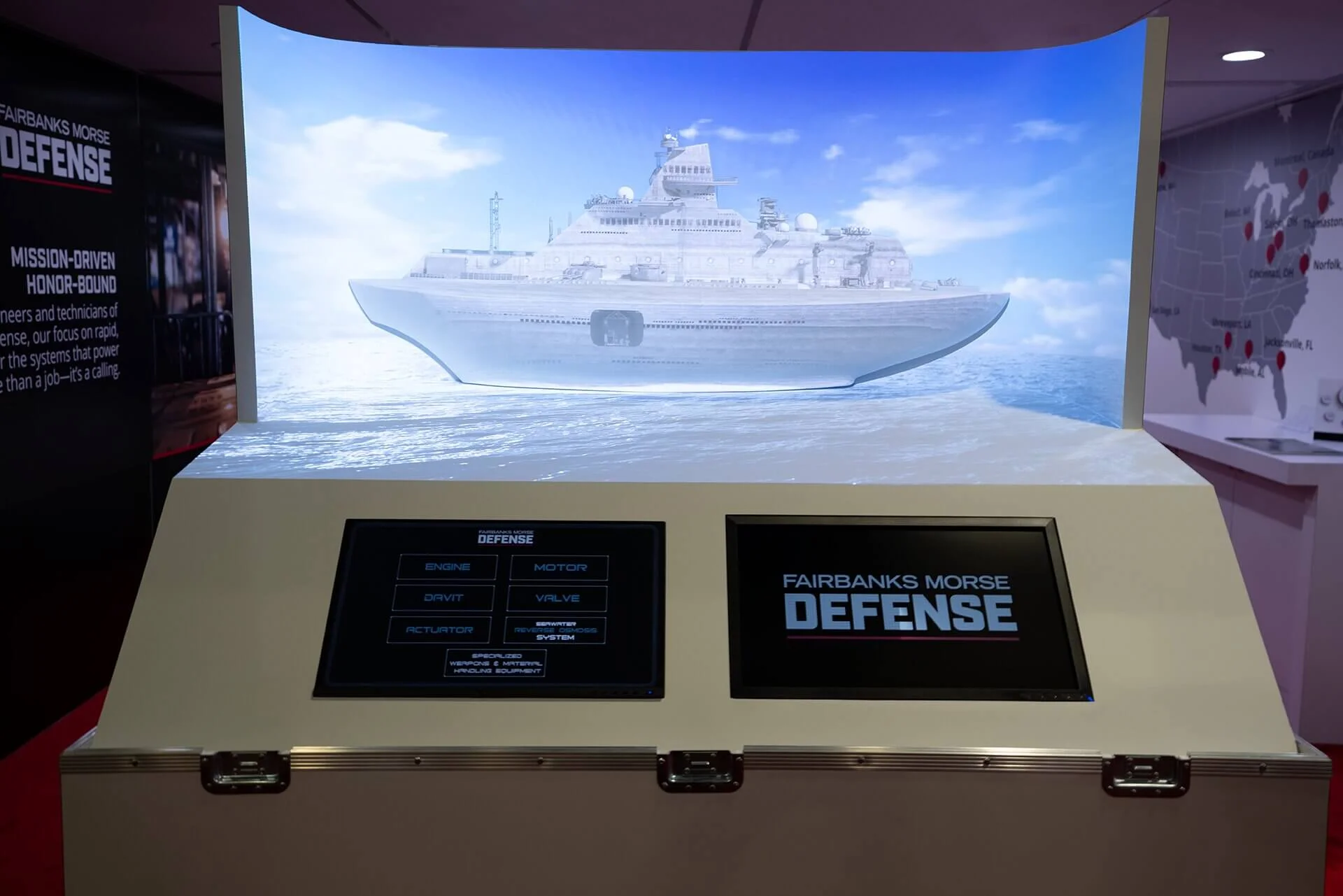
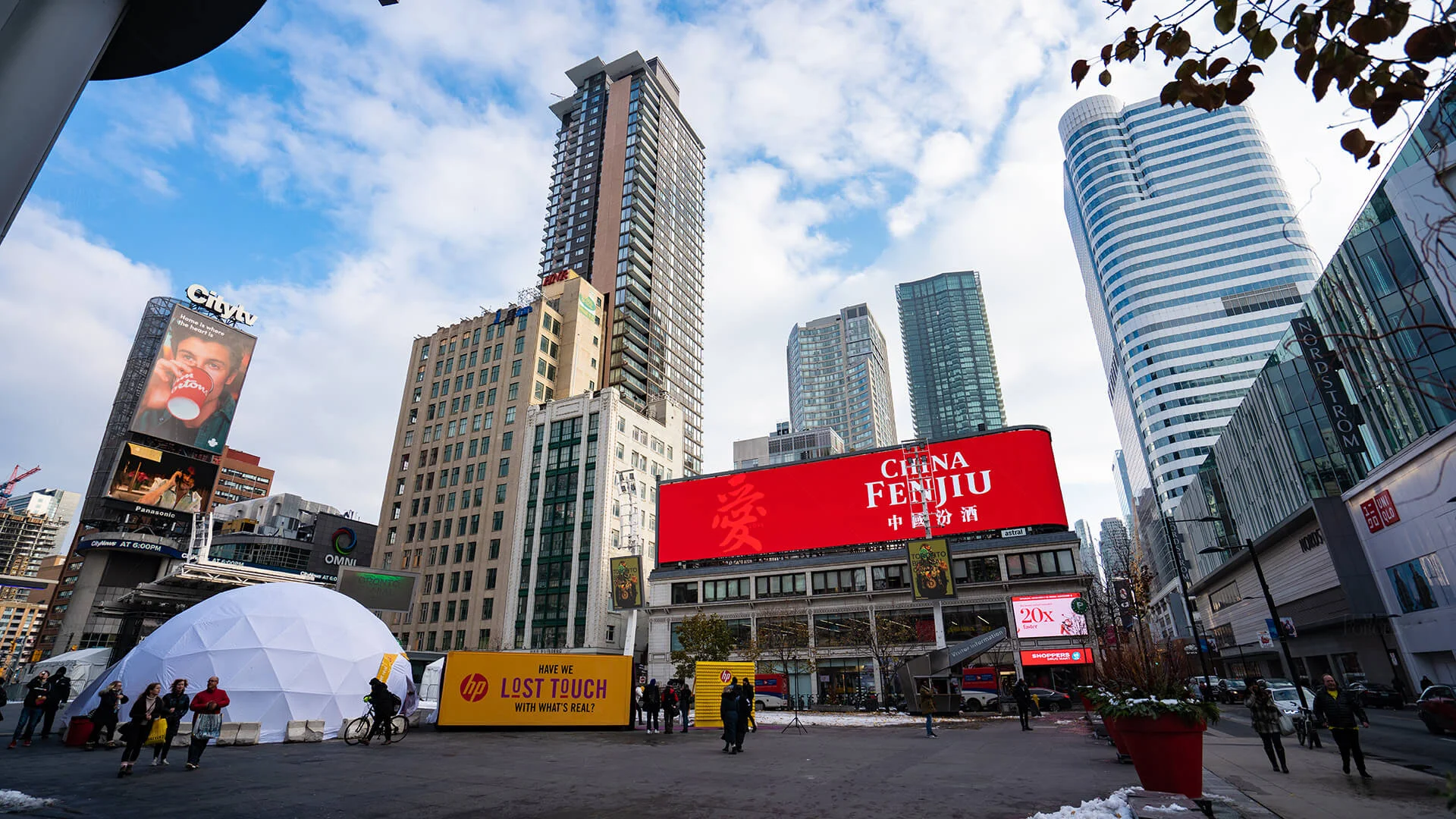
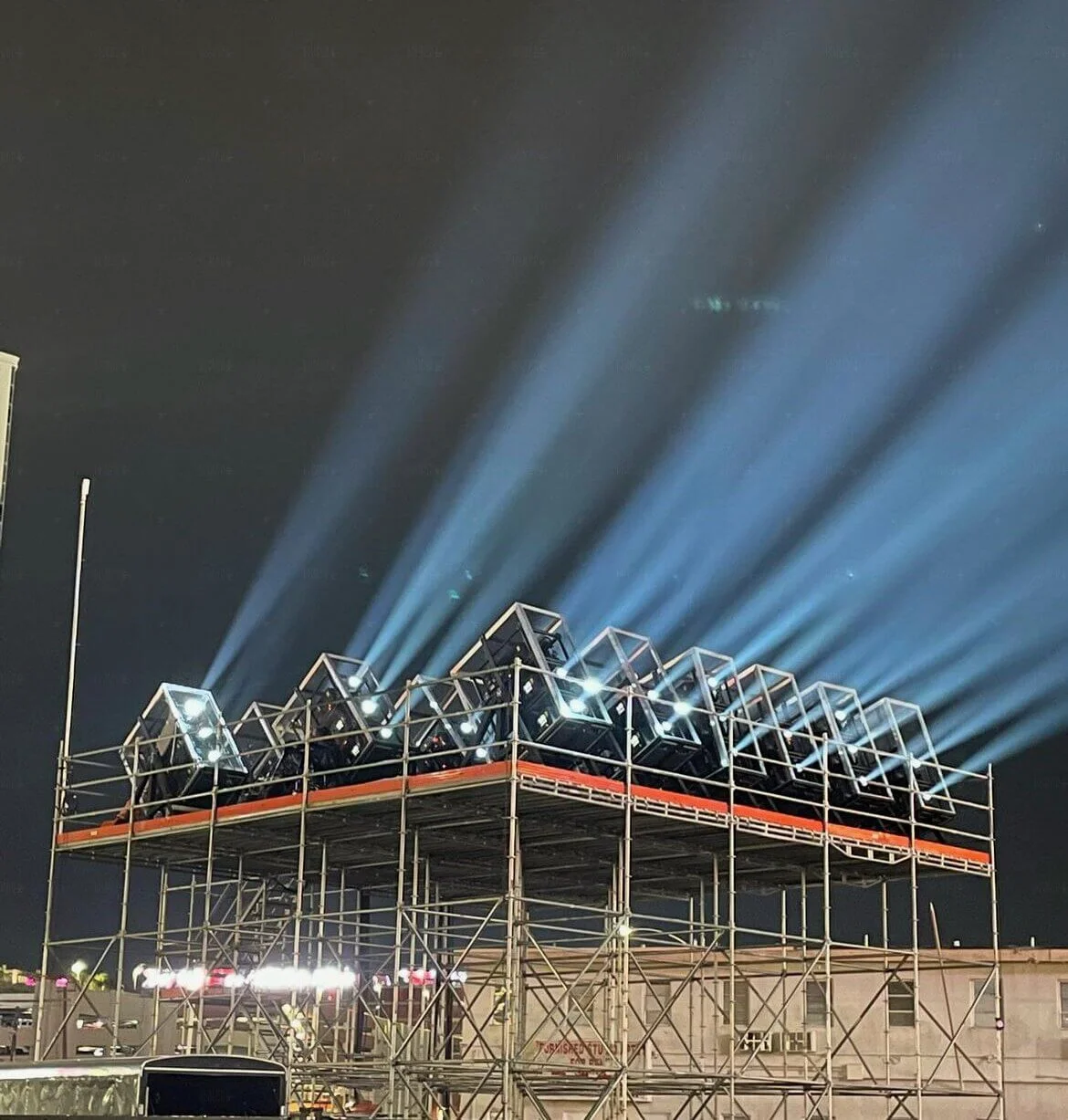
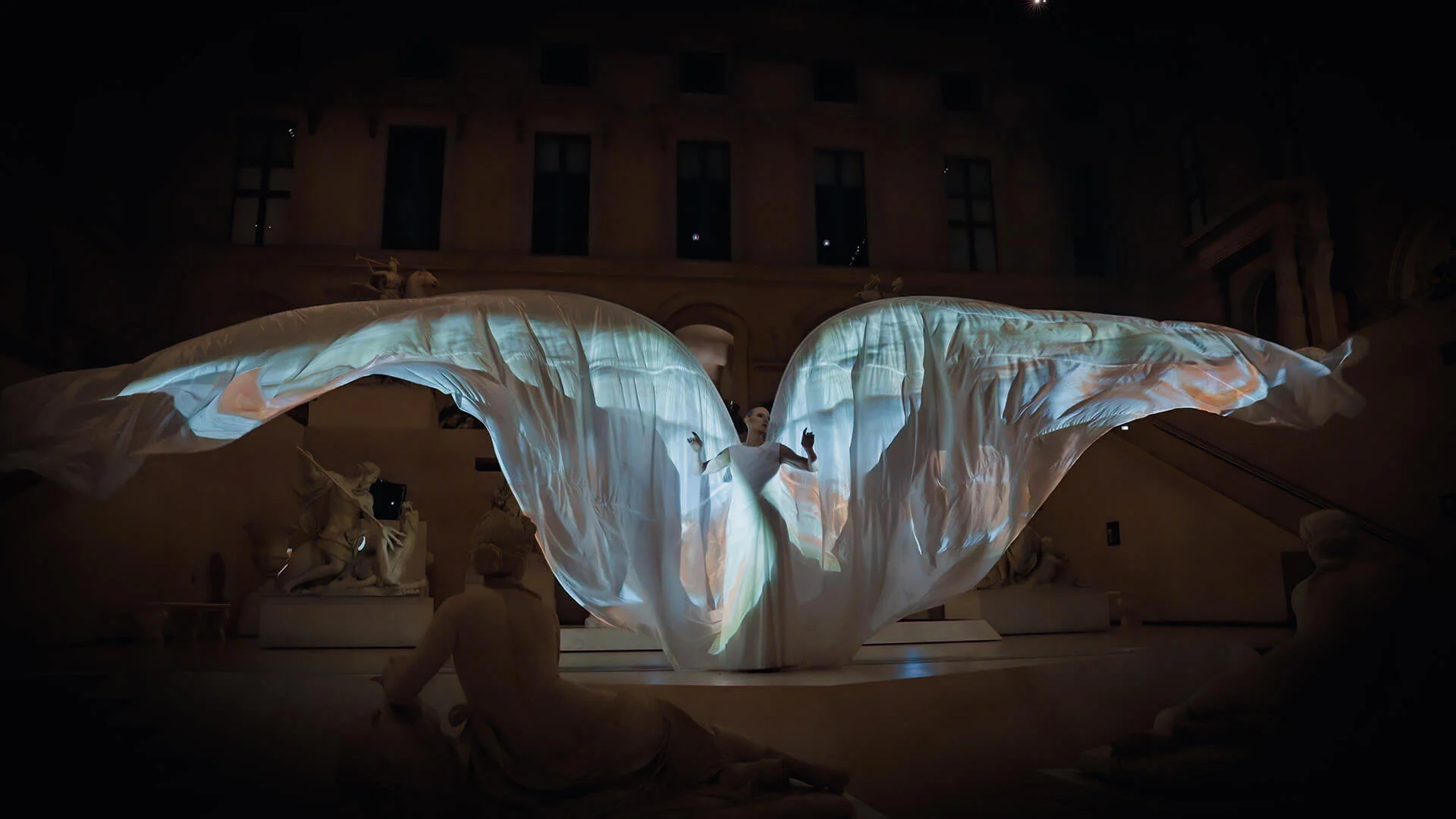
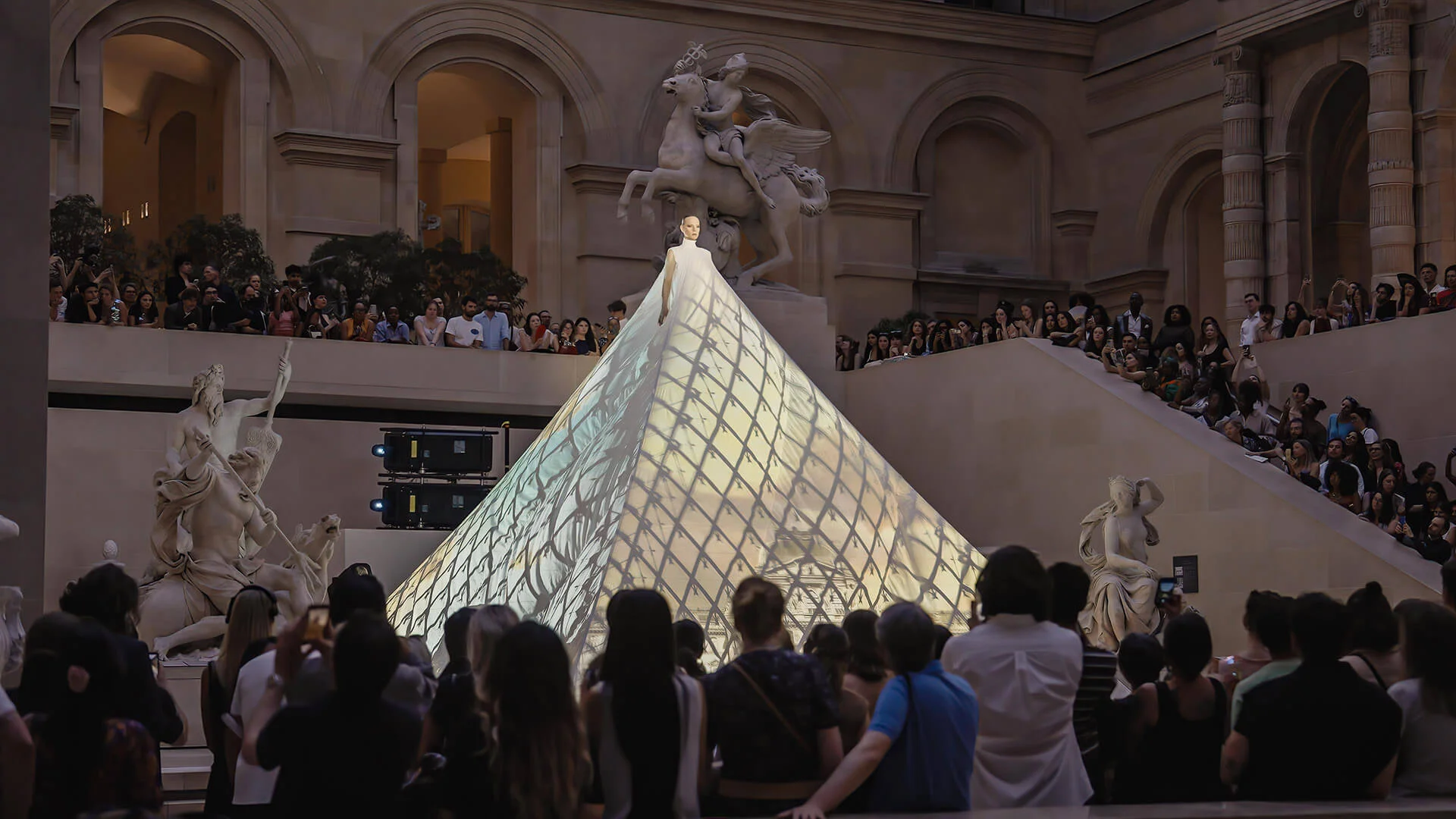
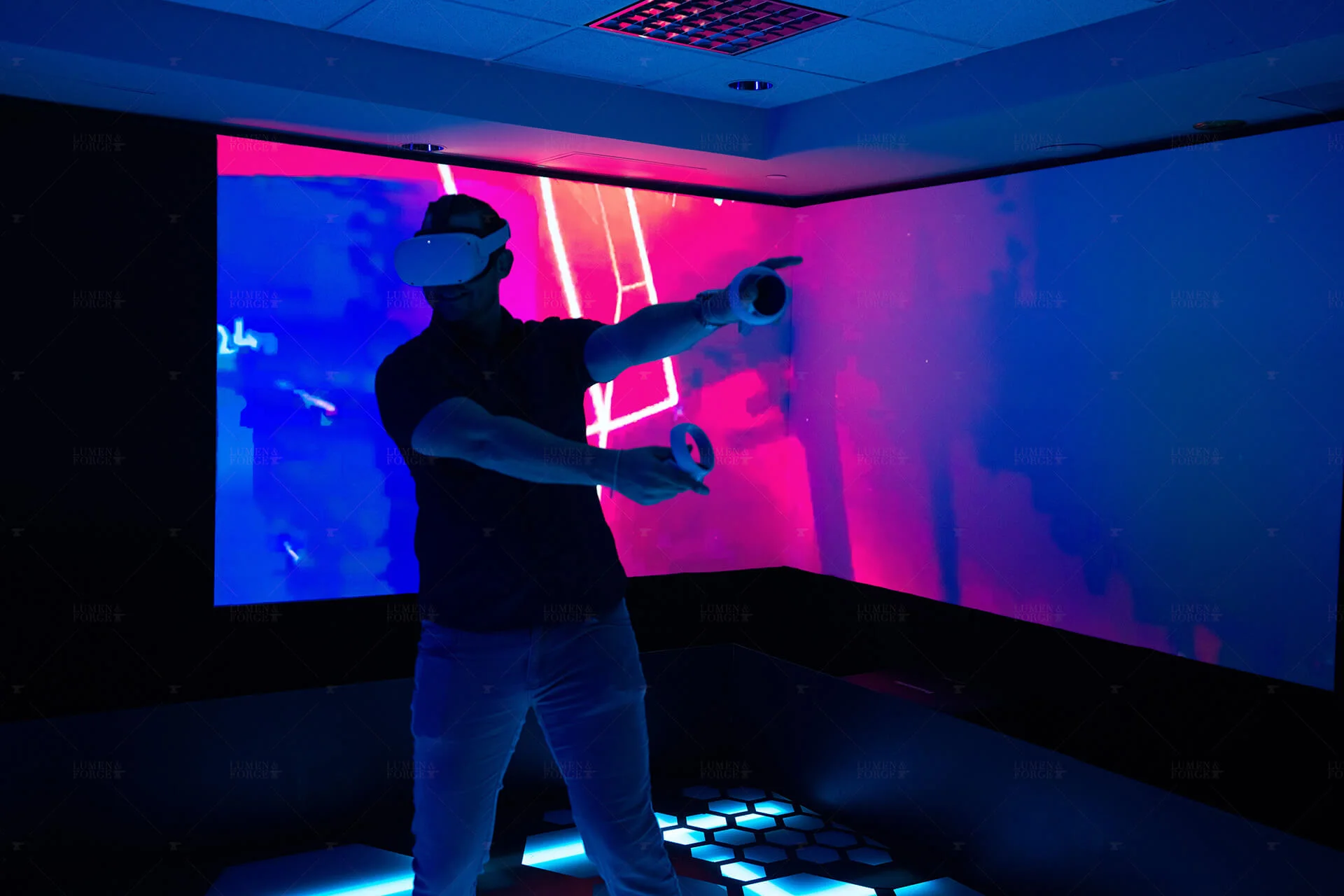
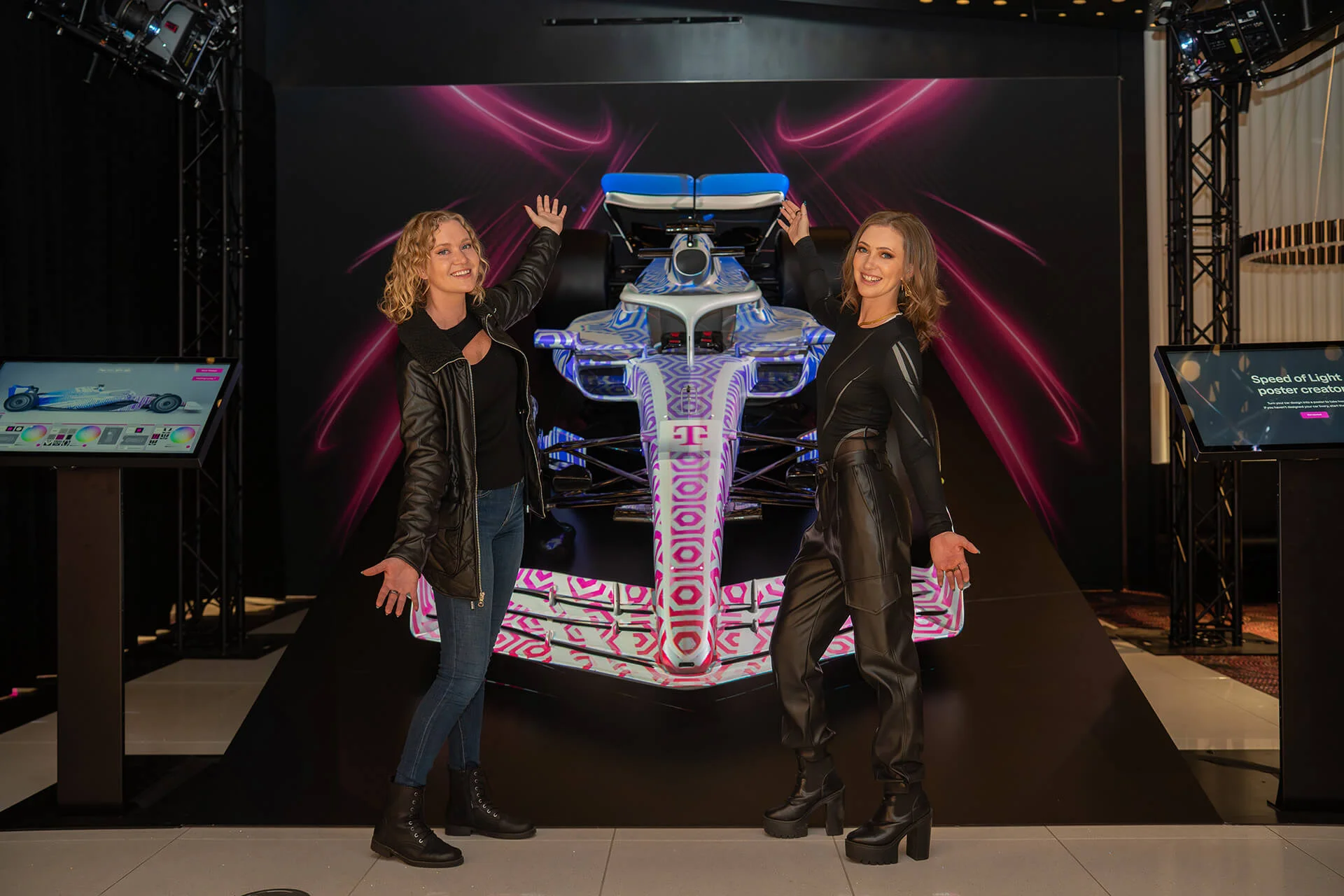
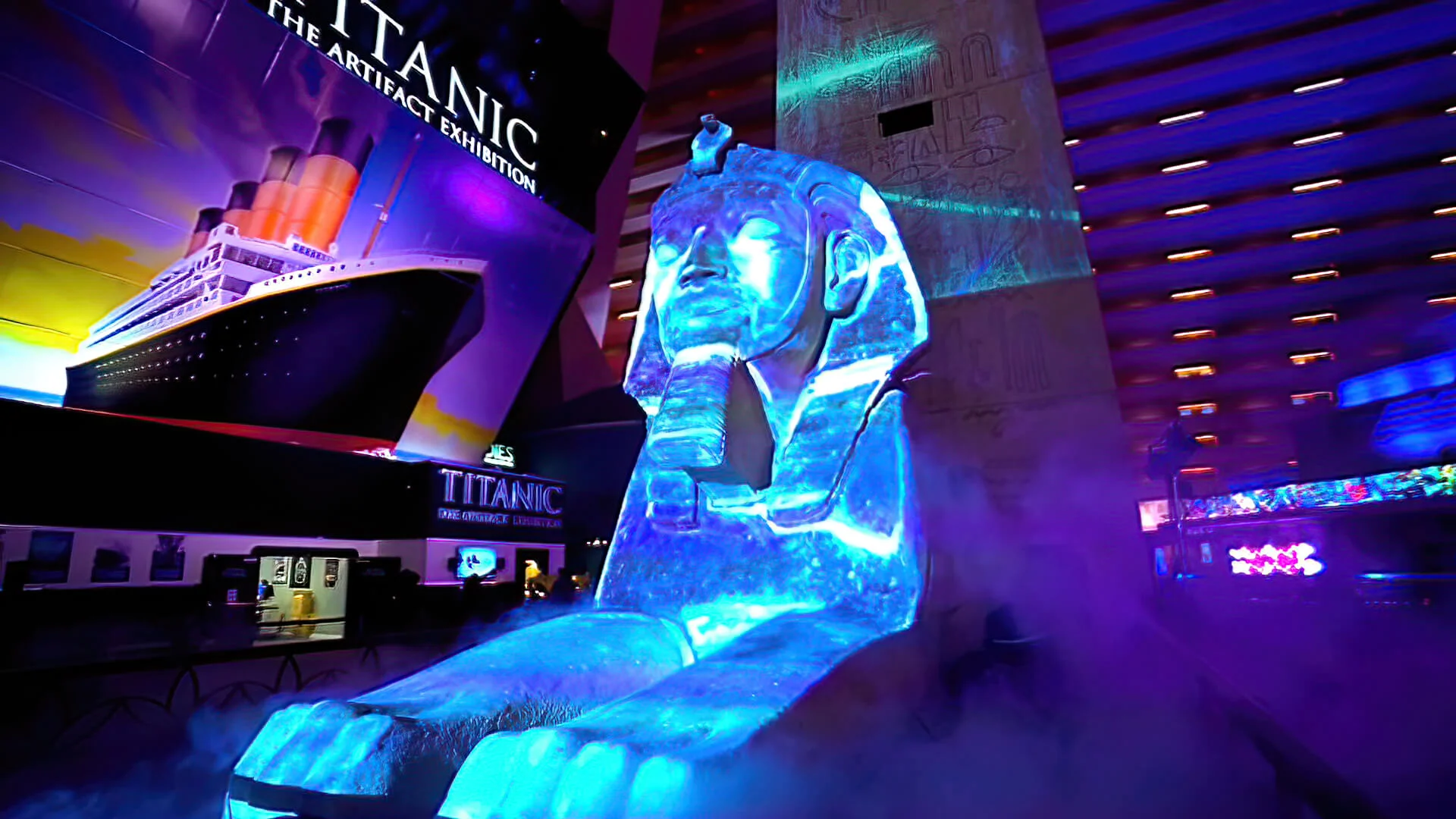
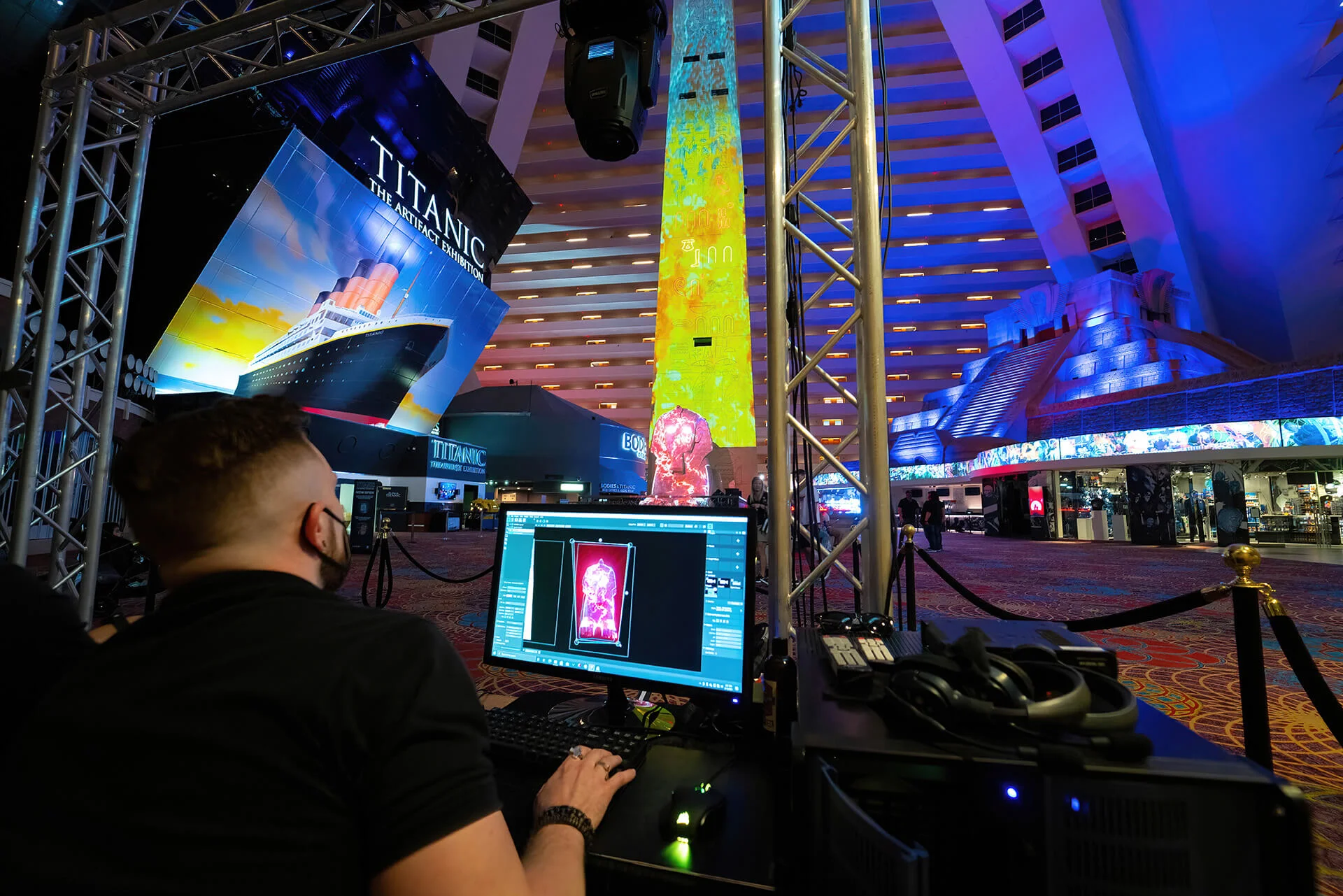
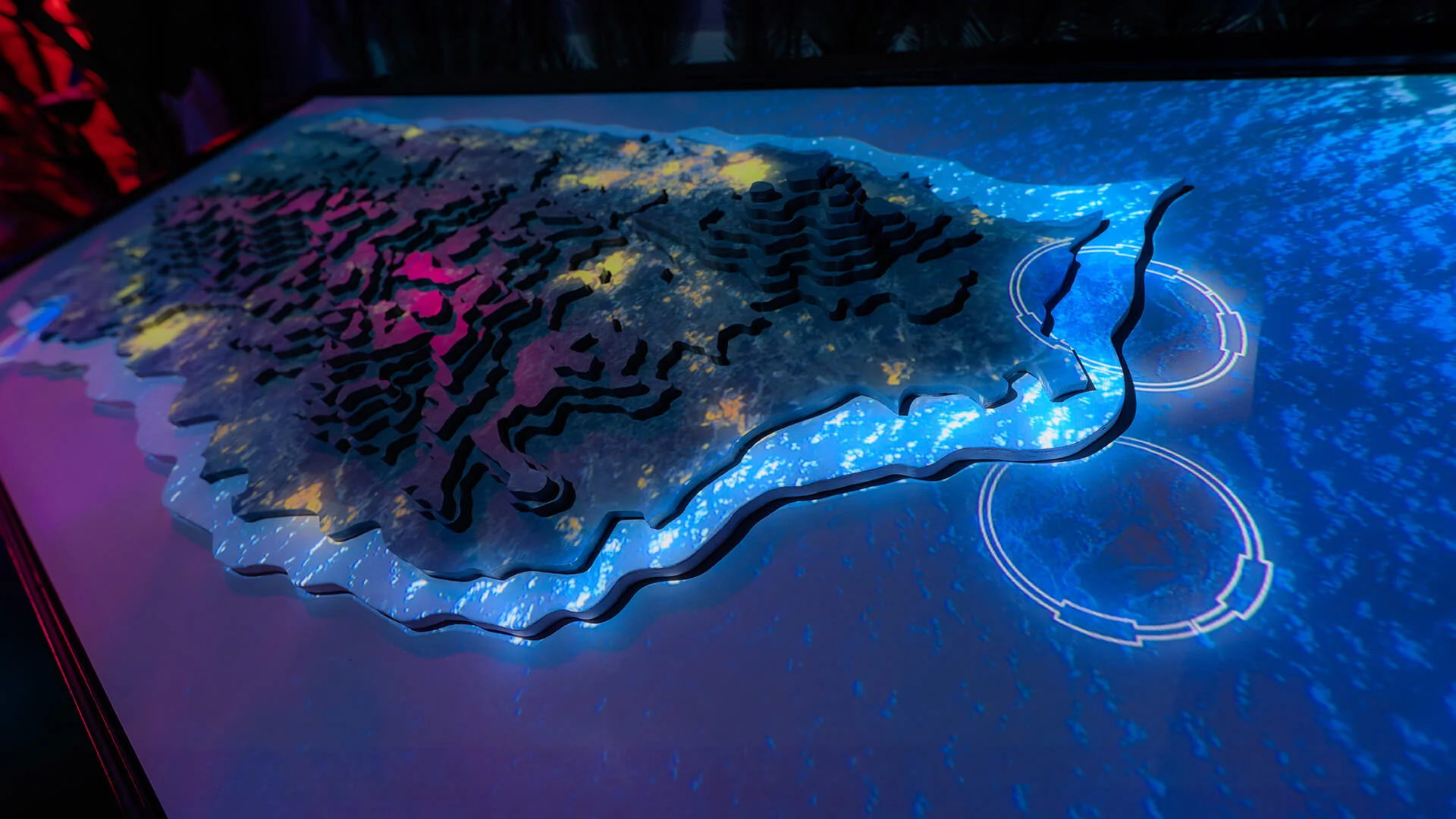
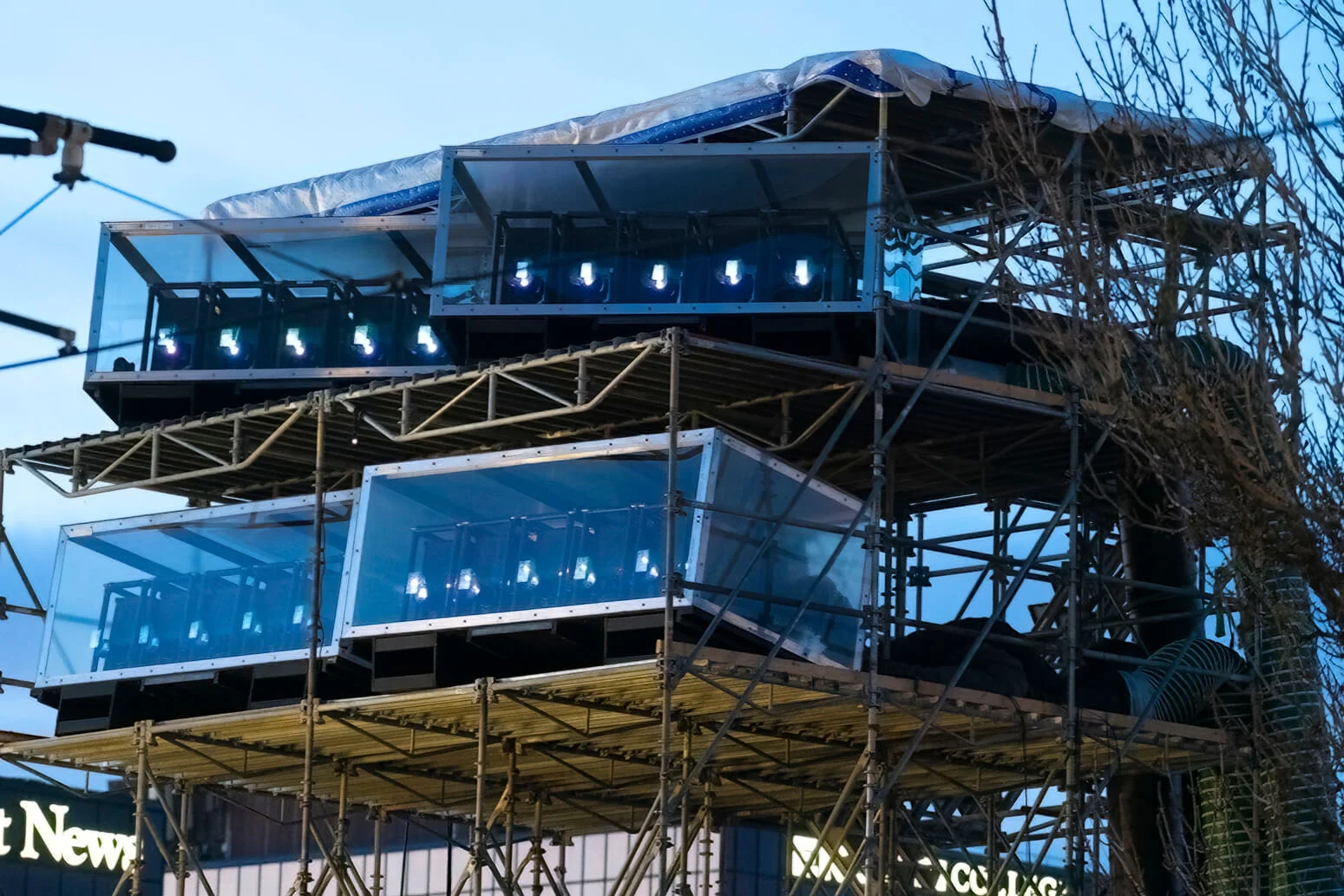
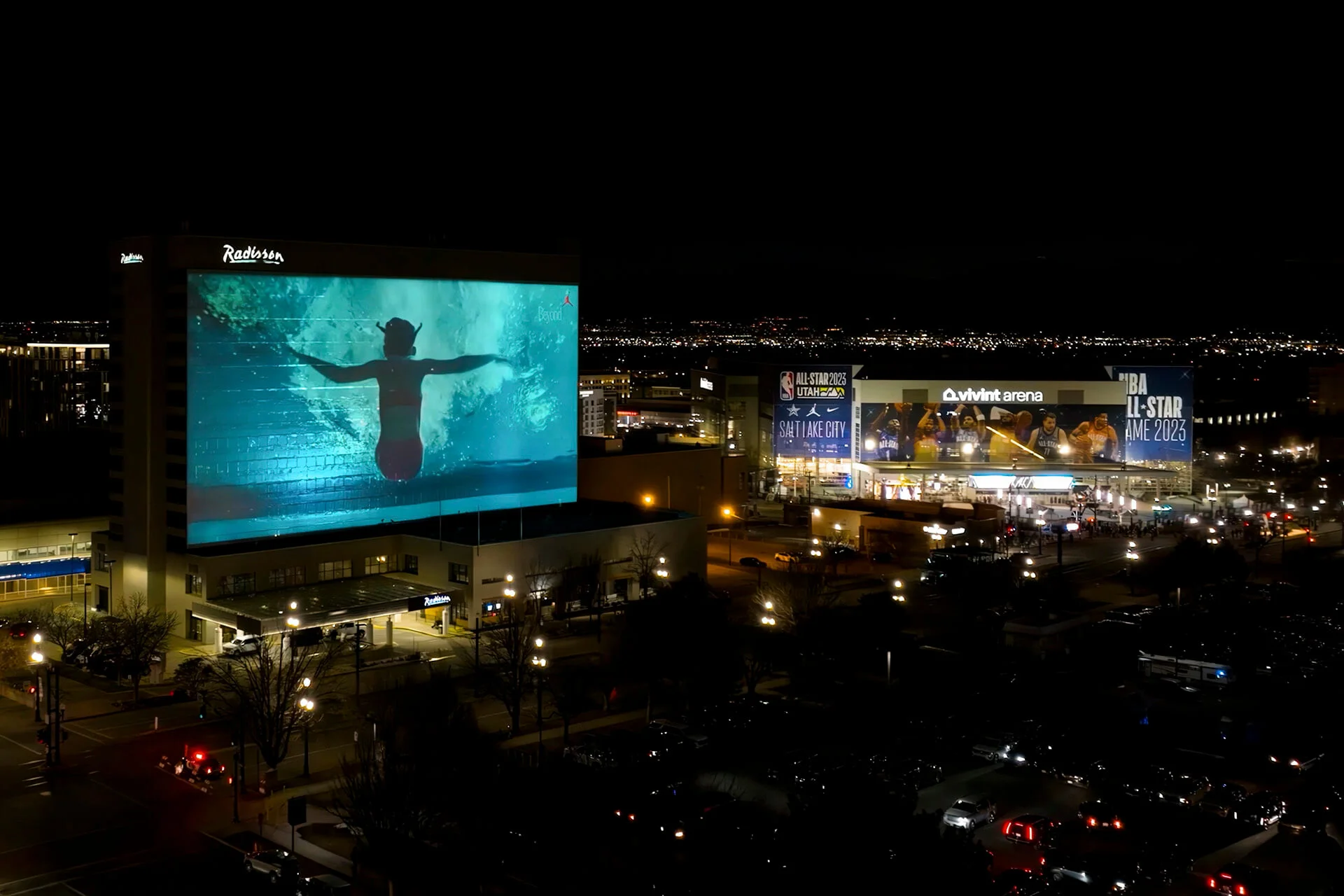
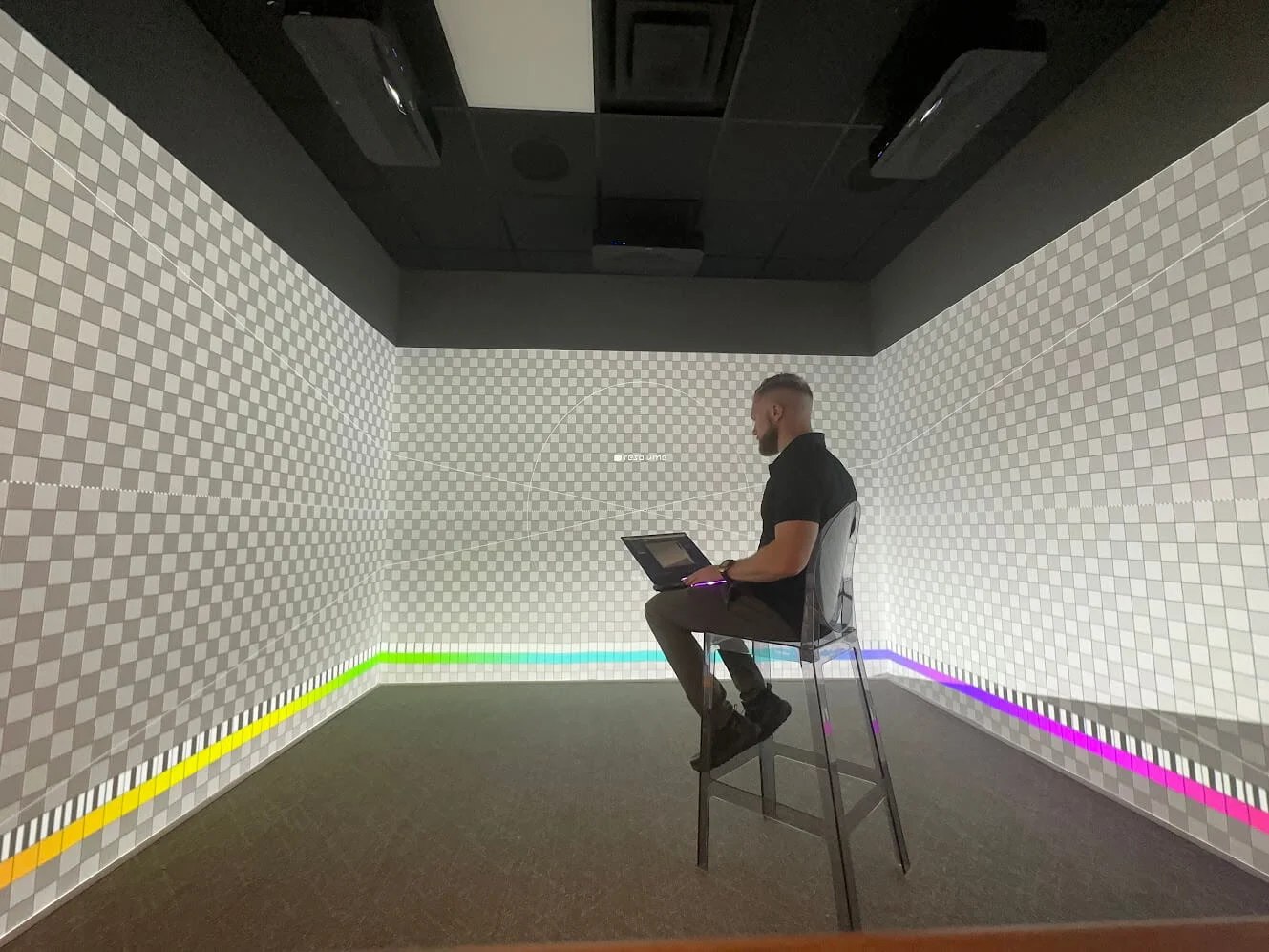
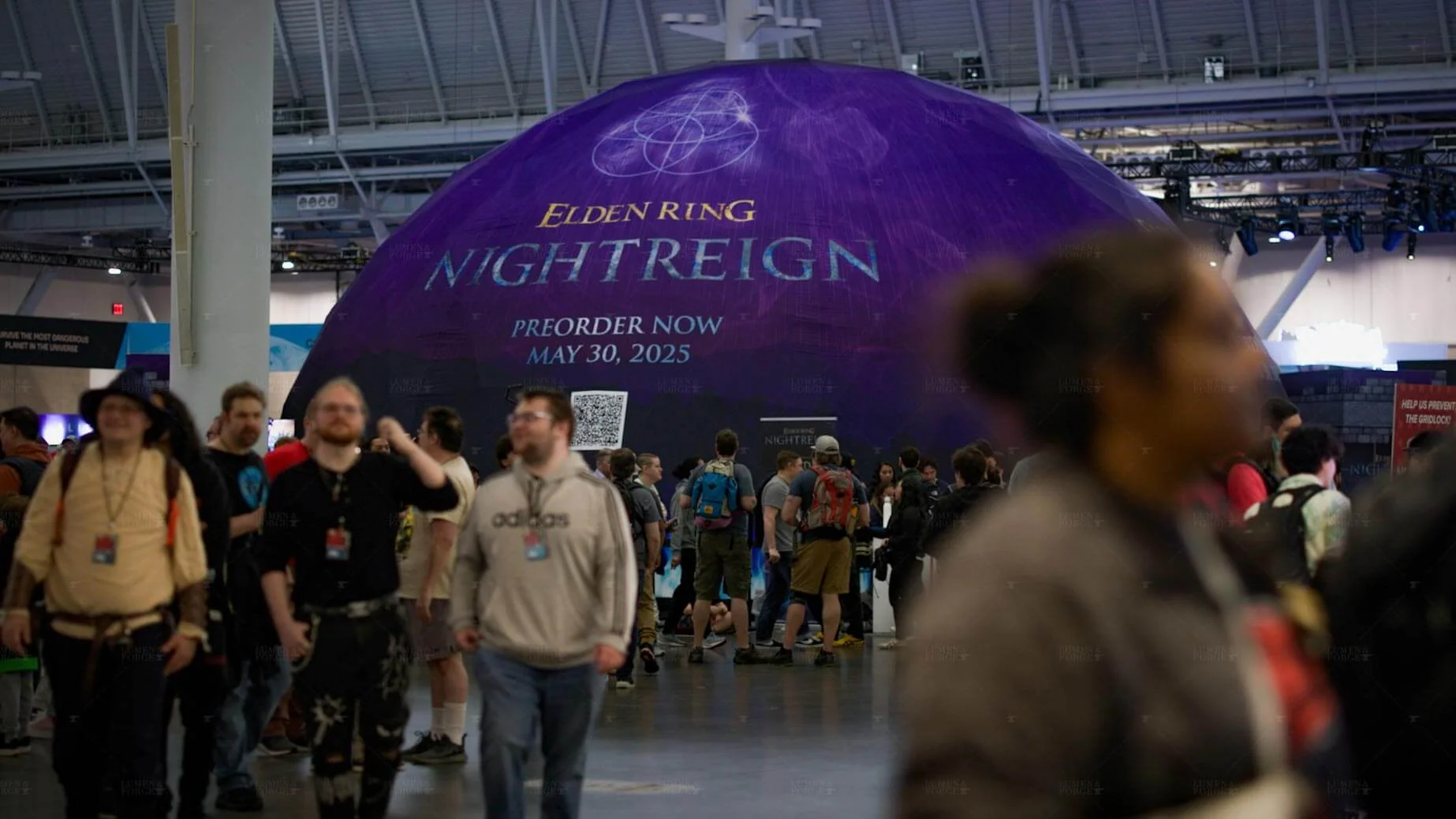
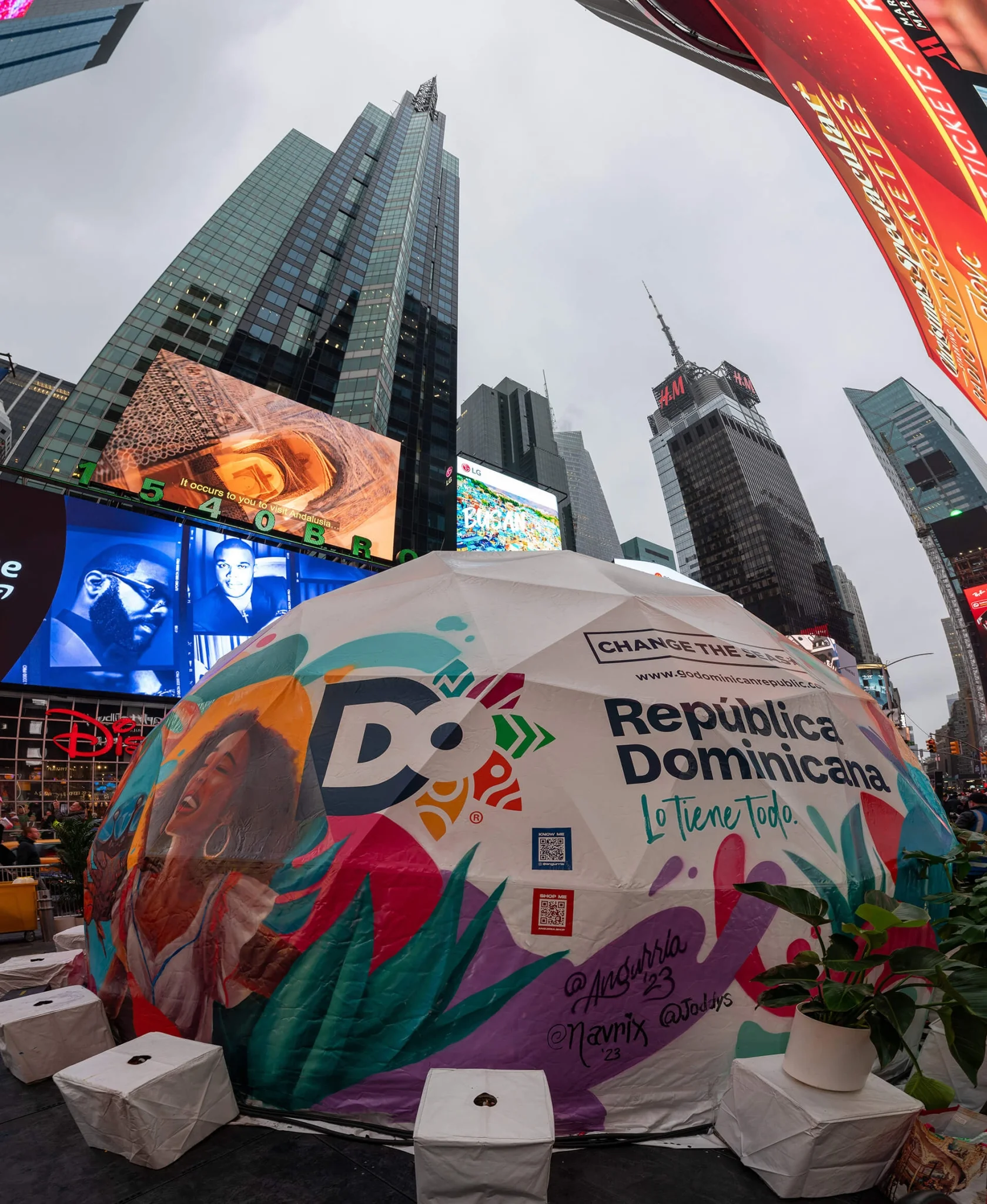
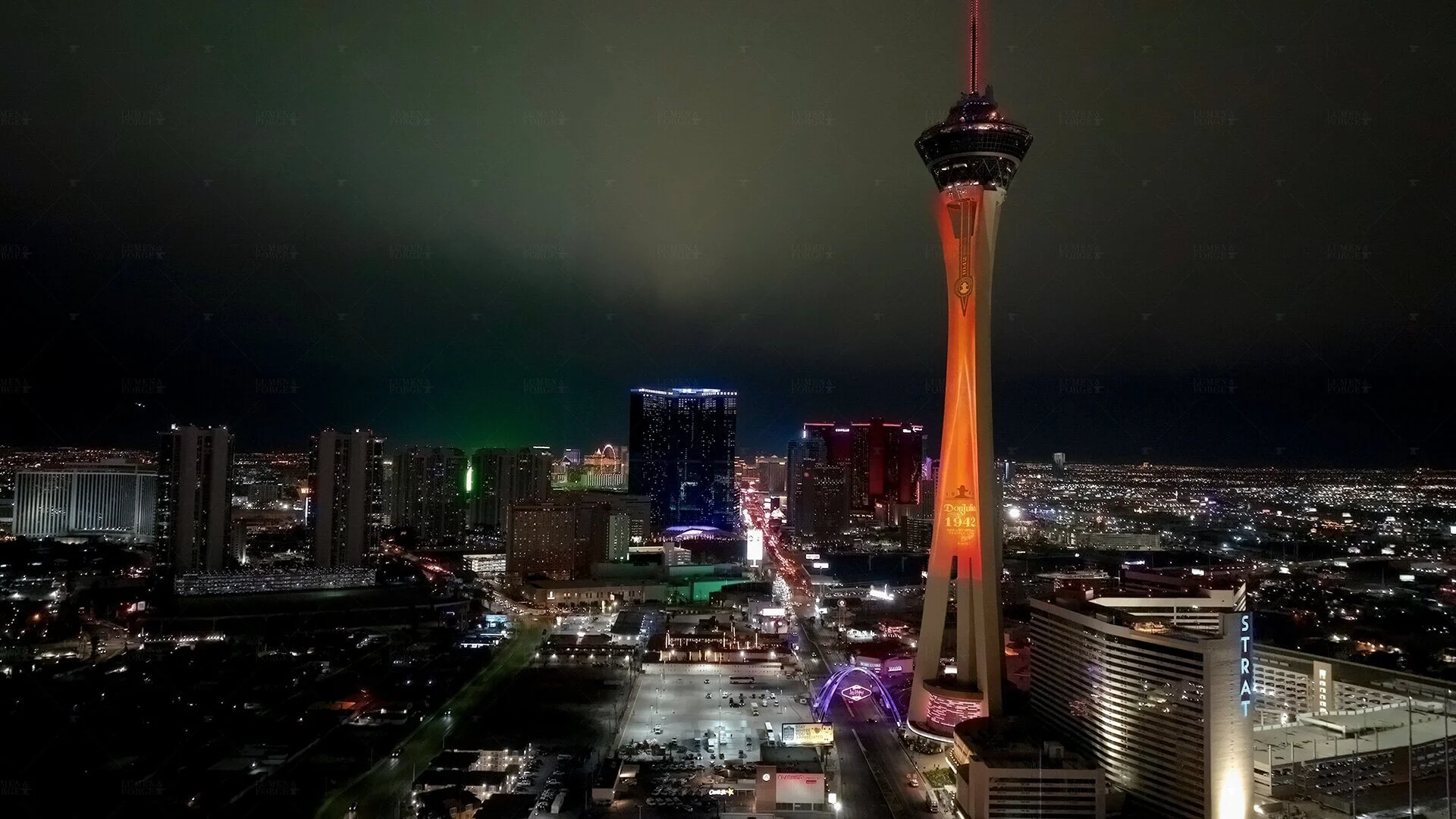
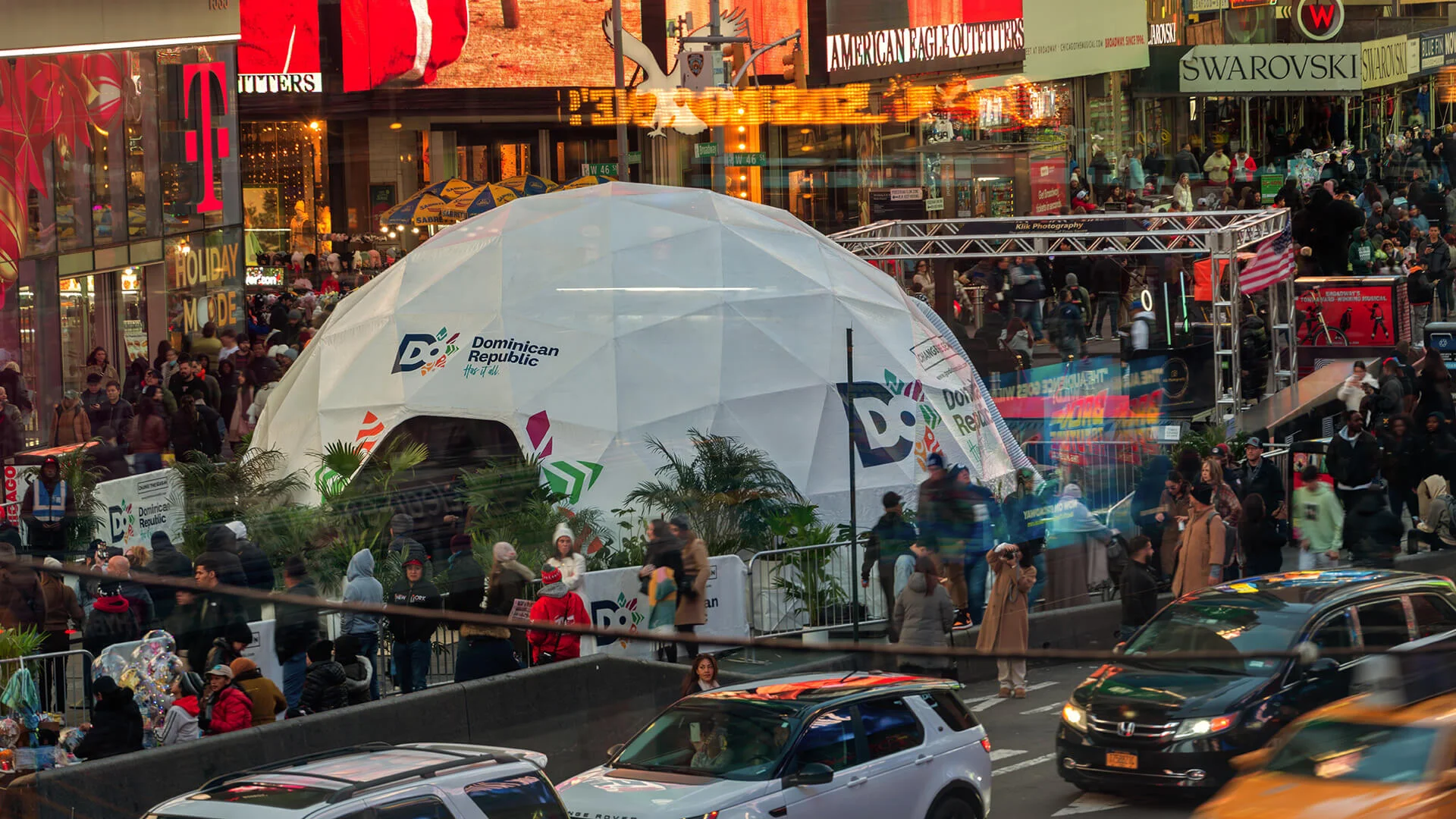
Take A Closer Look
A Deeper Look Into Animation & Visual Story Telling
A Deeper Look Into
Projection Mapping
Projection Mapping: Turning Any Surface Into a Story
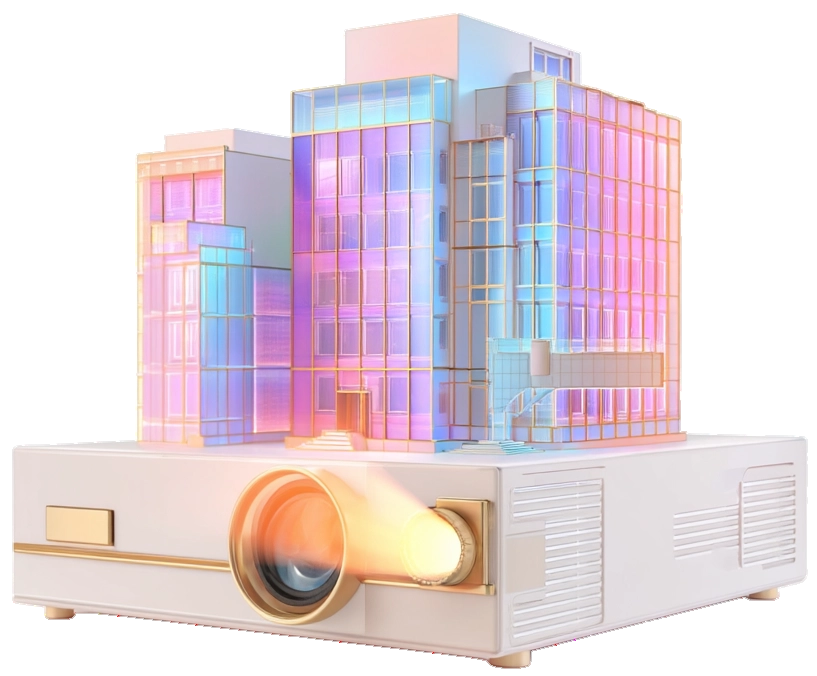
Projection mapping is the craft of aligning projected light to the exact geometry of a physical surface, so that every edge, corner and contour becomes part of the image. Unlike a flat screen, which simply displays a picture inside a fixed rectangle, mapping treats the object itself as the canvas. Software warps and blends the output so pixels land precisely on architectural features, and the surface stops reading as a screen and starts reading as a living thing. Depth, shadow and motion behave differently, which is why mapped content feels built into the building rather than played on top of it.
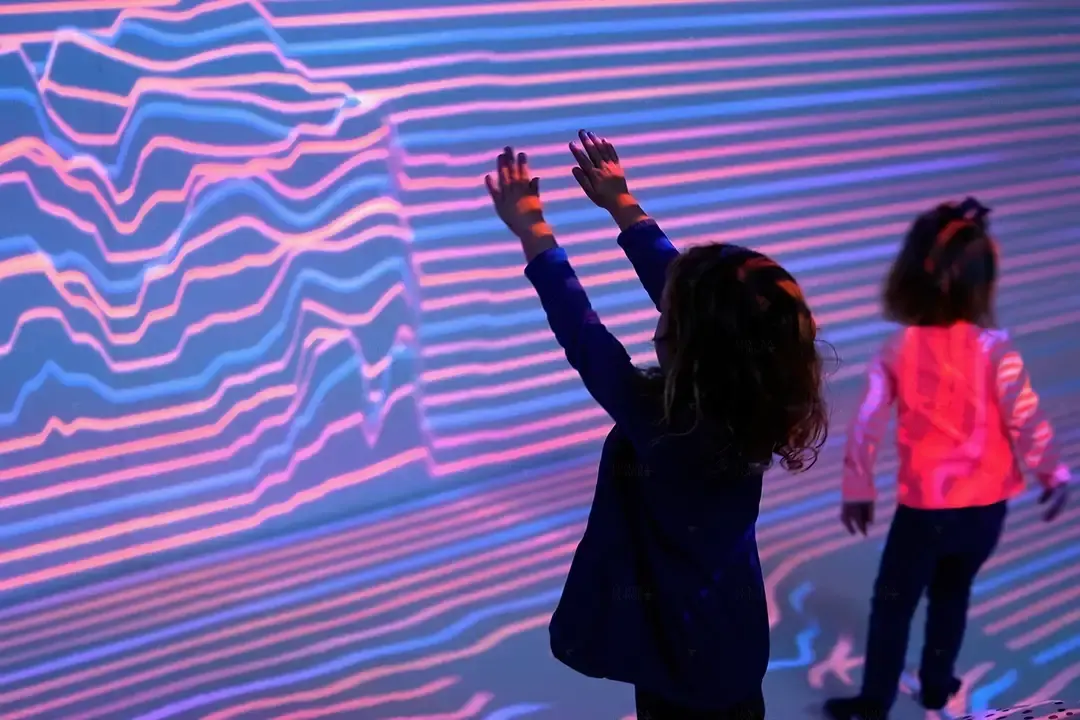
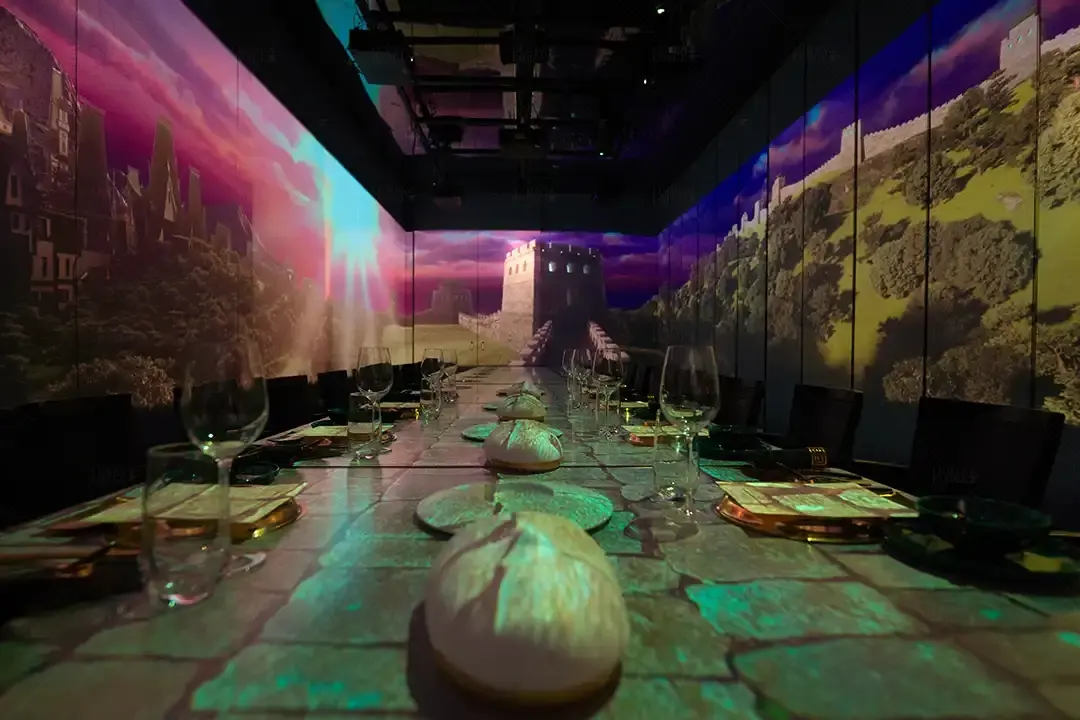
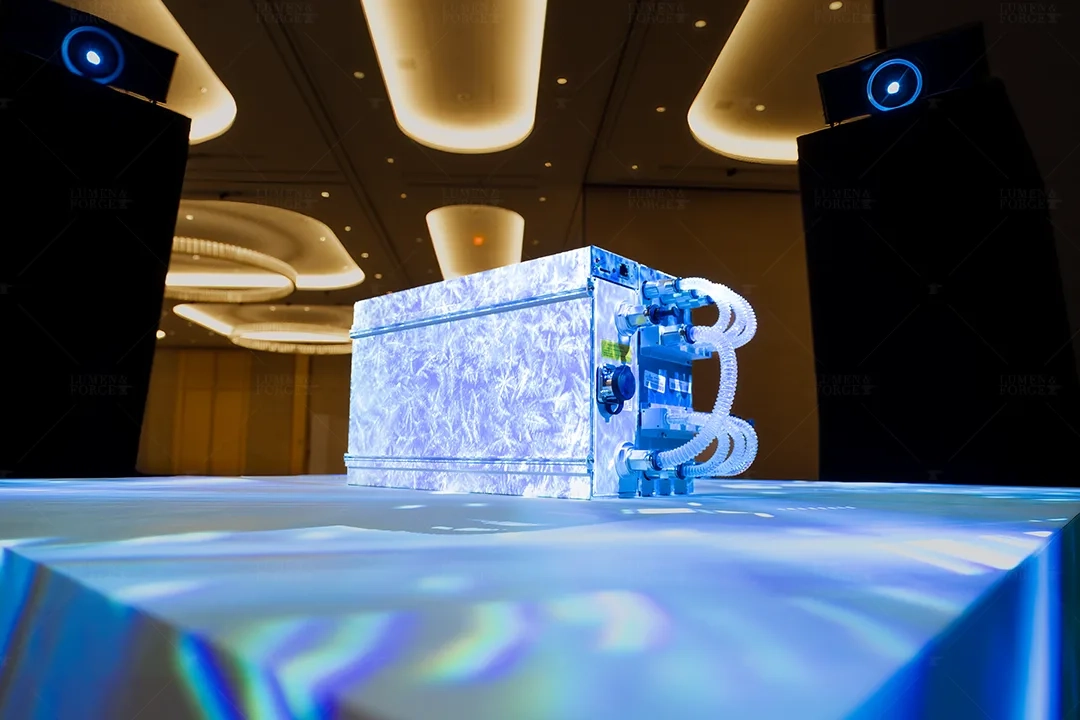
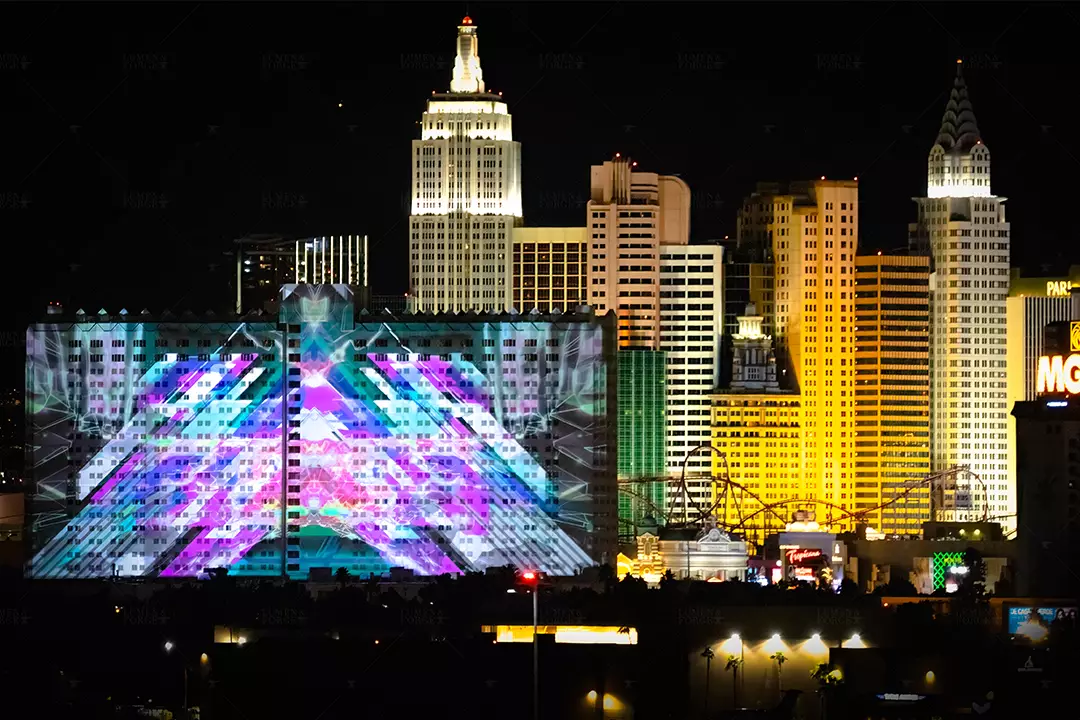
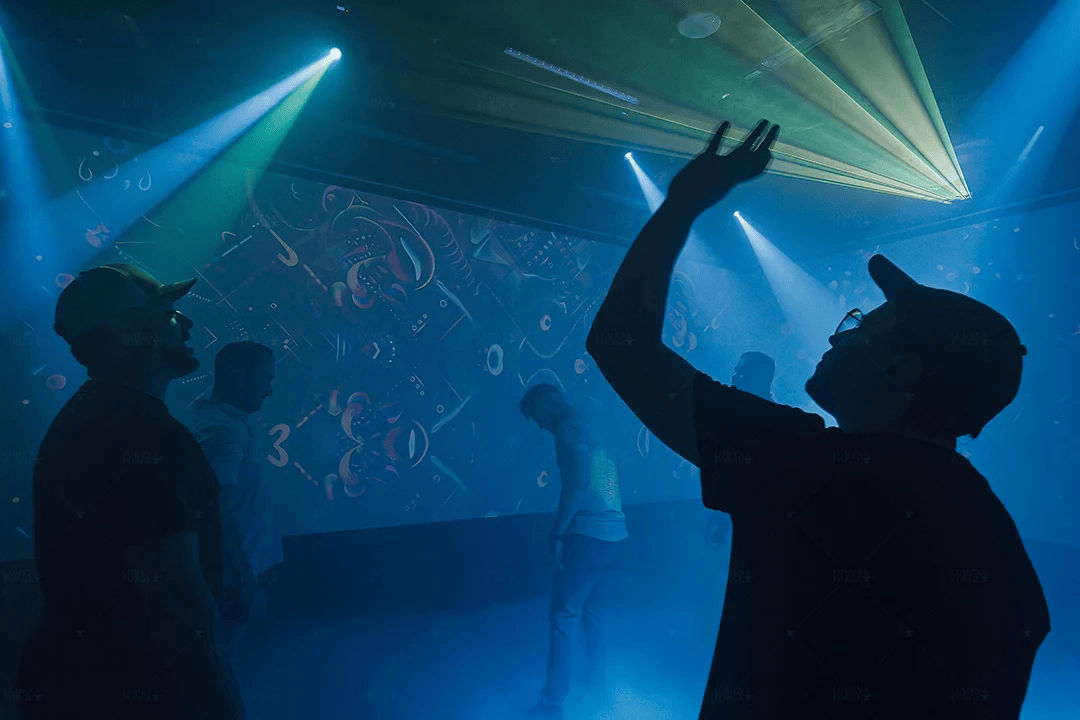
Chicago offers unusually varied canvases for that work. The riverfront facade of the Merchandise Mart (theMART) gives a vast vertical plane for building projection, while the trellis and shell of Jay Pritzker Pavilion in Millennium Park reward object mapping and room-scale design. Museum halls at the Field Museum and the Griffin Museum of Science and Industry suit immersive environments and projection domes, and the exhibit floors at McCormick Place and Navy Pier carry object mapping and interactive installations for trade shows and conventions. Stadium concourses and club spaces at Soldier Field, the United Center, Wrigley Field and Rate Field extend the same techniques to sports audiences.
Building and Architectural Projection
Object and Product Projection Mapping
Interactive Projection
Room and Environment Mapping
Dome Projection
Why Chicago Is a Natural Fit for Projection Mapping
Chicago is a city that sees a lot of spectacle. Between Lollapalooza in Grant Park, the Chicago Air and Water Show along the lakefront, and the Magnificent Mile Lights Festival every November, local audiences are regularly exposed to large-scale production. That raises the bar for any brand activation. A crowd here has watched fireworks over the water and headline sets in the middle of the city. Projection mapping can still stop people in their tracks, but only when the content earns the attention it asks for. Scale alone is not a differentiator in this market.
The calendar matters as much as the skyline. February brings the Chicago Auto Show to McCormick Place, April brings EXPO CHICAGO to Navy Pier, and the Bank of America Chicago Marathon fills the streets in October. Each of these events draws a different crowd with a different threshold for marketing. Auto Show attendees expect to be immersed in product, not interrupted by it. Art fair visitors arrive with a critical eye and respond to craft and concept. Marathon weekend is a civic celebration, and brands that show up with something genuinely impressive and shareable are the ones that get remembered. A mapped facade or a room-scale environment has to be built for the specific audience standing in front of it.
Chicago's industry mix shapes what that audience wants from an activation. Trade shows and conventions at McCormick Place bring in healthcare and medical associations, financial services and trading firms, and food and beverage brands, all of whom are competing for attention in a dense hall. Architecture and design professionals hold the city to a high standard of execution, and a projection that ignores the geometry and history of a building like the Merchandise Mart riverfront facade will read as careless. Professional sports franchises and retailers along the Magnificent Mile face audiences who have seen polished brand work before and can tell the difference between a template and something made for the place.
That is why a pure wow moment does not carry far here. The strongest activations give people a reason to stay, to interact, and to connect the experience to the brand behind it. A projection mapped onto an object at Navy Pier, an interactive installation inside a convention booth, or a room-scale environment near Millennium Park can all work, but each has to be specific to the venue, the event, and the audience it serves. Spectacle gets the first look. Relevance is what keeps the crowd there.
Lumen and Forge: Ready for Chicago's Convention Calendar
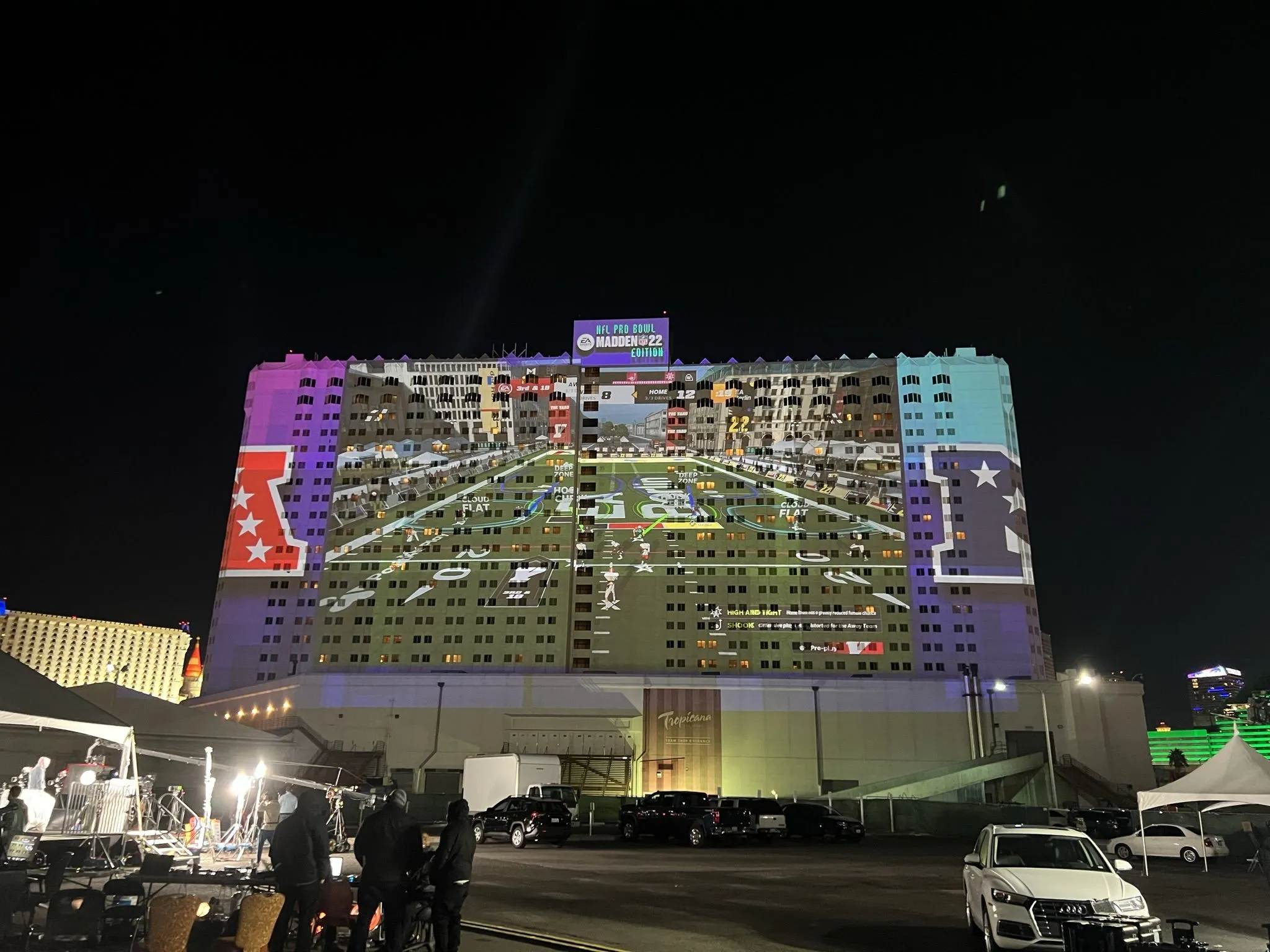
Over 15 years of producing large-scale projection mapping and immersive experiences for globally recognized brands gives Lumen and Forge the operational depth Chicago productions require. Our portfolio includes building projections for Nike and Air Jordan at NBA All-Star Weekend, large-scale convention experiences for Toyota, McLaren, and Mastercard, a world record video game screen at the Tropicana, and the Beneath the Blue 360-degree dome for National Geographic. Our team is comfortable working alongside experienced production crews and holding a technical standard in front of an audience that knows the difference, which is exactly what Chicago requires.
Who We Work With in Chicago
Chicago brings together convention floors, trading desks, museum campuses, ballparks and a retail corridor that all compete for attention. These are the client types we work with most often when projection mapping is on the table.
- Trade shows and conventions. Exhibitors and show organizers at McCormick Place need to stop traffic on a busy floor. Building and object mapping turns a booth into a destination, and room-scale environments give the Chicago Auto Show and other February programming a centerpiece that photographs well from every aisle.
- Financial services and trading. Firms use projection mapping for client events, recruiting evenings and milestone celebrations, often in private venues and hotel ballrooms. Precise object mapping on a branded centerpiece or a full room-scale environment gives a conservative audience something genuinely memorable without abandoning a polished tone.
- Food and beverage brands. Launch nights and hospitality activations lean on projection to make a product the hero. Interactive installations let guests trigger visuals themselves, which keeps a room engaged through a long evening and gives the brand shareable moments.
- Healthcare and medical associations. Association meetings and medical conferences use projection domes and room-scale environments to explain complex science clearly, and object mapping to give awards dinners and sponsor receptions a distinctive look.
- Architecture and design. Design firms and cultural institutions commission building projection on facades such as the Merchandise Mart riverfront and the museum campuses, using light to reframe familiar architecture for anniversaries, openings and public programs.
- Professional sports franchises. Teams and their partners use building projection and interactive installations around marquee dates at Soldier Field, the United Center, Wrigley Field and Rate Field, from fan festivals to the NCAA Frozen Four in 2028.
- Retail along the Magnificent Mile. Retailers use object mapping and interactive installations to draw shoppers during the Magnificent Mile Lights Festival and through the holiday season.
Ready to Light Up the Lakefront?
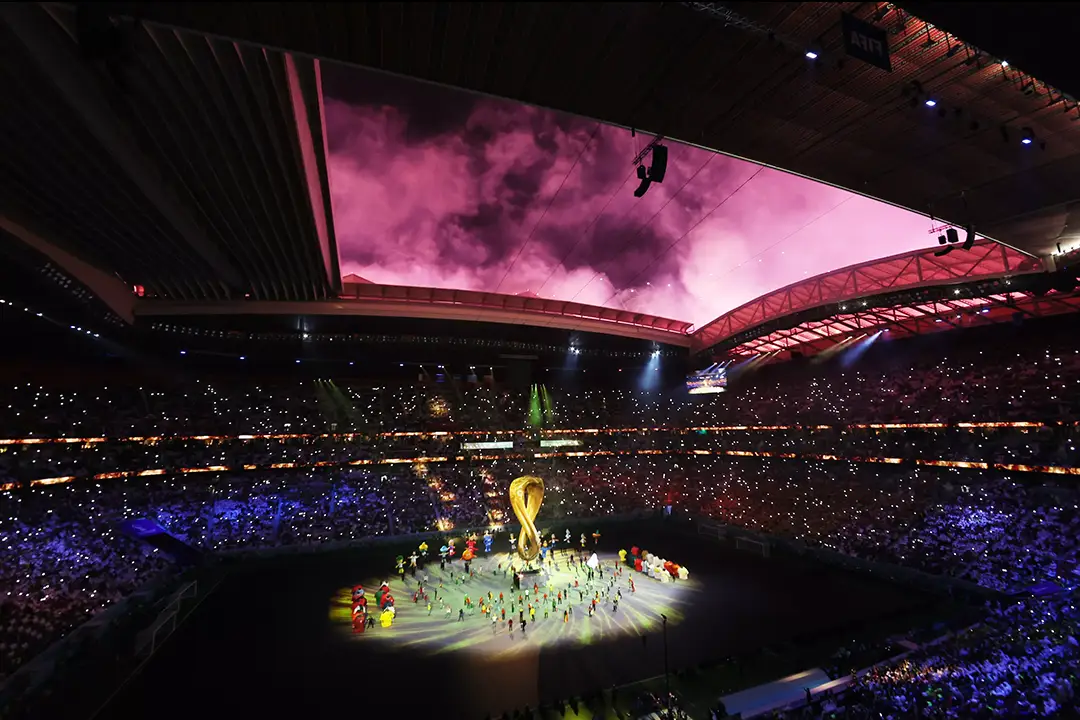
Chicago gives a brand an audience that notices craft. The people who fill McCormick Place for the Chicago Auto Show, cross Navy Pier for EXPO CHICAGO, and line the lakefront in August expect production that holds up at scale and close range. That is the standard Lumen and Forge builds to, with more than 15 years of projection mapping and immersive work for brands including Nike and Air Jordan, Toyota, McLaren and Mastercard.
If you are planning a launch, a trade show moment, or a takeover along the Magnificent Mile, tell us what you have in mind. We will help you shape it for the venue and the crowd.
Frequently Asked Questions: Projection Mapping in Chicago
Standard projection displays a flat image on a flat screen or white wall. Projection mapping uses specialized software to warp, align, and calibrate video content so it fits precisely onto any three-dimensional surface, whether that is a building exterior, a custom sculpture, a vehicle, or an entire room. The software accounts for every edge, angle, and curve, so the content appears to belong to the object itself rather than simply being cast onto it. In a city full of working production professionals, that level of precision is what separates a real installation from a lighting effect.
Yes. Outdoor projection mapping works in Chicago with the right season and schedule. Plan activations between spring and fall, when temperatures suit long outdoor events and the lakefront stays busy. Summer sunset arrives late, so mapping cannot begin until close to 9 p.m., which suits evening programming at Navy Pier, Millennium Park and Grant Park. Ambient light is the real constraint: street lighting, venue floodlights and event rigs all wash out projected images, so specify high-lumen projectors and control competing light sources. Winter installs need weatherized housings and heated enclosures.
McCormick Place suits large-scale building projection and trade show activations. Navy Pier offers a busy lakefront canvas for festivals and fairs. theMART's riverfront facade is ideal for architectural projection. Millennium Park and Jay Pritzker Pavilion pair mapping with live events, while Grant Park handles festival-scale crowds. Soldier Field, United Center, Wrigley Field and Rate Field bring sports audiences. The Art Institute of Chicago, Field Museum and Griffin Museum of Science and Industry fit cultural and design-driven work.
Projection mapping in Chicago fits best where crowds already gather after dark or indoors at scale. The Chicago Auto Show at McCormick Place and EXPO CHICAGO at Navy Pier reward object mapping and booth-scale builds. Lollapalooza in Grant Park and the lakefront Chicago Air and Water Show suit large outdoor projection. The Magnificent Mile Lights Festival, the Bank of America Chicago Marathon and NCAA Frozen Four at the United Center round out the calendar.
Yes. Lumen and Forge coordinates permits, power, rigging and site logistics directly with each venue, so your team is not chasing load-in windows and electrical drops while creative is still in review. For outdoor special events on the public way, we work through the Department of Cultural Affairs and Special Events (DCASE) Special Events Permit process, and for events in parks we account for the Chicago Park District special event permit as well. Every plan is built around the venue and the event.
Projection mapping costs in Chicago are driven by four variables: the scale and geometry of the surface, the complexity of the content, the duration of the event, and the equipment and crew required on site. Mapping the riverfront facade of theMART calls for a different budget than an object-mapping moment inside McCormick Place or a room-scale environment at Navy Pier. Content production, hardware, rigging, permits through DCASE and the Chicago Park District, and load-in logistics at venues like Soldier Field or the United Center all factor into the final scope.
Lead time depends on the scale of the project. Custom content, a site survey, equipment and crew scheduling, and permitting all take time, and large building projections and outdoor events need the longest runway. Outdoor special events on the public way go through the Department of Cultural Affairs and Special Events (DCASE) Special Events Permit, and events in parks also need a Chicago Park District special event permit. Get in touch as soon as the venue and date are known.
Projection mapping applies video content onto a surface and aligns it precisely to that surface's edges, corners and features. 3D projection mapping goes further: it maps content onto objects and structures with real depth, so the imagery wraps around corners, faces and contours and reads as three-dimensional from the audience's viewpoint. On the riverfront facade of the Merchandise Mart, that means content can travel across the building's planes and setbacks rather than sitting flat on a single wall.
In addition to projection mapping, we offer dome projection for fully immersive 360-degree spherical experiences, event and project design for end-to-end production planning, and animation and visual storytelling for original content creation. Many of our Chicago clients combine projection mapping with one or more of these services into a single integrated production. We are a full-service immersive experience company, and the strongest work we build is conceived as a whole from the first conversation.
Do you have more questions?
Didn't find what you were looking for? Our team is happy to walk you through your project and answer anything else