

The Queen City Already Knows How to Light Up
Cincinnati is a production market built on landmark architecture, a packed annual events calendar and brands that show up in public. The skyline itself is a canvas: the Roebling Suspension Bridge, Cincinnati Museum Center at Union Terminal and Cincinnati Music Hall give projection mapping work scale and civic meaning that a blank wall never will.
The event calendar keeps crews sharp year round. The Flying Pig Marathon in May, the Cincinnati Music Festival at Paycor Stadium in July, WEBN Fireworks at Riverfest over the Ohio River on Labor Day weekend, and Oktoberfest Zinzinnati at Sawyer Point and Yeatman's Cove in September all put audiences outdoors and in motion.
Downtown venues including Duke Energy Convention Center, Great American Ball Park, TQL Stadium, Heritage Bank Center, Washington Park, Fountain Square and Smale Riverfront Park host the crowds that consumer packaged goods, grocery and retail, banking and financial services, healthcare, brewing and hospitality, professional sports, and arts and cultural organizations want to reach.
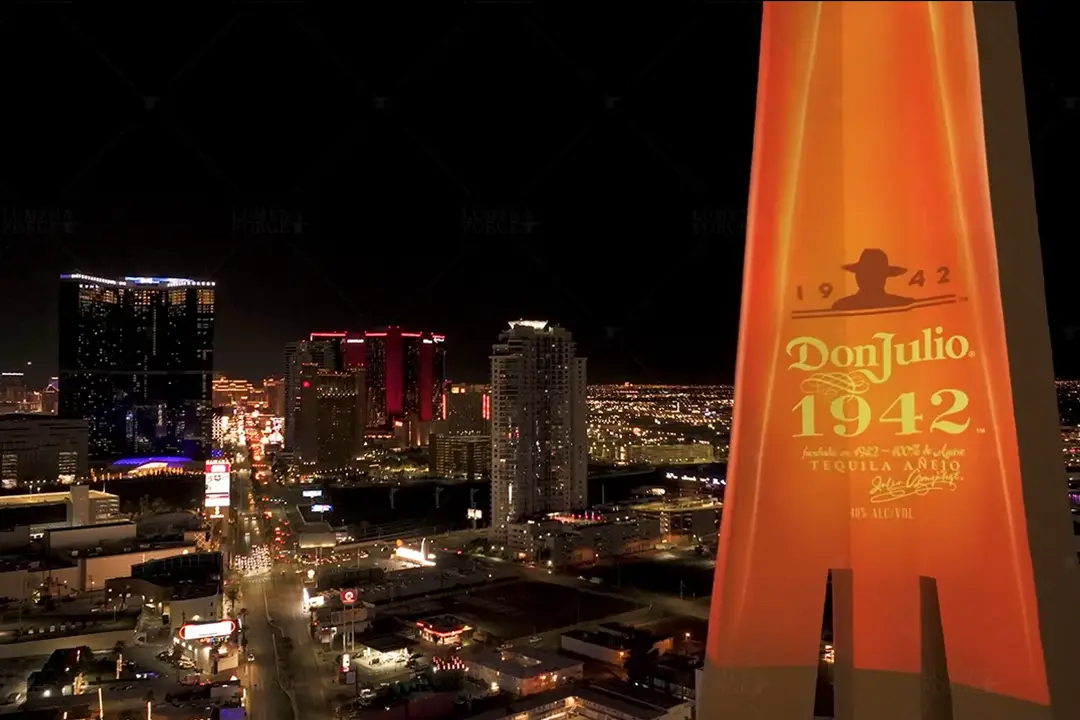
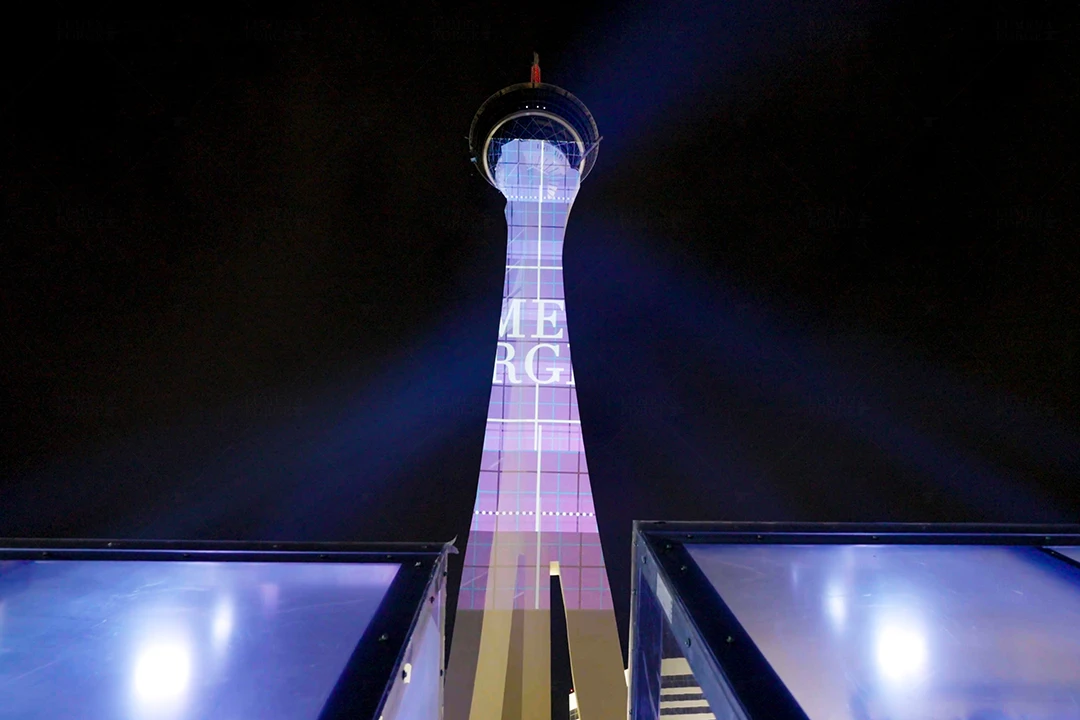
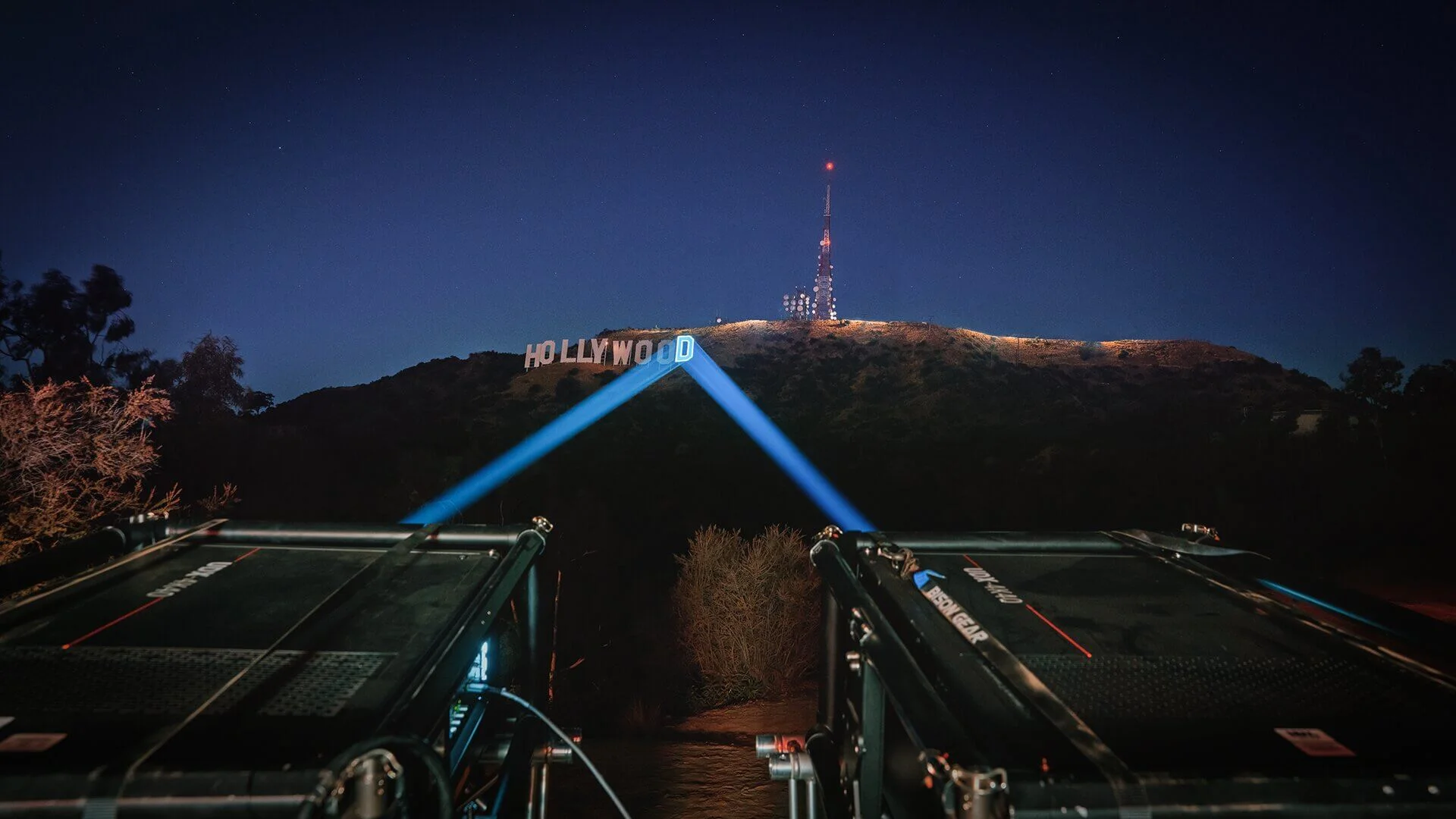
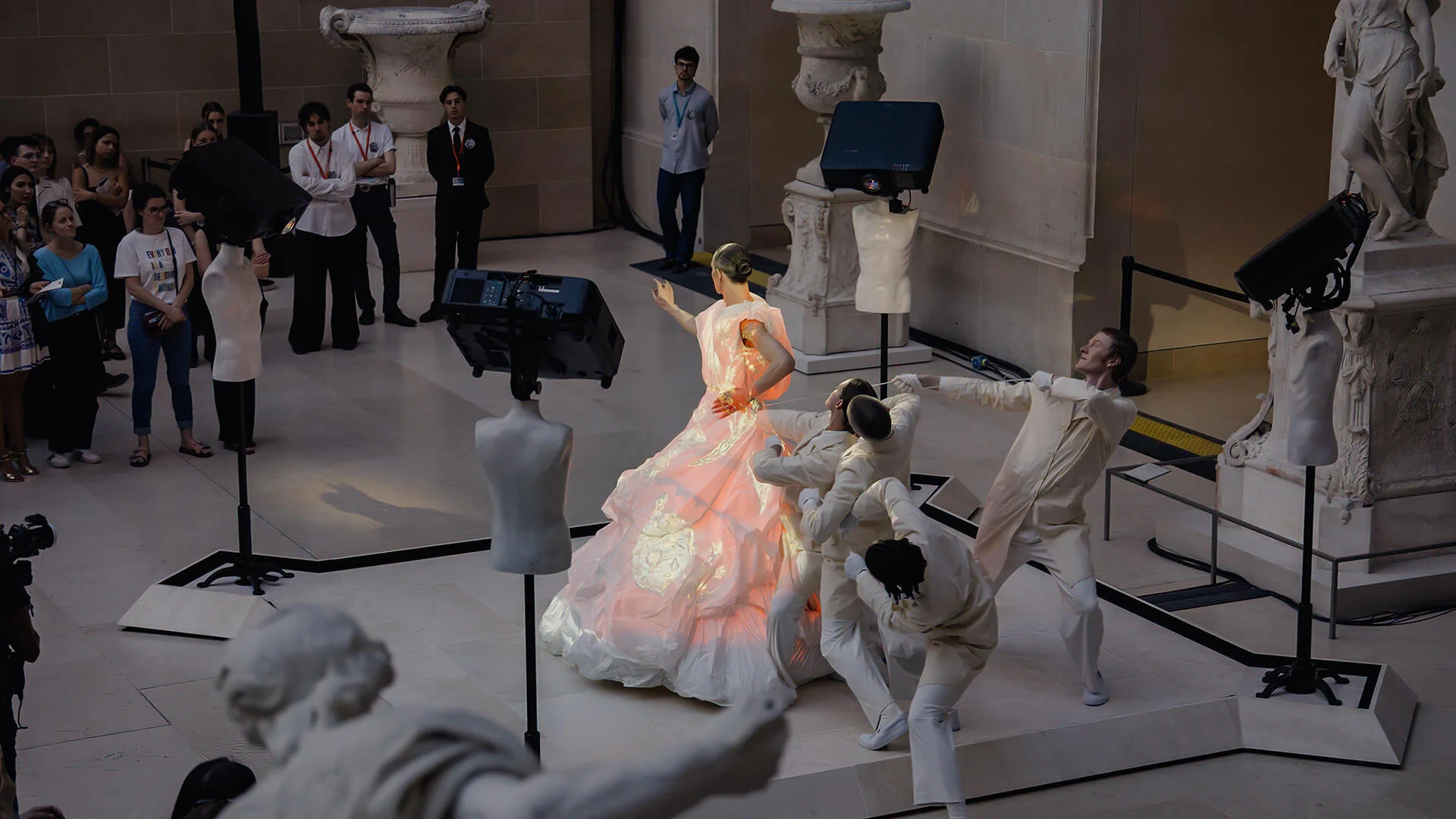
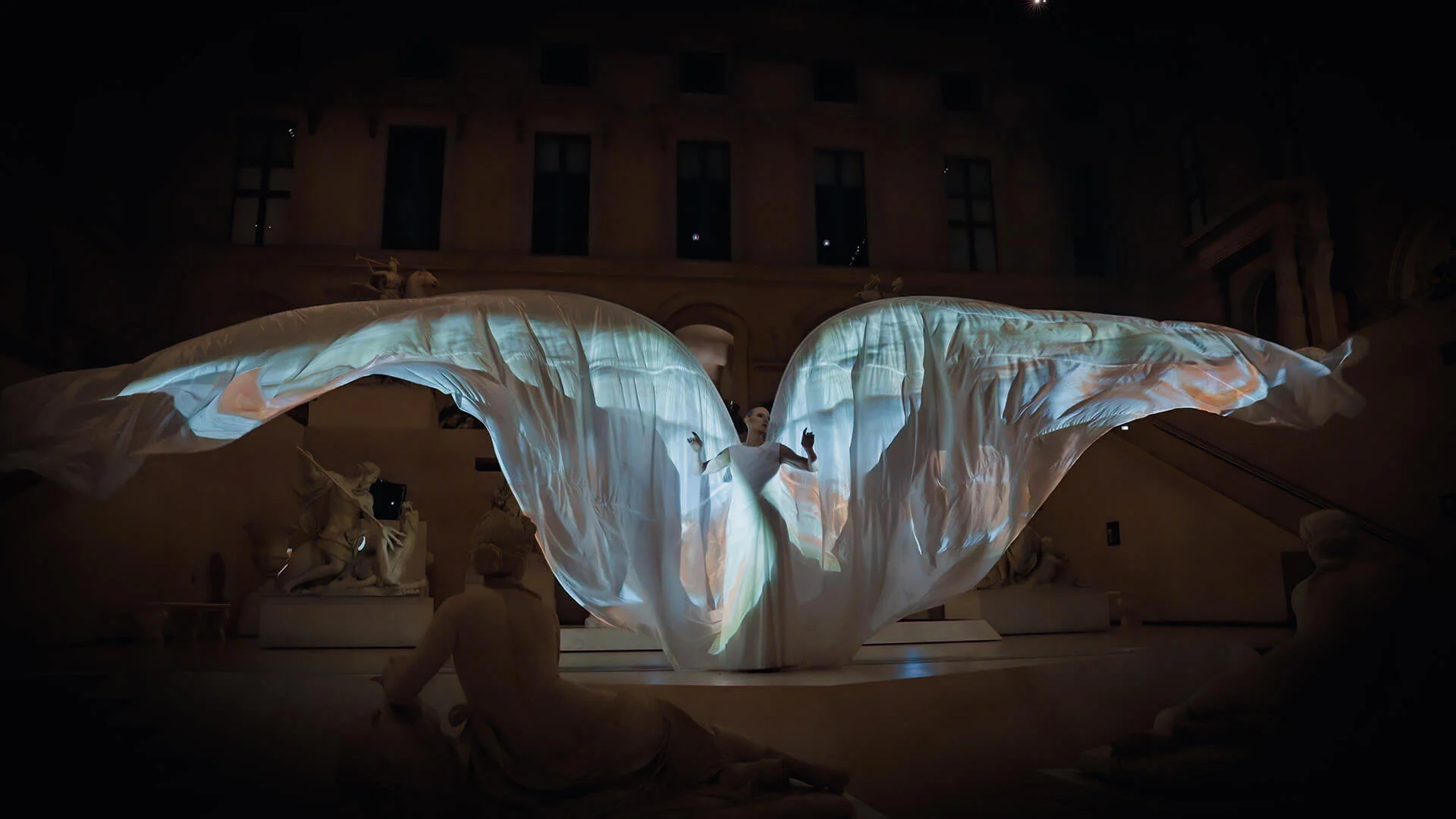
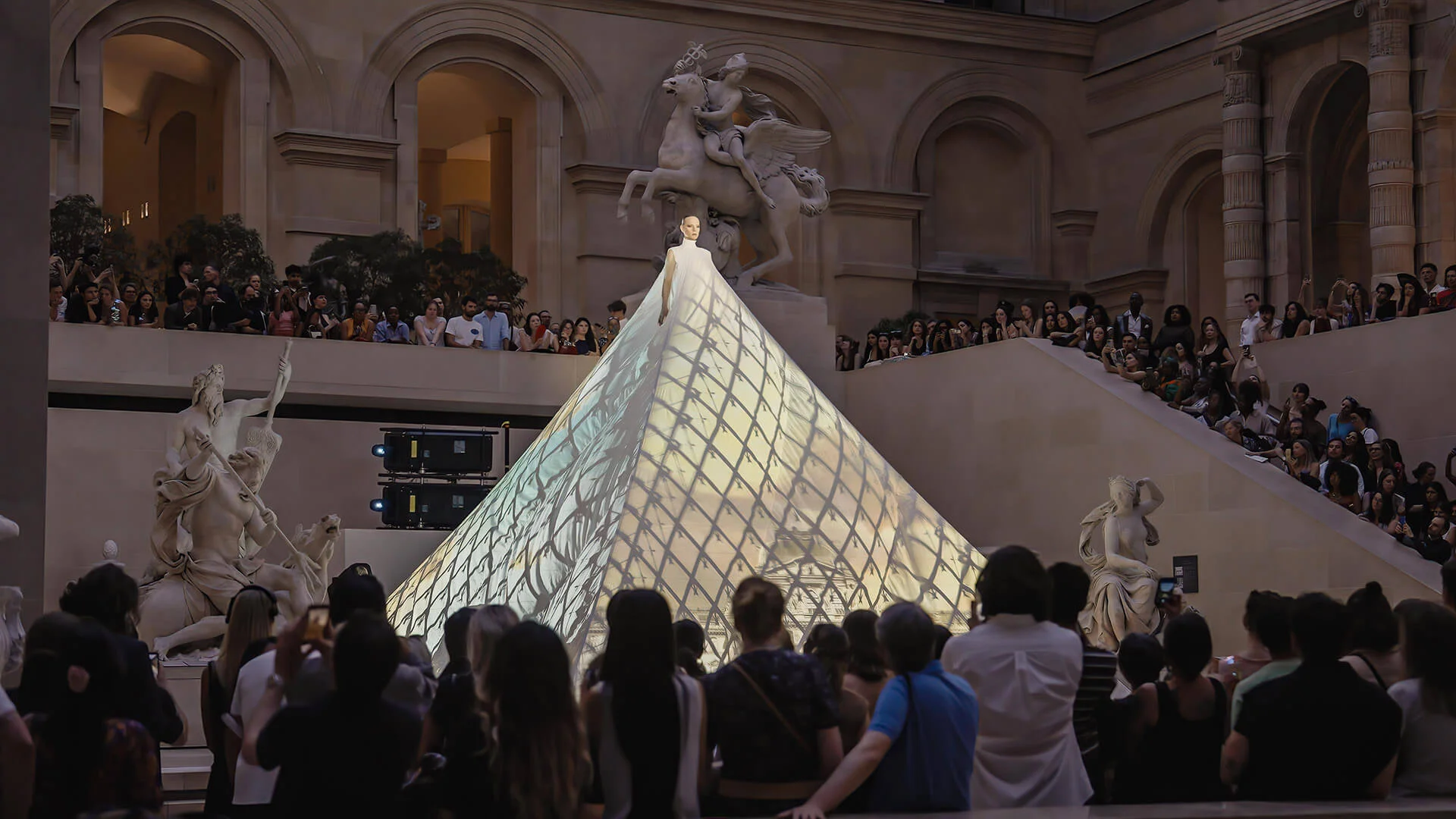
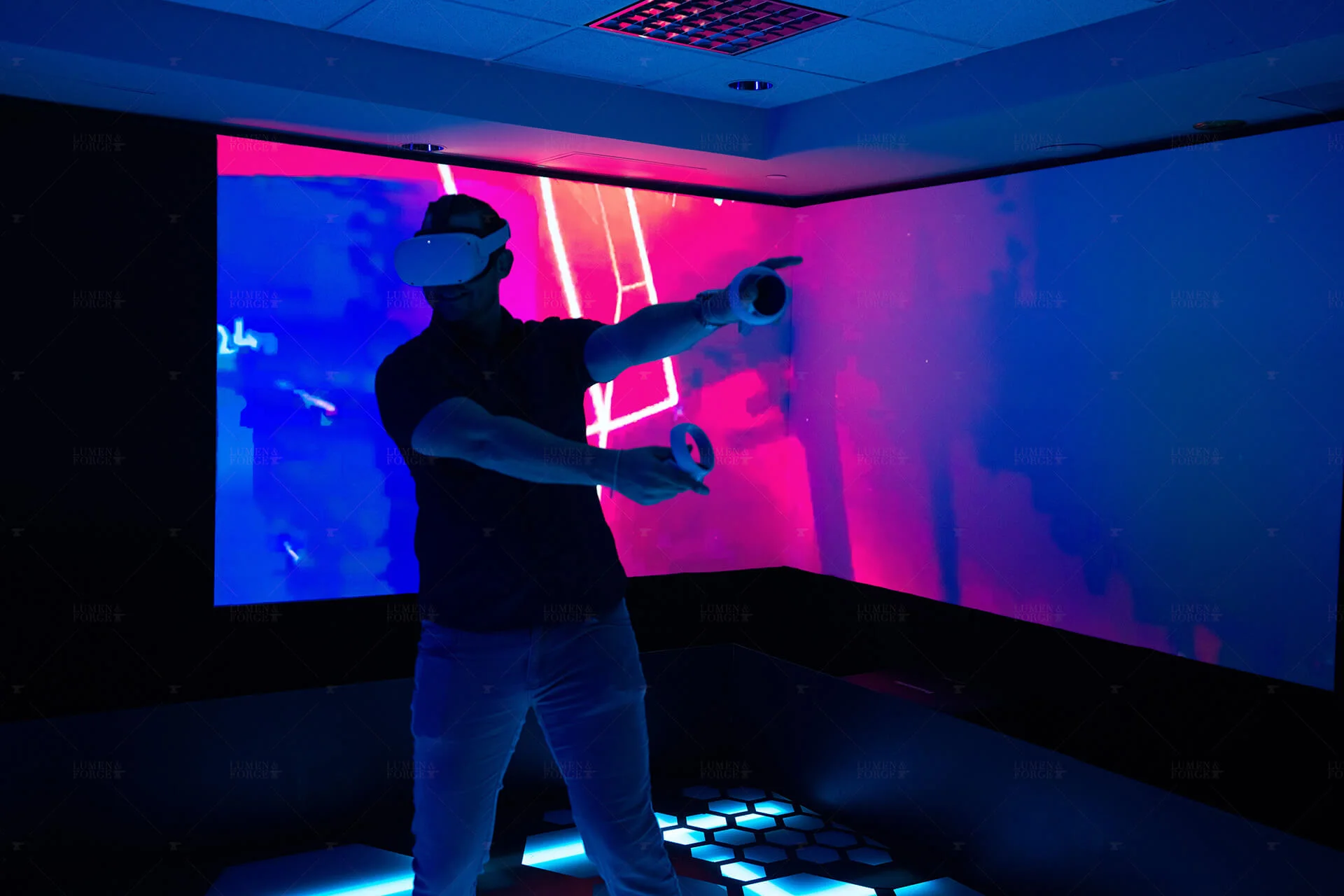
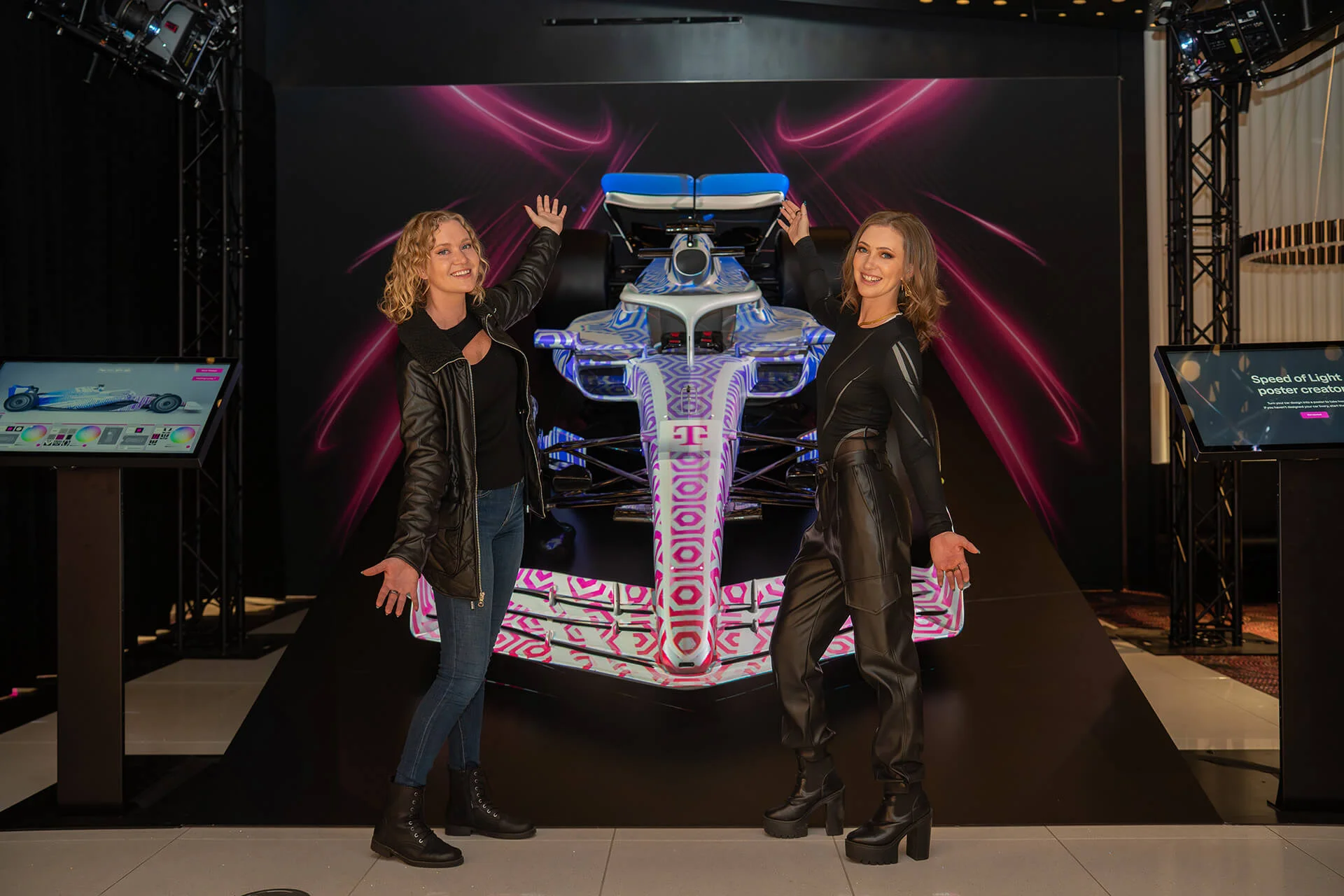
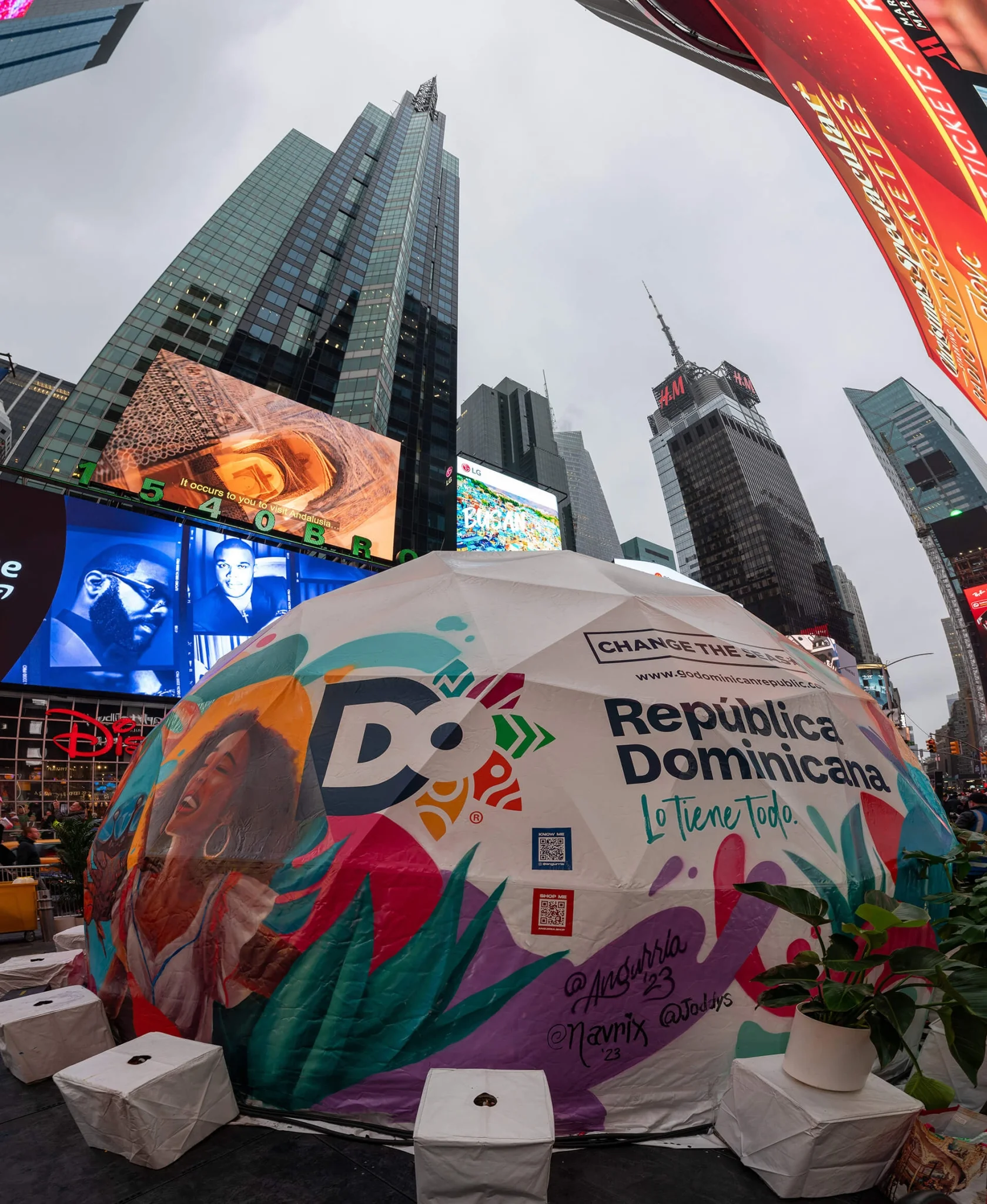
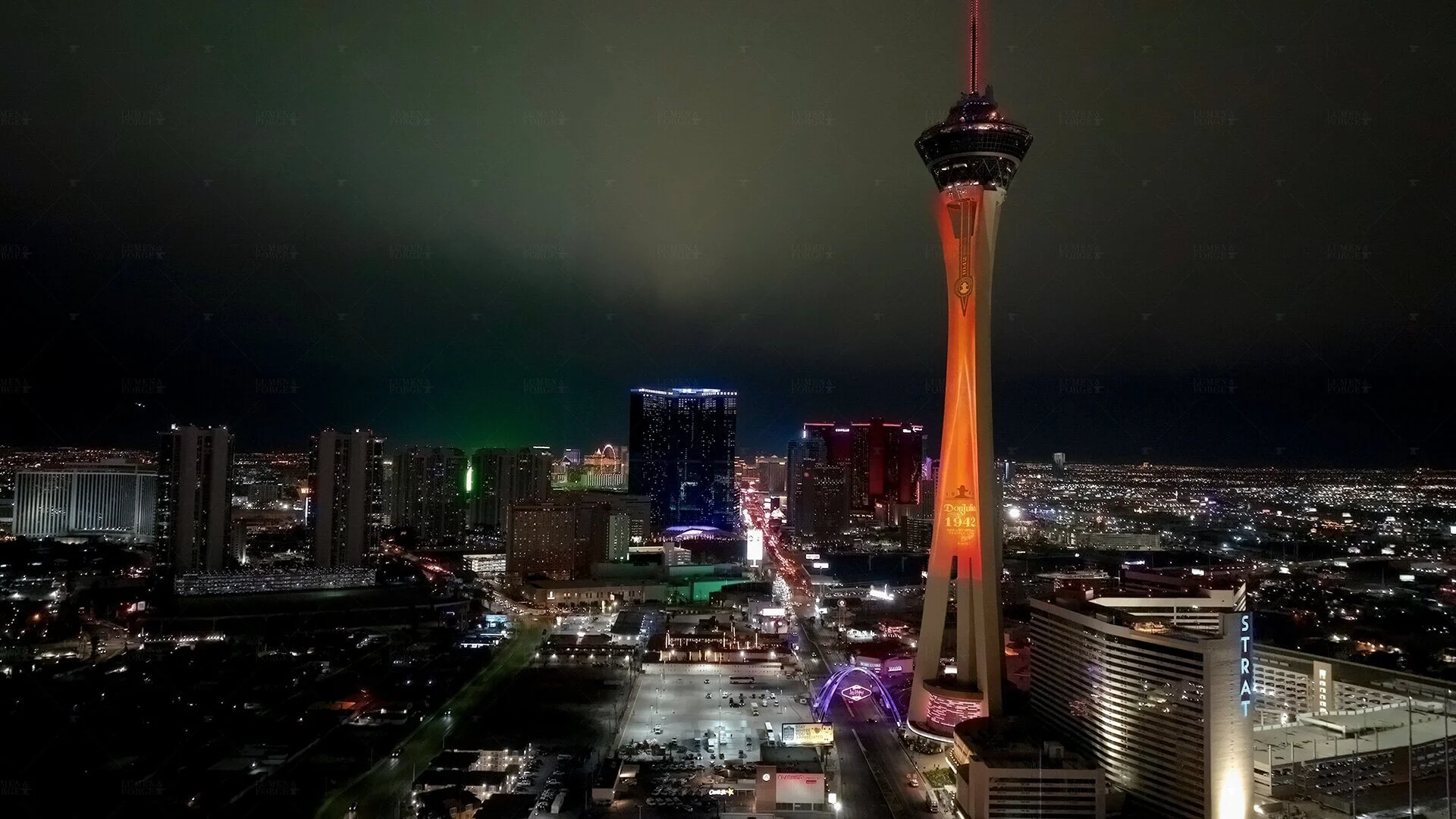
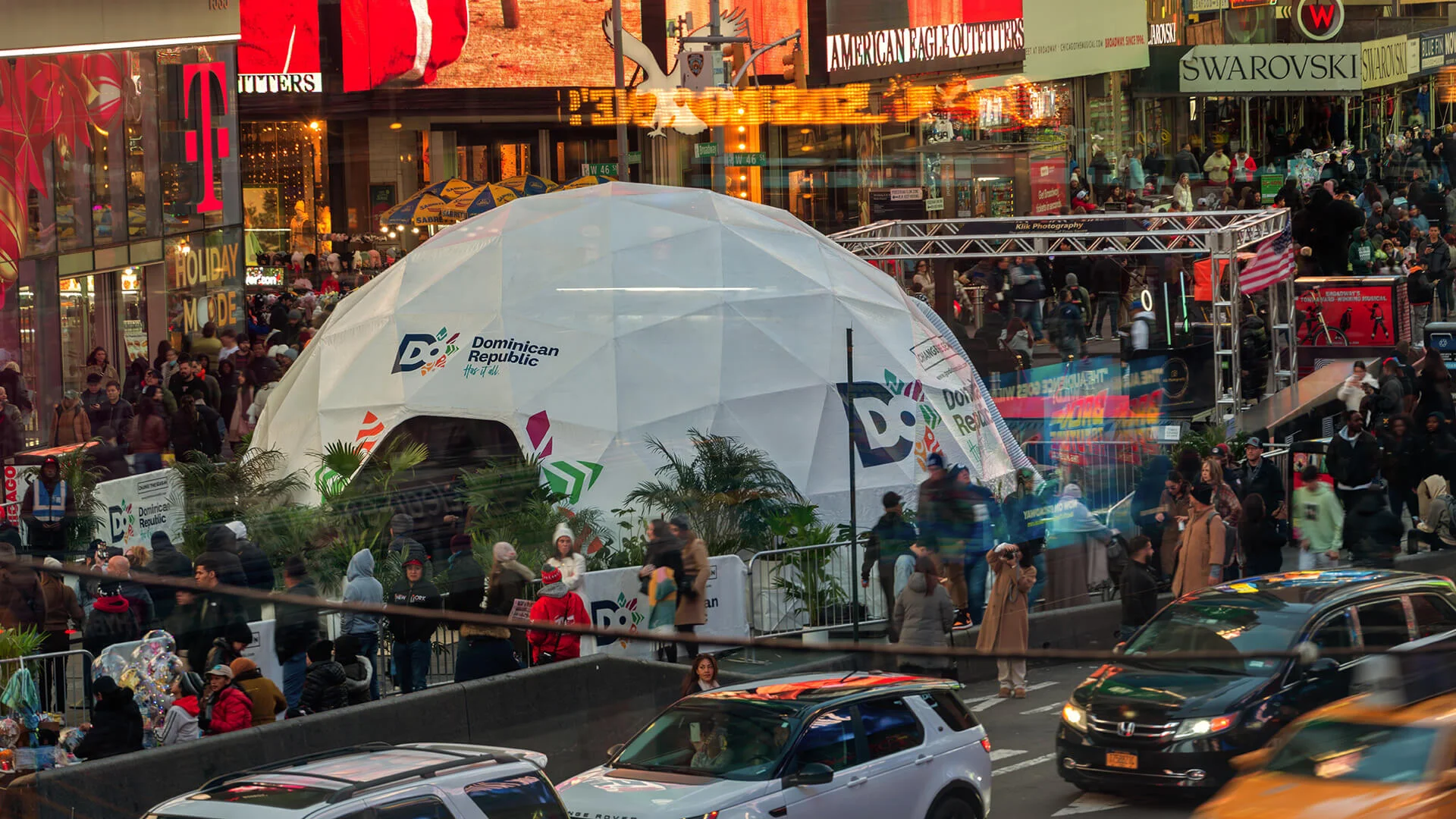
Take A Closer Look
A Deeper Look Into Animation & Visual Story Telling
A Deeper Look Into
Projection Mapping
Projection Mapping: Turning Any Surface Into a Story
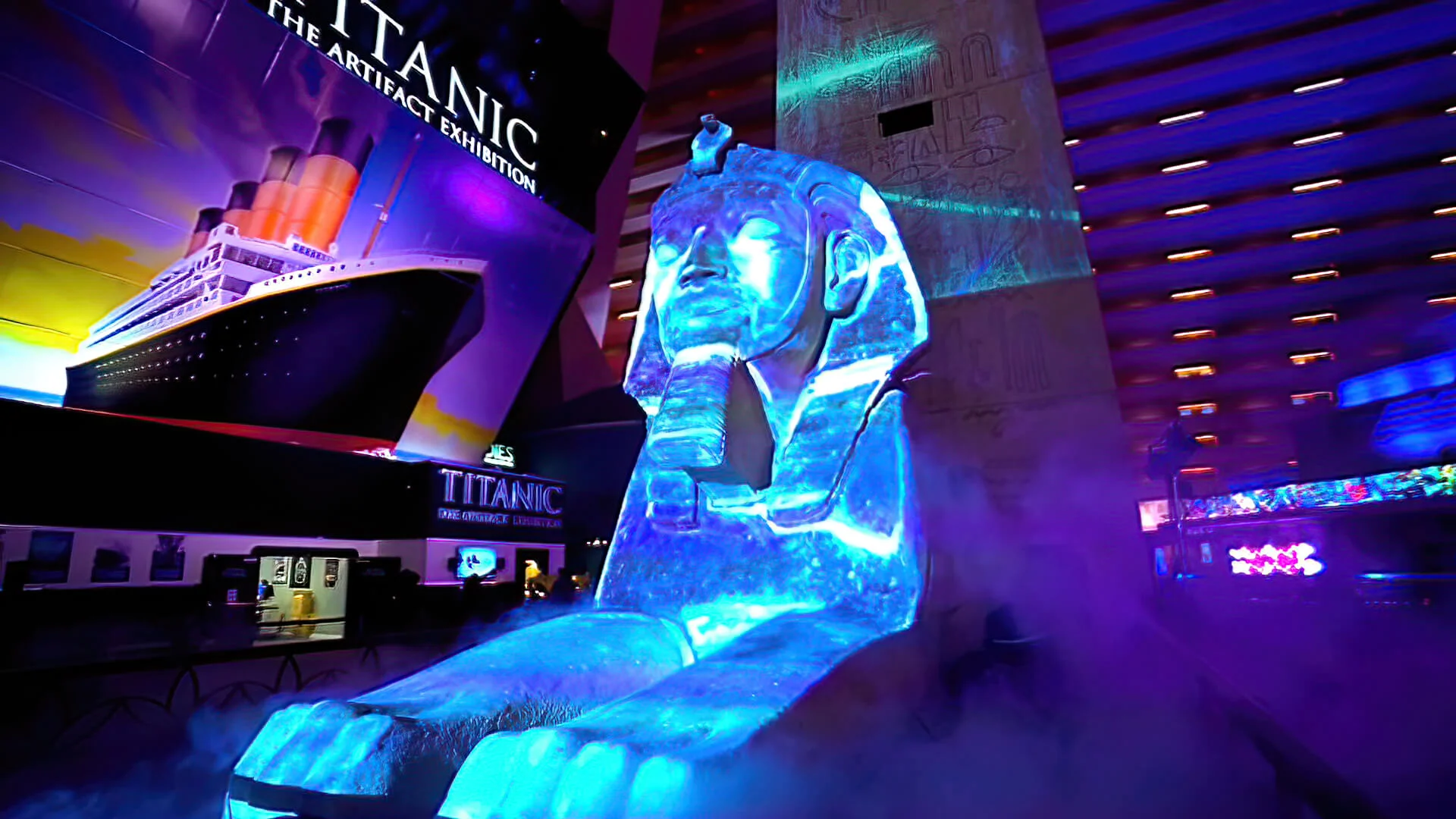
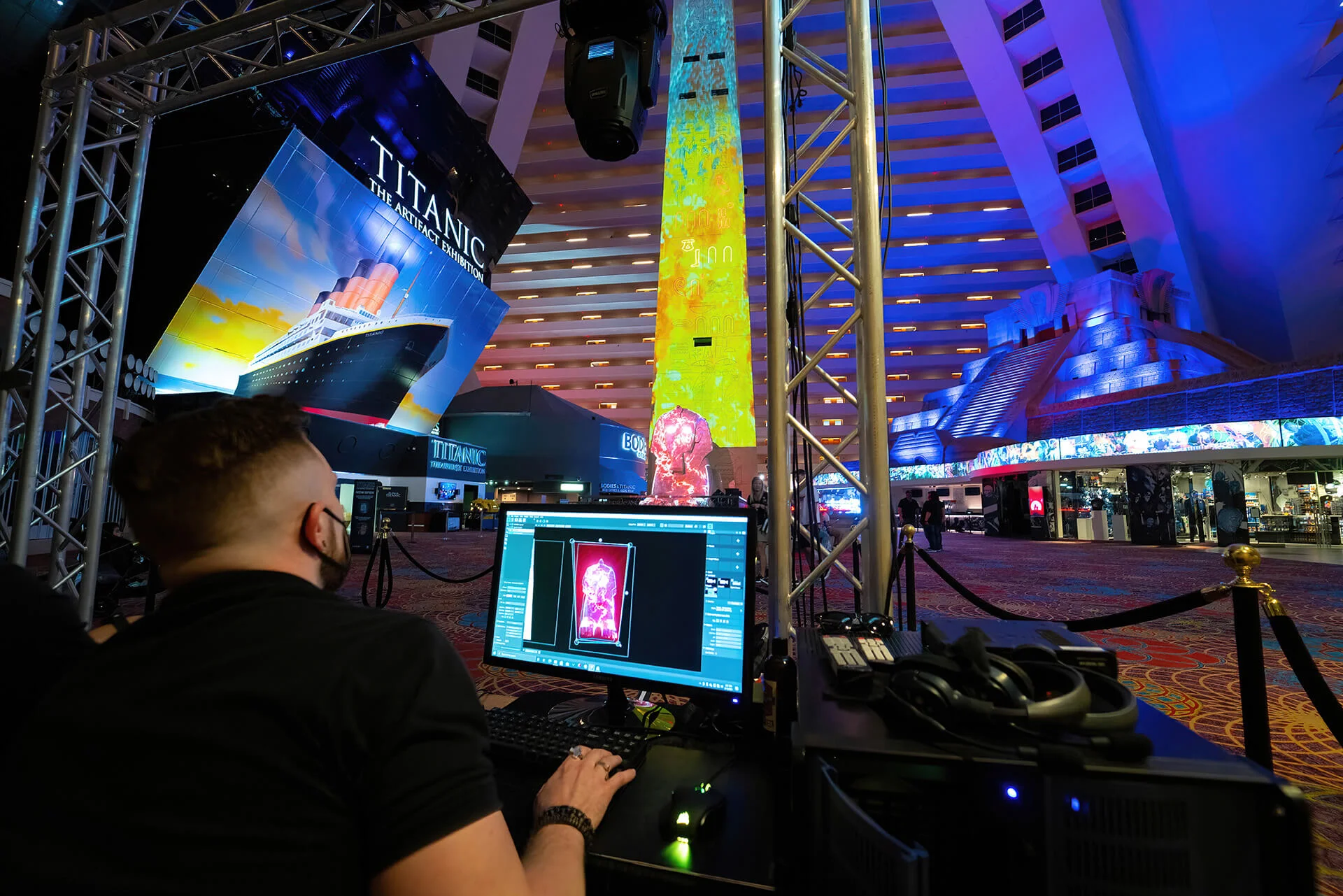
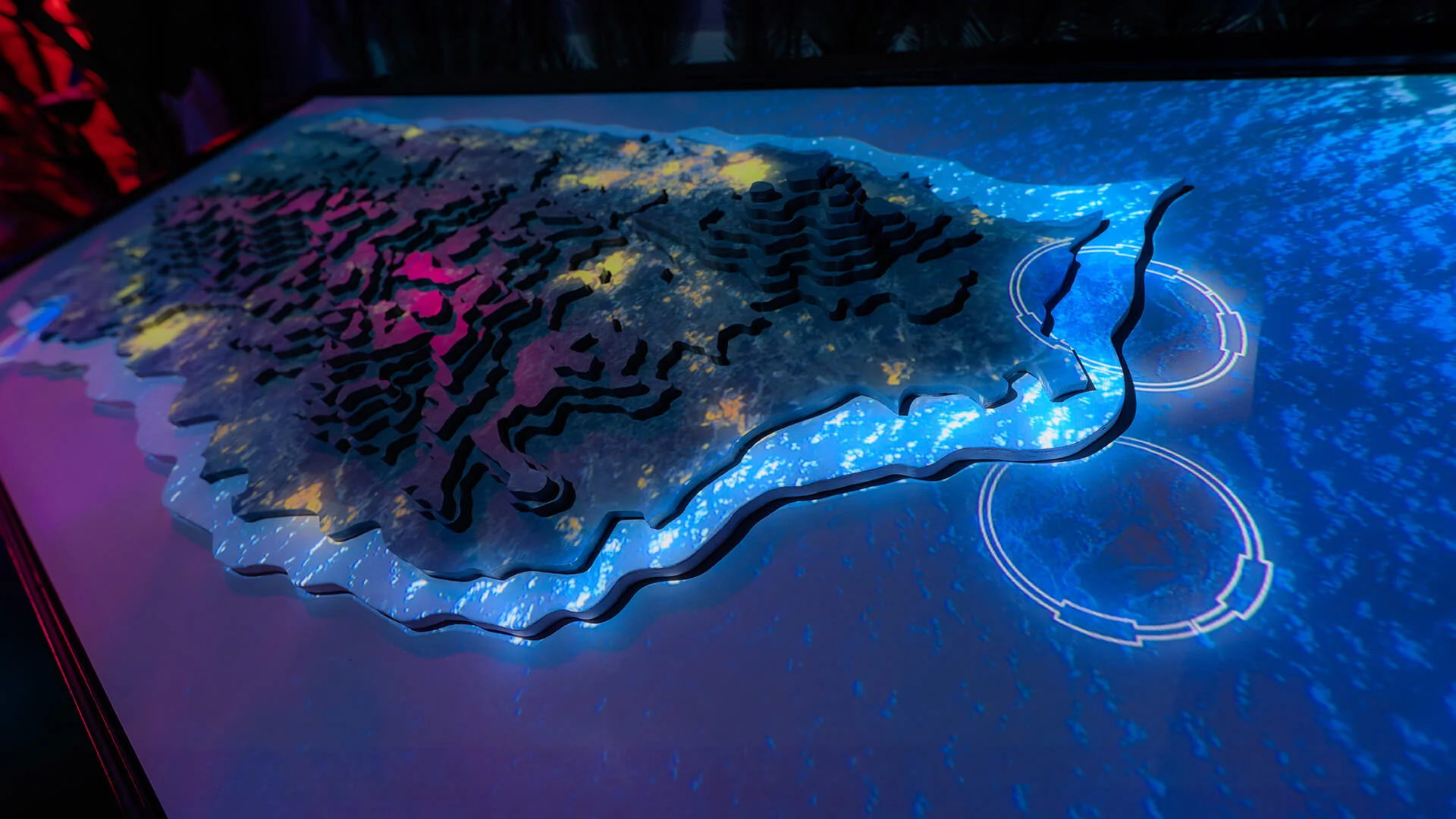
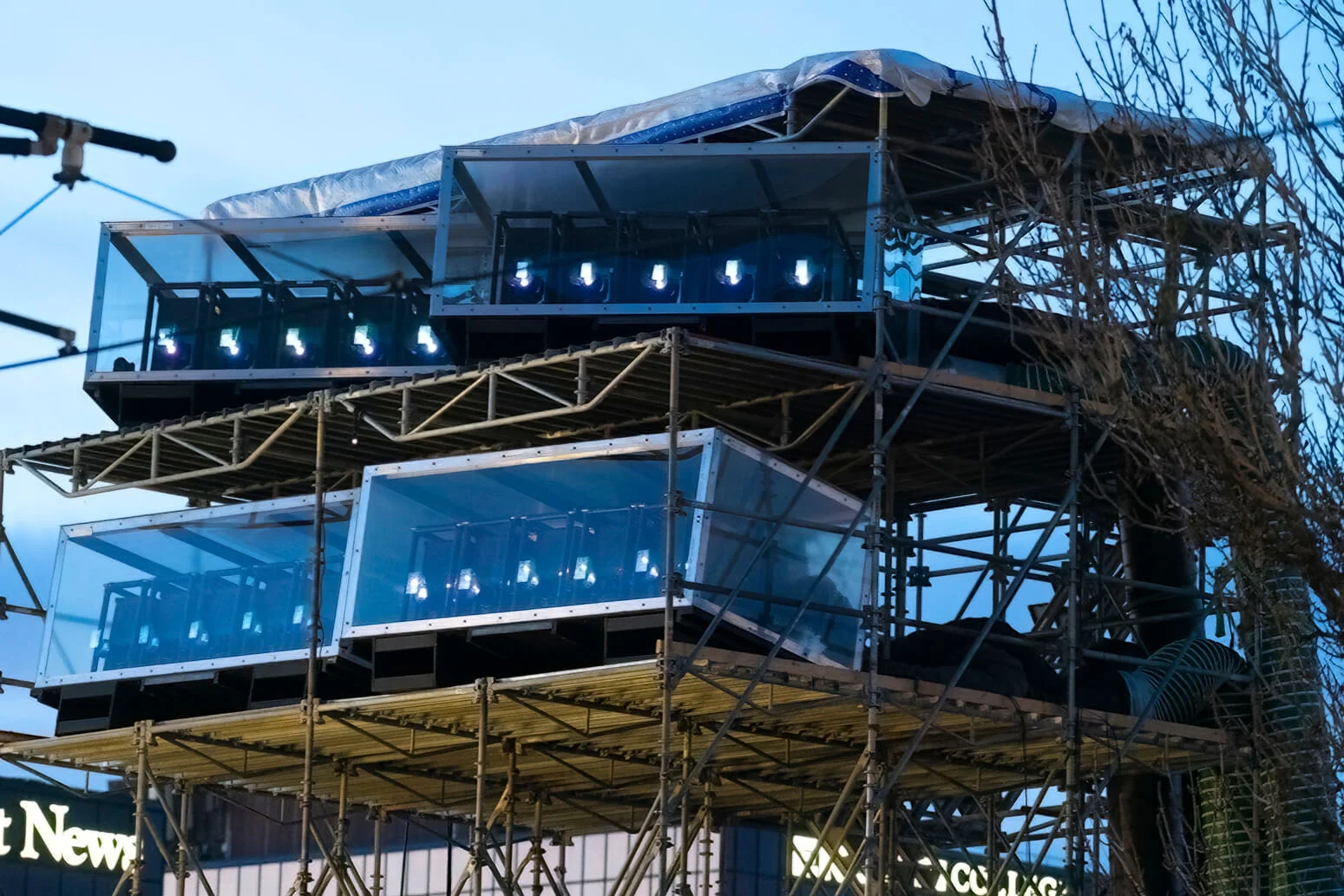
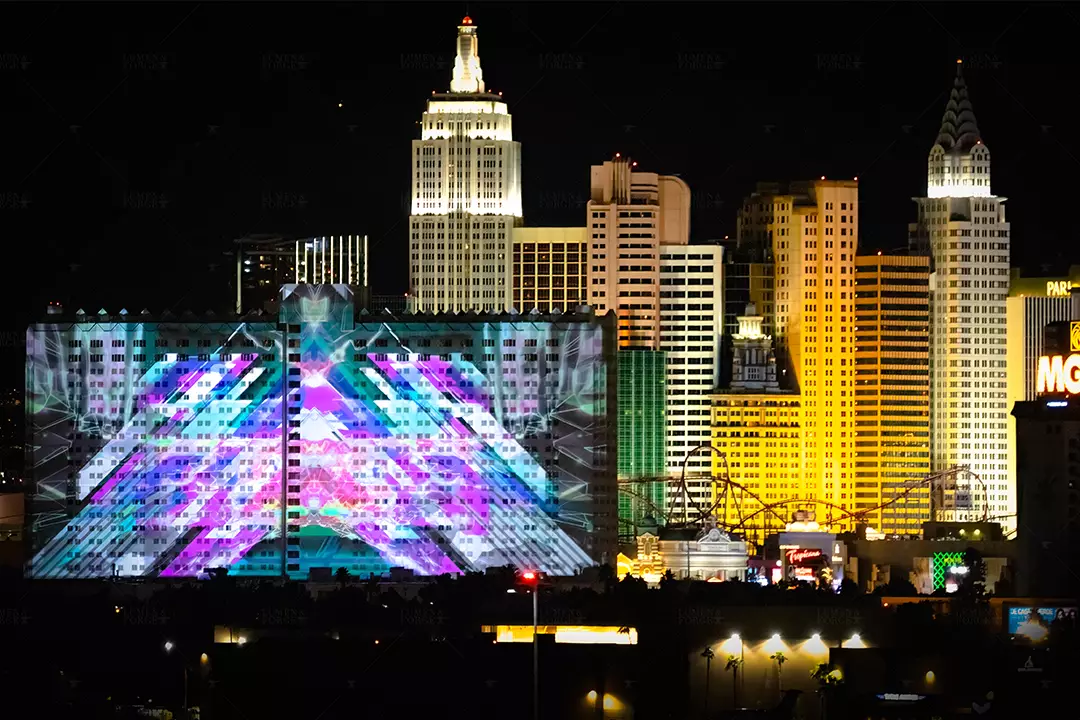
Projection mapping is the process of aligning projected light to the exact geometry of a physical surface, so the image bends, wraps and conforms to what it lands on. That is the difference from a flat screen. A screen gives you a rectangle that plays video; projection mapping treats a building, a sculpture or an interior wall as the canvas, which means the artwork has to be built around real dimensions, textures and sightlines. The result reads as though the surface itself is changing.
Cincinnati gives that approach plenty of room. Facades, entryways and event spaces at Duke Energy Convention Center, Paycor Stadium, Great American Ball Park, TQL Stadium, Heritage Bank Center and Cincinnati Music Hall can carry large-scale building projection. Object mapping suits the Cincinnati Museum Center at Union Terminal, the Cincinnati Art Museum and the Roebling Suspension Bridge, while Washington Park, Fountain Square and Smale Riverfront Park work well for outdoor installations and room-scale environments.
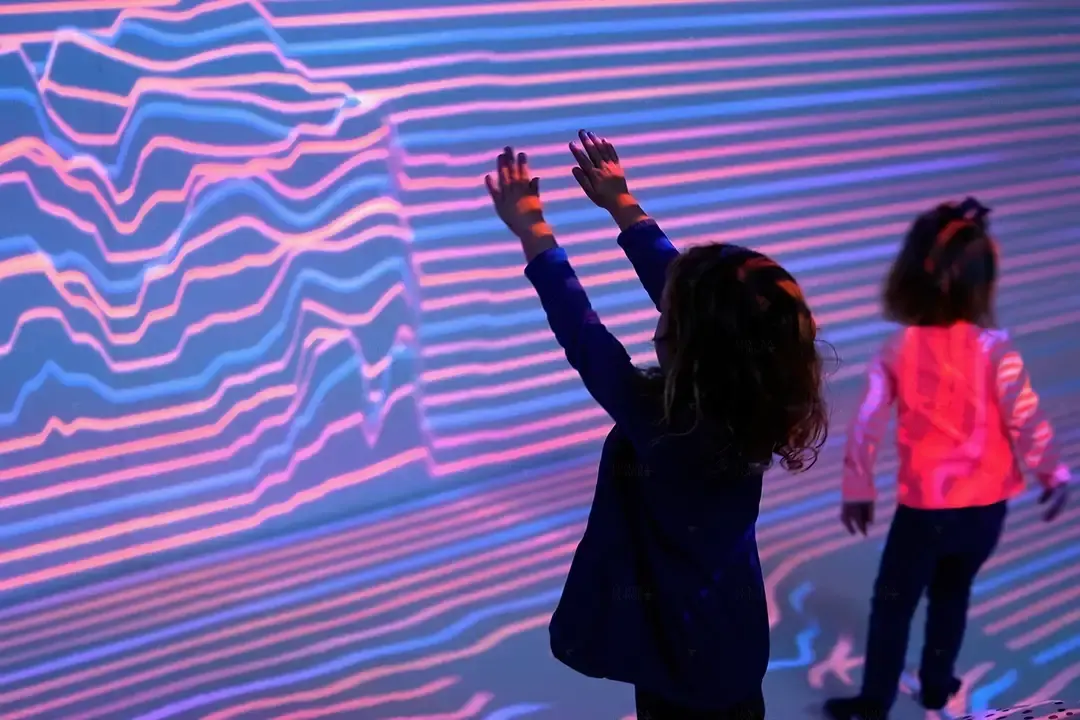
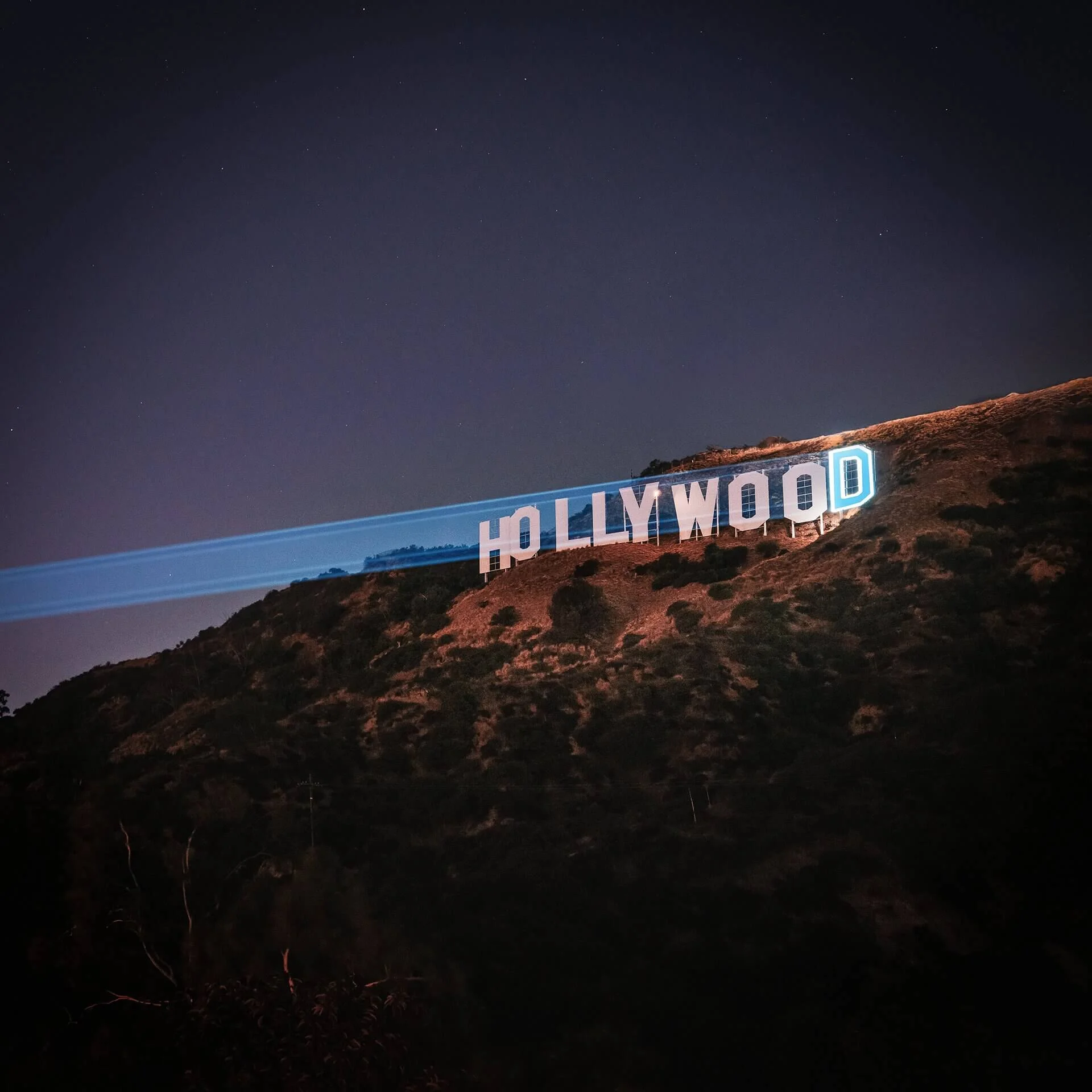
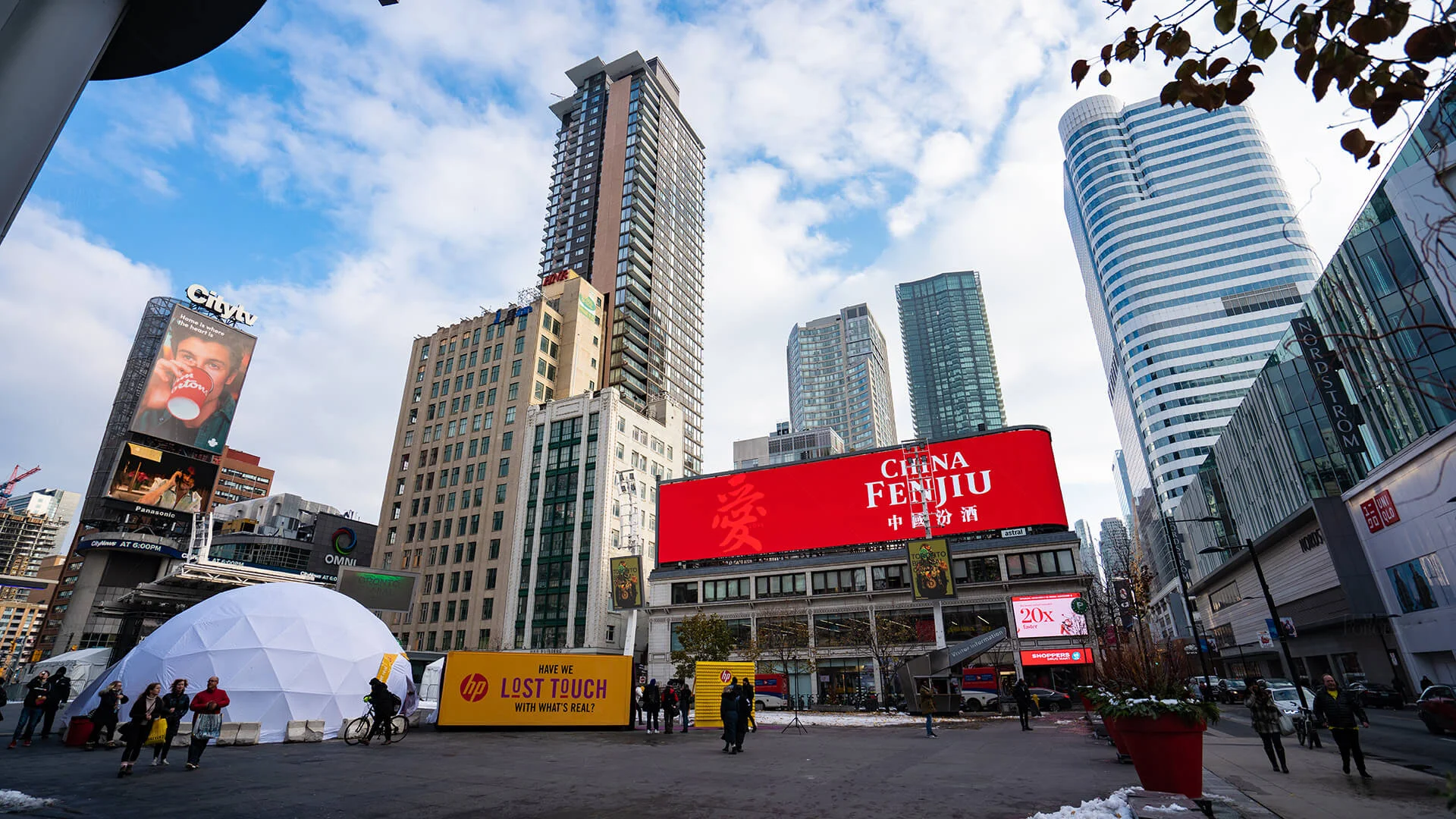
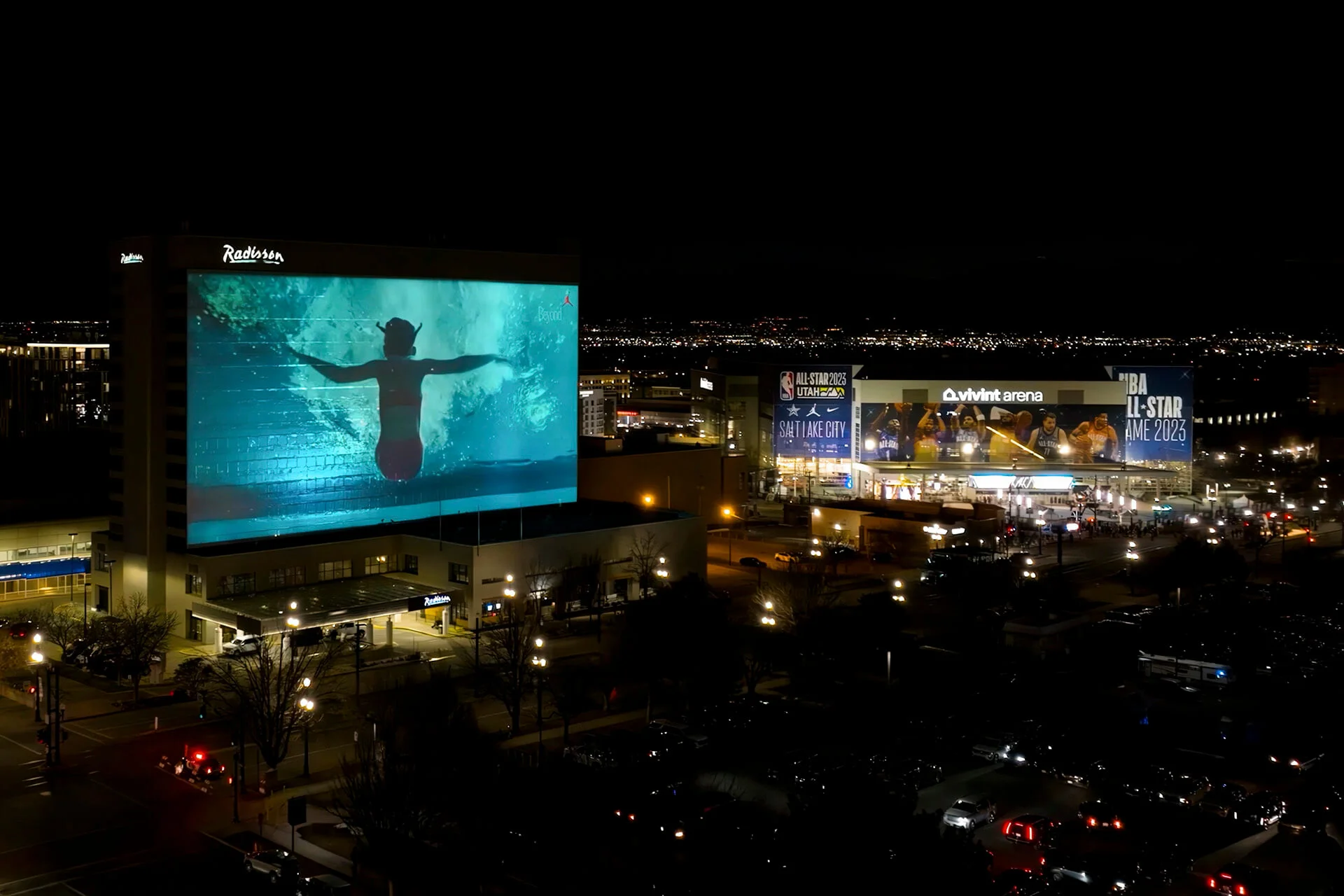
Building and Architectural Projection
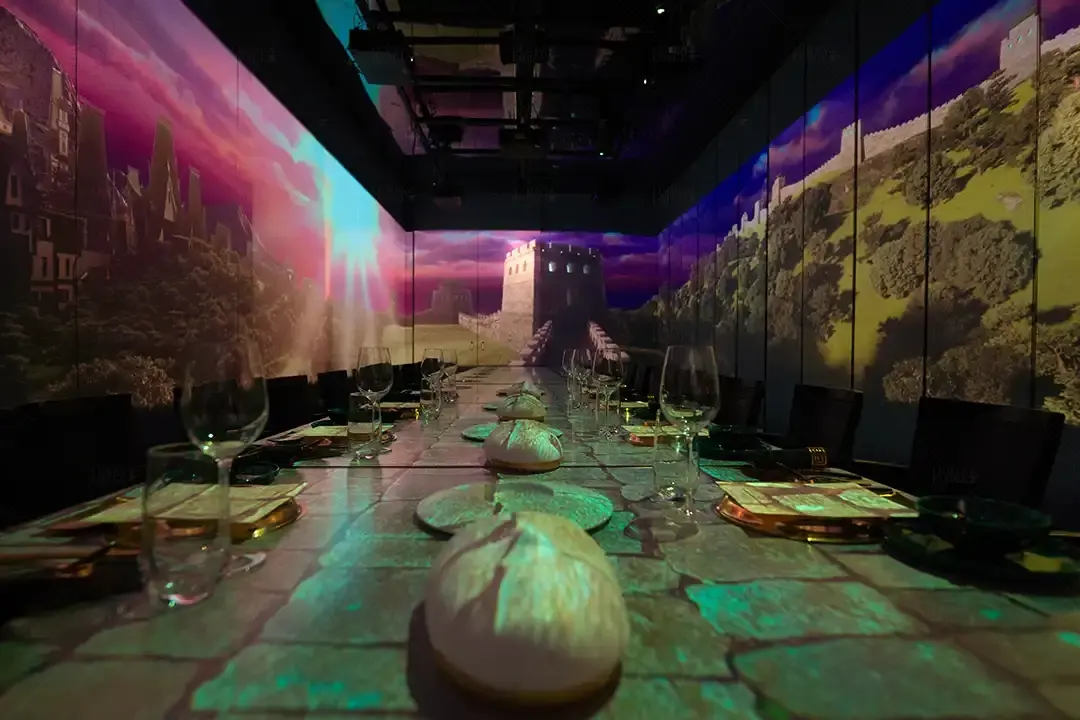
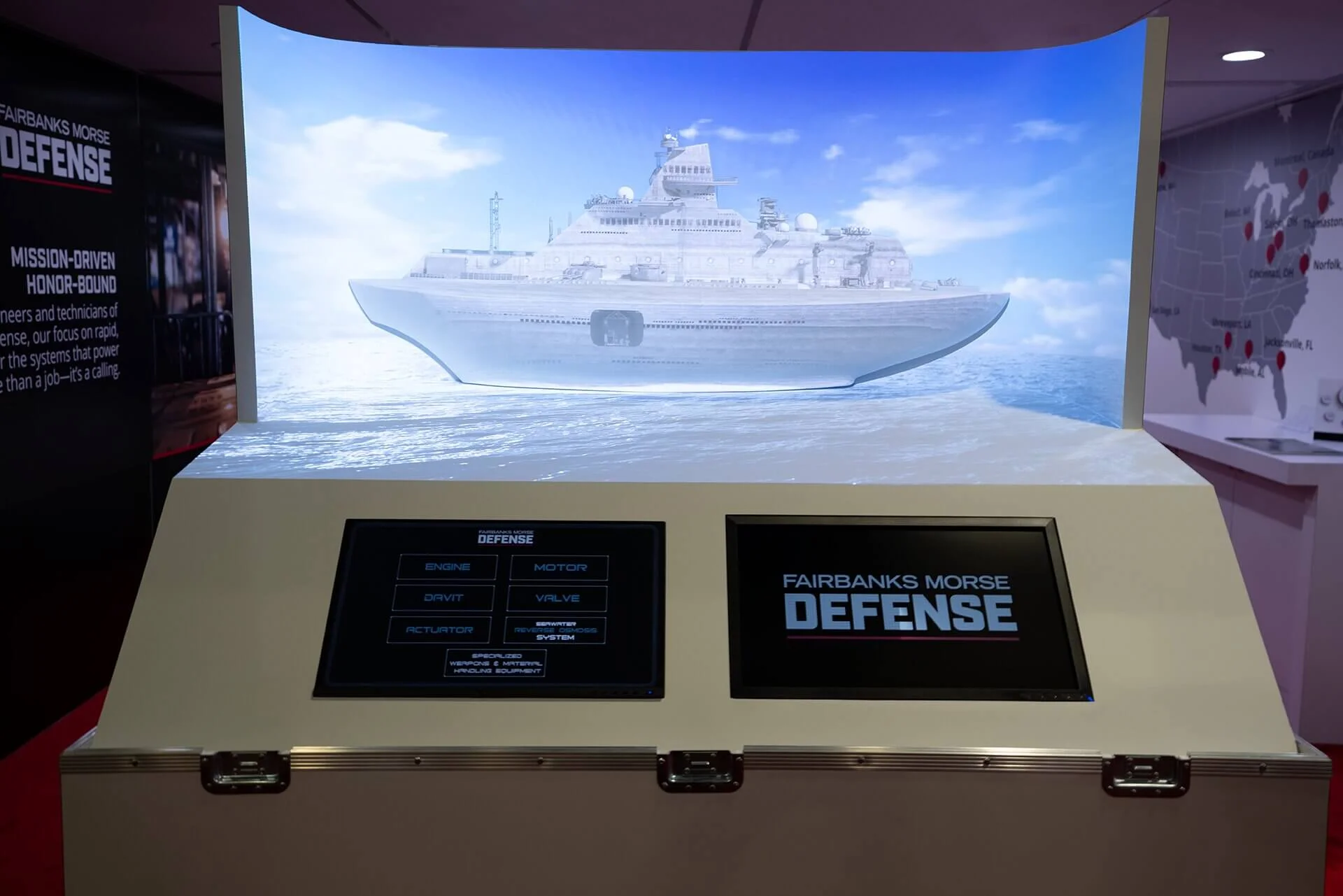
Object and Product Projection Mapping
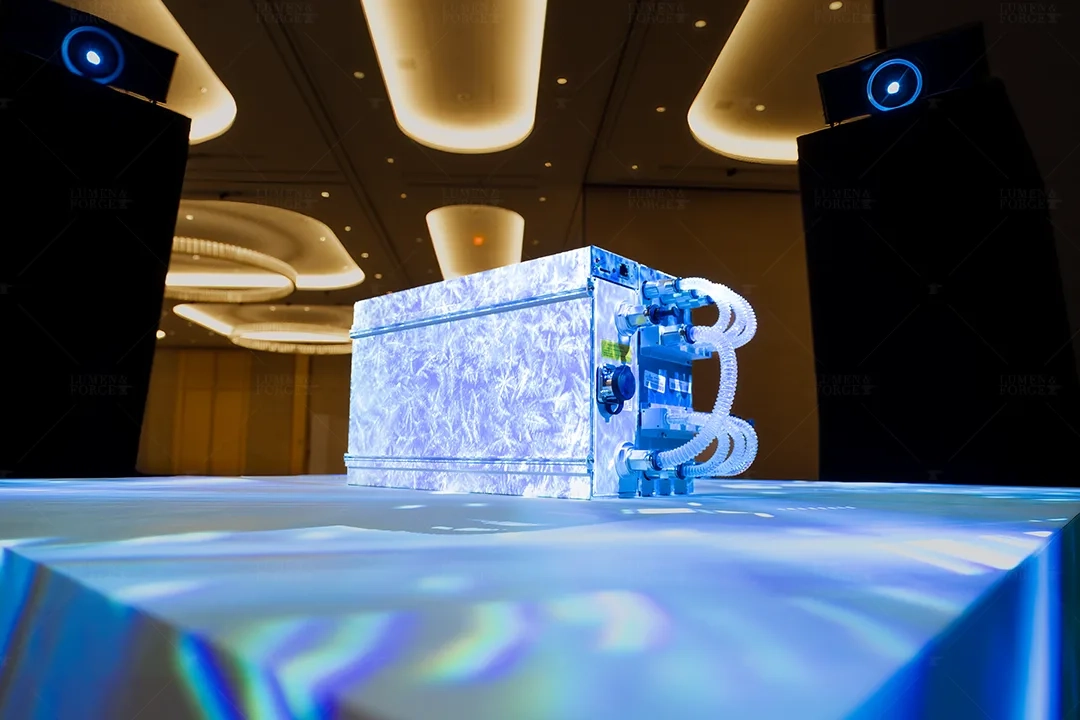
Interactive Projection
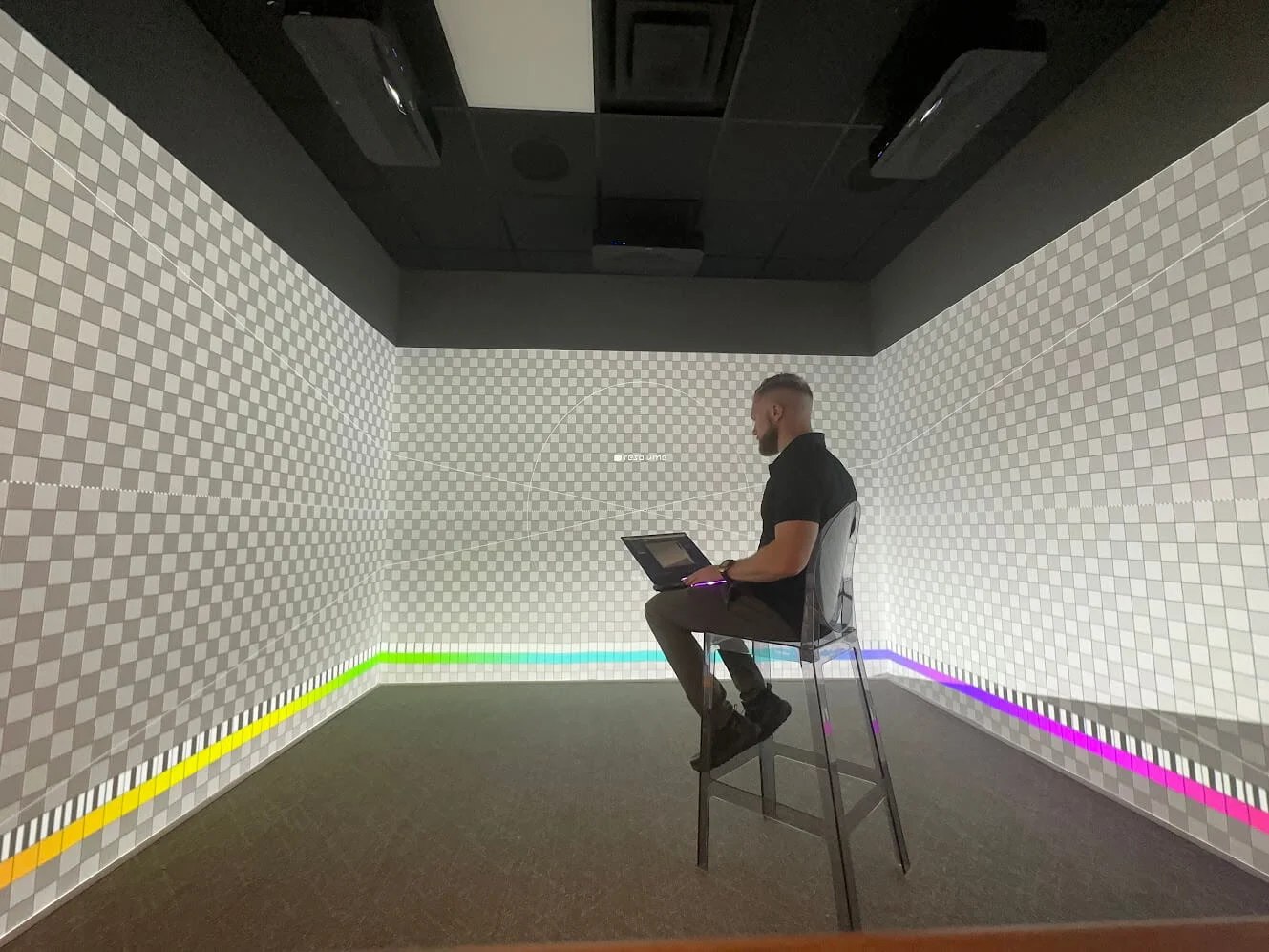
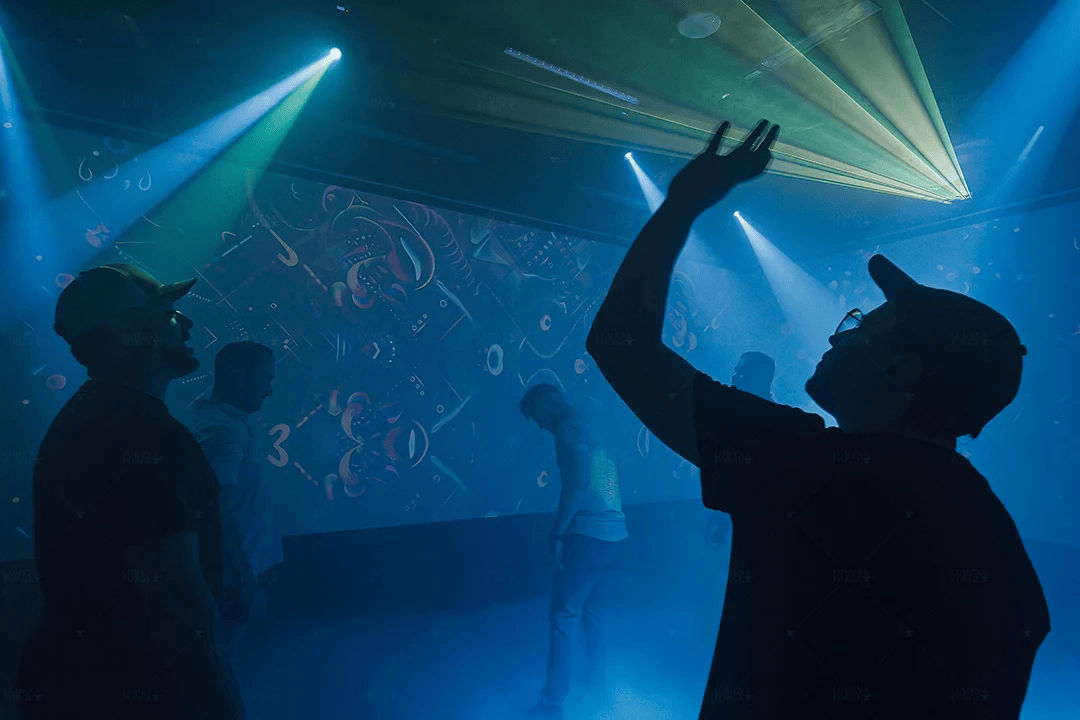
Room and Environment Mapping
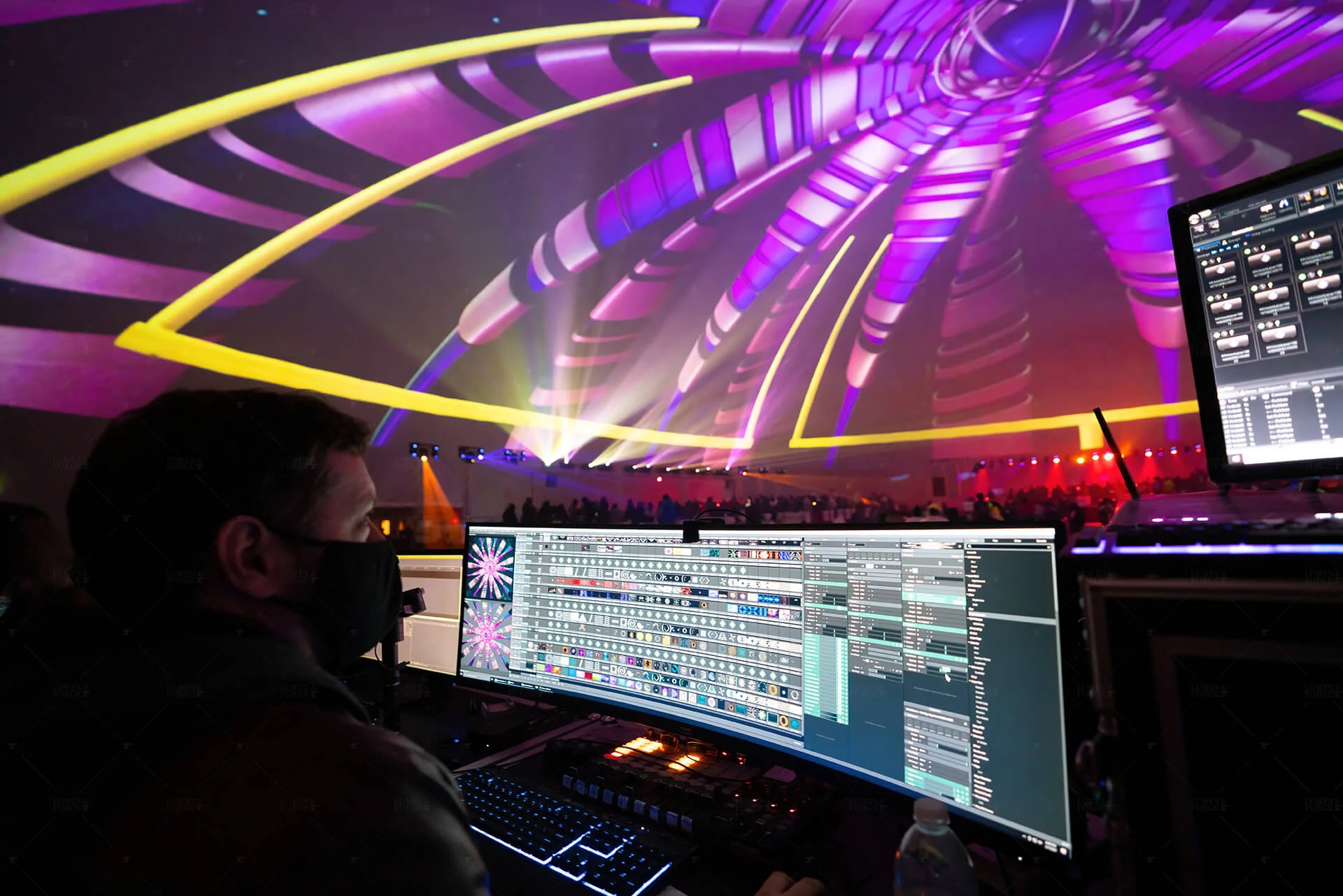
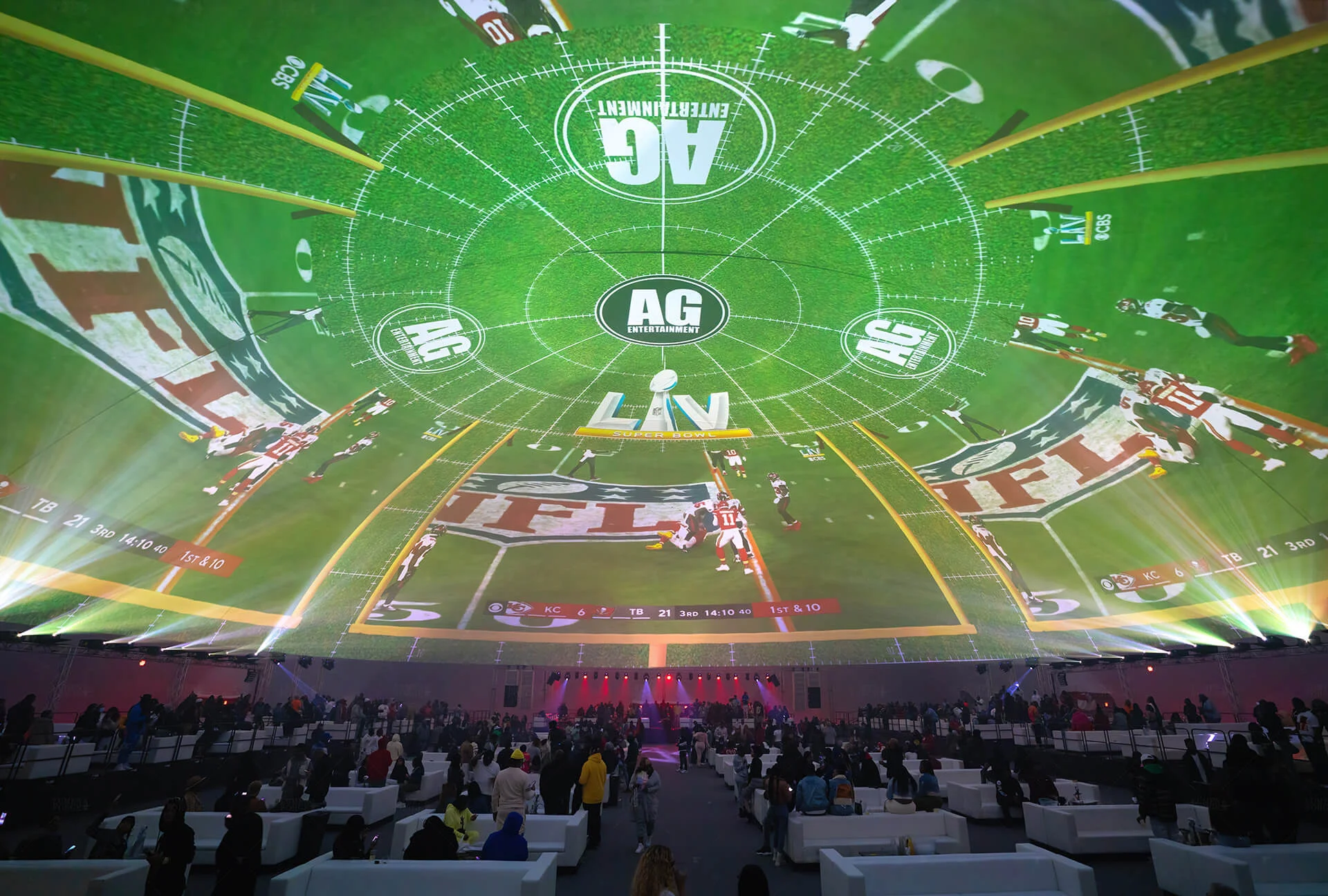
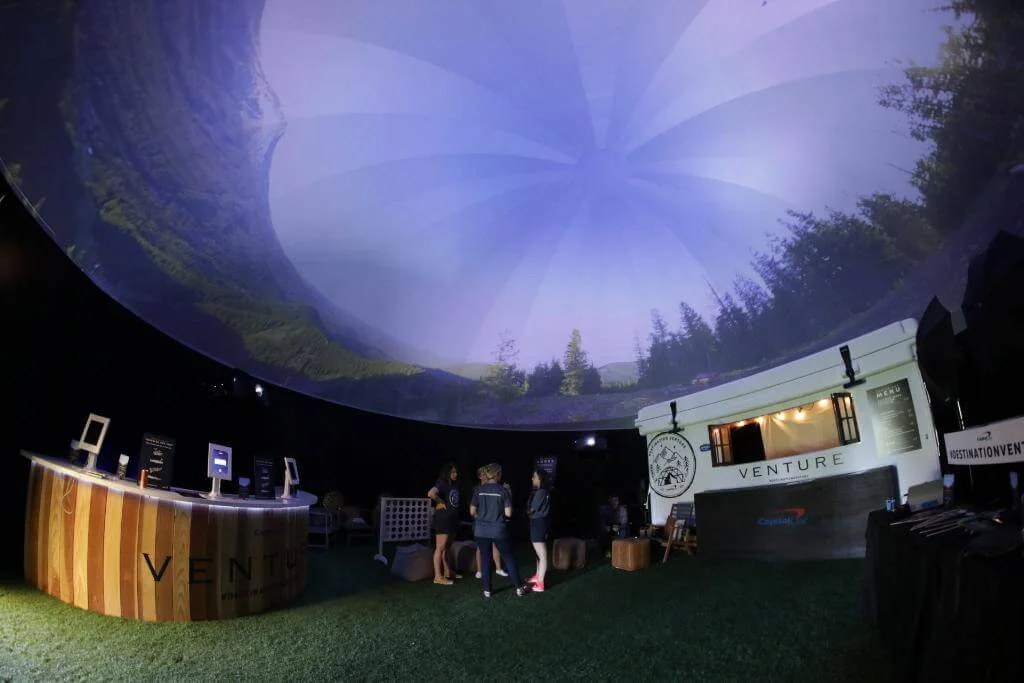
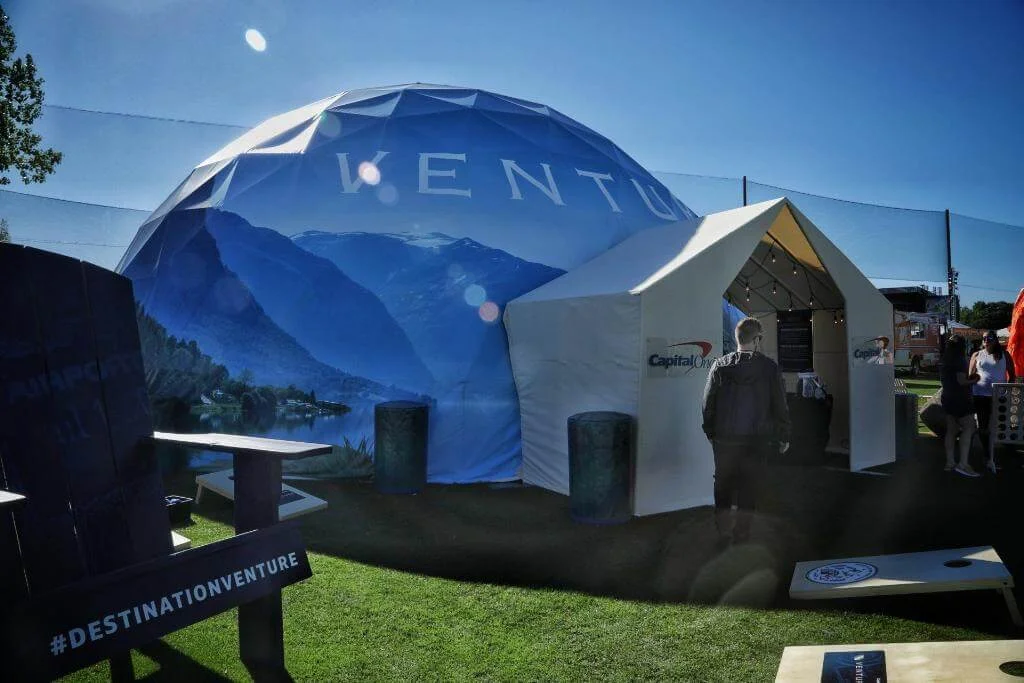
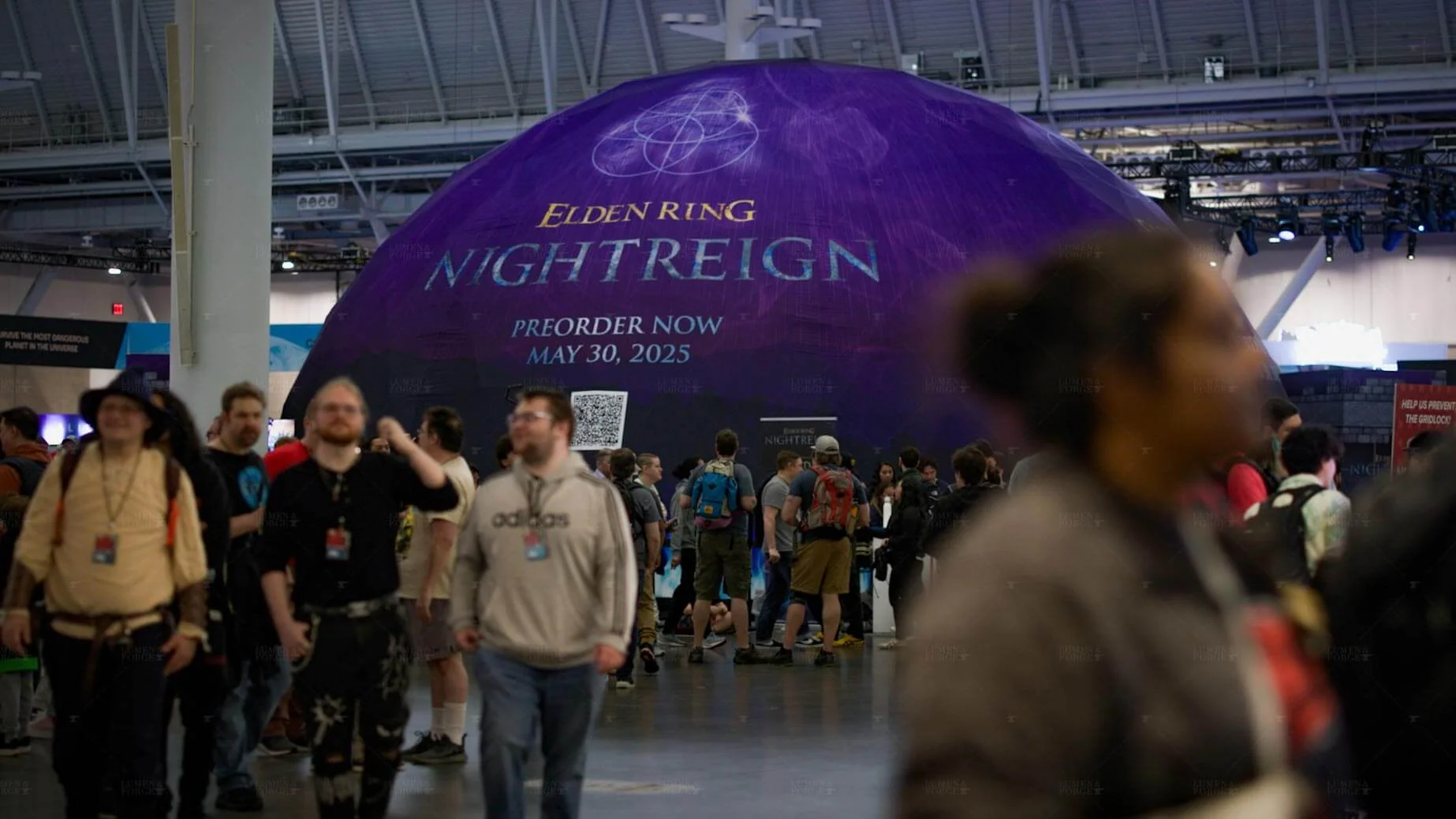
Dome Projection
Why Cincinnati Is a Natural Fit for Projection Mapping
Cincinnati audiences are not casual spectators. They turn out in force for the Flying Pig Marathon in May, pack Paycor Stadium for the Cincinnati Music Festival in July, line the Ohio River for the WEBN Fireworks at Riverfest over Labor Day weekend, and fill Sawyer Point and Yeatman's Cove for Oktoberfest Zinzinnati in September. That calendar sets a high bar. People here have seen large-scale spectacle repeatedly, and they bring real expectations to anything that asks for their attention.
The city's audience is also unusually varied. Consumer packaged goods brands and grocery and retail marketers compete for the same foot traffic as banking and financial services firms, healthcare organizations, brewers and hospitality operators. Professional sports franchises draw crowds to Paycor Stadium, Great American Ball Park and TQL Stadium, while arts and cultural organizations program Cincinnati Music Hall, the Cincinnati Art Museum and the Cincinnati Museum Center at Union Terminal. A single activation in Cincinnati often has to read clearly to a family on a Saturday afternoon, a corporate sponsor group on a Thursday evening, and a late-night festival crowd on a Friday, all without losing its identity.
That mix is why spectacle alone falls short. A large, bright image can stop a crowd for a moment, but Cincinnati audiences reward work that gives them a reason to stay. They respond to content tied to the place they are standing in: the architecture of Washington Park or Fountain Square, the riverfront at Smale Riverfront Park, the silhouette of the Roebling Suspension Bridge, the scale of the Duke Energy Convention Center or Heritage Bank Center. Projection mapping earns its place here when the surface and the story are connected, not when a generic visual is dropped onto whatever wall is available.
The practical side matters too. Special events are scoped and permitted through the City Manager's Office Special Event Portal, with the Cincinnati Police Department issuing special event permits and Cincinnati Parks handling events on park land. Marketers who plan around those processes, and around the venue and festival calendar, get work that feels native to the city rather than imposed on it. In Cincinnati, the audience is loyal, knowledgeable and hard to impress twice with the same trick. Projection mapping succeeds when it is built for the specific crowd, the specific venue and the specific moment.
Lumen and Forge: Built for the Queen City's Big Nights
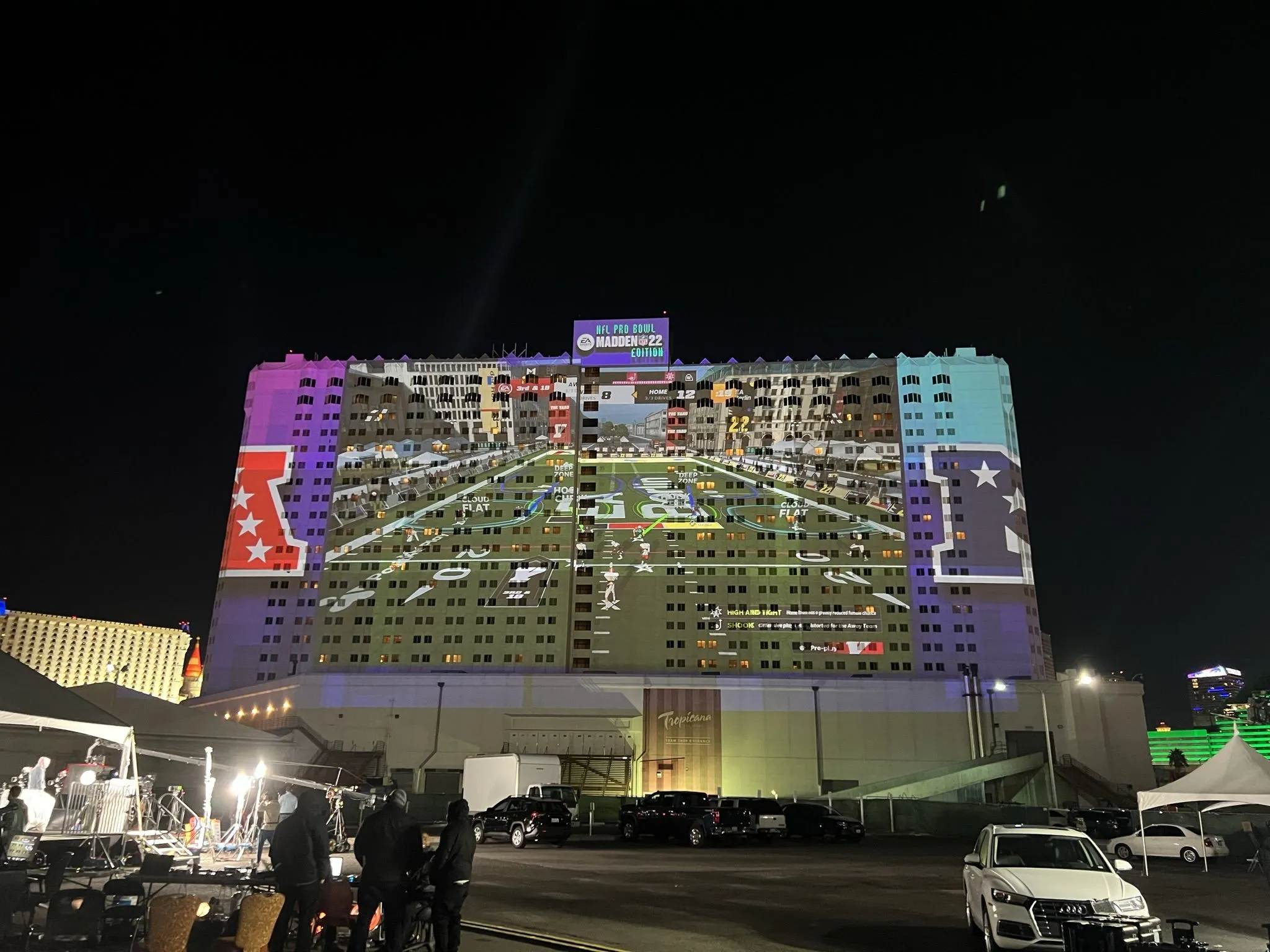
Over 15 years of producing large-scale projection mapping and immersive experiences for globally recognized brands gives Lumen and Forge the operational depth Cincinnati productions require. Our portfolio includes building projections for Nike and Air Jordan at NBA All-Star Weekend, large-scale convention experiences for Toyota, McLaren, and Mastercard, a world record video game screen at the Tropicana, and the Beneath the Blue 360-degree dome for National Geographic. Our team is comfortable working alongside experienced production crews and holding a technical standard in front of an audience that knows the difference, which is exactly what Cincinnati requires.
Who We Work With in Cincinnati
Projection mapping in Cincinnati gets briefed by a fairly specific mix of marketers. Here is who tends to call.
- Consumer packaged goods brands use building projection and object mapping for product launches, sampling weekends and retail tie-ins, turning a facade or a sculpted form into the centerpiece of a campaign moment.
- Grocery and retail teams pair interactive installations with store openings, seasonal pushes and sponsorship activations, where foot traffic and dwell time matter as much as the visual.
- Banking and financial services clients lean on room-scale environments and projection domes for client events, investor receptions and community-facing sponsorships, where the room has to feel considered rather than loud.
- Healthcare organizations commission calm, legible installations for donor evenings, campus anniversaries and public health campaigns, with content that reads clearly from across a lobby.
- Brewing and hospitality venues want projection that works around service: taproom walls, patio screens and event nights that change week to week without a rebuild.
- Professional sports properties and their partners use object mapping and building projection for game day, fan festivals and championship runs, where the crowd is already moving and the content has to hold attention fast.
- Arts and cultural organizations bring projection into exhibitions, galas and free public programming, often as the piece that connects a historic building to a contemporary audience.
Across all of them, the work is the same discipline: design, produce and install, whether that means one facade, a dome, or an interactive room. If your audience is in Cincinnati, the format follows the venue and the story, not the other way around.
Ready to Light Up the Queen City?
Cincinnati rewards projection mapping that respects the room. A ballpark facade, a museum rotunda, a riverfront park and a bridge all carry their own scale, sightlines and story, and the work has to hold up in each one. That is where more than 15 years of designing, producing and installing immersive experiences for brands like Nike and Air Jordan, Toyota, McLaren and Mastercard pays off.
If you are planning a launch, a game day moment, a festival activation or a room-scale environment, bring us the venue and the date. We will help you map the site, scope the permitting and build something Cincinnati remembers.
Frequently Asked Questions: Projection Mapping in Cincinnati
Standard projection displays a flat image on a flat screen or white wall. Projection mapping uses specialized software to warp, align, and calibrate video content so it fits precisely onto any three-dimensional surface, whether that is a building exterior, a custom sculpture, a vehicle, or an entire room. The software accounts for every edge, angle, and curve, so the content appears to belong to the object itself rather than simply being cast onto it. In a city full of working production professionals, that level of precision is what separates a real installation from a lighting effect.
Yes. Cincinnati's outdoor season runs roughly May through October, when sunset lands between 8:30 and 9:15 p.m. in midsummer, giving projection mapping a genuinely dark canvas. Late spring and early fall evenings are cool but workable; January through March cold and precipitation push most work indoors. Ambient light is the real constraint downtown, so sites like Fountain Square, Washington Park and Smale Riverfront Park need careful aiming and brightness planning around street lighting and building glow. Riverfront venues along the Ohio River add reflected light to account for.
The Cincinnati events most relevant for projection mapping activations are the Flying Pig Marathon in May, the Cincinnati Music Festival at Paycor Stadium in July, the WEBN Fireworks at Riverfest over Labor Day weekend on the Ohio River, and Oktoberfest Zinzinnati in September at Sawyer Point and Yeatman's Cove.
Yes. Lumen and Forge coordinates permits, power, rigging and site logistics directly with your venue, so your team is not chasing paperwork between departments. For special events, we work through the City Manager's Office Special Event Portal, with special event permits issued by the Cincinnati Police Department and Cincinnati Parks handling approvals for events on park land. That covers installations at Fountain Square, Washington Park and Smale Riverfront Park, plus stadium, arena and museum sites across the city.
The cost of projection mapping in Cincinnati depends on the scale of the surface, the complexity of the content, the duration of the event, and the equipment and crew required. A single-surface building projection onto a venue like Cincinnati Music Hall is scoped differently than a multi-site activation running across Fountain Square, Washington Park and Smale Riverfront Park. Room-scale environments, interactive installations and projection domes each carry their own production requirements. Lumen and Forge prices every Cincinnati project against its specific scope, so the most accurate figure comes from a conversation about your venue, dates and creative ambition.
Lead time depends on the scale of the project. Custom content, a site survey, equipment and crew scheduling all take time, and large building projections and outdoor events need the longest runway. Special events are also scoped and permitted through the City Manager's Office Special Event Portal, so build that into the timeline. Get in touch as soon as your Cincinnati venue and date are set so we can plan the schedule with you.
Projection mapping paints light onto a shaped surface, while 3D projection mapping accounts for depth, so content wraps corners, curves and recessed features without distortion. The Cincinnati Museum Center at Union Terminal is a clear example: its domed and stepped architecture rewards a 3D approach, letting artwork track the building's contours rather than sit flat against it. For marketers, that depth is what makes a facade read as a single, believable object.
In addition to projection mapping, we offer dome projection for fully immersive 360-degree spherical experiences, event and project design for end-to-end production planning, and animation and visual storytelling for original content creation. Many of our Cincinnati clients combine projection mapping with one or more of these services into a single integrated production. We are a full-service immersive experience company, and the strongest work we build is conceived as a whole from the first conversation.
Do you have more questions?
Didn't find what you were looking for? Our team is happy to walk you through your project and answer anything else