

A Young, Fast-Growing City That Loves a Crowd
Columbus is a production market built on volume and variety. The Greater Columbus Convention Center hosts the Arnold Sports Festival each late February into early March, drawing crowds that expect more than a banner and a booth. Nationwide Arena, Ohio Stadium and the Schottenstein Center anchor a year of game days, concerts and touring shows, while ScottsMiracle-Gro Field and Huntington Park keep outdoor events on the calendar from spring through fall.
Cultural institutions give brands a different kind of canvas. COSI, the Columbus Museum of Art, the Ohio Statehouse, Franklin Park Conservatory and the Scioto Mile all sit within a short drive of downtown, and each brings its own architecture, sightlines and audience. The Columbus Arts Festival takes over the riverfront in June, ComFest fills Goodale Park the same month, Red White and BOOM! lights downtown in early July, and the Ohio State Fair runs late July into early August at the Ohio Expo Center.
That mix serves higher education and collegiate athletics, insurance and financial services, retail and consumer brands, healthcare, technology and data centers, and the conventions and sports expos that fill the calendar year round.
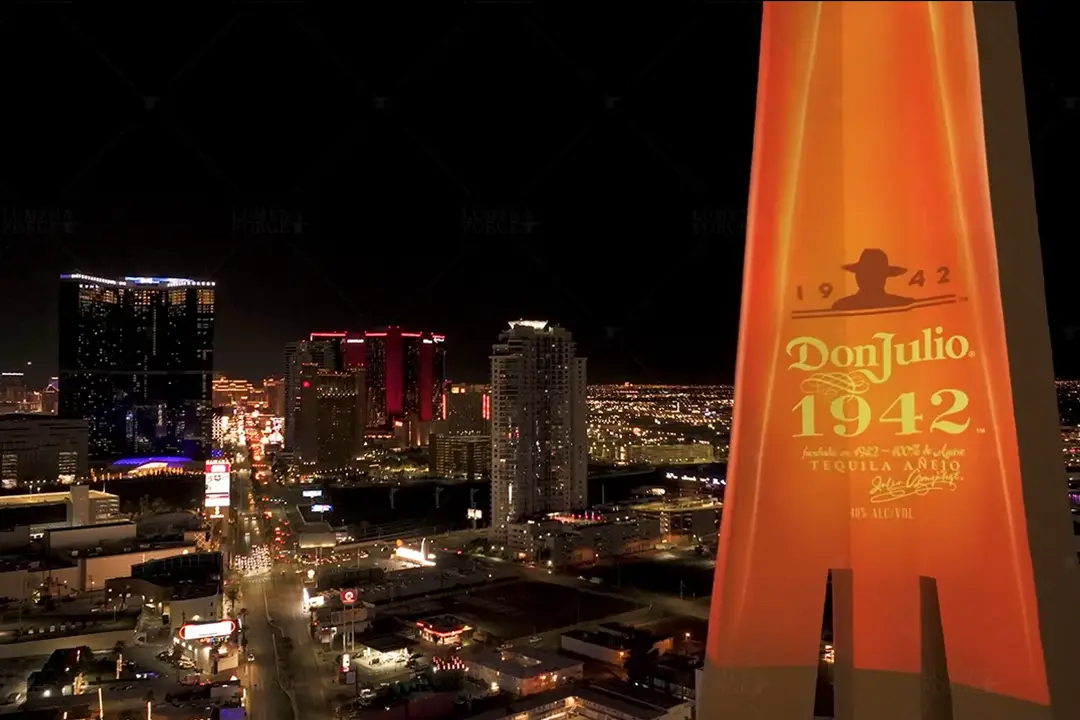
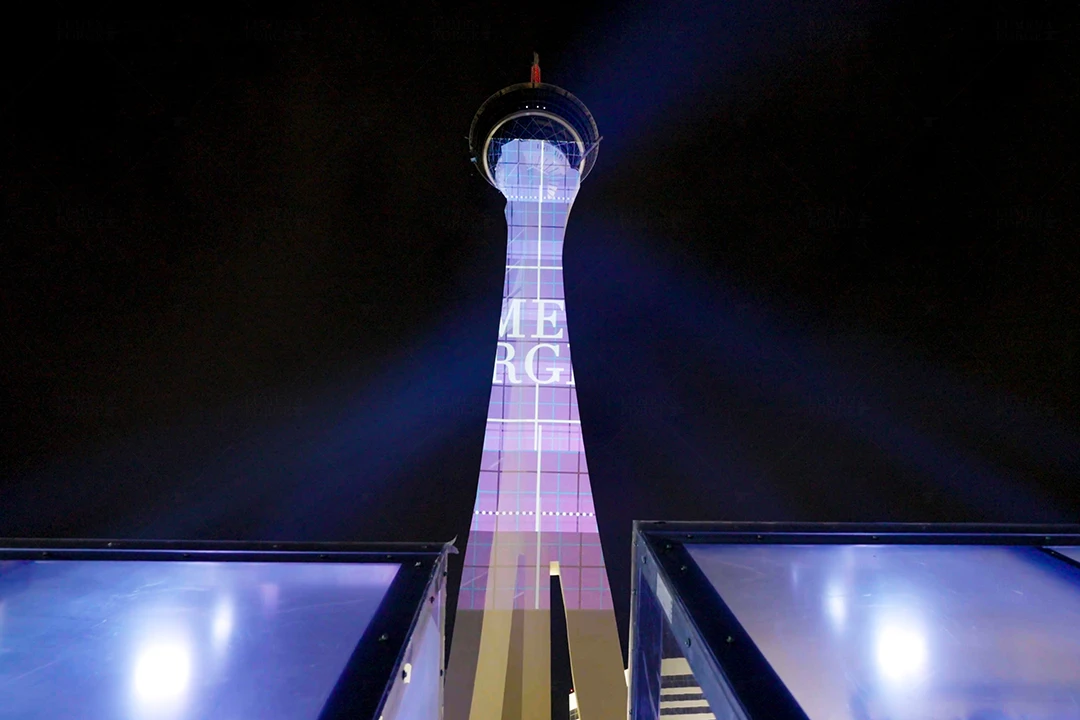
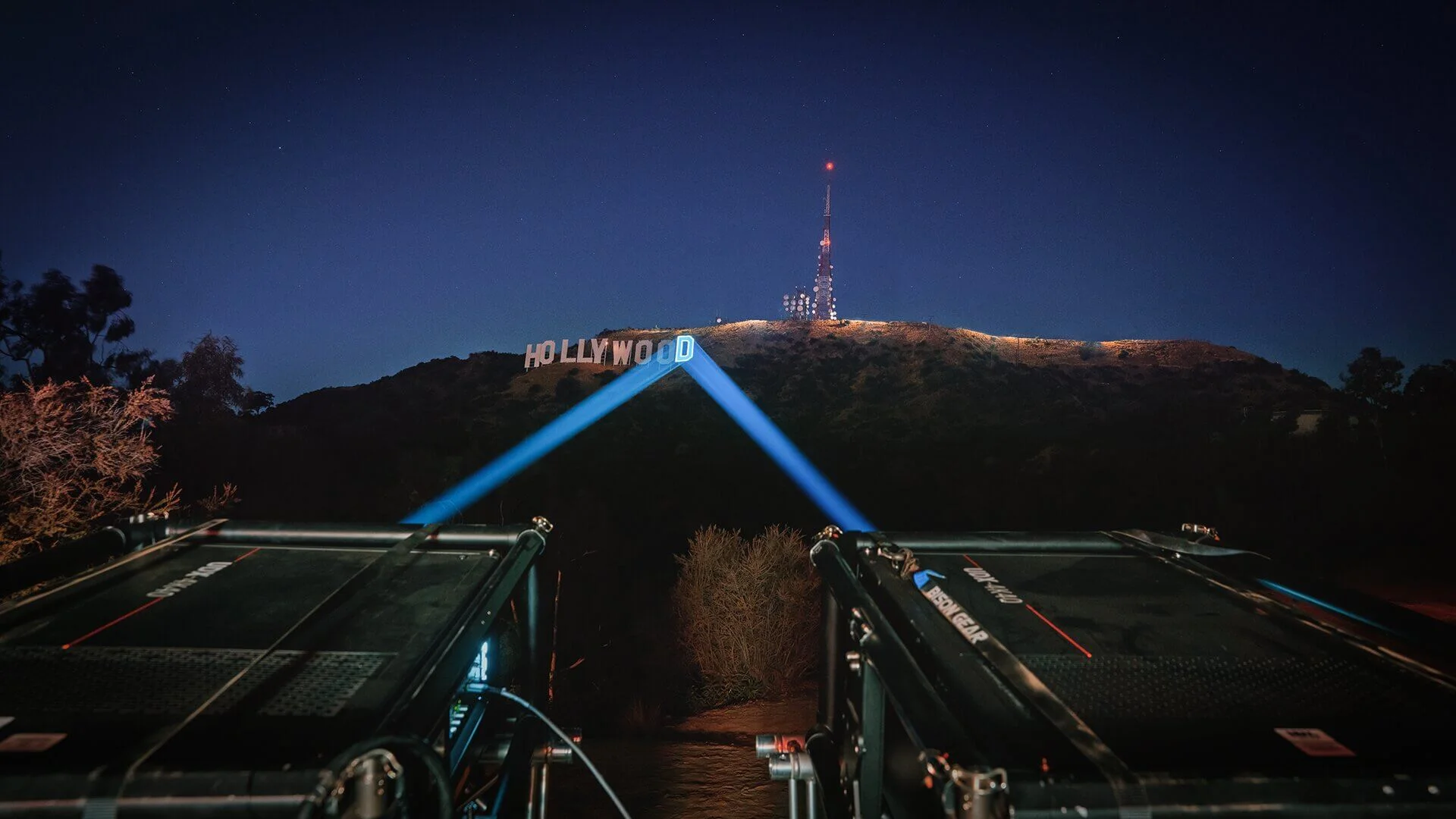
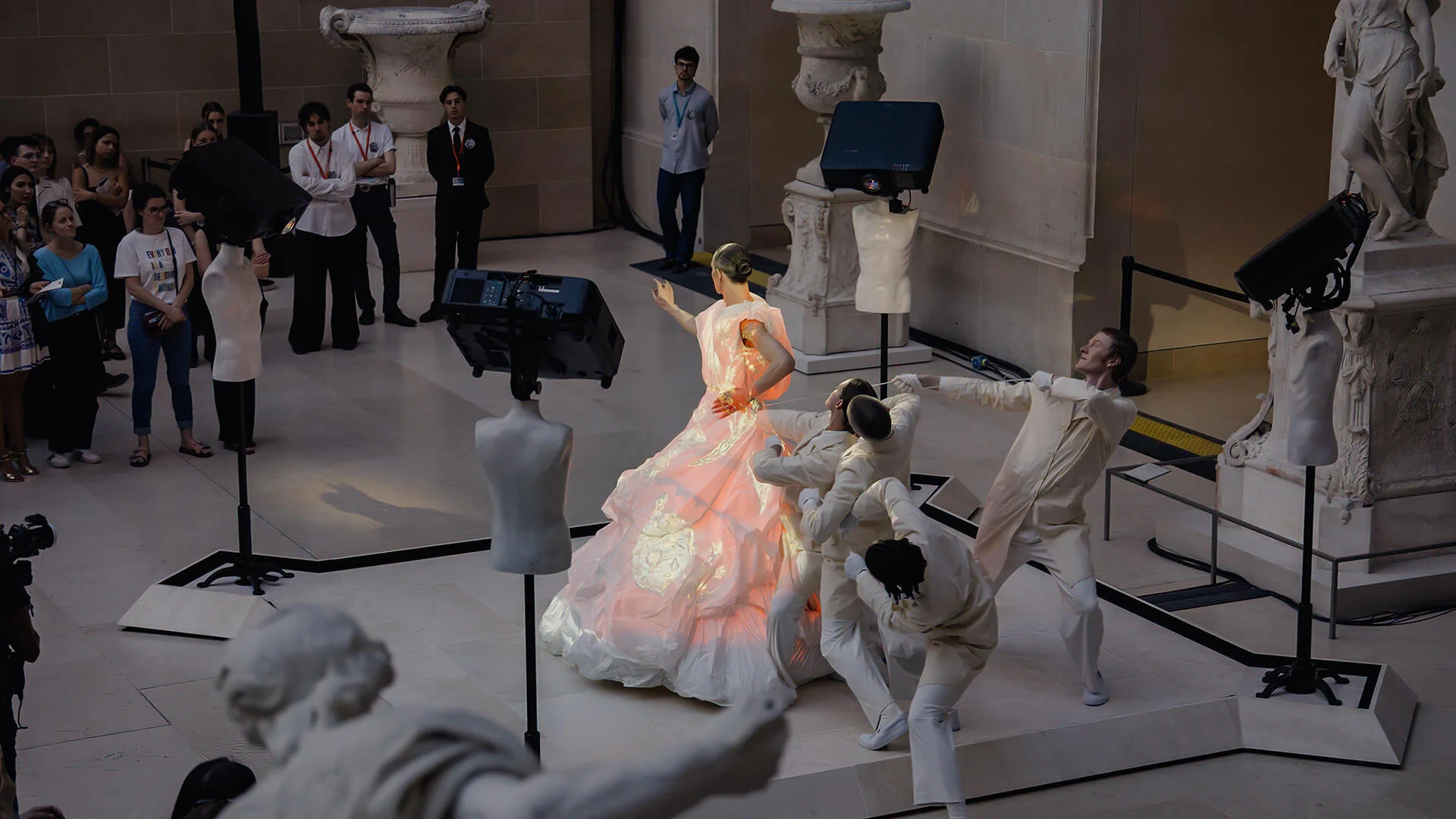
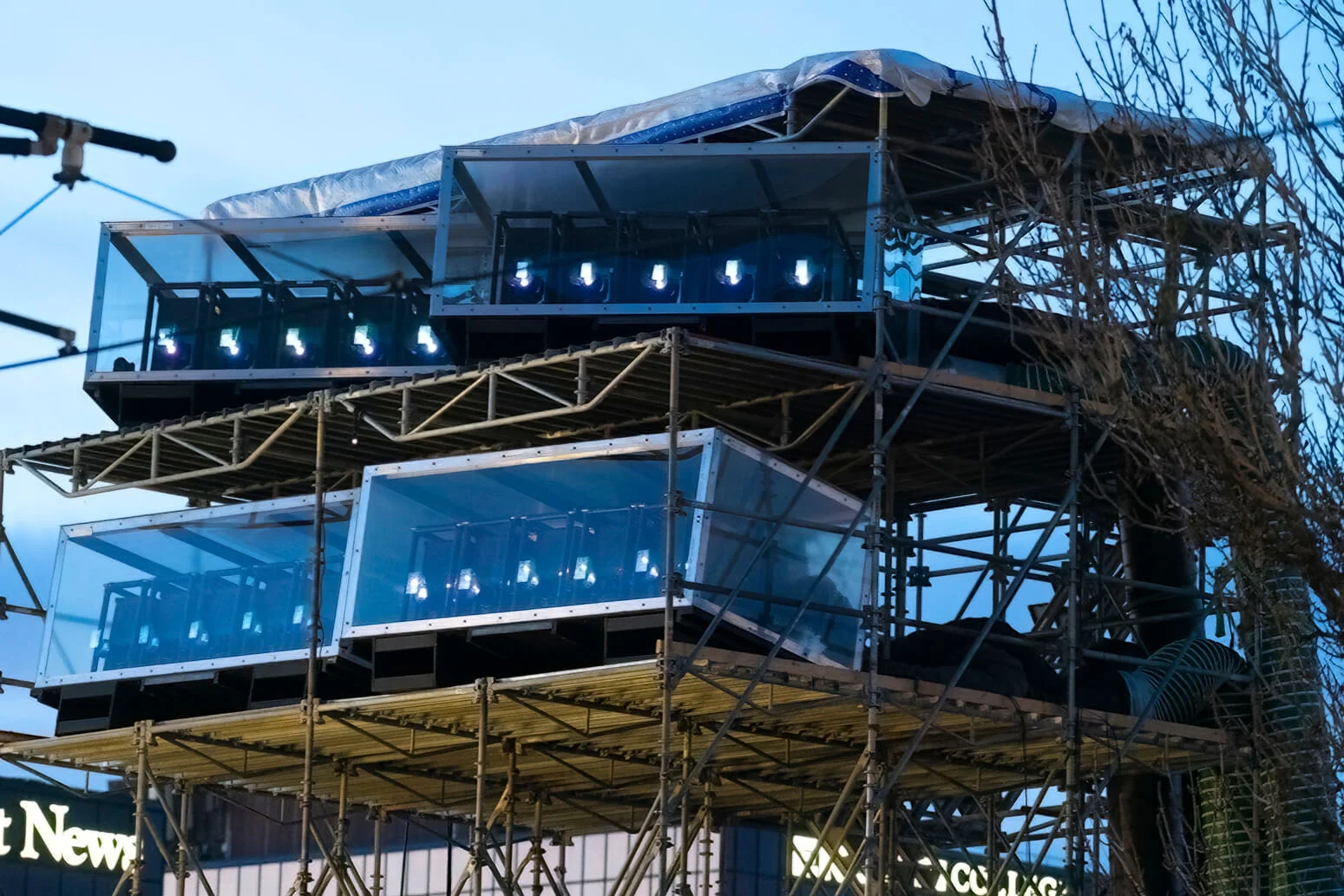
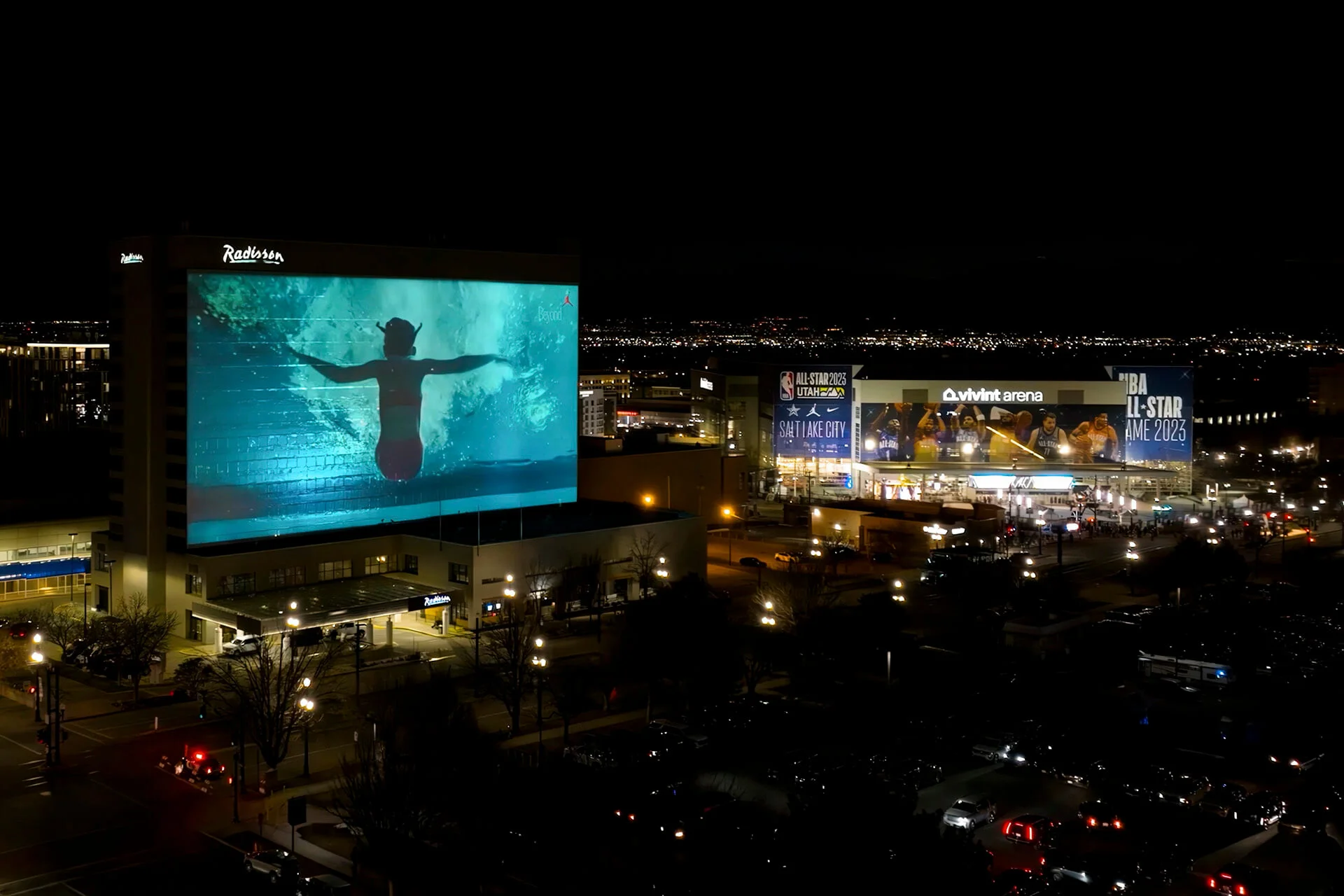
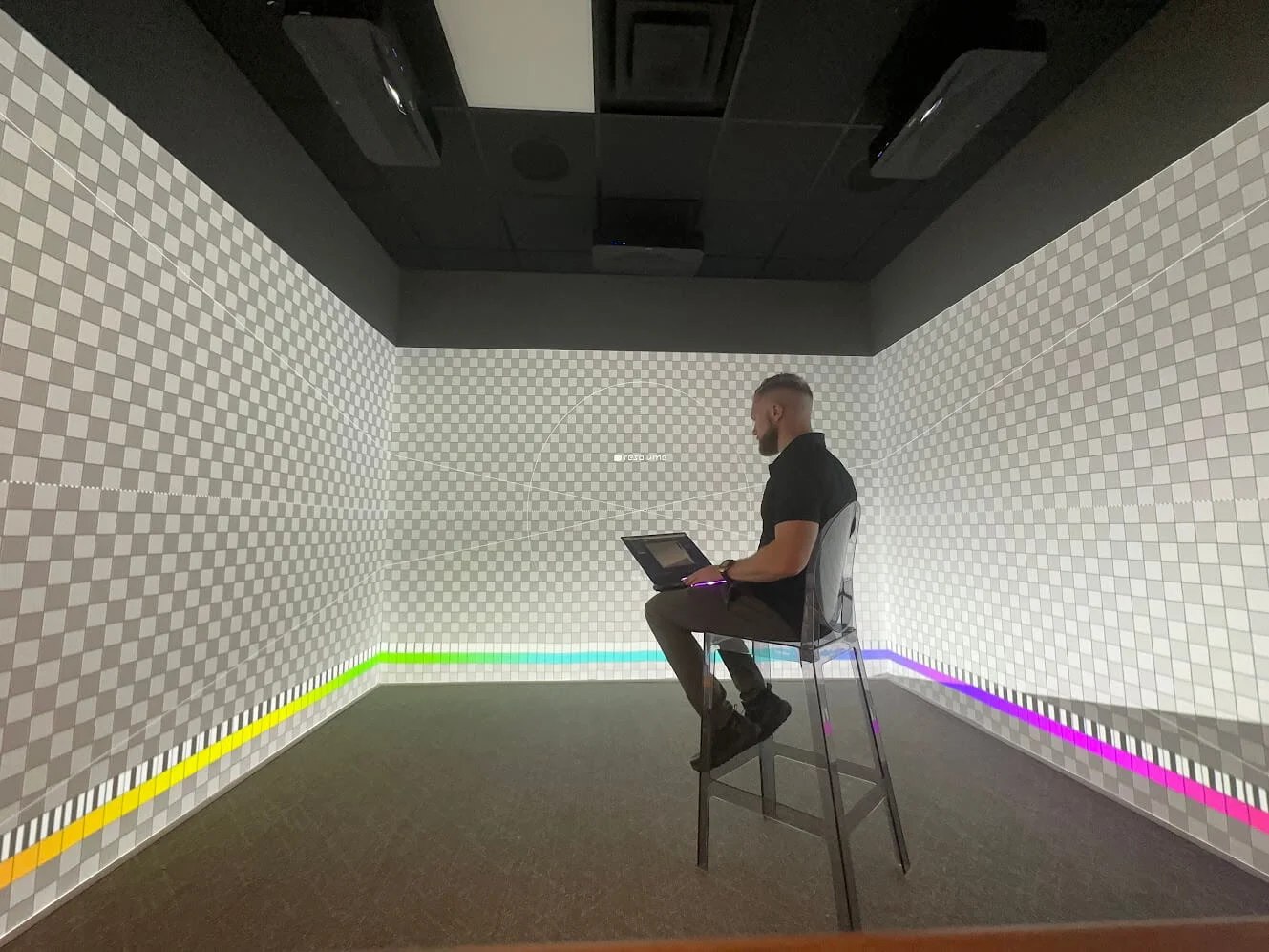
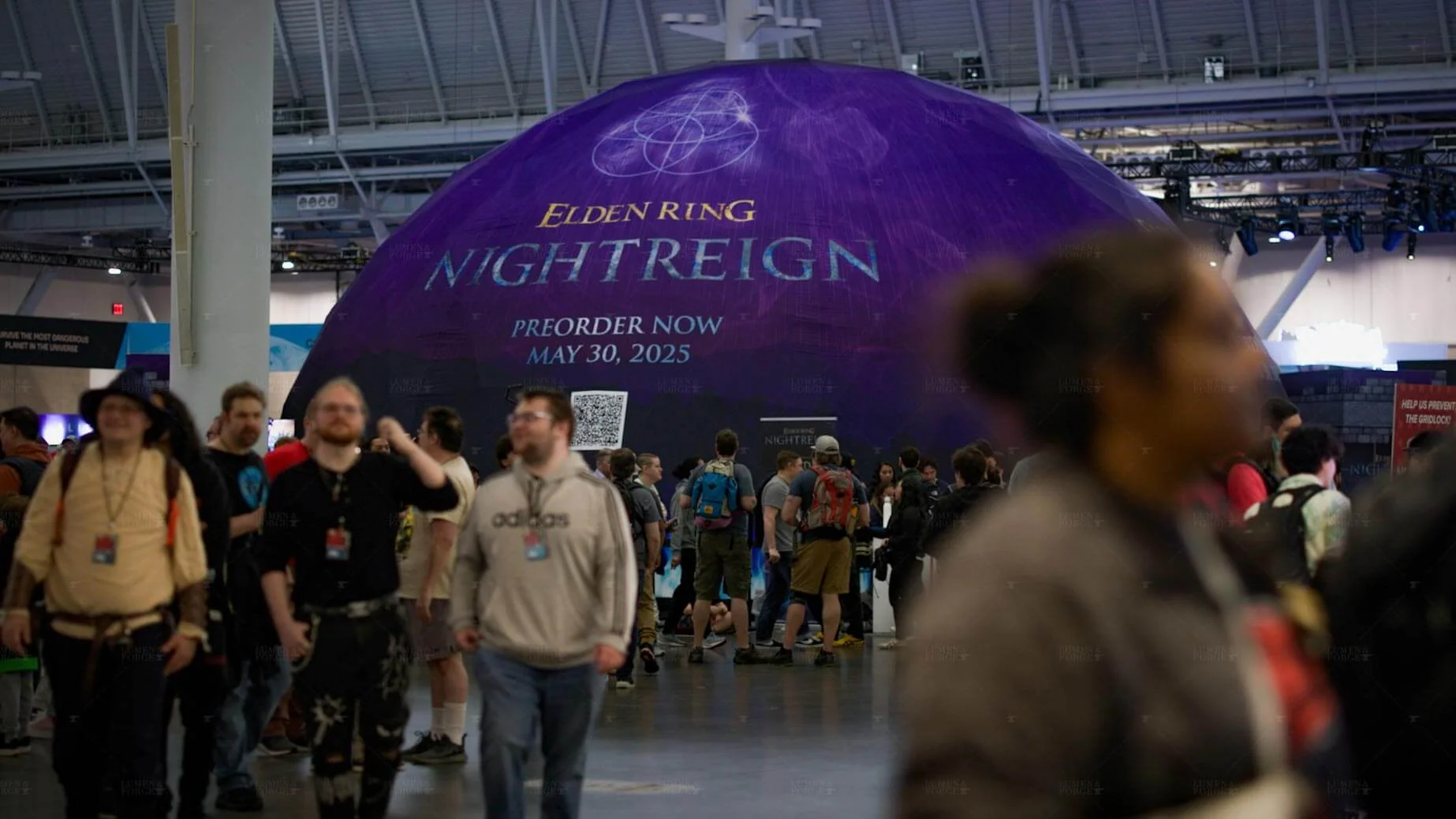
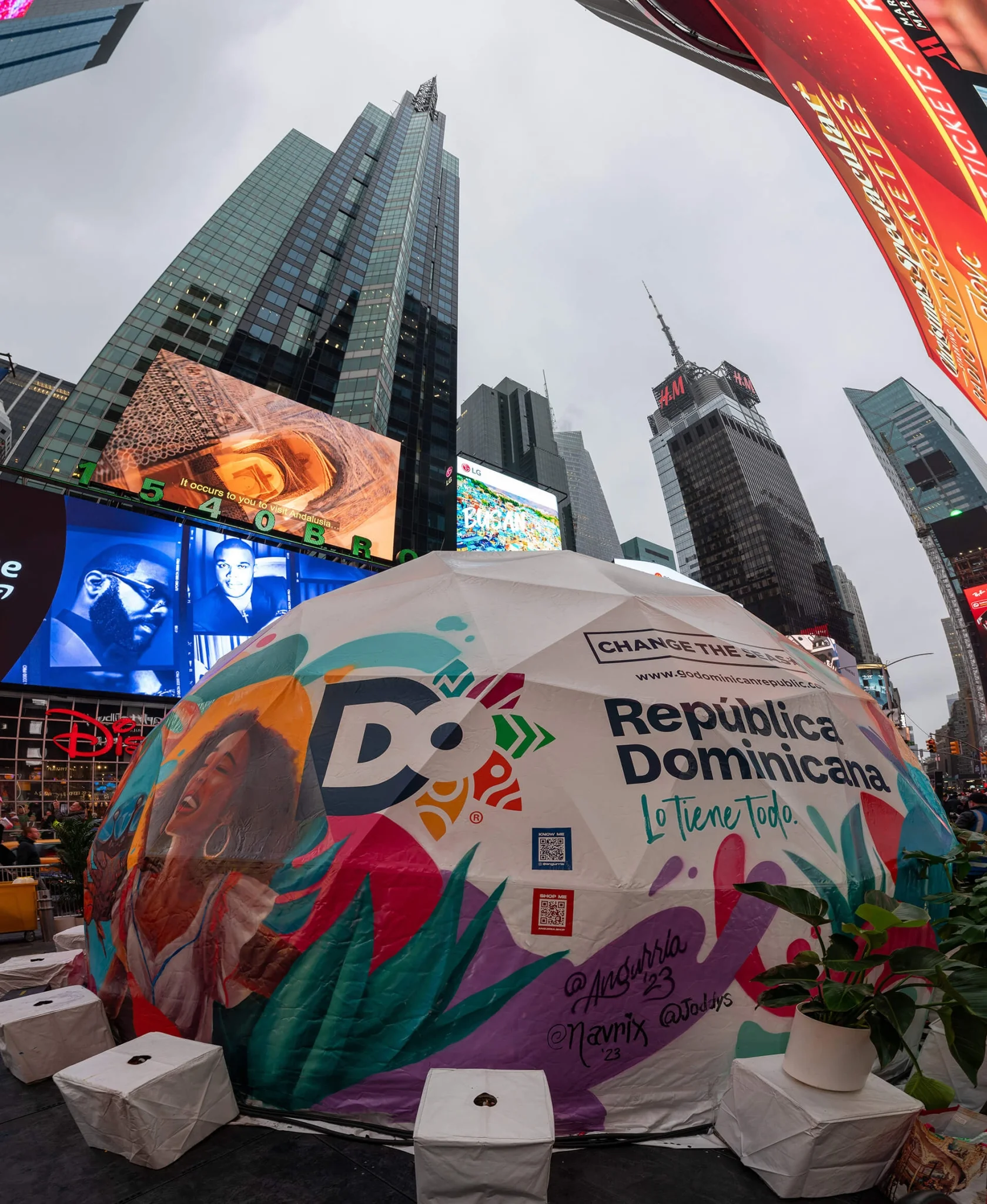
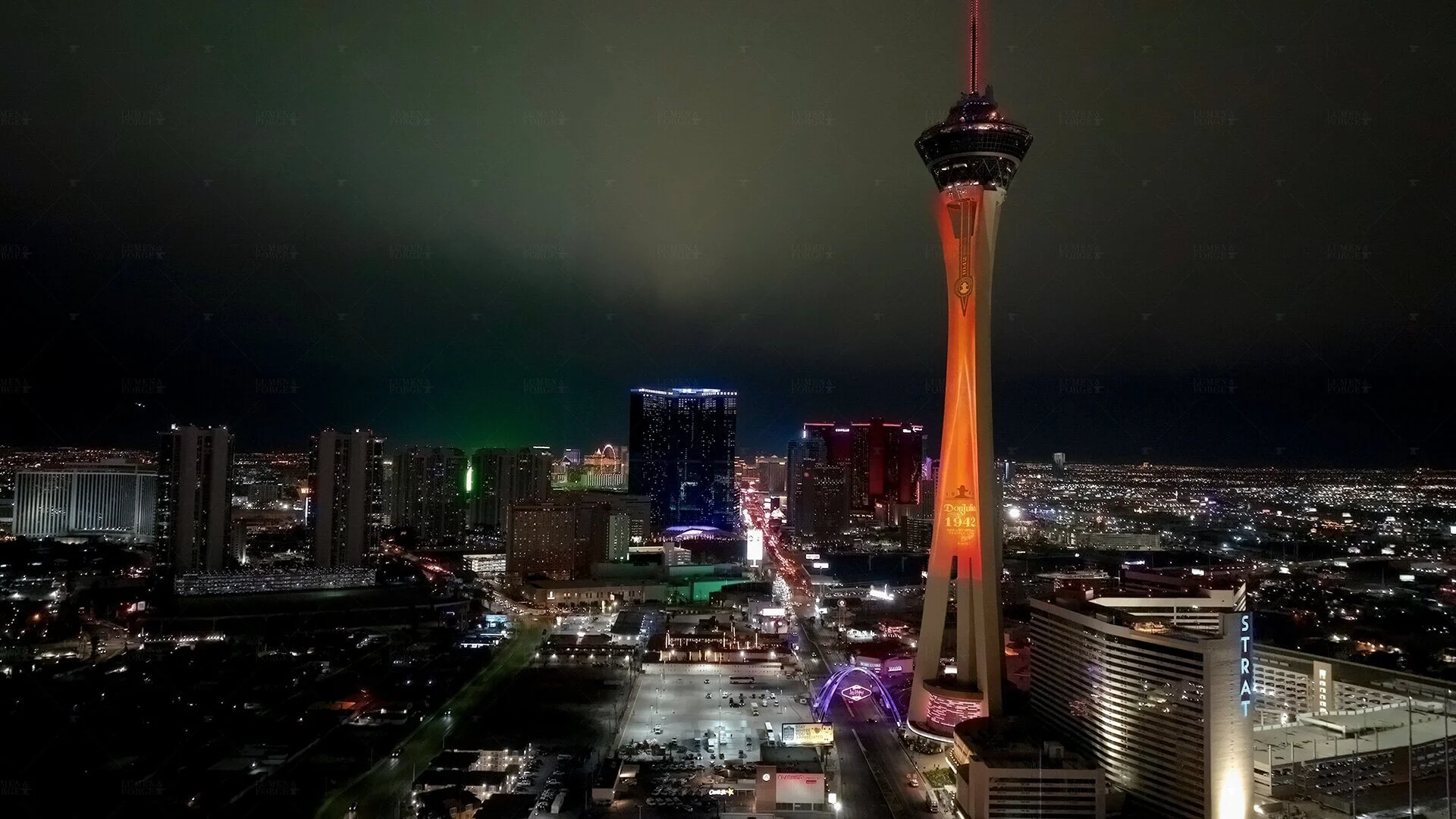
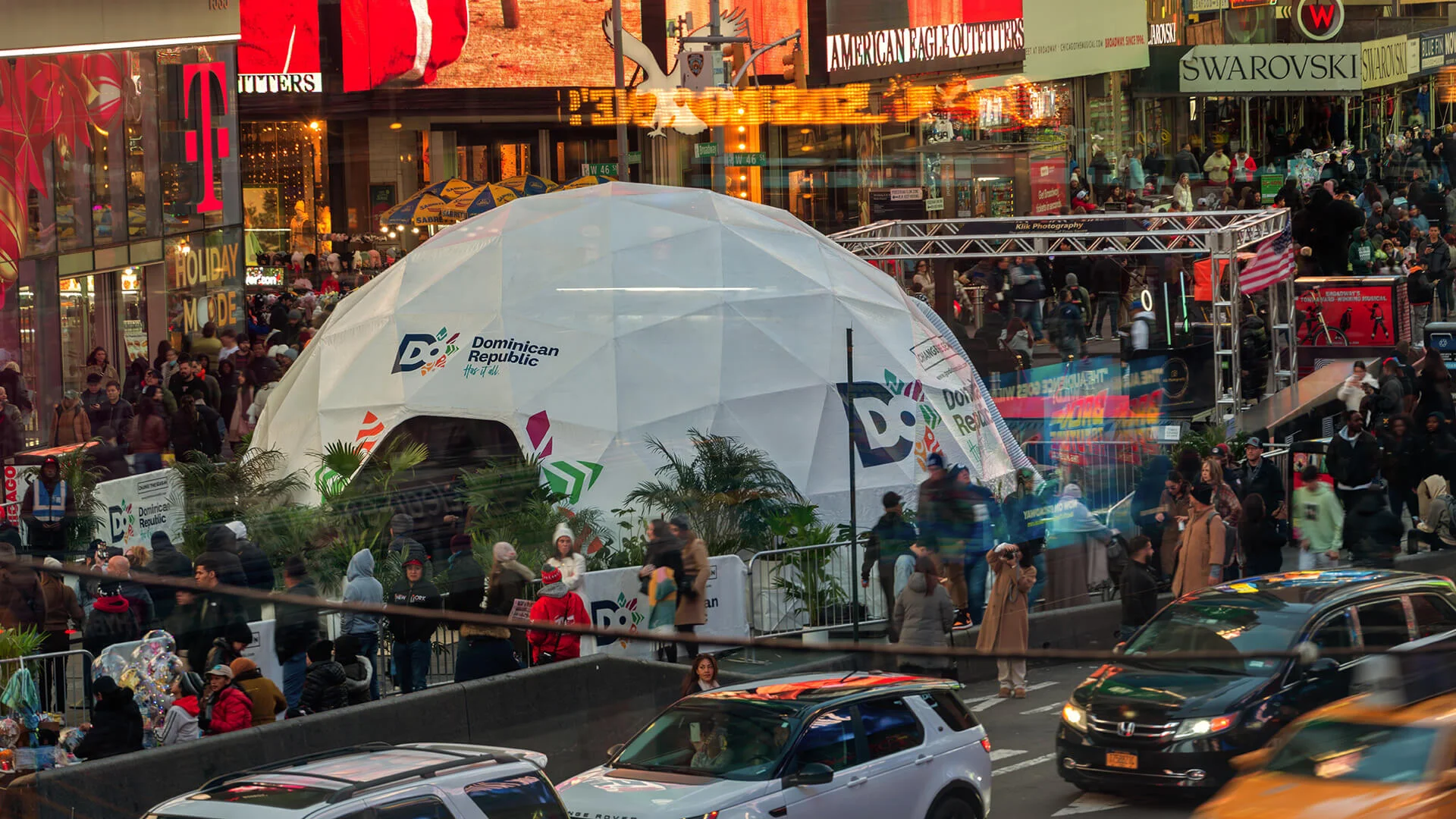
Take A Closer Look
A Deeper Look Into Animation & Visual Story Telling
A Deeper Look Into
Projection Mapping
Projection Mapping: Turning Any Surface Into a Story
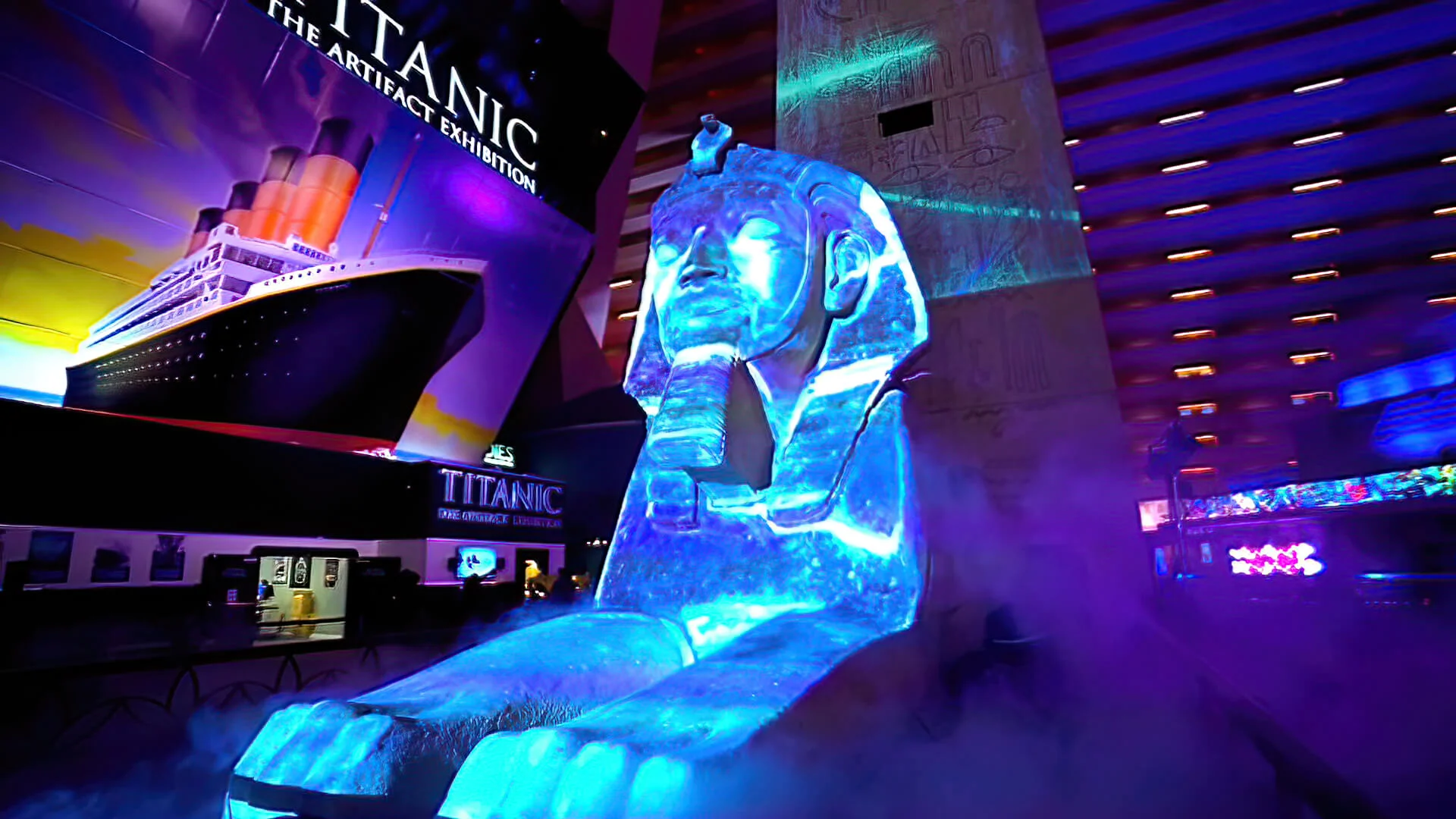
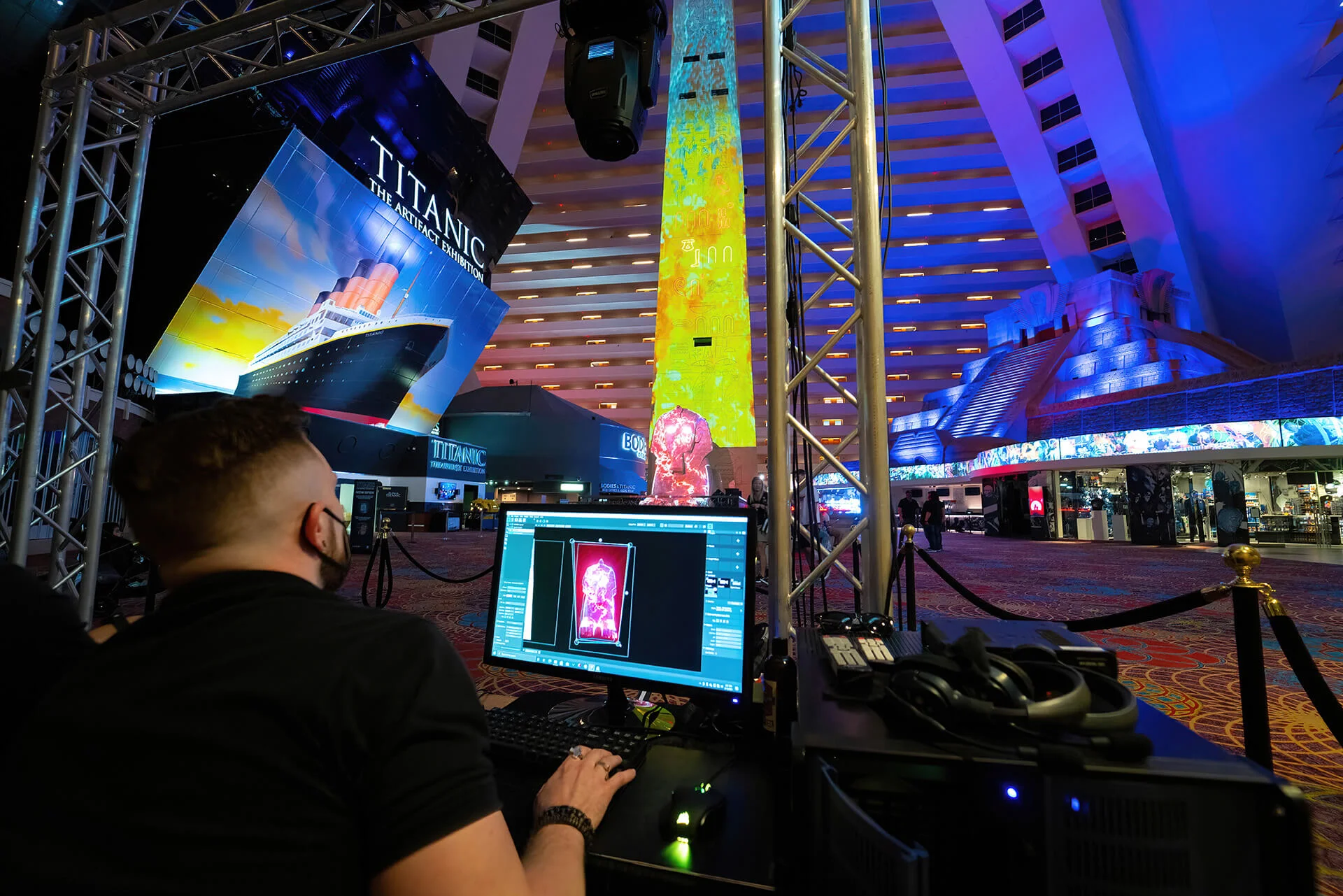
Projection mapping is the process of aligning projected light to the actual shape of a surface, so an image bends around corners, follows a facade and lands exactly where it should. A flat screen treats every pixel the same, but mapping starts with geometry: the contours of a building, the curve of an object, the angles of a room. The result reads as though the surface itself has changed, which is why it holds a crowd in a way a screen never does.
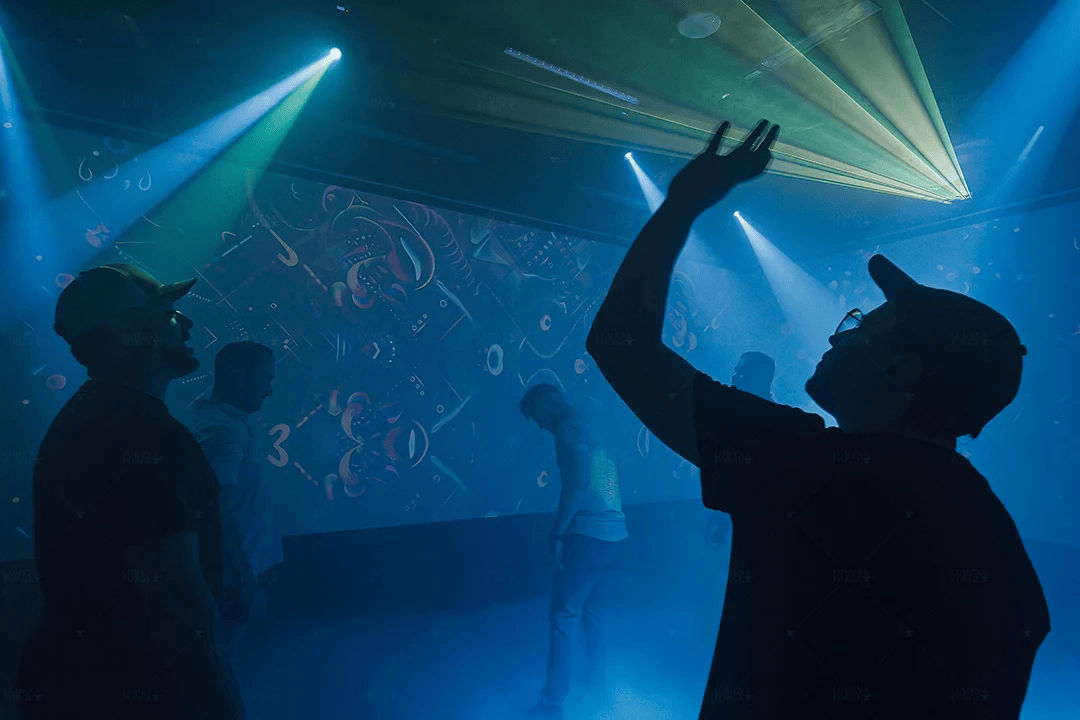
In Columbus, that range covers a lot of ground. Nationwide Arena, Ohio Stadium and the Schottenstein Center suit large-scale building and facade projection. COSI, the Columbus Museum of Art, the Ohio Statehouse and Franklin Park Conservatory offer architecture and interiors for object mapping and room-scale environments. The Greater Columbus Convention Center and Huntington Park fit event-driven installs, while the Scioto Mile and ScottsMiracle-Gro Field work for outdoor activations and domes.
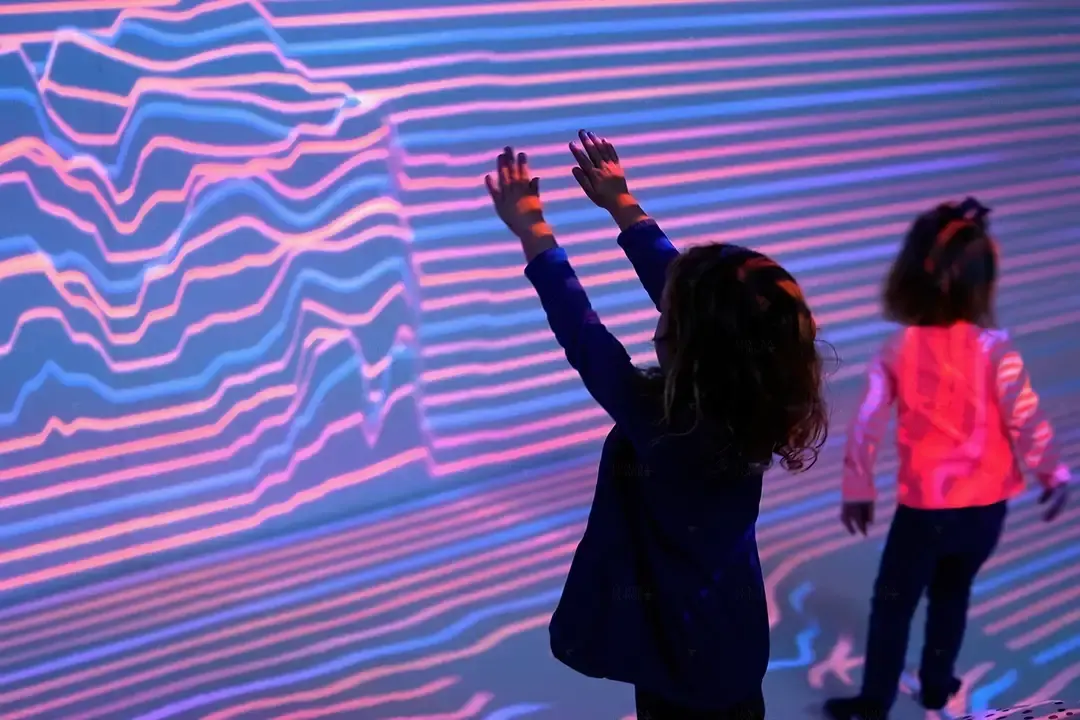
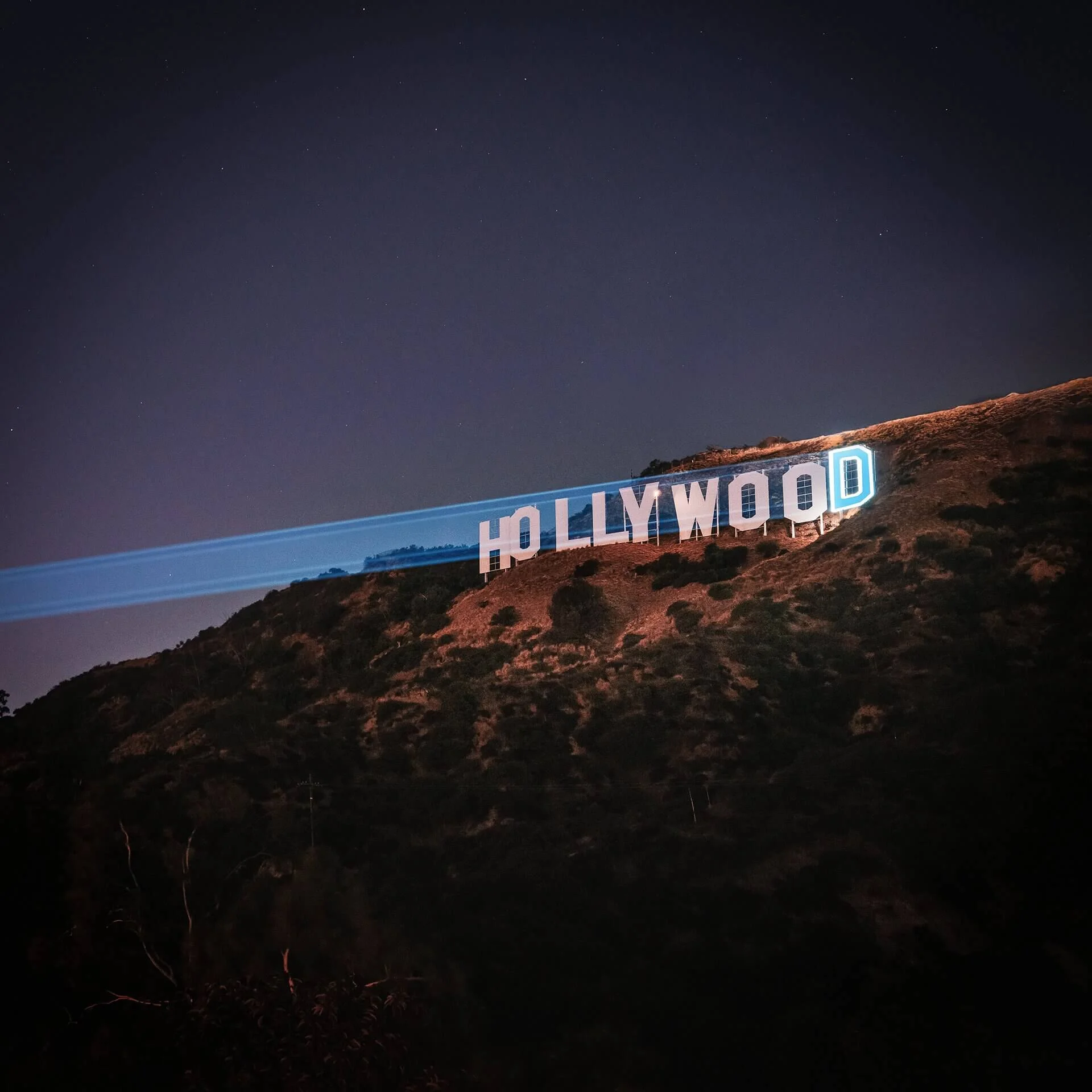
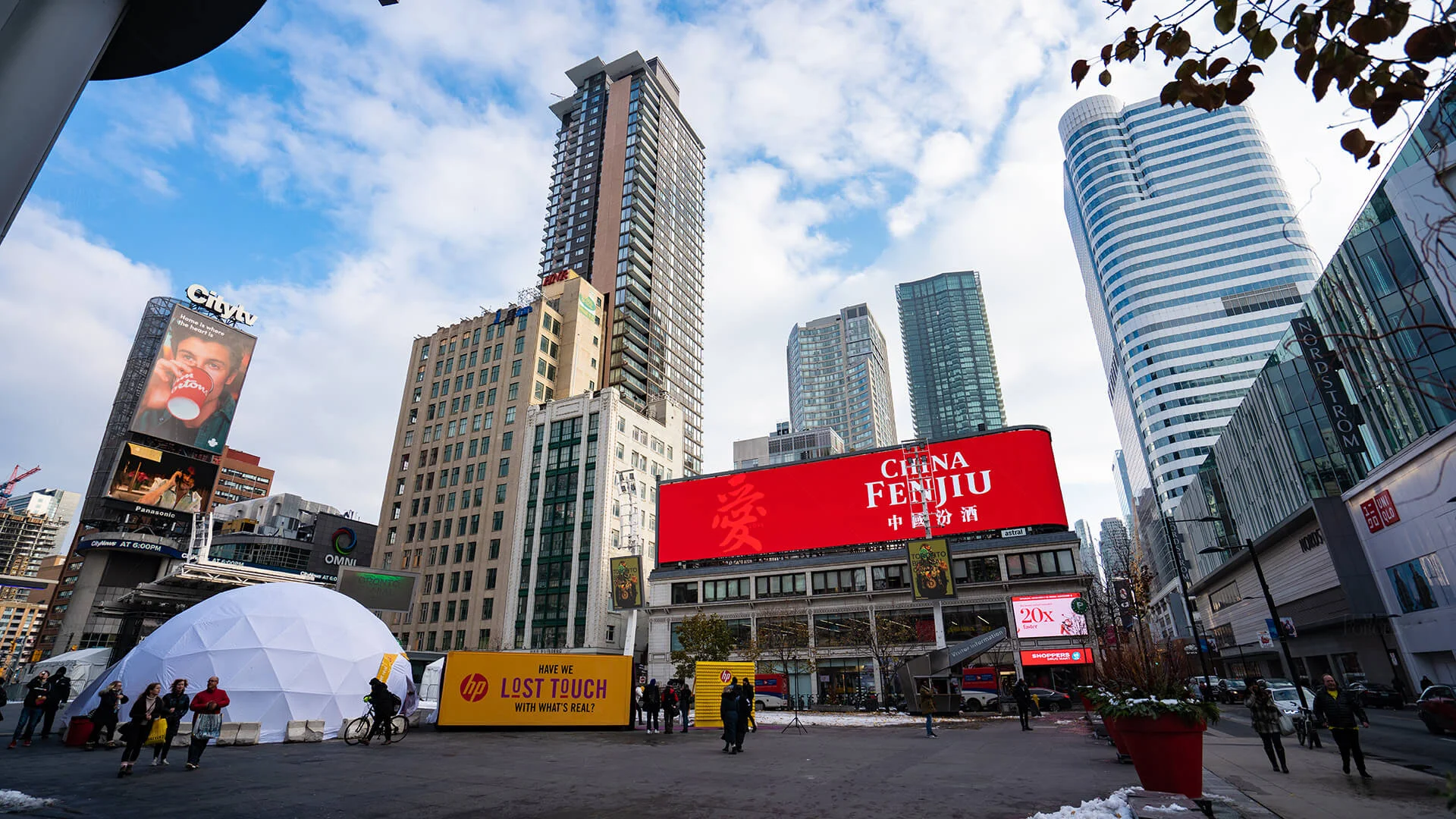
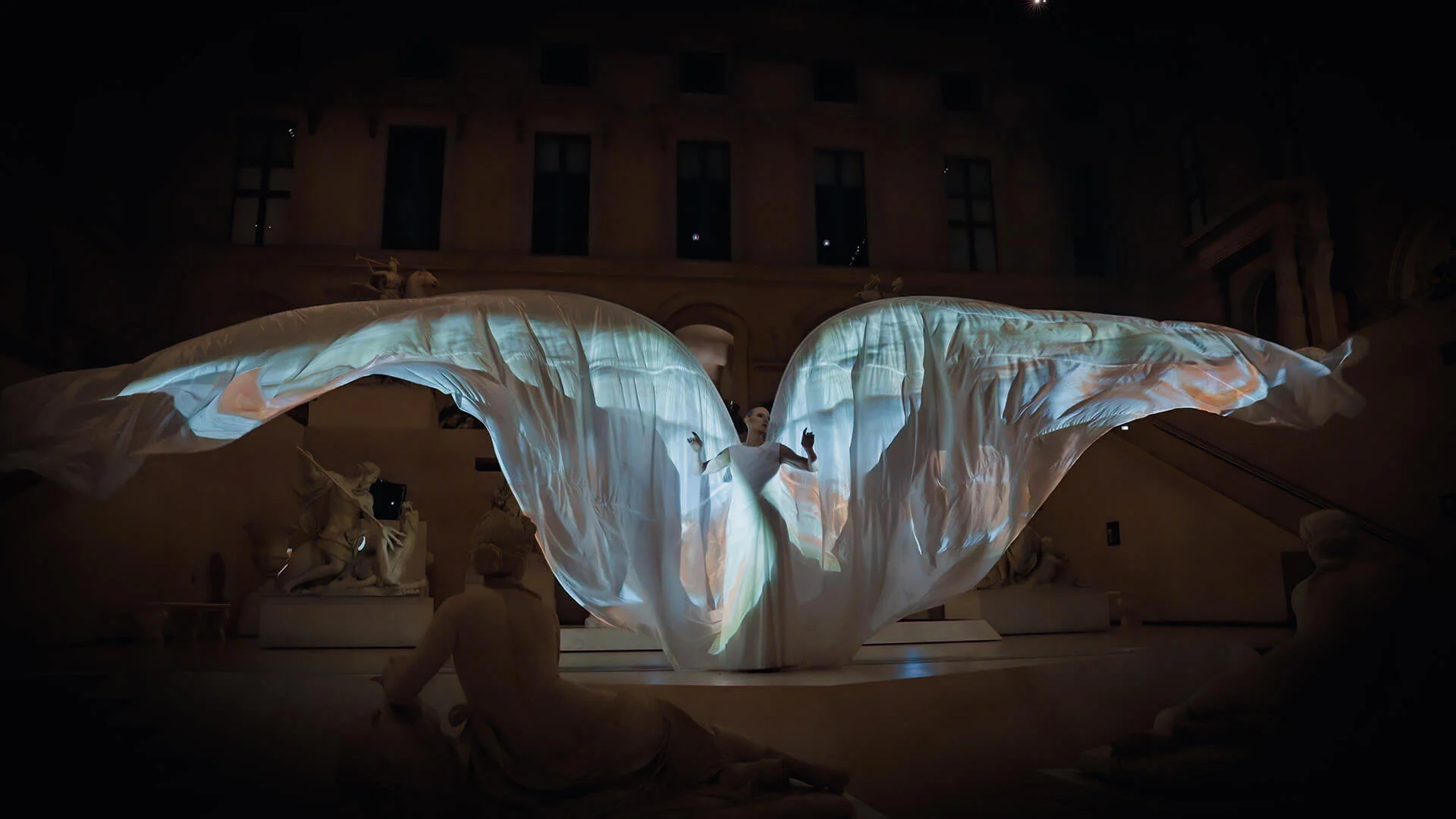
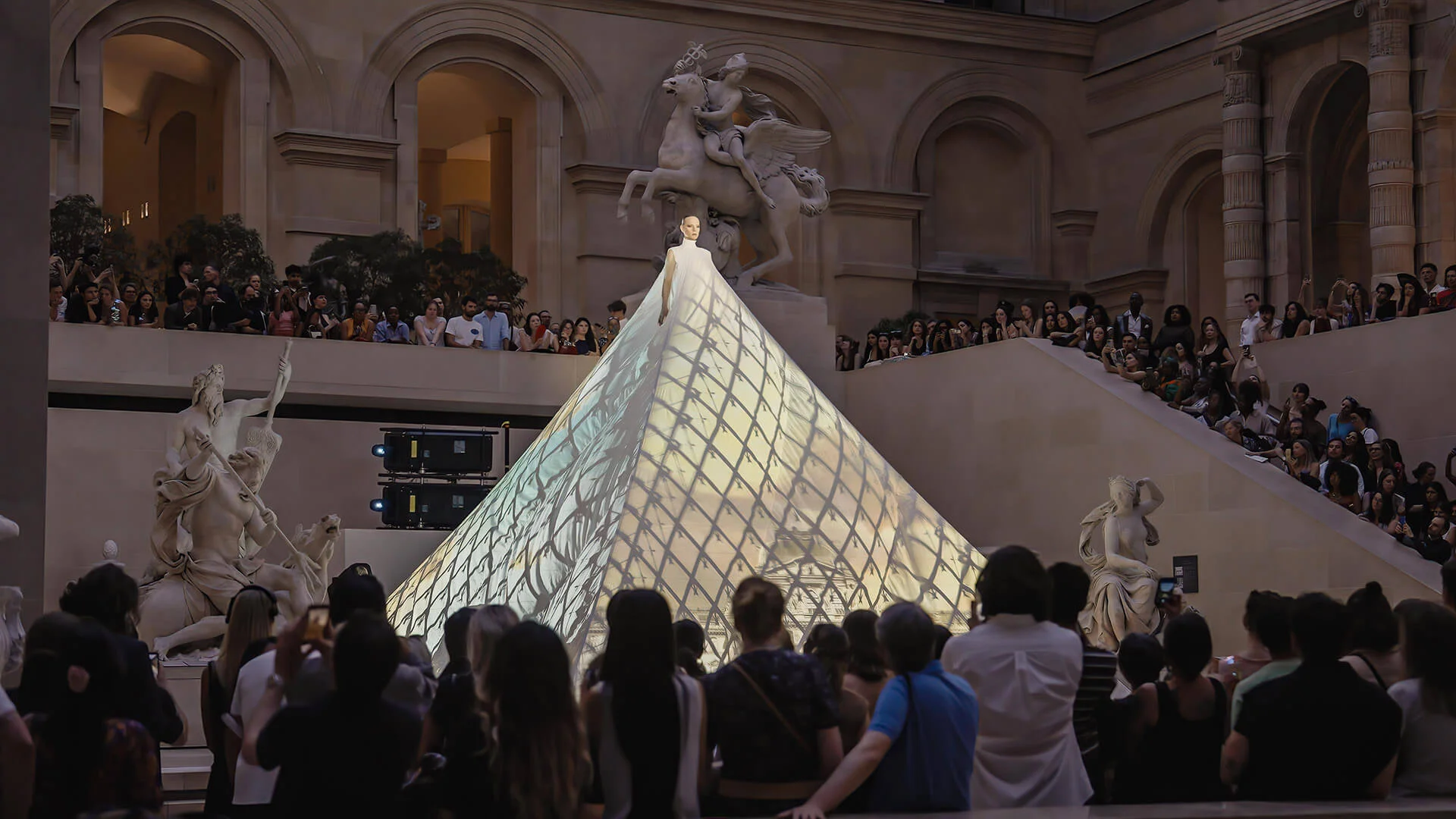
Building and Architectural Projection
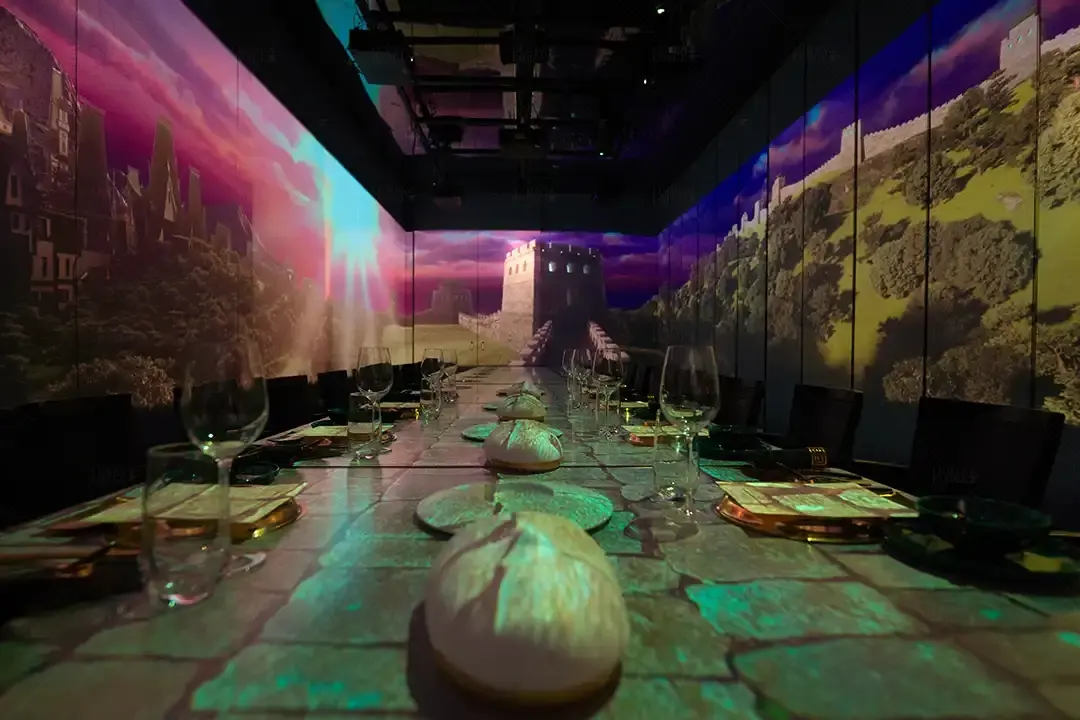
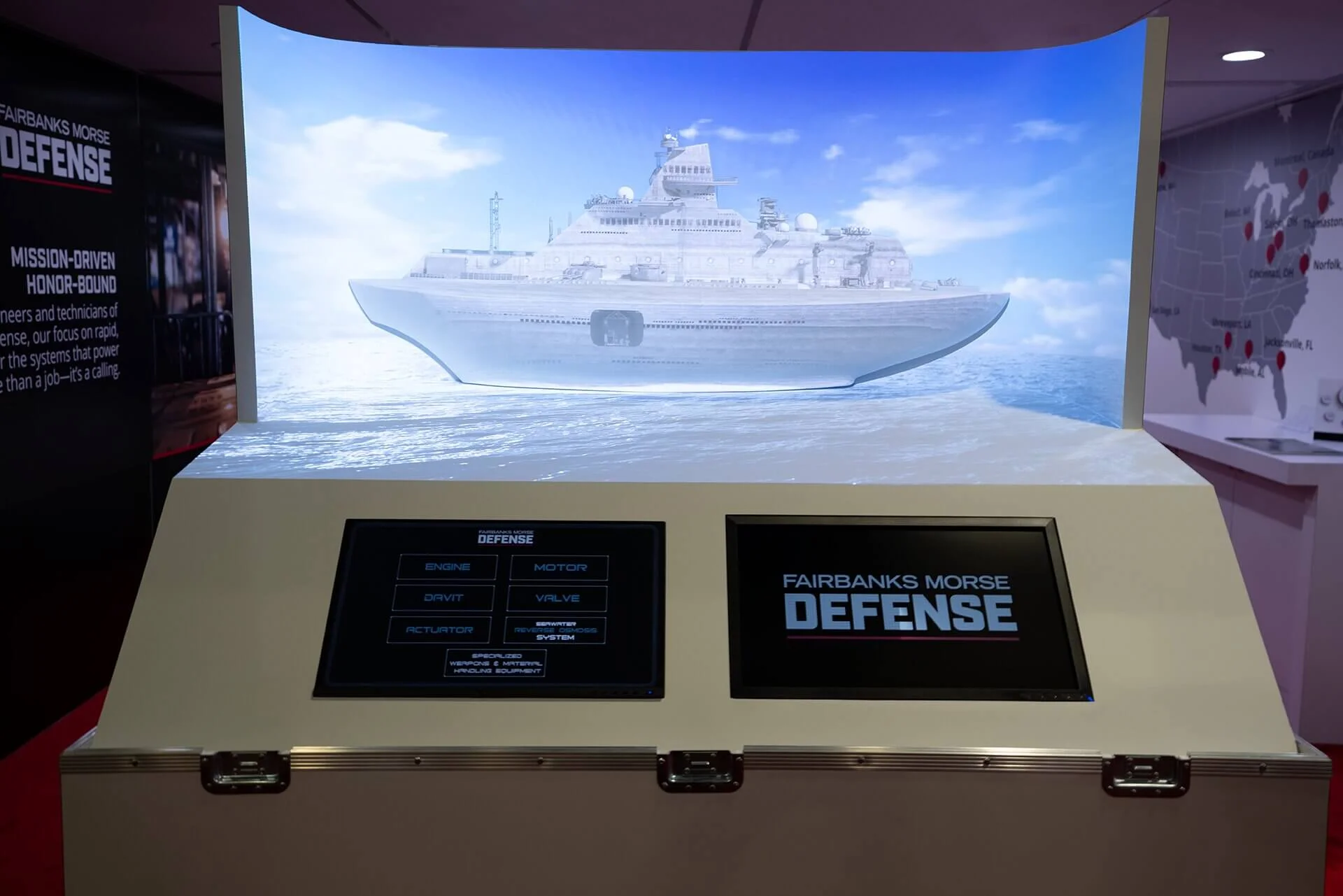
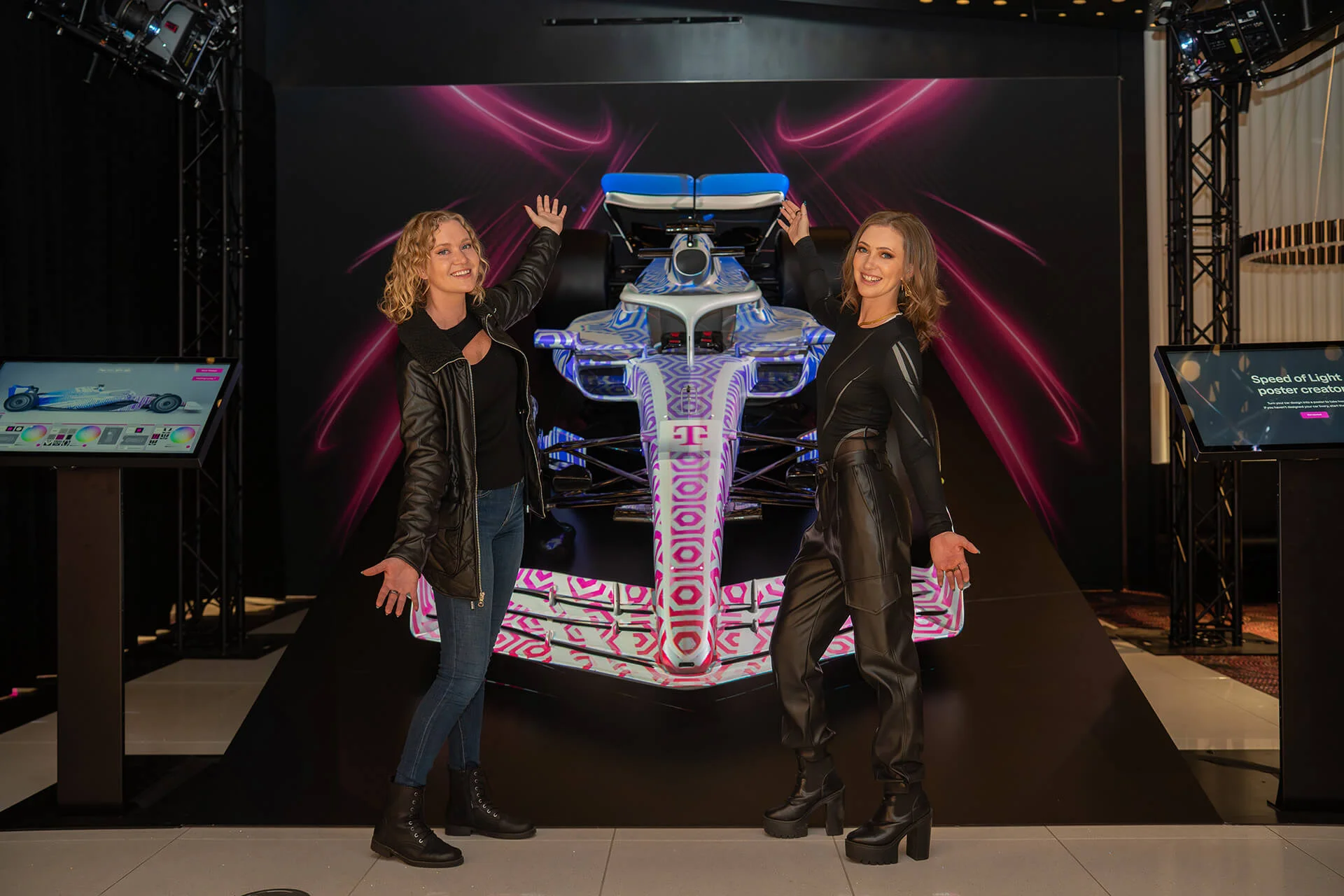
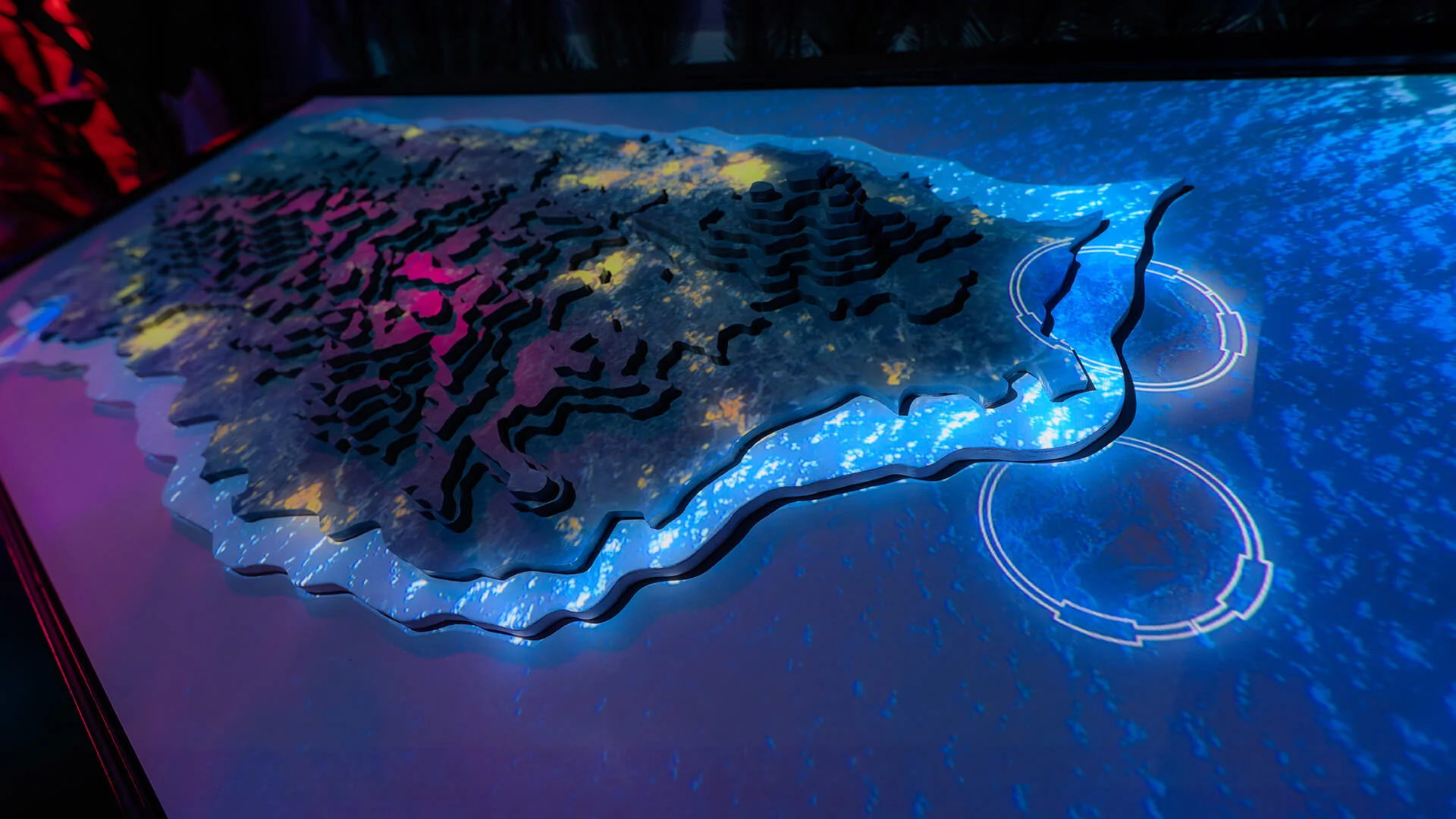
Object and Product Projection Mapping
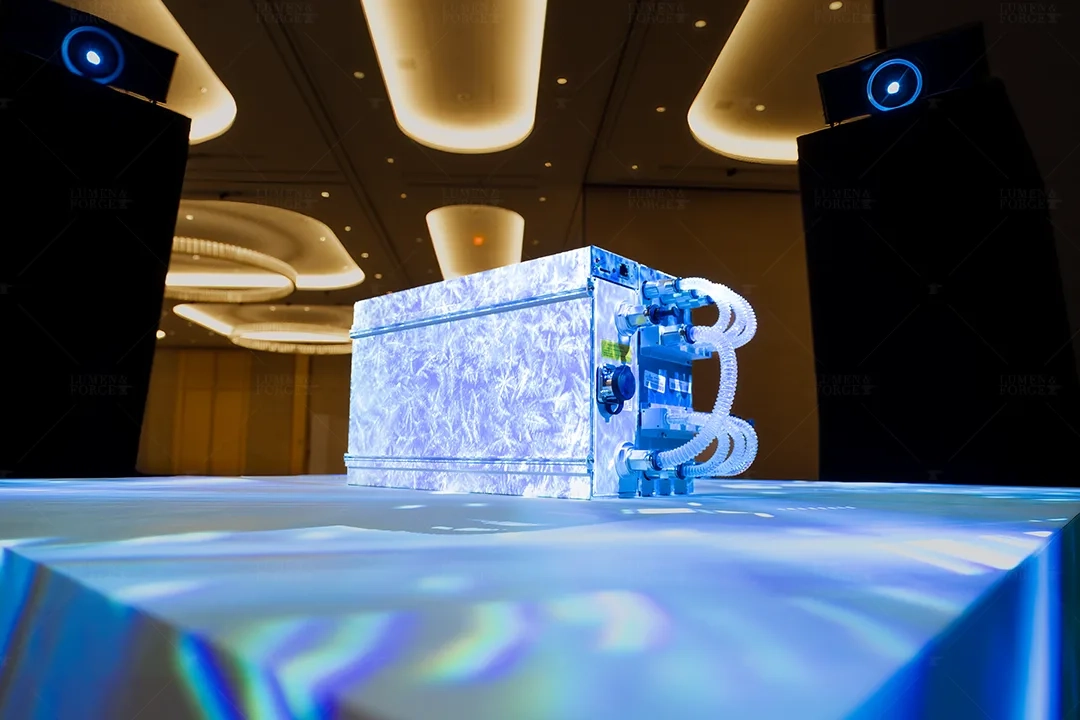
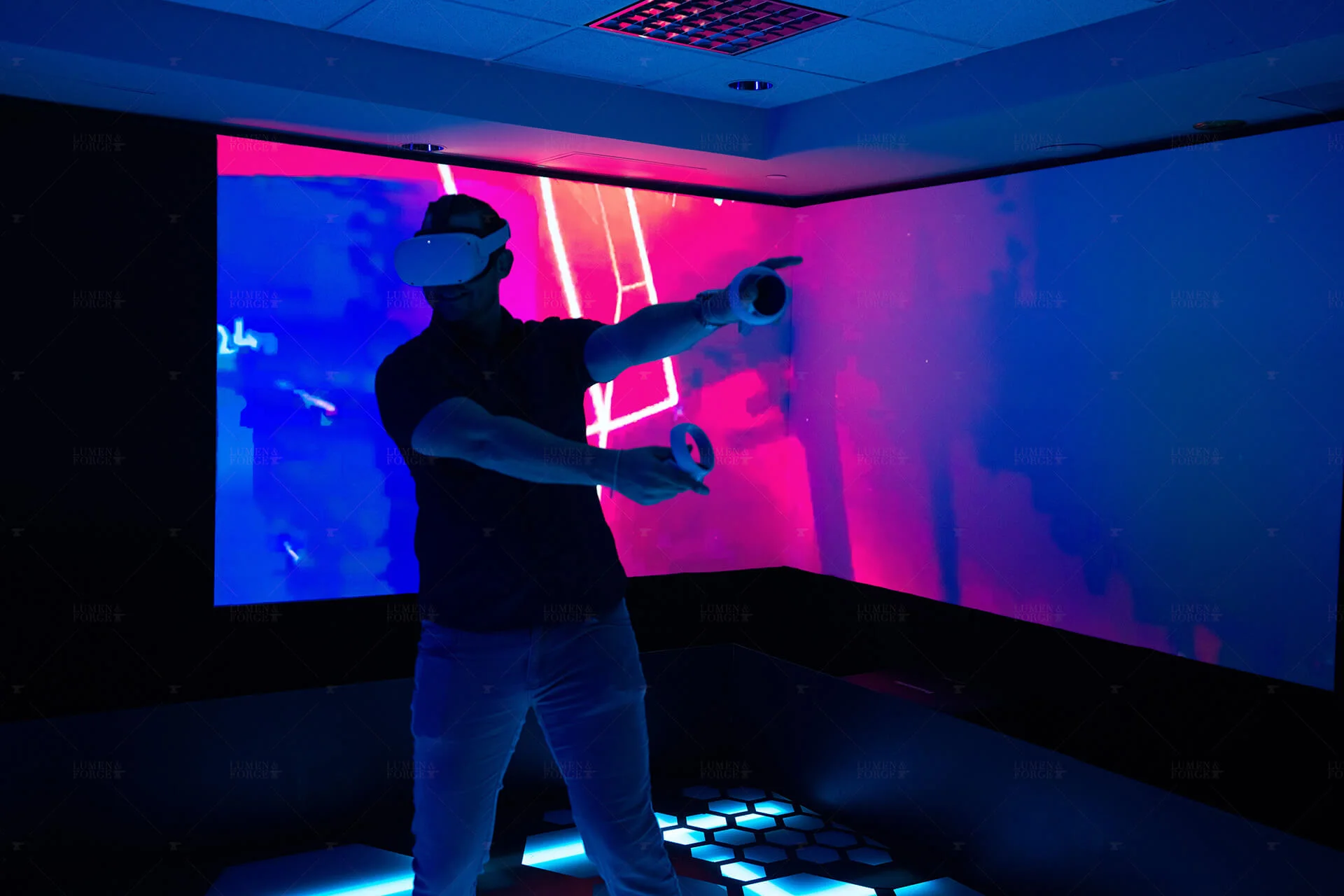
Interactive Projection
Room and Environment Mapping
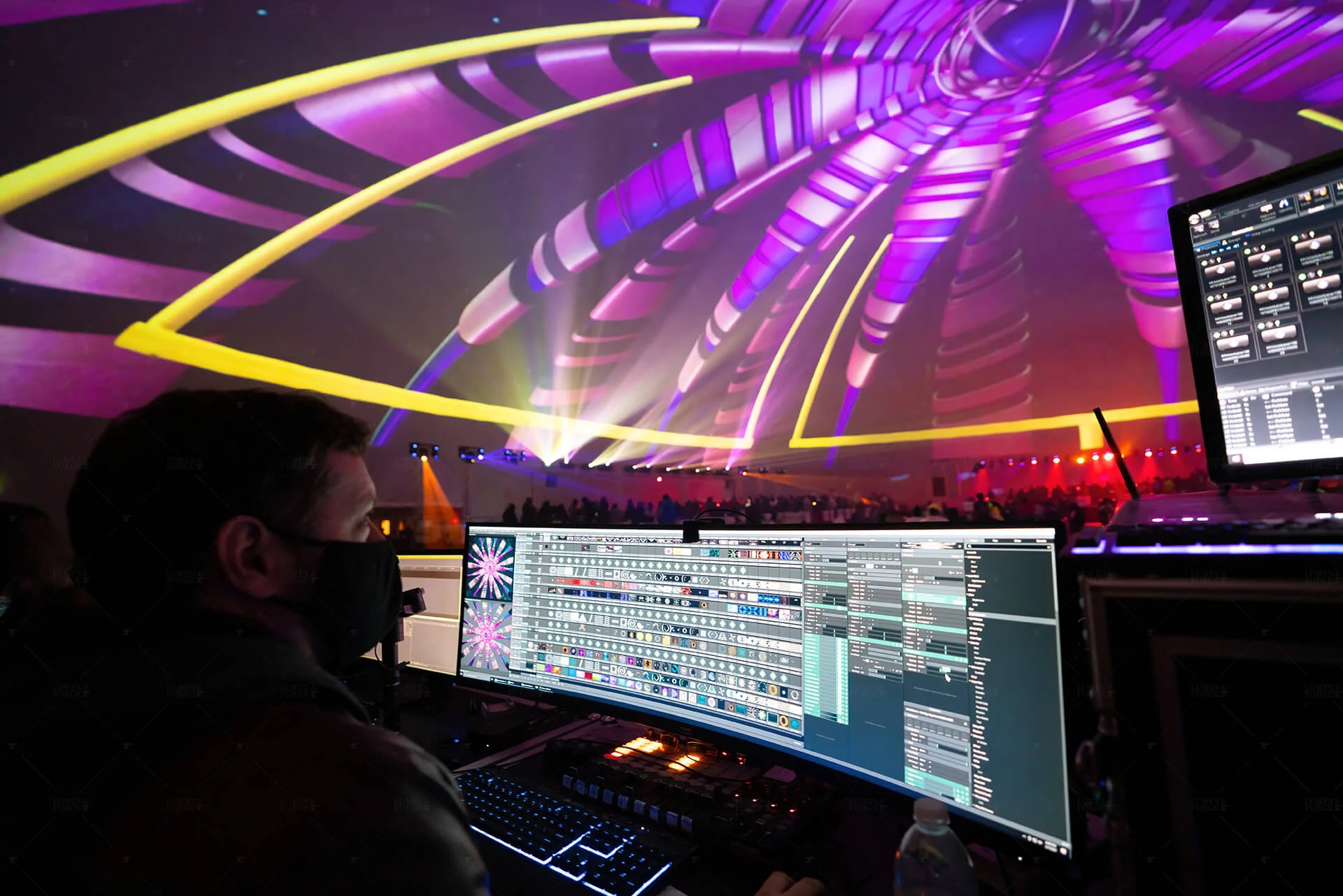
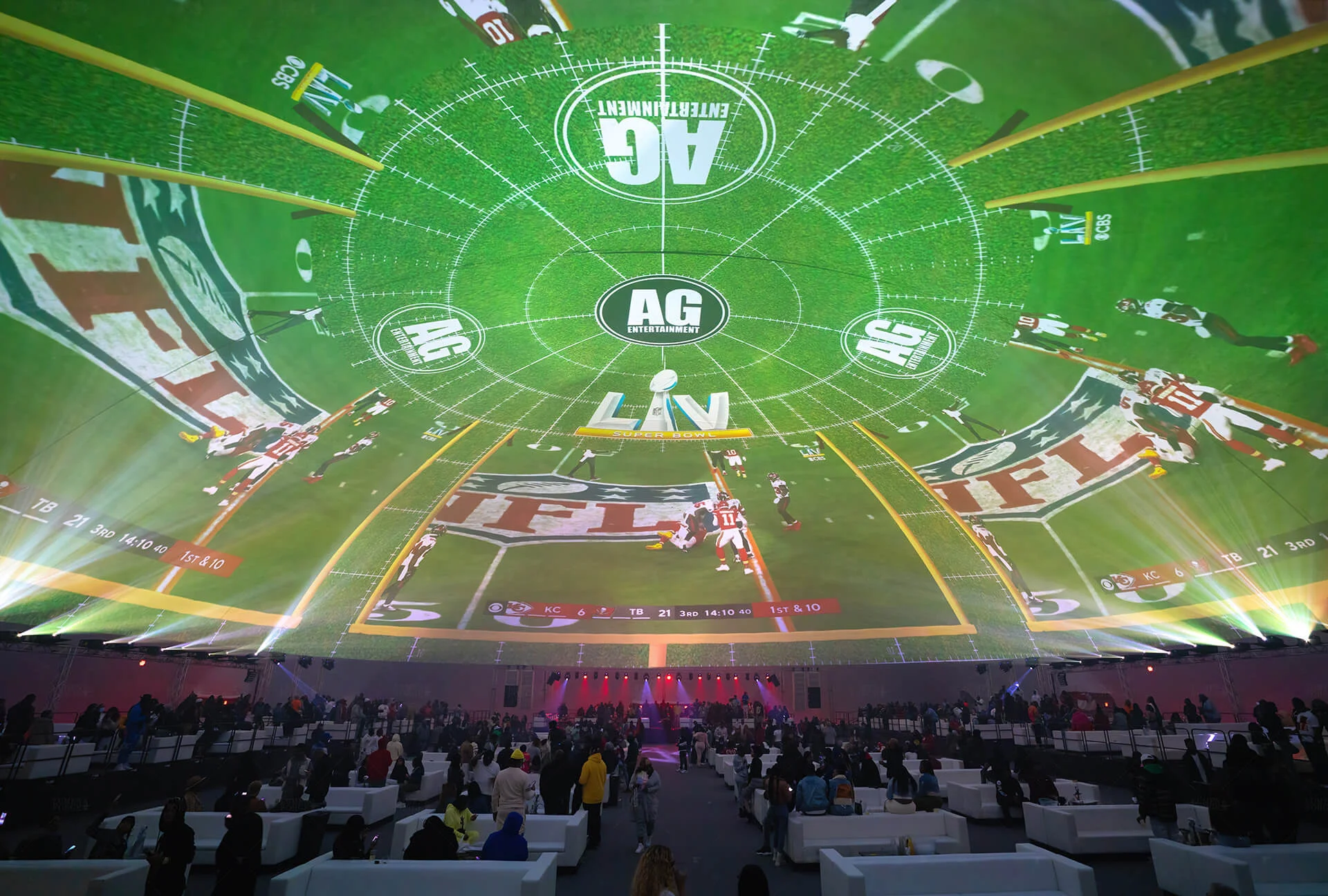
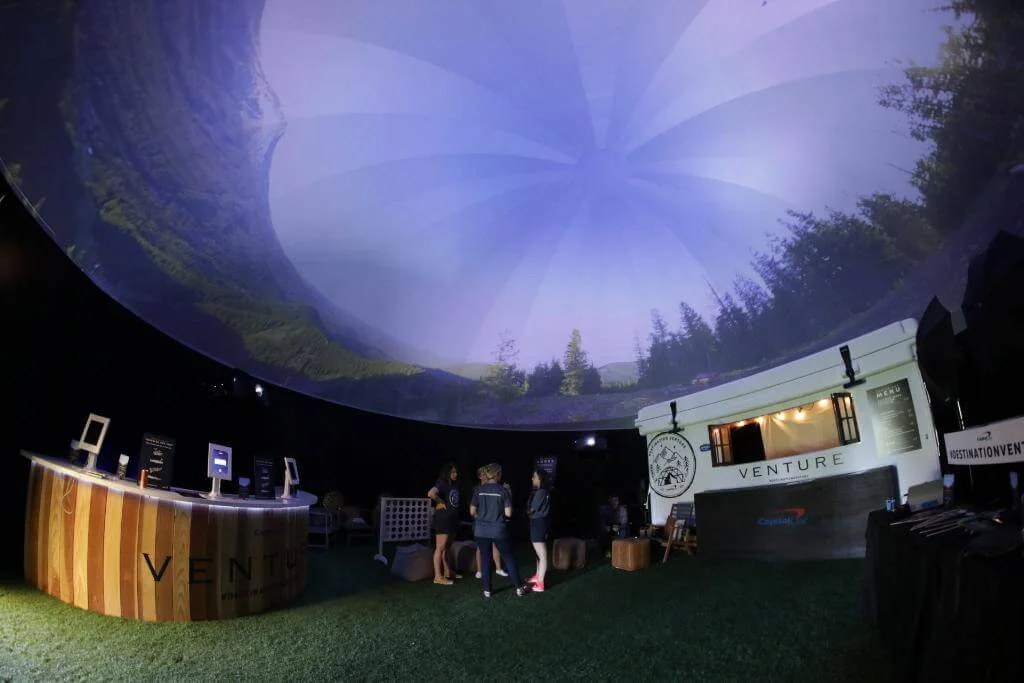
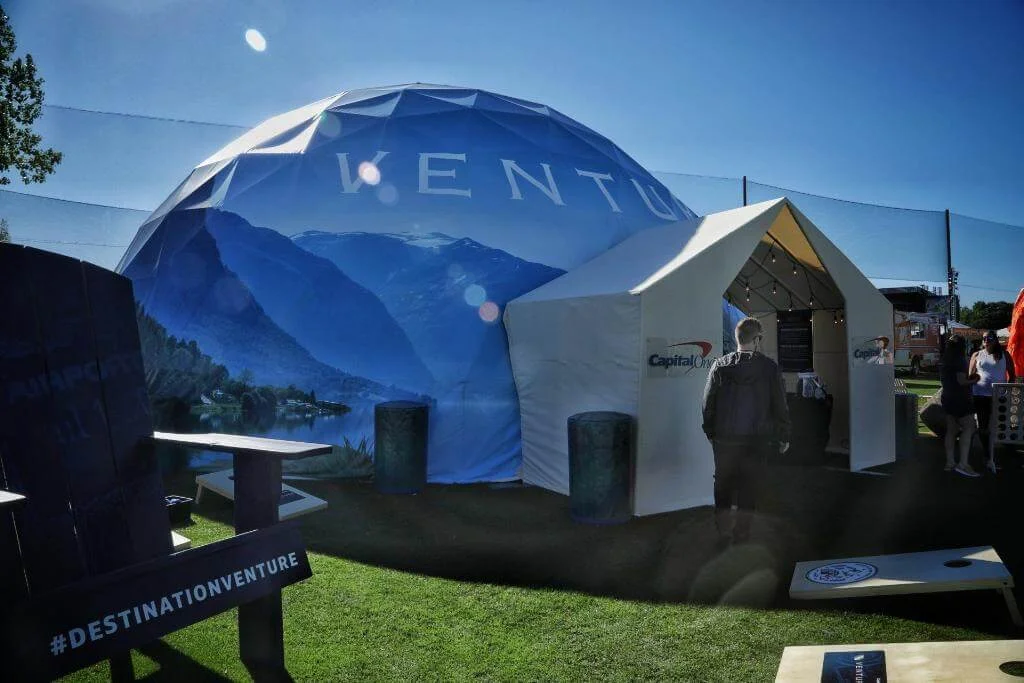
Dome Projection
Why Columbus Is a Natural Fit for Projection Mapping
Columbus is not a city that rewards a flashy loop on a wall and calls it a night. The audiences here arrive from a dense mix of industries: higher education and collegiate athletics, insurance and financial services, retail and consumer brands, healthcare, and technology and data centers. Those are people who spend their working lives reading data, evaluating risk and measuring returns. When they walk into a brand activation, they bring the same instincts with them. They want to understand what they are looking at, why it exists and what it is telling them. Spectacle gets their attention for a moment. Relevance is what holds it.
The calendar raises the stakes further. The Arnold Sports Festival fills the Greater Columbus Convention Center in late February and early March with an audience that travels for fitness, performance and gear, and expects production values to match the scale of the event. June brings the Columbus Arts Festival to the downtown riverfront and ComFest to Goodale Park, two crowds with sharp visual literacy and a low tolerance for anything that feels like advertising wearing an art costume. Red White and BOOM! draws the region downtown in early July, and the Ohio State Fair runs from late July into early August at the Ohio Expo Center. Each of these audiences is distinct, and each one reads a projection differently.
Then there is fall, when Ohio State Buckeyes home football takes over Ohio Stadium and the surrounding streets. That is a crowd of tens of thousands arriving with a single shared focus, and it is one of the hardest rooms in the country to impress with anything generic. The same holds at Nationwide Arena, the Schottenstein Center, ScottsMiracle-Gro Field and Huntington Park, where fans move between the venue and the districts around it before and after events. A projection that ignores that flow, or that says nothing about the city it is standing in, reads as an import.
Cultural institutions set the bar too. COSI, the Columbus Museum of Art, the Franklin Park Conservatory and the Scioto Mile all host programming that trains local audiences to expect craft, narrative and a point of view, not just brightness. Add a convention and sports expo economy that brings outside brands into the Greater Columbus Convention Center year round, and the local audience becomes unusually good at telling the difference between a production built for Columbus and one dropped in from somewhere else. That is why projection mapping here has to carry meaning as well as light, and why the strongest activations are the ones that speak to a specific street, a specific season and a specific crowd.
Lumen and Forge: Game-Day Energy for the Capital City
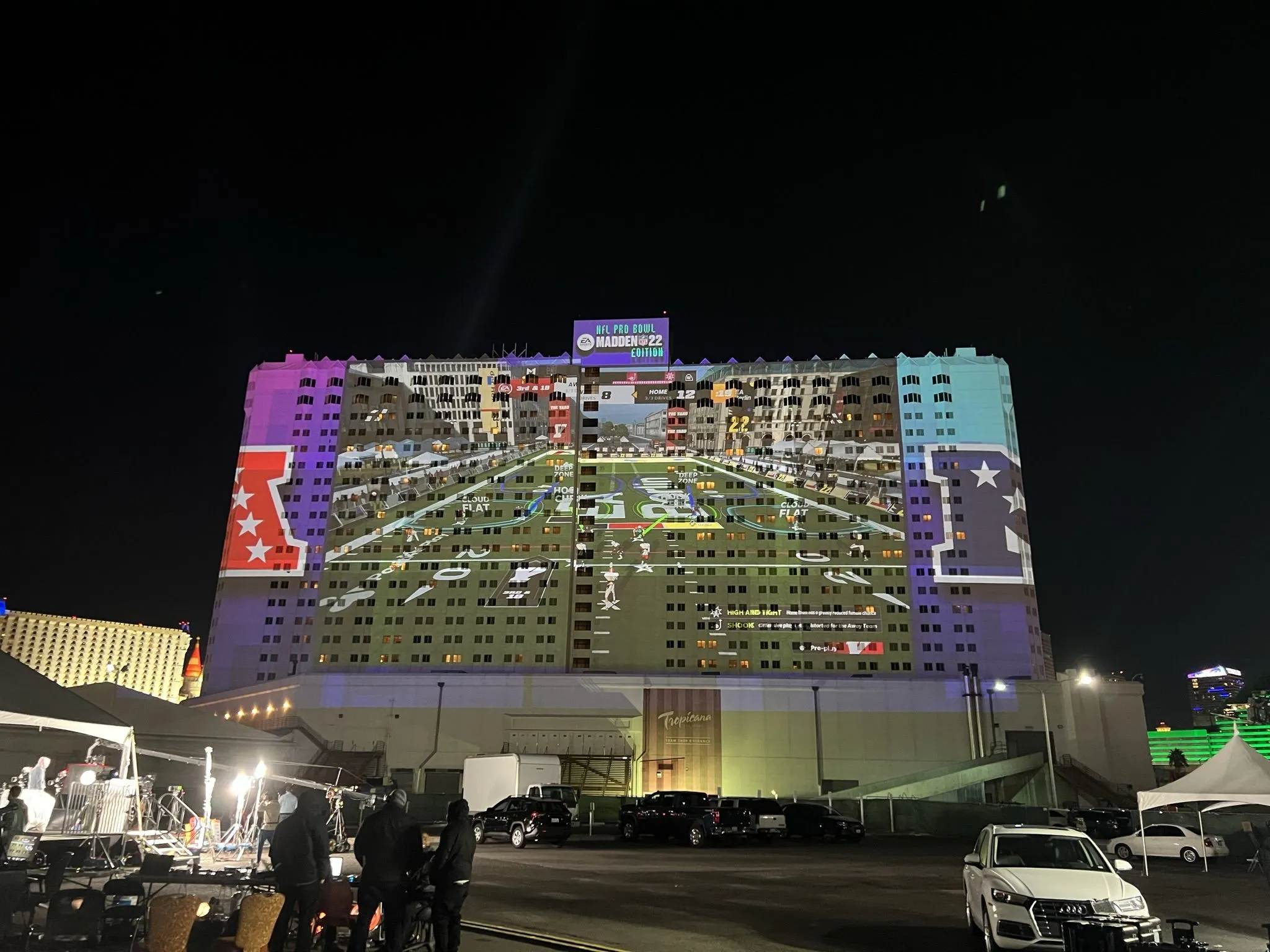
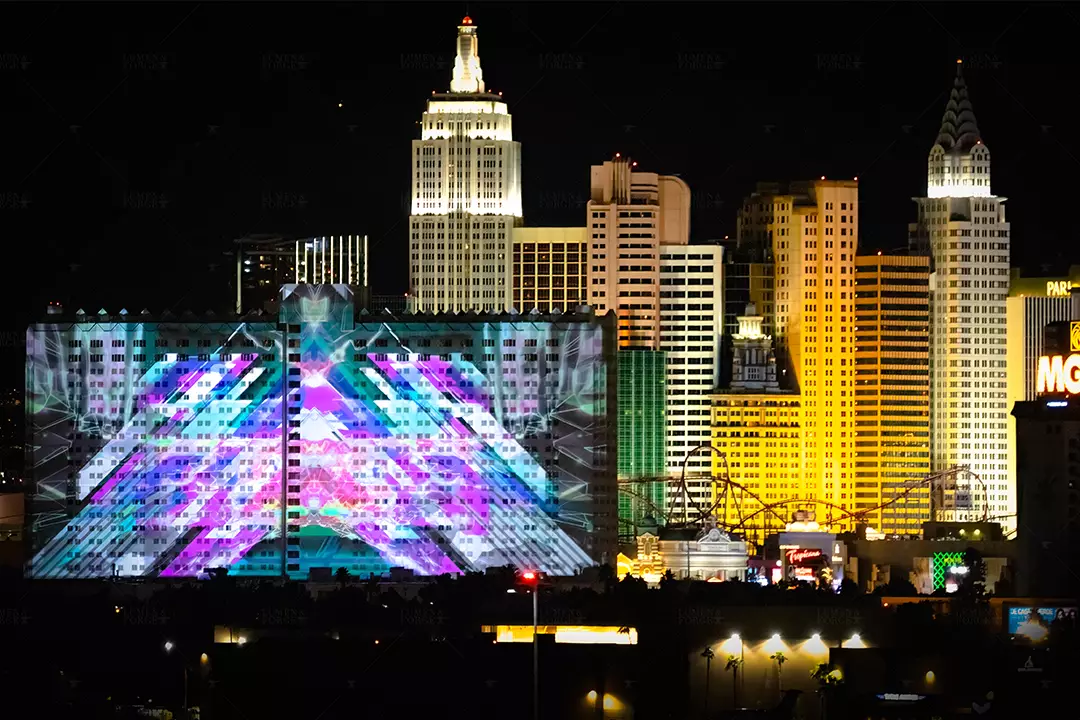
Over 15 years of producing large-scale projection mapping and immersive experiences for globally recognized brands gives Lumen and Forge the operational depth Columbus productions require. Our portfolio includes building projections for Nike and Air Jordan at NBA All-Star Weekend, large-scale convention experiences for Toyota, McLaren, and Mastercard, a world record video game screen at the Tropicana, and the Beneath the Blue 360-degree dome for National Geographic. Our team is comfortable working alongside experienced production crews and holding a technical standard in front of an audience that knows the difference, which is exactly what Columbus requires.
Who We Work With in Columbus
Columbus runs on a calendar of moments people plan around. Projection mapping fits that rhythm, whether it is a single night on a landmark facade or a room-scale environment that runs for the length of a convention. Here is who tends to call us.
- Higher education and collegiate athletics. Campus milestones, donor events, recruiting weekends and game day build-up all need something a static banner cannot do. We map onto architecture, stage surfaces and temporary structures so a university or athletics department can turn a building into the story of the season, then repeat it for the next one.
- Insurance and financial services. Annual meetings, sales kickoffs and client appreciation events reward precision. Object mapping puts data, milestones and brand marks onto a physical form in the room, which reads as substance rather than decoration to an audience that notices detail.
- Retail and consumer brands. Product launches, pop-ups and sponsorship activations need a crowd-stopping moment. We build interactive installations and building projection that let shoppers and fans step into the brand instead of walking past it.
- Healthcare. Fundraisers, recognition galas and community health events carry a tone that has to be right. We keep the visuals warm and legible, mapping onto venue walls and objects so the message lands without overwhelming the room.
- Technology and data centers. Groundbreakings, ribbon cuttings and customer briefings benefit from showing scale and infrastructure in motion. Projection turns a facility or a floor plan into something an audience can actually read.
- Conventions and sports expos. Show floors at the Greater Columbus Convention Center and similar venues compete for attention. We install booth-scale projection and dome content that pulls traffic from the aisle and holds it.
Ready to Light Up the Scioto Mile?
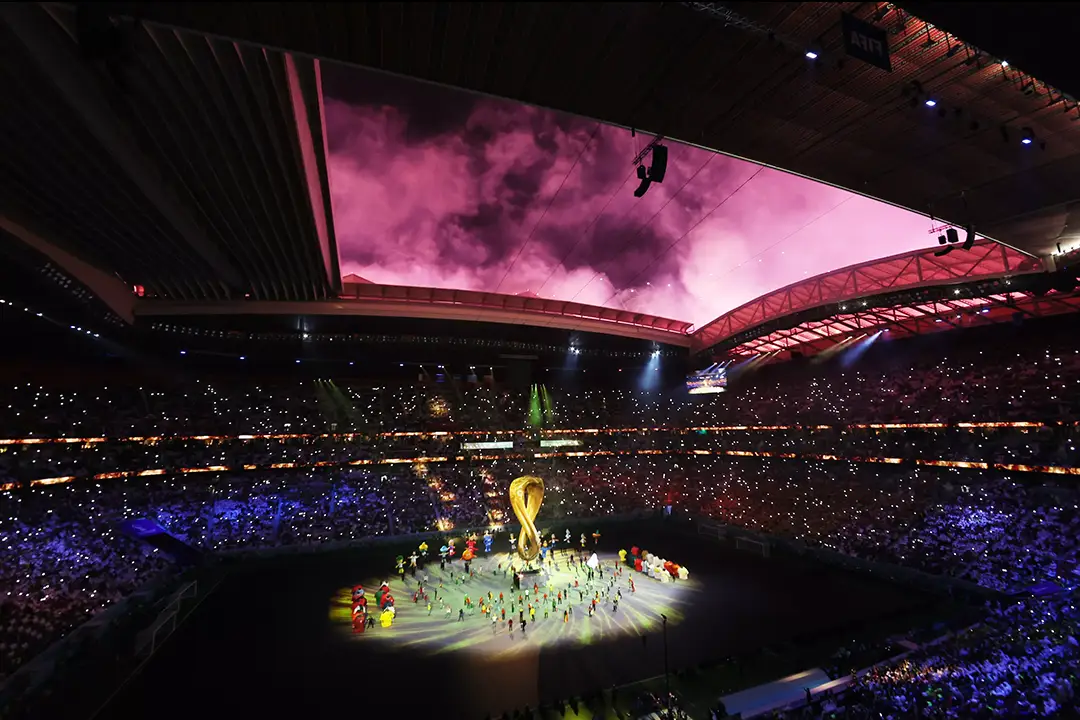
Columbus audiences are used to big stages and long traditions, from Buckeyes Saturdays at Ohio Stadium to June nights along the Scioto Mile and the Arnold Sports Festival at the Greater Columbus Convention Center. Lumen and Forge brings more than 15 years of projection mapping and immersive experience work for brands such as Nike and Air Jordan, Toyota, McLaren and Mastercard to that same standard, whether the canvas is a building facade, an object, a room or a dome.
If you are planning a launch, activation, gala or game day moment at Nationwide Arena, COSI, the Ohio Statehouse or anywhere else in the city, get in touch and let us map what is possible.
Frequently Asked Questions: Projection Mapping in Columbus
Standard projection displays a flat image on a flat screen or white wall. Projection mapping uses specialized software to warp, align, and calibrate video content so it fits precisely onto any three-dimensional surface, whether that is a building exterior, a custom sculpture, a vehicle, or an entire room. The software accounts for every edge, angle, and curve, so the content appears to belong to the object itself rather than simply being cast onto it. In a city full of working production professionals, that level of precision is what separates a real installation from a lighting effect.
Yes. Projection mapping works outdoors in Columbus with the right planning. Summer evenings give the longest window after sunset, when buildings and stages read best, while spring and fall events need earlier darkness and brighter projectors. Winter cold affects gear, so we specify accordingly. Downtown ambient light from streetlights and venues such as Nationwide Arena or the Scioto Mile shapes contrast, so we scout each site, aim for after dusk, and design content that holds up against the glow.
Columbus gives projection mapping plenty of canvas. Nationwide Arena and the Greater Columbus Convention Center handle large-scale building projection, while Ohio Stadium and the Schottenstein Center suit game-day spectacle. COSI, the Columbus Museum of Art and the Ohio Statehouse reward architectural mapping, and Franklin Park Conservatory, the Scioto Mile, Huntington Park and ScottsMiracle-Gro Field each offer distinct outdoor or event settings.
Columbus events built for projection mapping activations include the Arnold Sports Festival at the Greater Columbus Convention Center, the Columbus Arts Festival on the downtown riverfront, ComFest in Goodale Park, Red White and BOOM! downtown, and the Ohio State Fair at the Ohio Expo Center. Fall Ohio State Buckeyes home football at Ohio Stadium also draws crowds that brand activations can meet.
Yes. Lumen and Forge coordinates permits, power, rigging and site logistics with the venue for Columbus events and installations. For street and park land activations, special event permits are coordinated through the City of Columbus special event application portal, with the Columbus Division of Police Special Events Office and Columbus Recreation and Parks reviewing events on streets and park land. We manage the technical and site details so your team can focus on the audience and the brand.
The cost of projection mapping in Columbus depends on what you are projecting onto and how long it needs to run. A single-surface building projection on the Ohio Statehouse facade is a different scope than a room-scale environment inside COSI or a dome build for a convention at the Greater Columbus Convention Center. Surface scale, content complexity, event duration, equipment and crew all shape the budget, along with permitting through the City of Columbus for street and park land activations. Share your venue, dates and creative goals and Lumen and Forge will scope it.
Lead time depends on the scale of the project. Custom content, a site survey, equipment and crew scheduling all take time, and large building projections and outdoor events need the longest runway. Events on streets and park land also go through the City of Columbus special event application portal, so build that into the timeline. Get in touch as soon as your Columbus venue and date are set so we can plan the schedule with you.
Projection mapping treats a surface as a canvas, warping content so it lands precisely on a flat facade or screen. 3D projection mapping goes further, mapping onto objects and architecture with real depth, so light wraps corners, columns and contours and the surface appears to move, shift or dissolve. In Columbus, that could mean animating the sculptural forms of the Franklin Park Conservatory rather than a flat wall.
In addition to projection mapping, we offer dome projection for fully immersive 360-degree spherical experiences, event and project design for end-to-end production planning, and animation and visual storytelling for original content creation. Many of our Columbus clients combine projection mapping with one or more of these services into a single integrated production. We are a full-service immersive experience company, and the strongest work we build is conceived as a whole from the first conversation.
Do you have more questions?
Didn't find what you were looking for? Our team is happy to walk you through your project and answer anything else