

How To Choose a Dome Projection System: Inflatable vs Hard Shell
{{actual_date_posted}}
Choosing a dome for immersive projection is part experience design, part logistics, and part engineering. The right structure should fit your story, your site, and your schedule, then support clean geometry for mapping and reliable operations for the length of the run. This guide explains when an inflatable dome is the smart move and when a hard shell dome is worth the investment, with practical checkpoints you can use before you commit.
Start With The Experience
Begin with the outcome you want people to feel. Is the goal a pop up activation with rapid set up and high throughput, a traveling exhibit with repeatable geometry, or a permanent theater with premium audio and seating. Define capacity, dwell time, brightness expectations, content format, and whether people will stand, sit, or move through the space. These decisions drive size, placement, and hardware choices long before model numbers enter the conversation.
Consider the venue realities. Ceiling height, clear floor area, access paths for cases, electrical capacity, HVAC, and egress all shape what is feasible. In outdoor locations, add wind exposure, anchoring method, sound spill, and neighborhood lighting to the checklist. The best dome is the one that works with, not against, your site.
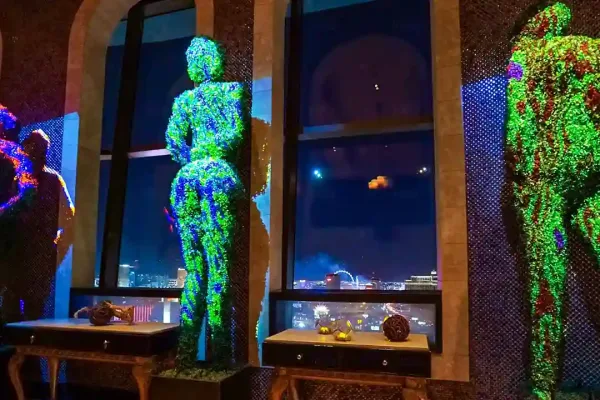
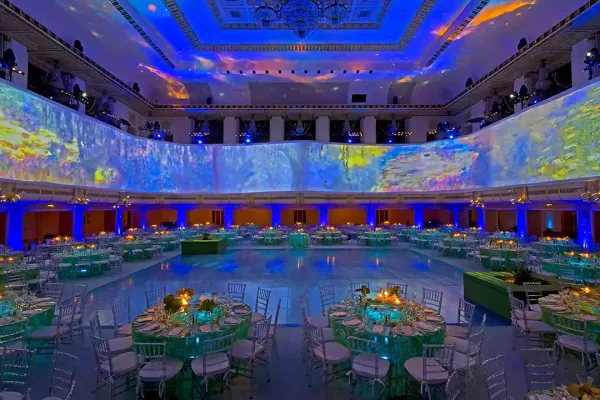
Inside Miami's largest projection dome, immersive skyline visuals wrap the full interior surface.
Inflatable Domes: Where They Shine
Speed and portability
Small inflatables pack into cases, travel easily, and go from truck to showtime quickly with a trained crew. They are ideal for indoor tours, festivals, trade shows, and short-run campaigns. When you need to move city to city, an inflatable can save days of loading, rigging, and finishing work.
Flexible footprints
Many inflatable models offer multiple diameters, shapes and heights, so you can match capacity to the venue while keeping a familiar interior. The dome is the screen liner as part of the structure, so you get a continuous surface without elaborate internal framing like the traditional geodesic dome negative pressure screens.
Operational simplicity
Inflatables come in a few different formats some use continuous blowers to maintain pressure throughout the event, while others are sealed, pressurized structures that only need to be inflated once and then hold their form. Each option has its advantages depending on the environment, noise sensitivity, power availability, and how "architectural" you want the final look to feel.
What to watch
Inflatables also come with a few practical requirements that are important to plan for early. They need specific anchoring points based on the structure's design and expected loads, so rigging and ballast should be engineered not improvised. Depending on the type, they may require continuous power for blowers (and redundancy planning), and you'll want to think through noise, cable routing, and what happens if power is interrupted.
If the experience is interior or semi-enclosed, HVAC and airflow become critical. Projectors, media servers, lighting, and bodies all generate heat, and without proper ventilation the space can become uncomfortable quickly plus heat can impact projector performance and alignment stability.
From a visuals standpoint, surface reflectivity and seams vary by material and liner type. Some fabrics hotspot more, some show stitch lines more, and some shift color under projection. It's smart to plan contrast and color tests before final grading so your content holds up in real conditions. And operationally, you'll want wind policies and local permitting locked in well before show day. Temporary-structure requirements, wind thresholds, and shutdown protocols vary widely by jurisdiction, and getting clarity early prevents last-minute surprises.
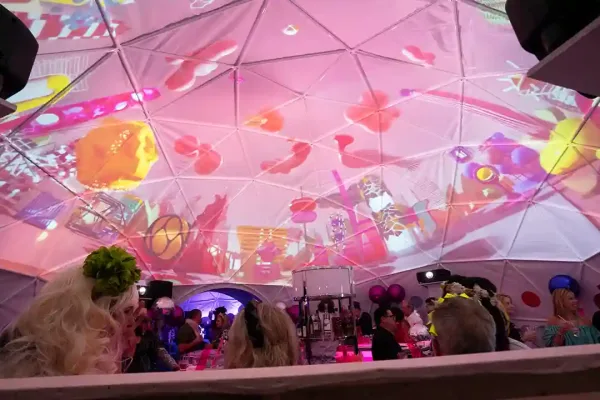
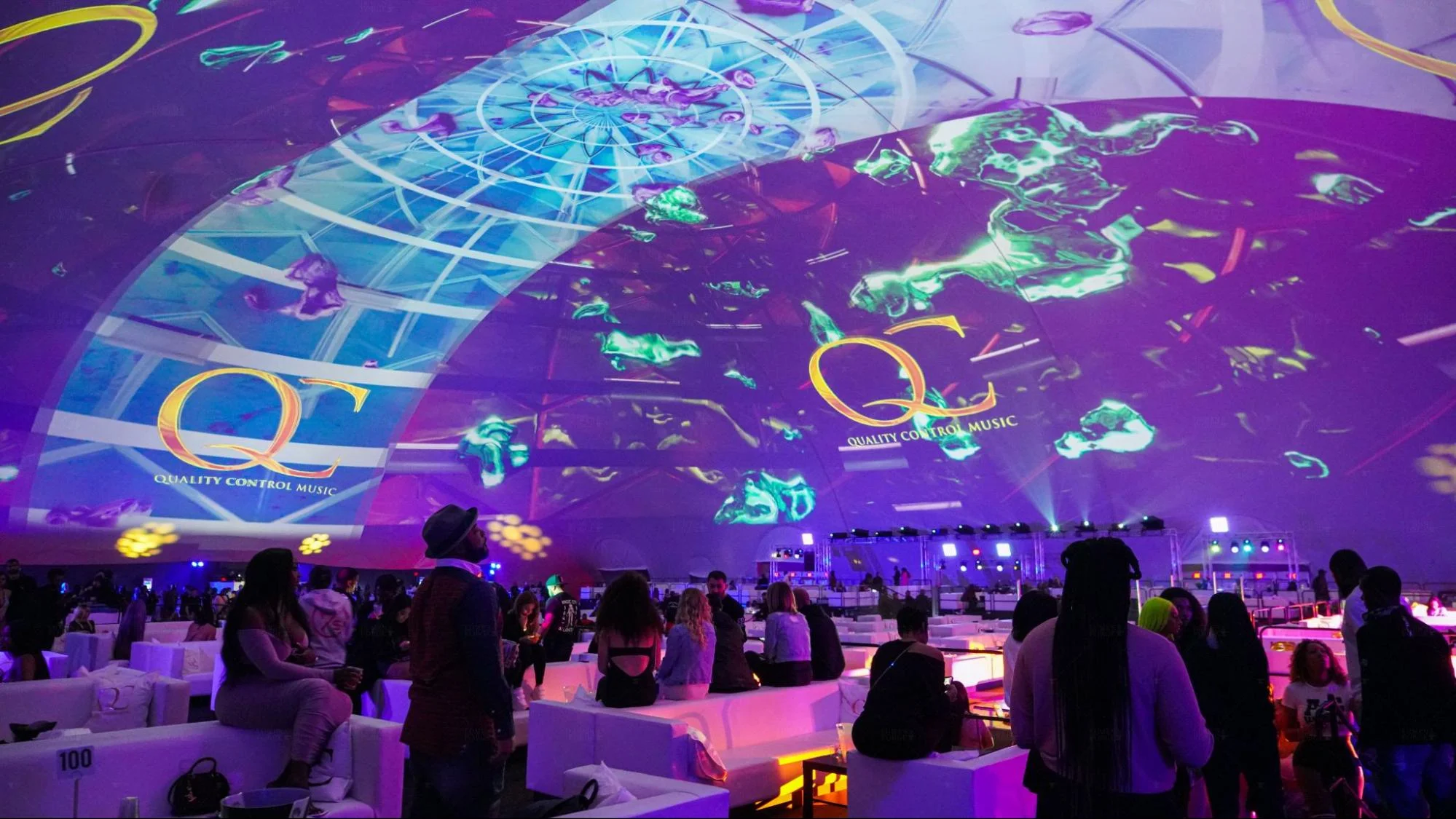
See how a high-visibility brand moment leverages a rapid deployment dome in Travis Scott x Air Jordan at ComplexCon.
Hard Shell Domes: When They Win
Premium finish and acoustics
Hard shell domes use rigid panels with engineered coatings for uniform reflectance. The result is higher perceived contrast, seamless blends, and less surface flutter under heavy sound. Acoustically, you can tune the room with interior treatments, seating, and isolation from outside noise.
Stable geometry for complex mapping
With a rigid shell, projector positions, throw distances, and blend geometry remain stable over long runtimes. That consistency enables tighter pixel alignment, reliable camera-based auto-calibration, and repeatable shows with minimal drift especially important when you're running day after day and need the image to stay "locked." You can take it a step further by hard-masking the projectors (physically or optically) to eliminate any unwanted spill and reduce black-level overlap in blend regions. This is particularly valuable in planetariums and other precision applications, where even subtle double-black areas or overlap artifacts can be noticeable in dark scenes and fine gradients. The result is cleaner edges, deeper perceived blacks, and a more seamless final image.
Long service life
For permanent or multi-year dome installations, a hard shell justifies itself through durability, serviceable finishes, and a far cleaner technical integration. You get concealed cable paths, protected equipment runs, and intentional routing for power, data, and ventilation plus clean tie-ins for HVAC, audio, lighting, and ADA-compliant access. At this point it stops feeling like a temporary structure and starts functioning like a purpose-built venue. It becomes a theater, not a tent.
What to watch
Hard shells require crane access, additional construction time, and close coordination with local building codes and inspections. They will require engineered foundations or footings based on site conditions and jurisdictional requirements. Budgets must cover the full build-out not just the structure including finishes, seating, platforms/ramps, and life-safety systems. Lead times are longer by default, so key design decisions need to be finalized early to keep permitting, fabrication, and installation on schedule.
For an example of a headline-grabbing, large-format build, explore the World's Largest Projection Dome in Miami.
Image Quality, Brightness, And Lenses
Screen surface and gain
Inflatable liners and hard-shell coatings will differ in optical gain and surface texture. Gain directly affects perceived brightness and hotspot risk, while texture determines how well fine detail, edges, and subtle gradients hold up at scale. You must match the projector lumen class to the total surface area and expected ambient light, then validate the result with test content on the actual material not a sample that "looks close." Real-world tests are the only reliable way to confirm brightness uniformity, black levels, and how the content reads once it's wrapped across seams, curves, and viewing angles.
Throw ratio and placement
Throw ratio is the primary driver because it dictates whether you can achieve the required image size at the correct pixel density for the resolution and the experience you're trying to create. Once throw is right, everything else (projector placement, audience clearance, brightness efficiency, and blend geometry) falls into place. Short-throw and ultra-short-throw lenses are often ideal for immersive interiors because they keep projection beams above or below audience sightlines, preserve headroom, and make better use of the available volume. In larger domes especially with perimeter projector rings and longer standoff distances standard-throw lenses can be the right fit.
Start by calculating the throw ratio using the lens-to-surface distance divided by the target image width. Then choose lenses that hit that ratio with the zoom sitting closer to the wide end of the range whenever possible this typically yields higher usable light and a more forgiving alignment window.
Blending and black level
Domes rarely use a single projector. Plan overlaps of twenty to thirty percent with gamma corrected blends and black level compensation. Keep all units within the same model family for uniform color and aging. Hard shell domes make fine blending easier due to surface stability, yet inflatables can achieve excellent results with good calibration and content design.
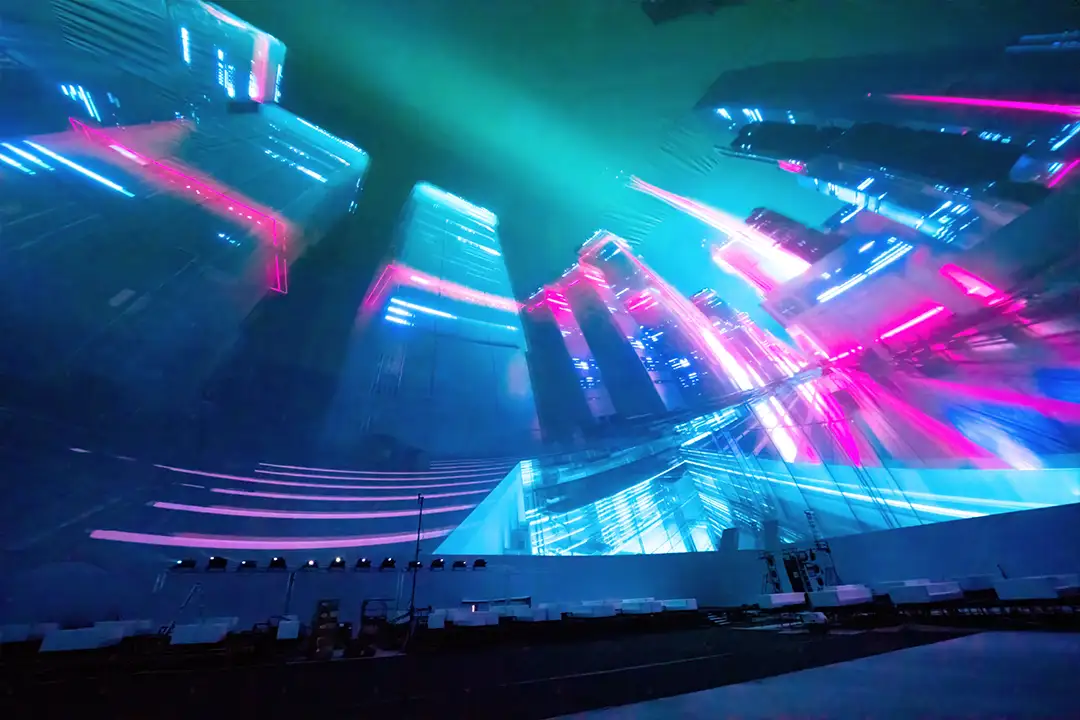
Inside Miami's largest projection dome, immersive skyline visuals wrap the full interior surface.
Logistics, Safety, And Codes
Permitting and compliance
Inflatables are typically classified as temporary structures, which still requires proper documentation fire-retardant certificates, egress plans, and anchoring/ballast engineering. In some jurisdictions, they can be permitted as permanent installations, but that classification needs to be confirmed and approved up front. Hard shells are treated much more like buildings, and will generally require permits, inspections, and stamped engineered drawings (often including structural, electrical, and life-safety review). In both cases, the requirements vary by city and site so confirm the local permitting path early to avoid schedule and scope surprises.
Power and HVAC
Budget power for the full system projectors, media servers, networking/control, blowers (if inflatable), and comfort systems. Dome interiors trap heat, and the combined load from equipment and audience can rise quickly. To stay ahead of this, ensure all electrical and HVAC calculations are completed in advance: model total connected load, peak draw, diversity factors, and required cooling/airflow based on audience counts, dwell time, and show schedules. Size power distribution and HVAC with appropriate headroom so the system remains stable and comfortable under full operational conditions.
Egress and accessibility
People must be able to enter, exit, and circulate safely with formal sign-off from the relevant local authorities (fire marshal, building department, venue safety, and any required inspectors). Plan for clear aisle widths, compliant egress paths, ADA access, and defined staff positions for operations and crowd management. In hard shells, ramps and platforms should be engineered and integrated into the design from the start. In inflatables, select appropriate door/airlock modules and configure the interior layout to support smooth, compliant audience flow.
Cost And Timeline Reality
Inflatable domes
Depending on size, inflatables typically deliver a lower upfront cost and much faster deployment often with lighter freight, simpler site requirements, and fewer construction trades. They're well-suited for touring campaigns, pop-ups, and programs with tight timelines or uncertain long-term commitments.
Operationally, costs are generally predictable:
- Power draw for continuous blowers (and any backup / redundancy planning)
- Staffing for guest flow, safety checks, and monitoring wind thresholds
- Anchoring / ballast requirements based on design and site exposure
- Permitting as a temporary structure (fire-retardant certs, egress plan, anchor documentation)
- Environmental management (heat buildup, ventilation strategy, door/airlock modules to maintain pressure)
From an experience perspective, inflatables can look incredible, especially with projection, but you'll plan around seams, surface gain/texture variability, and subtle movement that can affect ultra-fine alignment over long runs.
Hard shell domes
Hard shells require a higher capital outlay and a longer design/build cycle, with more coordination across disciplines. They also demand more up-front planning for:
- Permits, inspections, and engineered drawings (often structural and life safety, sometimes electrical and mechanical)
- Cranes, access, staging, and construction schedule
- Foundations/footings and site civil work as required by code
- Full integration of HVAC, audio, lighting, fire/life safety, and ADA circulation
- Interior build-out (finishes, seating, ramps/platforms, equipment rooms, cable paths)
The payoff is substantial: stable geometry (consistent projector positions, throw distances, blend masks), better acoustics, premium finishes, concealed infrastructure, and a much more "venue-grade" feel. Hard shells excel for permanent installations, year-round programming, and premium ticketed experiences where durability, repeatability, and guest comfort are central to the product.
In short: inflatables are optimized for speed, flexibility, and touring economics; hard shells are optimized for performance, permanence, and a premium theater-grade experience.
Quick Decision Guide
Choose an Inflatable Dome if you need…
Speed and portability as the top priority
- You're launching on a tight timeline and need a structure that can deploy quickly with minimal construction trades.
- You plan multiple stops (touring, roadshow, brand campaign, festivals) and want a repeatable kit-of-parts setup.
- The site is temporary or only available for a short window (limited load-in/load-out days).
Flexible footprints and lighter logistics
- You need options to fit different venues (parking lots, plazas, rooftops with limits, festival grounds).
- You want simpler transport, faster strikes, and lower site disruption.
Lower upfront cost with predictable operations
- You'd rather preserve capital and pay predictable operating costs (blowers, staffing, routine maintenance).
- You can accommodate the operational requirements: continuous power for blowers (if required), wind operating thresholds, and daily safety checks.
You're okay engineering around "temporary-structure realities"
- Permitting usually follows temporary-structure pathways (fire-retardant certs, egress plan, anchoring documentation).
- You'll design the experience knowing surfaces can vary (seams, material gain/texture) and the structure can subtly move, meaning ultra-fine calibration may need a bit more tolerance.
- Comfort planning matters: domes hold heat, so ventilation and airflow must be designed intentionally.
Best fit for: pop-ups, festivals, touring activations, pilot programs, seasonal programs with uncertain renewal, quick market tests.
Choose a Hard Shell Dome if you want…
Premium "venue-grade" experience
- You want the structure to read as a theater, not a temporary installation.
- You care deeply about acoustics, perceived quality, comfort, and finish level, and you want it to feel permanent and premium.
Maximum stability for projection and repeatable shows
- Rigid geometry keeps projector positions, throw distances, and blend masks stable across long runs.
- That stability supports tighter pixel alignment, reliable camera-based calibration, and repeatable results with minimal drift.
- You can integrate proper projector infrastructure (service access, hard masking, concealed cable paths, dedicated equipment rooms) for cleaner black levels and higher consistency.
Full integration and scalability
- You need clean integration of HVAC, audio, lighting, ADA circulation, and life-safety, built into the design, not adapted after the fact.
- You want consistent uptime, easier serviceability, and long-term maintainability (replaceable finishes, protected systems, access panels).
You can support building-level coordination
- You can accommodate the longer lead time: design decisions, engineered drawings, permitting, fabrication, site work, and inspections.
- Budget includes structure and build-out: finishes, seating, platforms/ramps, life safety, and code compliance.
Best fit for: permanent venues, year-round programming, premium ticketed experiences, institutional installs, long-running residencies, high-throughput attractions.
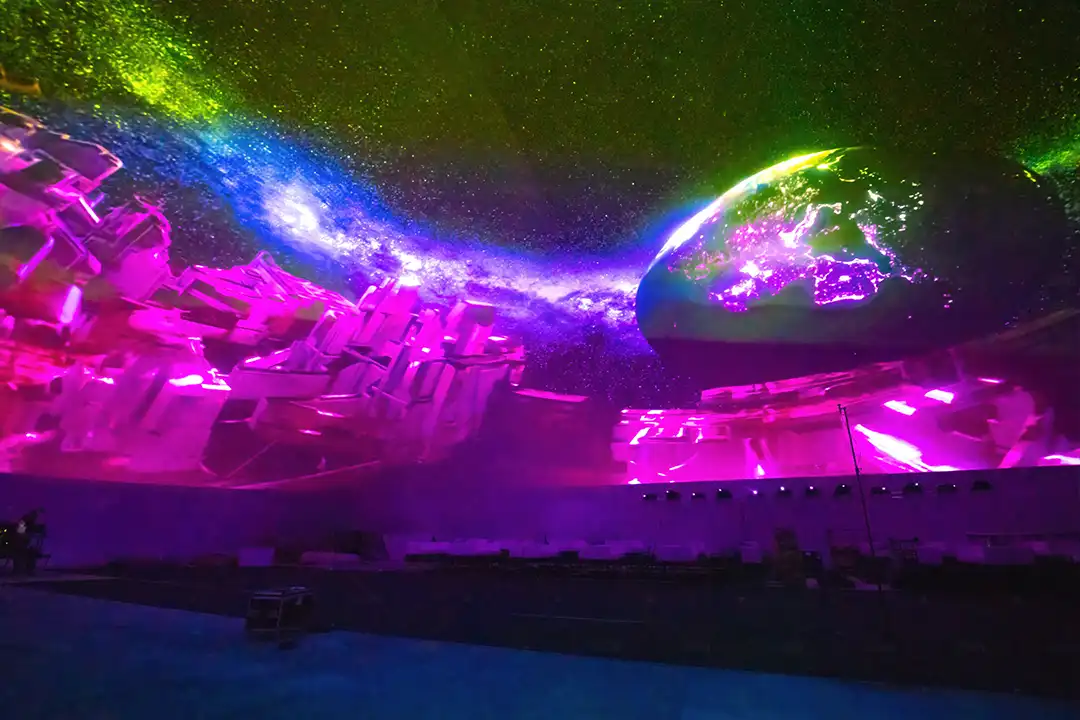
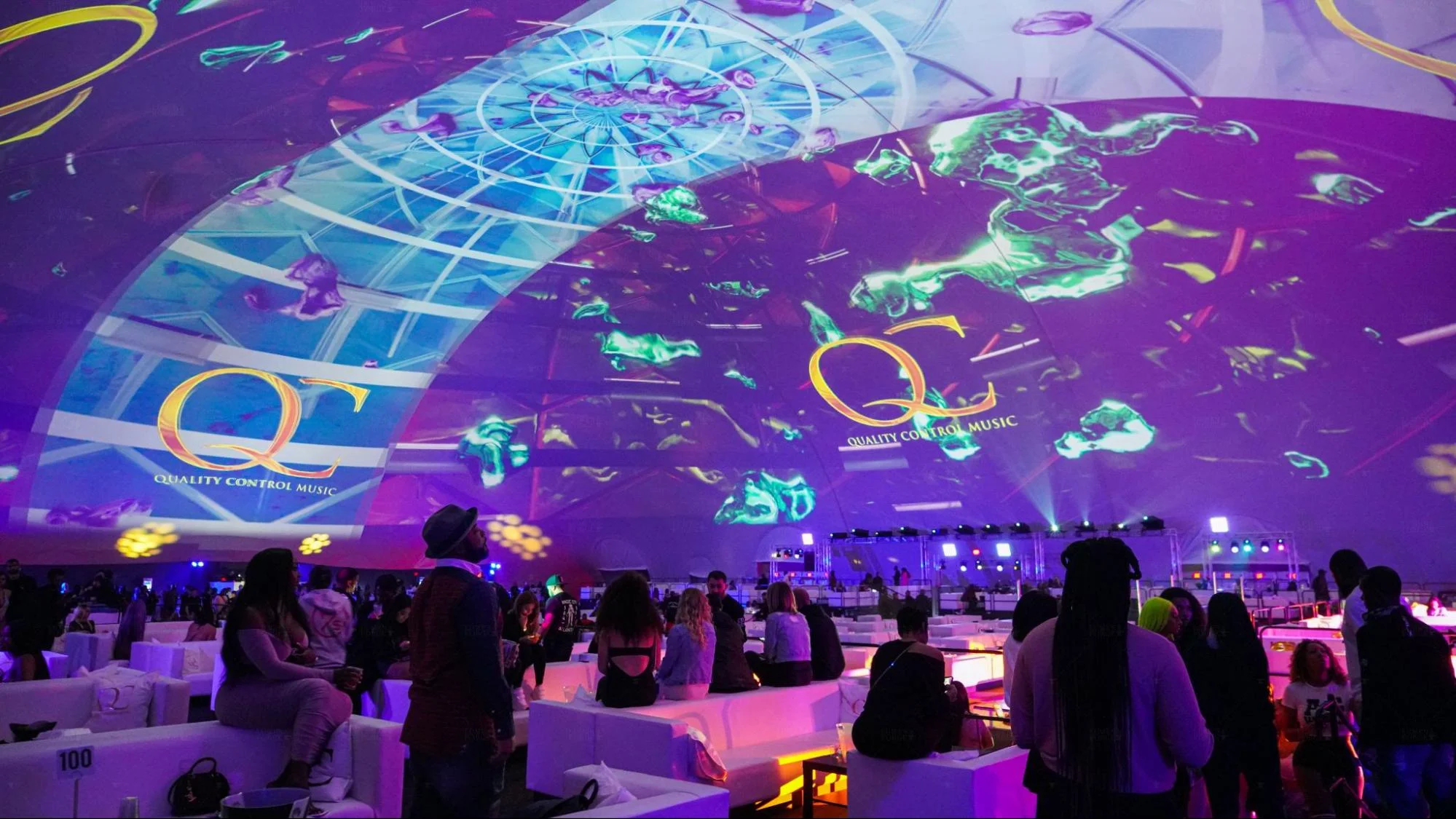
A crowd fills Miami's largest projection dome beneath immersive neon sky visuals.
The simplest way to decide
- If you're optimizing for time-to-launch and mobility → Inflatable
- If you're optimizing for quality and reliability and long-term value → Hard shell
Content And Workflow Considerations
Fulldome mastering
Render content as full dome masters or drive real-time scenes that output in real time to equirectangular or full dome master or spherical formats. Keep important elements away from blend regions and doors. Test legibility and motion across the perceived horizon line.
Servers and control
Select a media server platform that reliably supports genlocked/multi-output sync, real-time warping and blending, and robust show control (timelines, cues, triggers, and failover strategy). The goal is a system that can run for long hours with repeatable startup/shutdown behavior and minimal operator intervention. For long-running installs, implement camera-based auto-calibration to maintain alignment over time, and build it into operations not as an afterthought. Schedule daily verification passes before doors (a quick alignment/edge check, focus confirmation, and blend validation) so any drift or configuration changes are caught early and the show opens in a known-good state.
Audio and interaction
Plan spatial audio from day one not as a layer you "add later." Speaker locations, rigging points, cable paths, amplifier/DSP placement, and acoustic treatment all influence the creative and the build. Early planning lets you design for even coverage, intelligibility, and impact, while avoiding compromises like obstructed speakers, noisy equipment placement, or last-minute cabling that shows.
For interactive domes, coordinate the full interaction stack early as well: tracking systems, sensors, control protocols, and safety zoning. Define where guests can stand, walk, and queue so they can move naturally without crossing projection beams, blocking sightlines, or creating shadows in critical viewing areas. Map dedicated zones for operators and staff, establish clear boundaries for equipment and trip hazards, and ensure the tracking volume aligns with the audience flow so the experience feels seamless and safe.
How We Help You Choose
We start with your story, audience, and site because the right dome is as much about the experience as it is the structure. From there, we translate creative intent into a buildable plan: we measure the space, confirm sightlines and audience capacity, and map the technical infrastructure needed to deliver a reliable show.
Our process typically includes:
- Site evaluation and constraints: footprint, access, ceiling/height limits, crane/forklift routes, load-in/out windows, noise restrictions, and local permitting pathway.
- Projection design: throw distances and throw ratios, projector placement, beam paths, resolution targets, blend strategy, and lumen budgeting based on surface area, gain/texture, and ambient light.
- Audience planning: seating layouts, egress and circulation, ADA access, staff positions, and operational flow for peak throughput.
- Systems planning: power distribution, networking/control, media servers, show control, calibration strategy, audio approach (including spatial audio), and HVAC/comfort modeling.
From there, we recommend the structure that best fits the brief, based on timeline, budget, performance targets, and longevity.
For inflatable domes, we focus on:
- Anchoring/ballast engineering and wind operating policies
- Blower power and redundancy planning
- HVAC/ventilation strategy and heat management
- Door/airlock modules, interior layouts, and rapid changeovers for touring or multi-stop programs
For hard shell domes, we focus on:
- Coordination with engineers and local authorities (stamped drawings, permits, inspections)
- Integrated infrastructure: concealed cable paths, equipment access, HVAC, audio, and life-safety
- Finish level, seating/platforms, and premium guest experience details
- Long-term reliability, maintenance planning, and service/support over the life of the venue
Lumen and Forge maps content pipelines that match your schedule and staff, from pre-rendered films to real-time engines.
Bring The Right Dome To Your Story
The best dome is the one that serves your audience, your site, and your content without surprises. Share your goals, constraints, and timeline, and we'll guide you to the right solution, whether that's an inflatable dome or a hard shell venue. We'll translate your creative intent into a real-world system: selecting the right structure, specifying projectors and lenses, calculating throw and brightness, and designing a layout that supports smooth guest flow, comfort, and repeatable operations. The result is a clean, seamless canvas something that feels natural to step into and effortless to run, day after day, for the full duration of your program.