

360° Dome Projection for Concerts & Music Festivals | Lumen & Forge
{{actual_date_posted}}
360° Dome Projection for Concerts and Music Festivals
Every live music event fights for the same thing: a moment that stops the crowd mid-dance. A 360° dome projection transforms a concert or festival into a world where the music has a visual heartbeat, wrapping the audience in a synchronized environment that no flat screen or stage backdrop can match. At Lumen & Forge, we've spent over 15 years turning venues into living canvases, from the Tropicana facade to immersive domes for National Geographic. For music events, the dome is not a gimmick—it's a tool to deepen the connection between artist and audience.
Why 360° Dome Projection Works for Concerts and Music Festivals
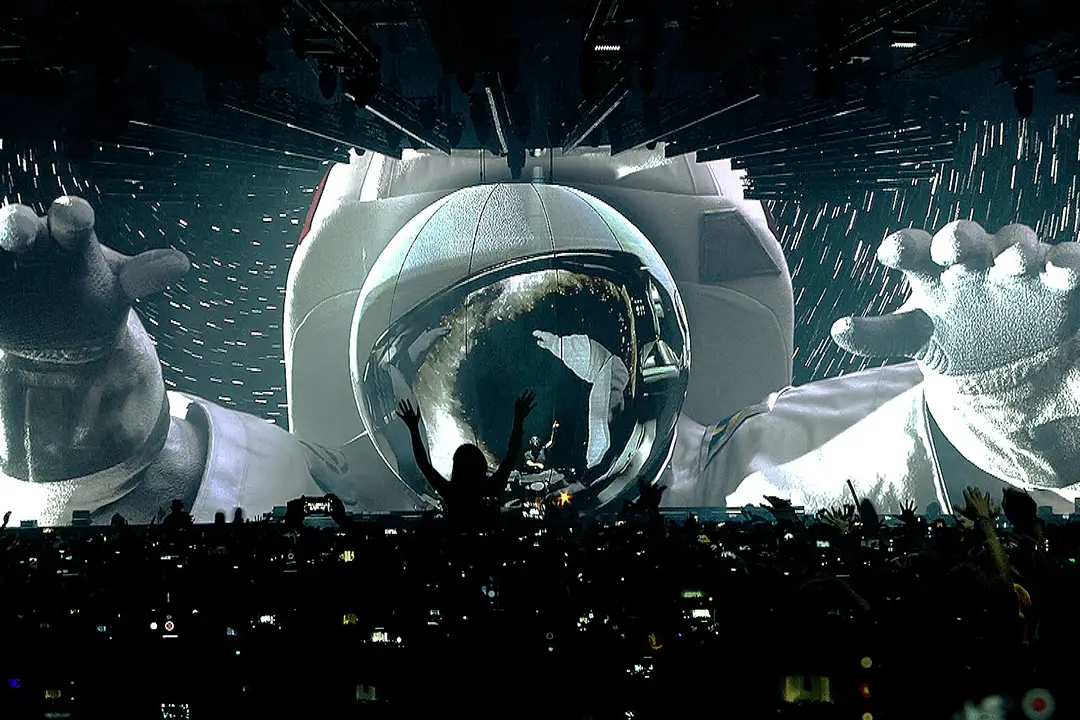
Standard concert visuals compete with the stage. A dome projection eliminates that competition. When the entire field of view—overhead, peripheral, and forward—becomes part of the visual narrative, the audience stops watching and starts being inside. For a music festival, this means a single dome can serve as a headliner's canvas, a chill-out zone for ambient sets, or a sensory journey for electronic acts. The immersive quality amplifies emotional peaks: a bass drop becomes a visual explosion across 360 degrees, and a slow build feels like the sky is contracting around you.
Unlike traditional projection mapping on flat surfaces or stage sets, a dome creates a seamless, curved surface that mimics the human visual field. This is especially effective for festival environments where you have a mobile audience. People can stand, sit, or move within the dome, and every angle delivers a coherent, high-impact experience. For concerts, it turns a single performance into a multisensory event that attendees will remember—and share—long after the last note. At Lumen & Forge, we've seen how this depth of immersion can elevate a festival's brand and create a distinct "destination" within a larger event.
What a Lumen & Forge Dome Production Involves
Every dome we produce starts with creative intent, not hardware. Before we spec a single projector, we work with the artist or festival team to understand the music's rhythm, mood, and narrative. This leads to custom content—whether it's abstract visualizations, live-coded graphics, or cinematic sequences—that is specifically designed for a 360° surface. We don't repurpose flat-screen content; we create worlds that wrap around the audience.
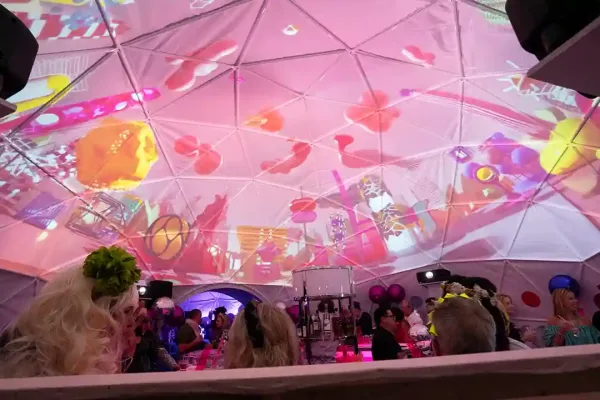
On the technical side, the process is precise. We use multiple high-lumen projectors, often six or more, calibrated to a custom-built inflatable or rigid dome. Each projector is mapped to a specific section of the surface using our projection mapping expertise, ensuring seamless blending across seams. The media server is synced to the audio feed—whether from a live band or a DJ—so visuals react in real-time. For outdoor festivals, we factor in ambient light, wind, and power requirements. For indoor concerts, we control the lighting environment to maximize contrast and color saturation. The result is a dome projection that feels alive, not just projected.
We also handle the entire event design integration. That means coordinating with stage builders, sound engineers, and festival logistics teams to ensure the dome fits the site plan, doesn't block sightlines to other stages, and has proper ingress/egress for crowds. Our team has done this for high-stakes events like the NBA All-Star projections for Nike Air Jordan, where precision and timing were everything.
Practical Planning Notes for Festival and Concert Organizers
Space and sightlines are the first consideration. A dome for a festival typically ranges from 10 to 30 meters in diameter. You need a clear footprint that is level and free of overhead obstructions. The dome's entrance and exit should be positioned to manage crowd flow without creating bottlenecks. Inside, we recommend a capacity of 50 to 300 people depending on dome size and whether you want seated or standing audiences. For sightlines, remember that the best experience is when the entire surface is visible from any point inside—avoid placing pillars or equipment inside the dome.
Timeline is critical. A custom dome production requires 6 to 12 weeks for content creation, depending on complexity. On-site setup takes one to three days for a single dome, including inflation, projector rigging, calibration, and testing. For multi-day festivals, we build in daily maintenance windows to clean lenses and check alignment. For indoor concerts, the timeline can be tighter if the venue is prepped, but we never compromise on the calibration process—it's what makes the difference between a good show and a great one.
Indoor versus outdoor matters. Outdoor domes need heavier fabric and anchoring for wind, plus we use brighter projectors to combat sunlight. Indoor domes can use lighter materials and lower-lumen projectors, often achieving deeper blacks and richer colors. Budgets for a full dome production typically start in the mid-five figures for a single-day event and scale up with dome size, content complexity, and event duration. We provide a detailed scope during the contact us phase, tailored to your specific festival or concert needs.
Finally, think about the experience design. Will the dome be a standalone attraction, or will it host specific sets? Do you want live visuals generated from audio input, or pre-rendered sequences? These decisions affect both creative and technical planning. Our team at Lumen and Forge guides you through each choice, drawing on our experience with large-scale projection mapping and immersive installations.
Ready to turn your next concert or festival into a world that audiences step inside? Contact us to discuss your vision, and we'll help you scope the right dome production for your event.
Frequently asked questions
How far in advance should we book 360° dome projection for a concert or music festival?
Does 360° dome projection work outdoors at a music festival, and how does ambient light affect it?
What space and audience capacity do we need for a 360° dome at a concert?
Can 360° dome projection incorporate our branding or live visuals during a festival set?
Do you handle everything turnkey—setup, crew, and teardown—for a music festival?