

Interactive Projection Mapping for Brand Activations That Work
{{actual_date_posted}}
Interactive Projection Mapping for Brand Activations: Creating Memorable Experiences
Brand activations live or die on one thing: whether people stop, engage, and remember. The challenge is cutting through noise—trade show floors, retail spaces, or public plazas—where every brand is competing for attention. Interactive projection mapping offers a solution that doesn’t just capture eyes but demands participation. When someone steps into a projection-mapped scene and their movement changes the visuals, they’re not just watching an ad; they’re part of the story. That’s the shift from passive viewing to active engagement, and it’s what makes these installations so effective.
Why Interactive Projection Mapping Works for Brand Activations
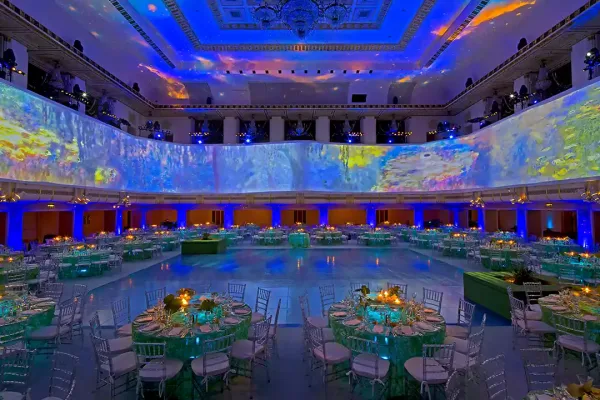
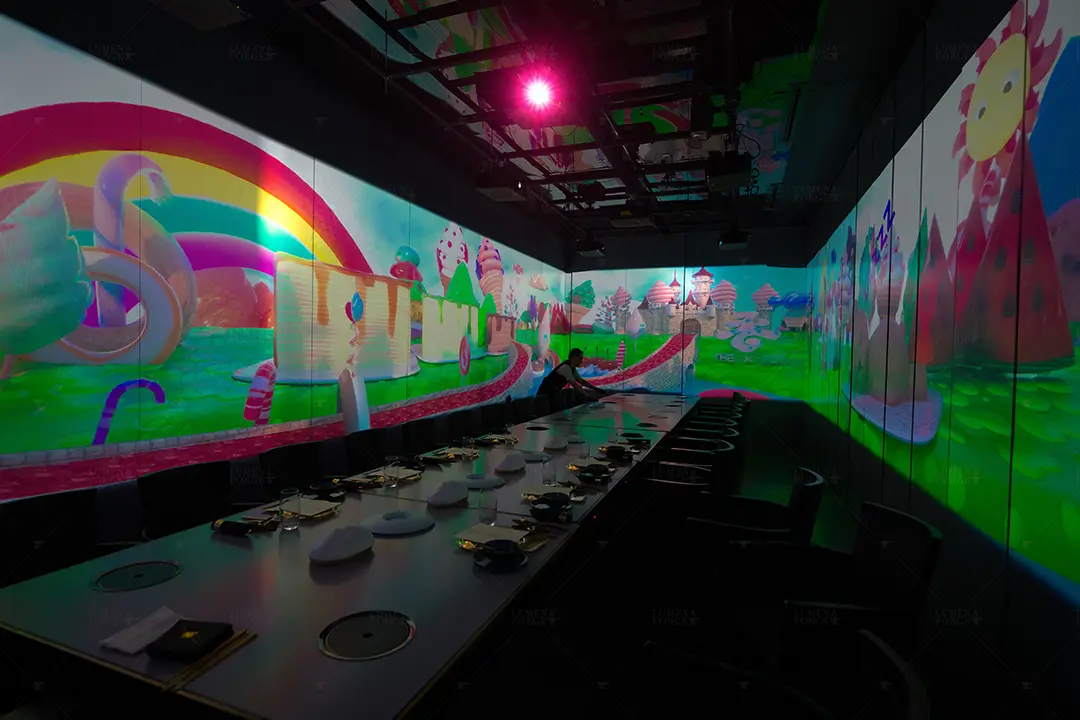
The power of interactive projection mapping lies in its ability to turn any surface into a responsive canvas. Unlike static signage or video walls, a projection-mapped activation reacts in real time to gestures, touch, or motion. This creates a feedback loop: the more someone interacts, the more they invest emotionally. For a brand, that investment translates into longer dwell times, organic social sharing, and a stronger association with innovation.
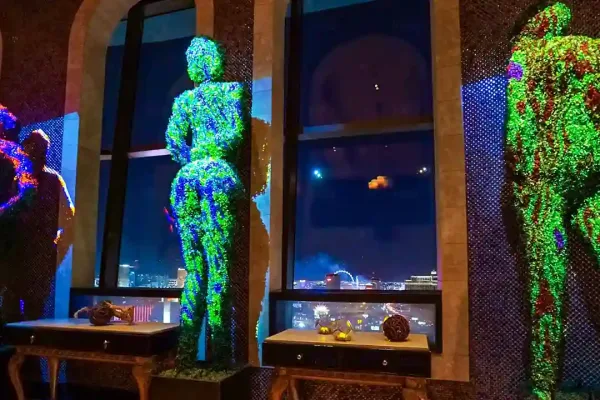
Consider a launch event where attendees wave their hands to reveal product features on a building facade. Or a pop-up where footsteps trigger animated trails on the floor. These moments are inherently shareable—people film them, post them, and talk about them. The interactivity becomes the hook, and the brand message weaves naturally into the experience. We’ve seen this firsthand with large-scale builds, like the world’s-largest video game screen on the Tropicana facade, where passersby became players. That level of engagement is hard to replicate with traditional media.
Interactive projection mapping also offers flexibility. The same hardware can host different content for morning, afternoon, and evening sessions, or adapt to different audiences without rebuilding the physical setup. For a brand activation running multiple days, this means the experience stays fresh, encouraging repeat visits and deeper brand exploration.
What a Lumen & Forge Interactive Projection Mapping Production Involves
Every project starts with a conversation about the brand’s goals and the physical space. We’re not a box-dropper; we design the entire experience from concept to execution. That means custom content creation is at the core. Our artists develop visuals that align with the brand’s identity—colors, typography, motion—while building in interactive triggers. For a Nike Air Jordan activation at NBA All-Star, we mapped content onto a building-scale surface, syncing motion sensors to player movements. The result was a dynamic, game-like environment that felt alive.
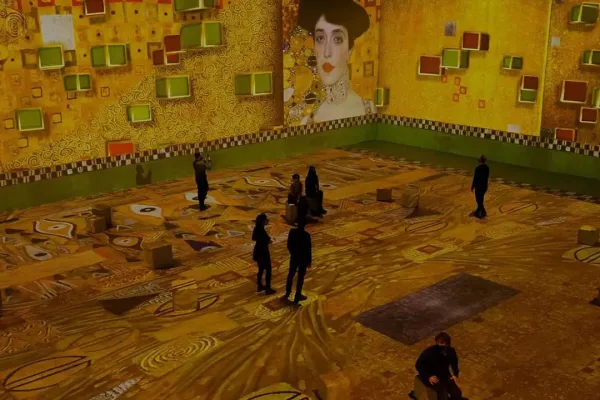
On the technical side, we select projectors based on brightness, resolution, and throw distance. For indoor activations, we often use laser projectors that are quiet and maintain color accuracy. Outdoors, we account for ambient light with higher-lumen units and weatherproof housings. Media servers run the show, handling real-time rendering and sensor input. Surface mapping is where precision matters: we scan the space, model it in 3D, and align every pixel to the architecture. Uneven walls, columns, or curved surfaces become part of the design, not obstacles.
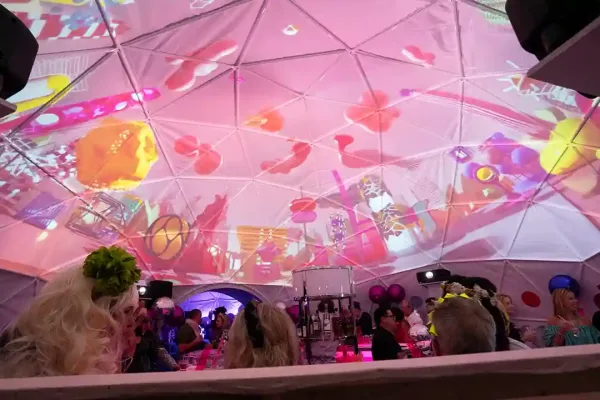
For dome-based activations, we bring our expertise from projects like the “Beneath the Blue” 360° dome for National Geographic. A dome creates an immersive envelope where interactivity can happen across the entire field of view. Attendees might point at constellations or trigger underwater scenes by stepping on floor sensors. The technical setup includes dome projection with multiple projectors blended seamlessly, plus tracking systems that follow movement in 3D space. It’s a full-body experience that leaves a lasting impression.
The production timeline typically spans four to eight weeks, depending on complexity. We handle content creation, hardware procurement, on-site installation, and testing. Our team includes creative directors, software engineers, and projection specialists who’ve worked together for years. That cohesion means fewer surprises and a smoother execution. For organizers, the key is that we manage the technical risk so they can focus on the brand message.
Practical Planning Notes for Organizers
Space is the first consideration. Interactive projection mapping needs room for both the projection surface and the audience. For a walk-up activation, maintain a clear sightline from the projector to the surface, with enough distance for people to stand back and see the full image. Floor projections require a clear area free of furniture or cables. If you’re using a dome, factor in a footprint of at least 20 feet in diameter for a 10-person capacity. Ceiling height matters for overhead projectors—allow at least 12 feet for a standard setup.
Timeline planning should start three months out. The first month is for creative development and site survey. The second month covers content production and hardware preparation. The final month includes installation, calibration, and a dry run. Rushed timelines lead to compromises in content quality or interactivity polish. We recommend at least two days for on-site setup and one full day for testing with actual visitors.
Indoor versus outdoor environments drive different decisions. Indoors, you control lighting and weather, so lower-lumen projectors work and surfaces are predictable. Outdoors, you need projectors rated for heat and dust, plus contingency for wind or rain. Power is another factor: outdoor activations may require generators, which add noise and cost. For a major activation, budget for a dedicated power feed from the venue.
Budget scales with complexity. A single-surface interactive installation with one projector and basic gesture tracking might start around $30,000. A multi-surface build with custom content, multiple projectors, and advanced sensors can run $100,000 to $250,000. Dome installations are at the higher end due to the custom screen, alignment, and tracking systems. These figures include creative development, hardware rental, installation, and on-site support. They don’t include venue costs, permits, or travel. We provide detailed quotes after a site visit and creative brief.
For organizers, the biggest variable is content complexity. Simple triggers like “wave to change color” are quick to produce. More sophisticated interactions, like facial recognition or multi-touch surfaces, require additional development time. We help you choose the right level of interactivity for your audience and budget.
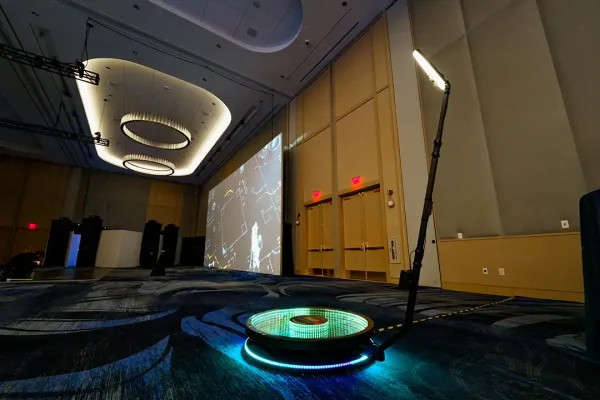
Finally, think about the user journey. Where do people enter the activation? What do they see first? How do they know they can interact? Clear signage or a host can guide them. We often design a “call to action” visual—like a glowing circle on the floor—that invites the first step. Once they engage, the experience should feel intuitive, not confusing. Testing with non-technical users is essential to iron out any friction.
Interactive projection mapping is a tool, not a gimmick. When planned well, it creates a bridge between the brand and the audience that feels personal and memorable. The technology is mature, the creative possibilities are wide, and the results speak for themselves.
Ready to explore how interactive projection mapping can elevate your next brand activation? Lumen and Forge has the experience to guide you from concept to completion. We’ve built projection mapping installations for some of the biggest brands in the world, and we’re here to help you create something that stands out. Start with a conversation about your goals and space—we’ll handle the rest. Contact us to scope your project today.
Frequently asked questions
What makes interactive projection mapping more effective for brand activations than a standard LED wall or static projection?
How far in advance should we book interactive projection mapping for a brand activation?
What space or venue requirements does interactive projection mapping need for a brand activation?
Can interactive projection mapping incorporate our branding, logos, or product in real time?
Does Lumen & Forge handle everything turnkey—equipment, crew, setup, and teardown—for brand activations?