

Interactive Projection Mapping for Galas & Award Shows
{{actual_date_posted}}
Interactive Projection Mapping for Galas & Award Shows
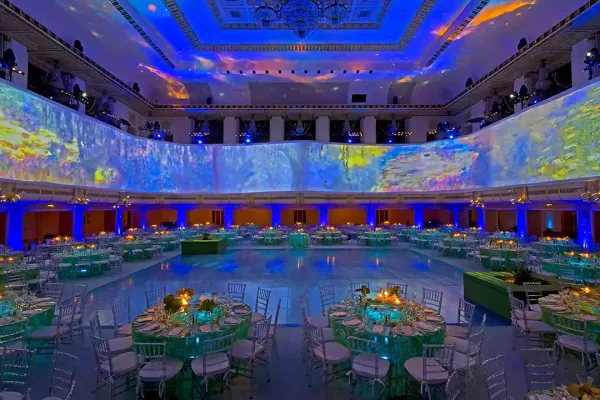
Galas and award shows are built on moments of recognition, but the real challenge is sustaining energy and engagement across an entire evening. Static décor and standard video walls can blend into the background. Interactive projection mapping transforms the venue itself into a participant, turning every entrance, speech, and award presentation into a dynamic, shareable event.
Why Interactive Projection Mapping Works for Galas and Award Shows
Traditional event design relies on passive visuals—banners, screens, or lighting that the audience watches. Interactive projection mapping flips that relationship. Guests become part of the show. When they walk across a mapped floor that ripples with their footsteps, or when their applause triggers a cascade of light across a stage backdrop, the experience becomes personal and memorable. This is especially powerful at galas and award shows, where the audience is already primed for spectacle but often sits through repetitive sequences of speeches and presentations.
Interactive elements create natural breaks and focal points. A pre-show cocktail hour can feature a mapped wall that responds to touch or movement, allowing guests to explore the event’s theme or sponsor content. During the ceremony, projection mapping can bring award categories to life—imagine a custom animated logo that reacts as the winner’s name is announced, or a stage that transforms into a virtual environment for each performance. These moments generate organic social media content, extending the event’s reach beyond the room. For organizers, the payoff is a higher perceived production value and a stronger emotional connection to the brand or cause being celebrated.
What a Lumen & Forge Production Involves
Every gala or award show we produce at Lumen & Forge starts with a creative brief that defines the event’s narrative and technical requirements. Our team then designs custom content tailored to the venue’s architecture—whether that’s a hotel ballroom, a convention center, or an outdoor amphitheater. We’ve mapped everything from intimate stages to the world’s largest video game screen on the Tropicana facade, so scale is never a limitation.
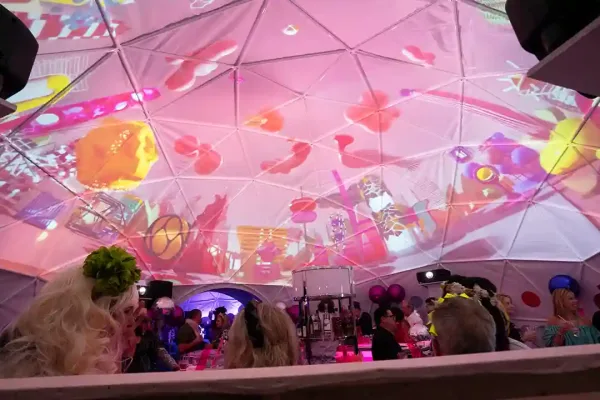
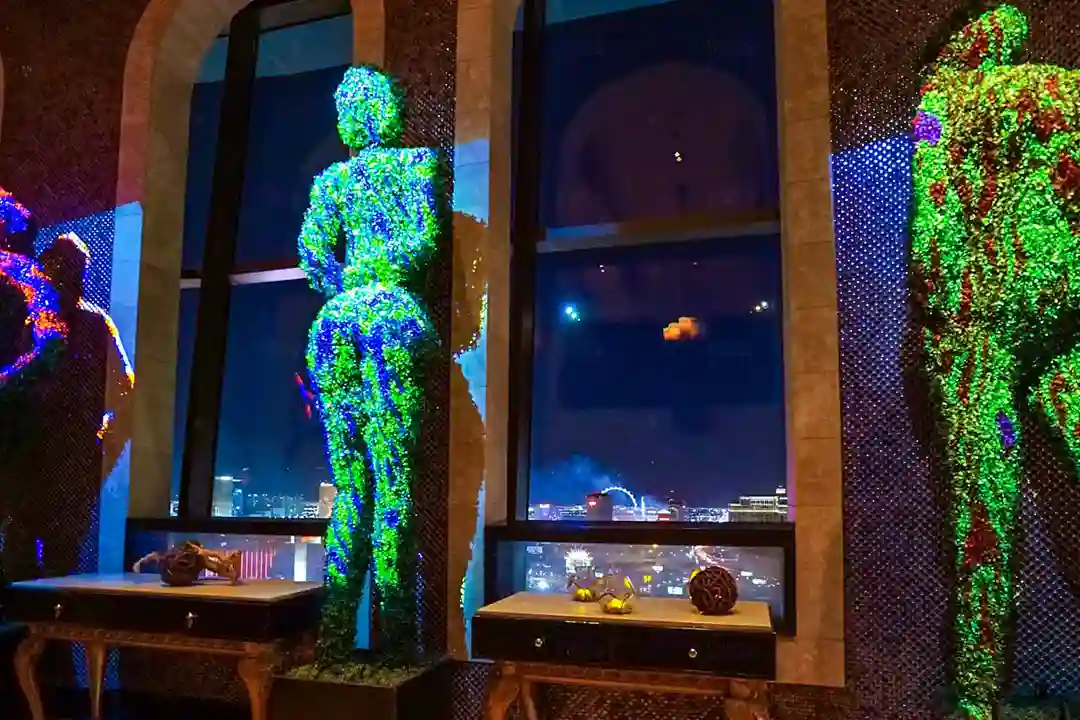
Technically, we deploy a combination of high-lumen projectors, media servers, and real-time tracking systems. For interactive elements, we use sensors or cameras that feed data into the projection software, allowing visuals to respond to movement, sound, or touch. Surface mapping is critical: we precisely align projections onto every column, wall, floor, or ceiling feature, ensuring the imagery fits seamlessly. If the event calls for an immersive environment, we can integrate dome projection, like the 360° experience we built for National Geographic’s “Beneath the Blue.” A dome can serve as a central attraction during cocktail hours or as a wrap-around backdrop for keynote presentations.
Our event design process also includes rigorous testing. We create a digital twin of the venue to simulate projections and interactions before load-in, which minimizes on-site surprises. For a Nike Air Jordan activation at NBA All-Star, we mapped a building-scale projection that responded to athlete movements—a technique we adapt for award shows where live presenters need to interact with the visuals in real time. The result is a production that feels effortless but is backed by years of technical precision.
Practical Planning Notes for Organizers
Space and sightlines are the first consideration. Interactive projection mapping requires clear surfaces free of obstructions, and projectors need adequate throw distance. For indoor galas, ballrooms with high ceilings (15 feet or more) work well, as they allow for floor-to-ceiling mapping without cutting off heads. Outdoor events introduce variables like ambient light and weather; we use higher-brightness projectors and weatherproof housings. We always conduct a site survey to measure ambient light levels and identify optimal projector placements.
Timeline wise, a typical project runs 8 to 12 weeks from initial concept to show night. This includes content creation (2–4 weeks), technical design and simulation (2 weeks), and on-site installation (2–4 days depending on complexity). Interactive elements add a layer of programming and testing, so we recommend starting discussions at least 12 weeks out. For a standard gala with one main stage and two interactive zones, the budget generally starts at $50,000 and scales with the number of surfaces, projectors, and custom animations. Larger productions, like a full dome or multi-room mapping, can exceed $200,000. We provide detailed quotes after the creative brief is finalized.
Finally, consider how interactive elements integrate with the event flow. A mapped floor works best during reception, while a responsive stage backdrop shines during awards. We help organizers sequence these moments so the technology enhances—not distracts from—the program.
Interactive projection mapping turns a gala or award show into an experience guests will talk about long after the last award is handed out. At Lumen & Forge, we’ve spent over 15 years perfecting this craft, from intimate installations to record-breaking facades. Ready to scope your event? Contact us to start the conversation.
Frequently asked questions
What makes interactive projection mapping especially effective for galas and award shows compared to standard video screens?
How far in advance should we book interactive projection mapping for a gala or award show?
What space or venue requirements does interactive projection mapping have for a gala or award show?
Can interactive projection mapping incorporate our branding, logos, or real-time audience interaction during the show?
What’s the most cost-effective way to use interactive projection mapping at a gala or award show?
Interactive Projection Mapping for Galas & Award Shows
3D Projection Mapping for Trade Shows & Conventions
3D Projection Mapping for Museum & Gallery Exhibits
360° Dome Projection for Trade Shows & Conventions