

360° Dome Projection for Trade Shows & Conventions
{{actual_date_posted}}
How 360° Dome Projection Transforms Trade Show Booths and Convention Floors
Trade shows and conventions are a battlefield of noise—rows of banners, looping videos, and tired giveaways blending into a blur. The real challenge isn’t just attracting attention; it’s holding it long enough to make a genuine connection. A 360° dome projection installation cuts through that noise, creating an immersive environment that turns a booth into a destination and a convention floor into a must-see experience.
Why 360° Dome Projection Works for Trade Shows and Conventions
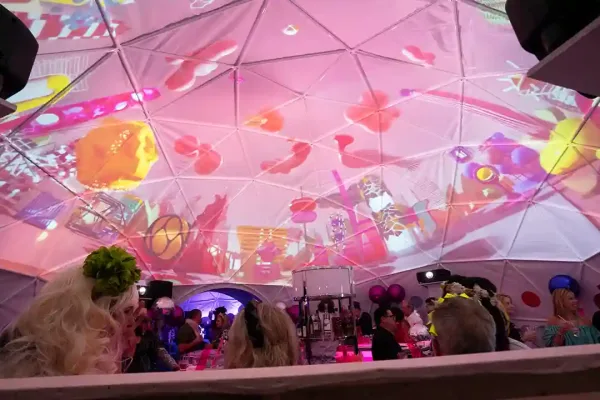
Trade show attendees are overwhelmed with visual stimuli. A flat screen or static display is easily ignored. A 360° dome projection, however, creates a fully enveloping environment that commands attention. The curved surface naturally draws the eye, and the immersive field of view forces visitors to stop and look up. This isn’t just about spectacle—it’s about creating a memorable brand moment that stands out among hundreds of competitors.
For conventions, where time is limited and foot traffic is high, the dome acts as a natural funnel. People are curious about what’s inside, and once they enter, they are captive to a carefully crafted narrative. This is where our dome projection expertise shines. We’ve seen it firsthand: a well-produced dome experience can increase dwell time from seconds to several minutes, giving your team a real opportunity to engage qualified leads. The result is a booth that doesn’t just attract a crowd—it builds a conversation.
Beyond attention, the dome offers a unique storytelling canvas. Whether you’re launching a product, showcasing a complex process, or transporting attendees to a remote location, the 360° field eliminates distractions and focuses the viewer on your message. This is especially effective for brands that want to convey scale, innovation, or emotional impact—think of how our work on the "Beneath the Blue" dome for National Geographic used immersion to create wonder, a principle we apply to every trade show project.
What a Lumen & Forge Dome Production Involves
Every dome projection begins with a creative brief. Our team works with you to define the core message, audience, and desired emotional response. For trade shows, this often means a short, looping experience—typically two to five minutes—that can be entered at any point. We develop custom 3D content, animations, and live-action video that are specifically designed for the dome’s curved geometry. This is not a stretched flat video; it’s a composition that uses the full spherical field to guide the viewer’s gaze and tell a story without a single flat edge.
On the technical side, the production involves precise calibration. We use multiple high-lumen projectors with warping and blending software to map content seamlessly onto the dome’s interior surface. The dome itself is typically an inflatable structure, which is lightweight, portable, and can be set up in a few hours. We handle all aspects of the projection mapping, from projector placement to edge blending, ensuring a unified image with no visible seams. Audio is equally critical—we design a 360° soundscape that matches the visuals, using directional speakers or a surround system to maintain immersion.
Our event design team coordinates the entire setup, including power, rigging, and traffic flow. We also provide on-site technicians to manage the show and troubleshoot any issues. The result is a turnkey experience that runs reliably for the duration of the event. For trade shows, we often recommend a dome between 20 and 40 feet in diameter, which comfortably accommodates 10 to 30 people at a time. Larger domes can be built for flagship conventions, but the key is matching the scale to your booth footprint and traffic goals.
Practical Planning Notes for Trade Show Organizers
Space and sightlines are your first consideration. A dome requires a clear footprint—typically a circle of at least 25 feet in diameter for a 20-foot dome. You need headroom of at least 15 feet for the structure and projectors. Avoid placing the dome near competing attractions or in a narrow aisle where it blocks emergency exits. Work with your venue’s floor plan early to secure a corner or central location that allows for natural crowd flow.
Timeline is critical. For a standard trade show, we recommend starting the conversation at least three months out. Content development takes four to six weeks, and technical planning—including power requirements, rigging, and AV integration—requires another two to three weeks. On-site setup typically takes one full day, with a half-day for testing and calibration. For outdoor conventions, factor in weather contingencies: domes can handle light wind, but heavy rain or sustained gusts above 20 mph require a backup plan.
Budget scale varies widely based on dome size, content complexity, and duration. A basic 20-foot dome with a pre-rendered show for a three-day event might start in the low five figures. A custom production with original 3D animation, multiple projectors, and a larger dome can reach the mid to high five figures. This includes all hardware, setup, teardown, and on-site support. For comparison, this is often less than a custom-built booth with multiple flat screens, but delivers far greater impact and recall.
Make Your Trade Show Booth Unforgettable
In a sea of sameness, a 360° dome projection is a proven way to stop traffic, tell your story, and create lasting brand impressions. At Lumen & Forge, we’ve spent over 15 years mastering this medium—from the world’s-largest video game screen on the Tropicana facade to immersive domes for National Geographic. We know what works on a convention floor, and we’ll guide you from concept to execution. Ready to scope your project? Contact us to start the conversation.
Frequently asked questions
What drives the cost of 360° dome projection for trade shows and conventions, and what's a realistic budget range?
How far in advance should we book 360° dome projection for a trade show or convention?
What space or venue requirements does a 360° dome have for a trade show floor?
Does Lumen & Forge create custom content, or do we supply our own visuals?
How is 360° dome projection different from a standard LED wall or flat screen at a trade show?
Interactive Projection Mapping for Galas & Award Shows
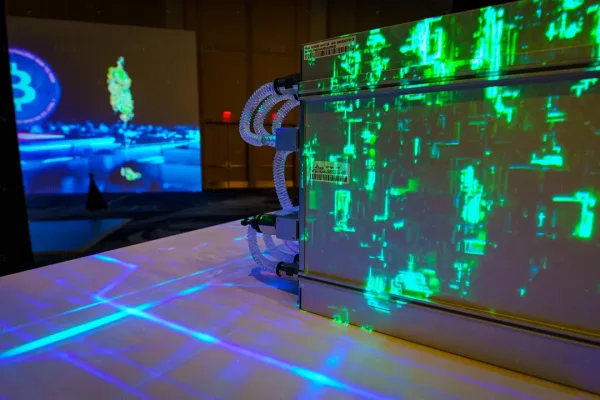
3D Projection Mapping for Trade Shows & Conventions
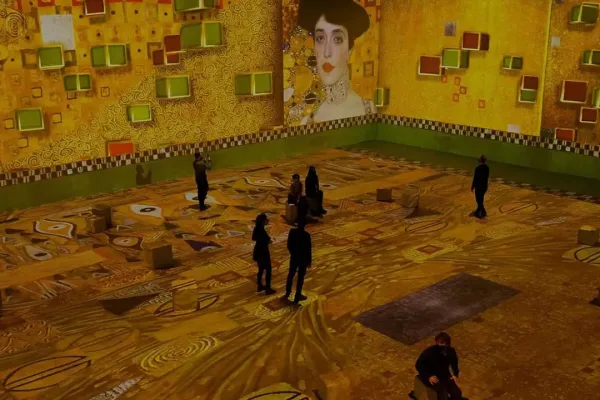
3D Projection Mapping for Museum & Gallery Exhibits
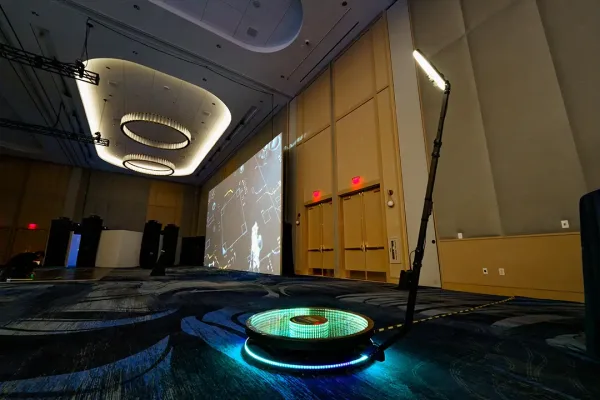
360° Dome Projection for Trade Shows & Conventions