

3D Projection Mapping for Trade Shows & Conventions
{{actual_date_posted}}
How 3D Projection Mapping Transforms Trade Shows & Conventions
In the crowded hall of a trade show or convention, every booth fights for a split second of attention. The challenge isn't just being seen—it's being remembered after the badges come off. 3D projection mapping turns a static booth into a living environment that pulls attendees in, holds them, and makes your message stick.
Why 3D Projection Mapping Works for Trade Shows & Conventions
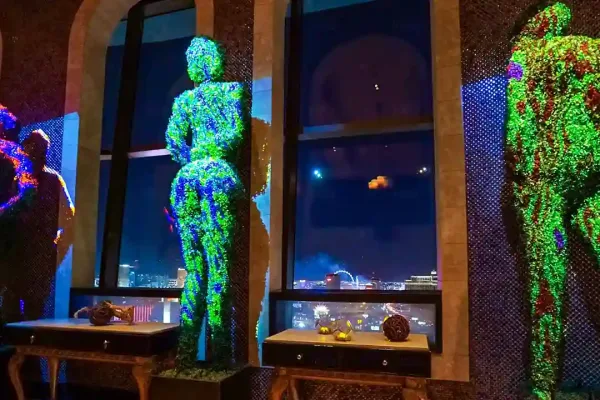
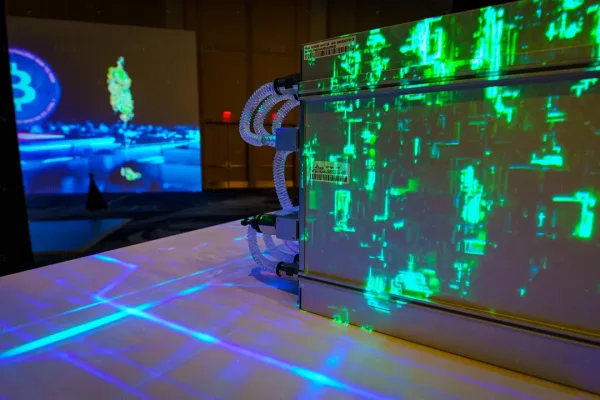
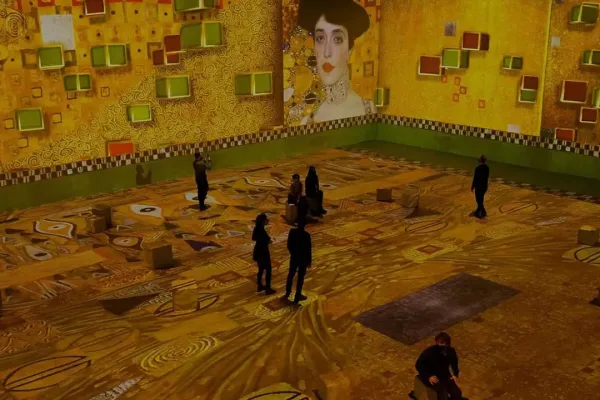
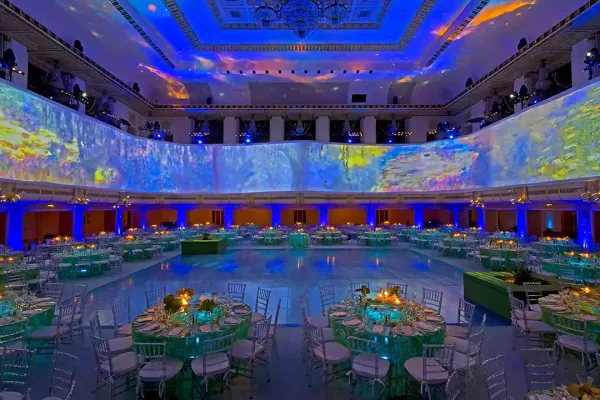
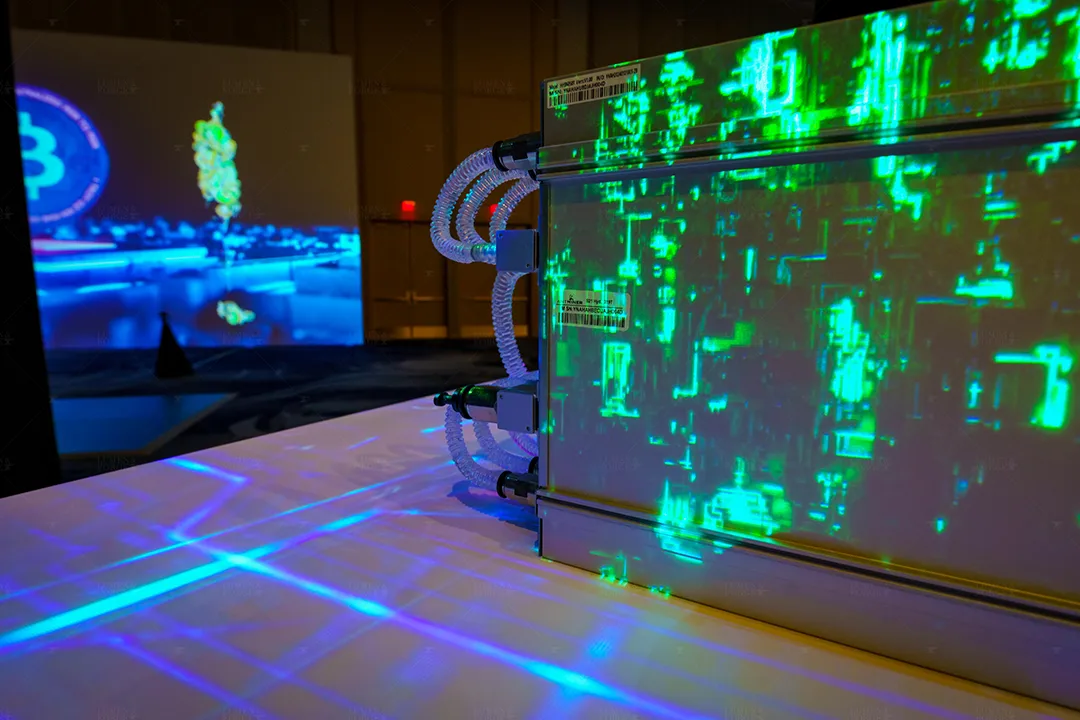
Trade shows and conventions are sensory overload by design. Fluorescent lights, endless booths, and competing sounds create a blur. Traditional banners and monitors blend in. Projection mapping breaks that pattern by turning any surface—a wall, a column, a product display—into a dynamic canvas. It's not a screen; it's an experience that unfolds in real time.
At Lumen & Forge, we've seen this work firsthand. For the world's-largest video game screen on the Tropicana facade, we learned how scale and motion command attention. That same principle applies in a convention hall: when a booth's surface appears to move, morph, or tell a story, people stop walking and start watching. The result is dwell time—the precious minutes when a prospect engages with your brand, not just your logo.
This technique also solves a specific trade show problem: limited square footage. You can't always bring a massive structure, but you can project onto what you have. A 10-by-10-foot booth can become a 360-degree environment. A simple backdrop can display product animations, data visualizations, or brand narratives that change throughout the day. It's efficient, repeatable, and scalable.
What a Lumen & Forge Production Involves
A successful trade show projection mapping project isn't just about turning on a projector. It's a full production that blends creative storytelling with technical precision. Here's how we approach it.
Custom Content Creation. Every piece of content is built for your specific booth geometry and message. We start with your brand assets—logos, colors, product shots—and then design animations that map directly onto your physical surfaces. For example, if you're launching a new product, we can project a 3D model that appears to "unbox" itself on your booth wall. The content is never generic; it's tailored to the space and the audience.
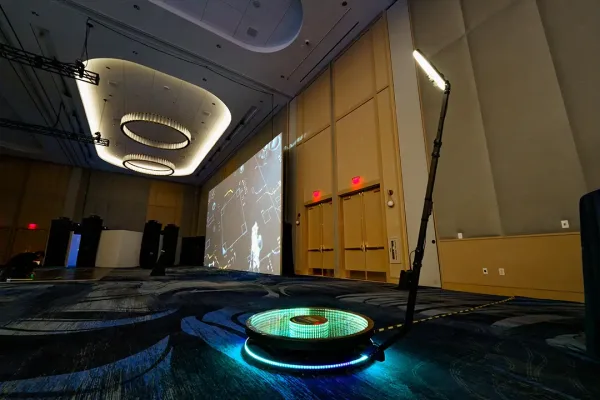
Projector and Media Setup. We select projectors based on brightness, throw distance, and ambient light. In a trade show environment, overhead lights are bright, so we use high-lumen laser projectors that cut through the glare. The media server synchronizes playback, often running loops or triggered interactions. We handle all cabling, rigging, and power to keep the setup clean and safe.
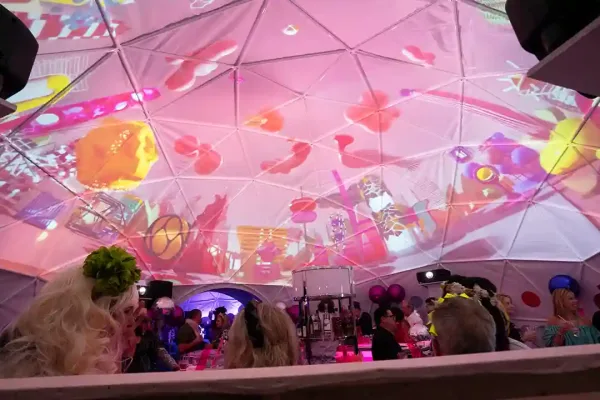
Surface Mapping and Calibration. This is where the "3D" part comes in. We scan the booth surfaces—flat walls, curved columns, angled displays—and map the projection pixels to match. The result is a seamless image that looks painted onto the surface, even if it's irregular. For conventions with large open spaces, we can also integrate dome projection to create a fully immersive environment. Our work on the "Beneath the Blue" 360° dome for National Geographic showed us how a curved surface can transport an audience entirely.
Integration with Interactivity. Many trade show clients want more than a passive display. We can add touch sensors, motion tracking, or mobile triggers. For instance, a visitor might wave a hand to change the projection from a product demo to a customer testimonial. This turns a one-way broadcast into a two-way conversation, which is gold for lead generation.
Our experience with building-scale projection for Nike Air Jordan at NBA All-Star taught us that precision matters. Every pixel must be aligned, every color calibrated, and every sequence timed to the second. That same rigor applies to a trade show booth, where you have one shot to impress.
Practical Planning Notes for Organizers
If you're considering 3D projection mapping for your next trade show or convention, here are the practical factors to plan for.
Space and Sightlines. The projection needs a clear path from the projector to the surface. Avoid placing columns, hanging signs, or tall displays in that line. Also consider sightlines for attendees: the best projection is useless if people can't see it from the aisle. We recommend a viewing distance of at least 10 feet for a standard booth wall, and a clear angle from the main traffic flow. For larger installations, like a 40-foot backdrop, you'll need more distance and a wider lens.
Timeline. A typical trade show projection mapping project takes 4 to 6 weeks from concept to installation. This includes content design, surface mapping, and a dry run. We always recommend a rehearsal in our studio before shipping to the venue. Last-minute changes on the show floor are risky because of power, lighting, and rigging constraints. Plan ahead.
Indoor vs. Outdoor. Most trade shows are indoors, which is ideal because ambient light is controlled. Outdoor conventions, like those in Las Vegas, introduce challenges: direct sunlight washes out projections, and wind can shift screens. For outdoor events, we use high-brightness projectors and rigid surfaces. If you're in a tent, check the ceiling height—projectors need clearance for safe mounting.
Budget Scale. Costs vary widely based on complexity. A single-wall projection with custom content and one projector typically starts around $15,000 to $25,000. A multi-surface or dome setup with interactivity can go higher, from $50,000 to $100,000 or more. This includes content creation, equipment rental, on-site labor, and travel. For comparison, a large video wall can cost similar amounts but offers less creative flexibility. Projection mapping gives you more impact per square foot because it uses the space itself as the display.
Finally, think about power and rigging. Most convention centers provide power drops, but you'll need dedicated circuits for projectors and media servers. Rigging points—like truss or ceiling mounts—must be approved by the venue. We handle all that logistics as part of our event design service, so you don't have to become an AV expert.
3D projection mapping turns a trade show booth from a place to stand into a place to experience. It's not about shouting louder; it's about creating a moment that feels fresh, custom, and alive. At Lumen & Forge, we've done it hundreds of times—from the Tropicana facade to intimate convention booths—and we know what works.
Ready to make your next trade show unforgettable? Contact us to discuss your space, your message, and your goals. We'll help you scope the project from concept to show floor.
Frequently asked questions
What makes 3D projection mapping especially effective for trade shows and conventions compared to standard screens?
How far in advance should we book 3D projection mapping for a trade show or convention?
What space or venue requirements does 3D projection mapping have for a trade show booth?
Can 3D projection mapping incorporate our branding, logos, or product visuals for a convention?
Do you handle everything turnkey—equipment, crew, setup, and teardown—for trade show projection mapping?