

360° Dome Projection for Museum Exhibits: A Creative Guide
{{actual_date_posted}}
How 360° Dome Projection Transforms Museum and Gallery Exhibits
Museums and galleries face a constant challenge: how to make static objects and historical narratives feel immediate and alive. 360° dome projection offers a solution that turns a passive viewing space into a visceral, all-encompassing environment—one where visitors don't just look at an exhibit, but step inside it. At Lumen & Forge, we've spent over 15 years engineering these moments, and we've learned what makes them work in a curatorial setting.
Why 360° Dome Projection Is Especially Effective for Museum and Gallery Exhibits
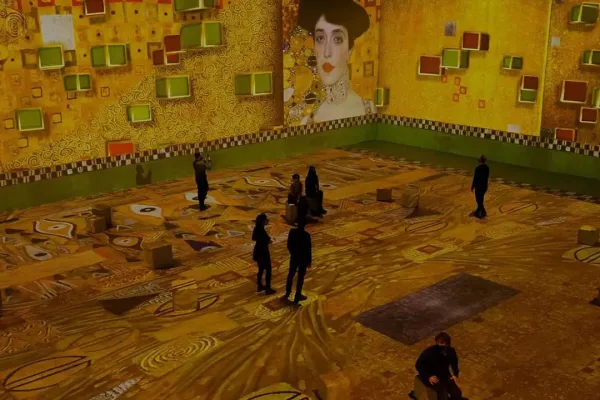
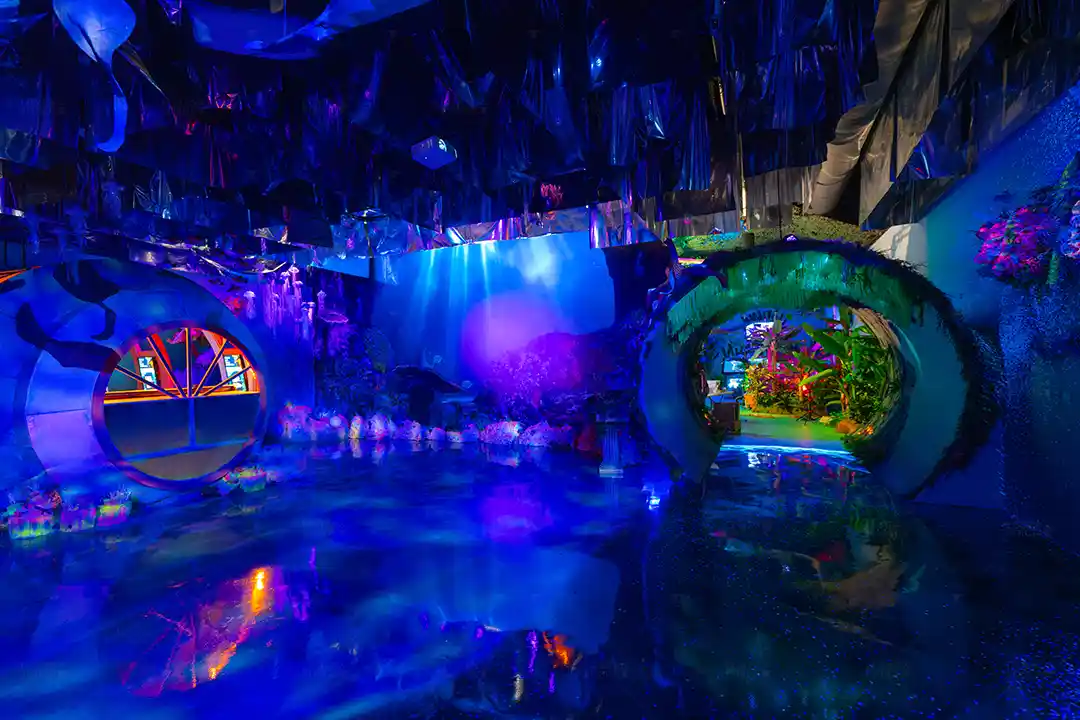
A 360° dome projection system wraps an entire hemispherical surface with synchronized video, placing the audience at the center of the action. For museums, this isn't just a novelty—it's a tool for deep engagement. Unlike flat screens or even large-scale projection mapping on walls, a dome eliminates peripheral distractions. The entire field of view becomes the canvas, which means visitors become wholly absorbed in the content. This is particularly powerful for exhibits on natural history, astronomy, or cultural immersion, where scale and context are everything. When we produced the "Beneath the Blue" 360° dome for National Geographic, we saw firsthand how a fully immersive underwater environment could make visitors feel they were diving the Great Barrier Reef—without leaving Las Vegas. That emotional response is precisely what museums need to make a lasting impression on modern audiences who expect more than glass cases and text panels.
What a Lumen & Forge Dome Projection Production Actually Involves
Building a 360° dome projection for a museum exhibit is a multi-layered process that blends creative storytelling with precise engineering. Here's how we approach it at Lumen and Forge.
Custom Content Creation is the starting point. We don't repurpose existing footage; we design original visual narratives that fit the dome's geometry. This means shooting or rendering in spherical formats, often with a 180° or 360° field of view, and compositing layers of animation, archival imagery, or live-action footage. For a gallery exhibit on ancient civilizations, for example, we might create a 10-minute journey through a reconstructed temple, with sound design that cues visitors to look at specific areas of the dome.
Projector and Media Setup is where technical precision matters. A single projector can't cover a full 360° dome without distortion. We typically use multiple edge-blended projectors—often four to six—mounted around the dome's perimeter or on a central rig. Each projector feeds a calibrated portion of the image, and our media servers handle synchronization and warping. The result is a seamless, continuous image with no visible seams. For indoor installations, we use laser projectors for brightness and color accuracy, which is critical when the dome is in a dim gallery space.
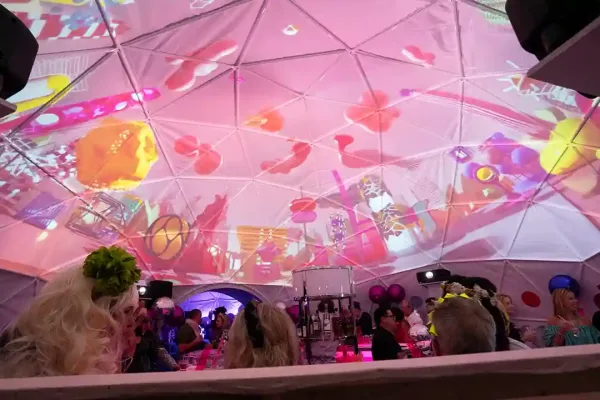
Surface Mapping is the final step. Even a perfectly spherical dome has subtle imperfections—seams, support structures, or acoustic panels. We map the projection to the exact surface using our own calibration software, ensuring that every pixel lands where it should. If the dome is a portable inflatable structure, we account for slight variations in inflation pressure. If it's a permanent installation, we integrate the dome's structural elements into the projection design, turning what could be a visual distraction into part of the show. This is where our experience with dome projection across hundreds of projects matters most: we've learned to anticipate and solve these challenges before they affect the visitor experience.
Practical Planning Notes for Museum and Gallery Organizers
If you're considering a 360° dome projection for your next exhibit, here are the key factors to plan around.
Space and Sightlines. A dome requires a clear footprint. For a 10-meter diameter dome, you need roughly 80 square meters of floor space, plus clearance for entry and exit. Ceiling height must accommodate the dome's apex—typically 5 to 7 meters for medium-sized domes. Sightlines inside the dome are unrestricted by design, but you must plan the audience flow: standing or seated? Single entry or multiple? We recommend a single-entry layout with a staggered seating or standing area to avoid bottlenecks. The dome's interior should be dark, with no ambient light leaking in, to preserve image contrast.
Timeline. A typical dome projection project for a museum takes 8 to 12 weeks from concept to opening. Content creation is the longest phase—about 4 to 6 weeks—because it involves scriptwriting, storyboarding, and rendering. Technical setup, including dome assembly and projector calibration, takes 1 to 2 weeks on site. We always recommend a full week of testing and fine-tuning before the exhibit opens, so we can adjust brightness, audio levels, and show flow based on actual conditions.
Indoor vs. Outdoor. Indoor domes are more predictable—stable lighting, climate control, and no wind. For outdoor installations, we use weatherproof domes and projectors with higher brightness ratings to compete with ambient light. Outdoor domes also require anchoring and wind-load calculations. If your exhibit is in a park or plaza, we can design a semi-enclosed dome that blocks direct sunlight while allowing natural ventilation. The trade-off is that outdoor domes have a shorter lifespan and require more maintenance.
Rough Budget Scale. A complete 360° dome projection installation—including custom content, projectors, media servers, dome structure, and on-site support—typically ranges from $50,000 for a small temporary setup (5-meter dome, single projector) to $250,000 or more for a large permanent installation (12-meter dome, multi-projector system, custom content with interactive elements). This does not include venue preparation, such as electrical upgrades or soundproofing. We provide a detailed scope of work during the event design phase, tailored to your specific exhibit goals.
Bring Your Vision to Life
360° dome projection is one of the most effective ways to deliver a memorable, educational experience in a museum or gallery setting. It's not about filling space with flashy visuals—it's about creating a narrative that visitors feel, not just see. At Lumen & Forge, we've done this for world-class clients, from National Geographic to the NBA, and we know what it takes to execute flawlessly in a curatorial environment. If you're ready to explore what a dome can do for your next exhibit, contact us to start the conversation. We'll help you scope the project, from concept to calibration.
Frequently asked questions
What makes 360° dome projection especially effective for museum and gallery exhibits?
How far in advance should we book 360° dome projection for a museum or gallery exhibit?
What space or venue requirements does 360° dome projection have for museum and gallery exhibits?
Can 360° dome projection incorporate our branding, logos, or product into the exhibit?
Do you handle everything turnkey—equipment, crew, setup, teardown—for museum and gallery exhibits?