

360° Dome Projection for Sporting Events & Fan Zones
{{actual_date_posted}}
Immersive Fan Zones: Using 360° Dome Projection for Sporting Events
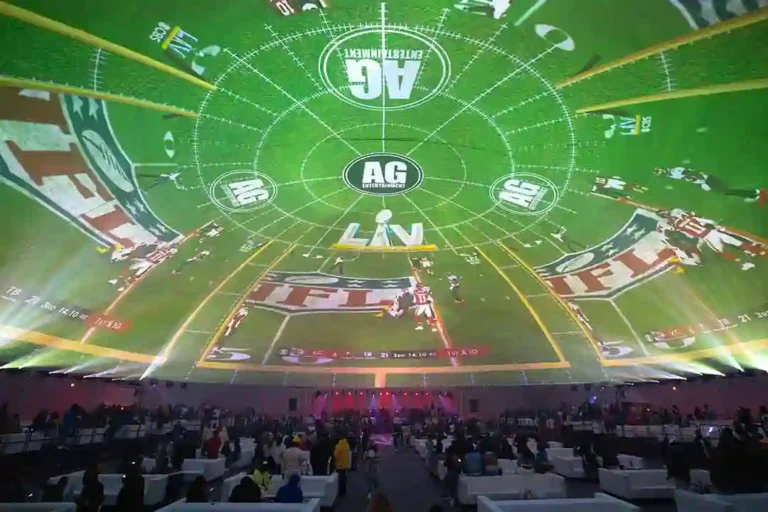
The roar of the crowd doesn't stop at the stadium gates. For today's sporting events, the fan zone is the front line of engagement—a space where anticipation builds and loyalty deepens. The challenge is cutting through the noise of multiple screens, food trucks, and activation tents. A 360° dome projection creates a gravitational center, a place where fans willingly stop, look up, and become part of the spectacle. It turns a passive waiting area into a shared, visceral experience that amplifies the energy of the game itself.
Why 360° Dome Projection Is Especially Effective for Sporting Events & Fan Zones
Standard video walls are flat. They present information; they don't immerse. A dome wraps the audience in a continuous field of view—often 180 degrees or a full 360—which fundamentally changes how people engage. In a sporting context, this is powerful because it can simulate the arena environment. We can project a live feed from the field onto the dome's interior, making it feel as though the fan is standing on the 50-yard line or courtside. This isn't a gimmick; it's a way to give thousands of fans a premium perspective that physical seats can't provide.
The dome also solves a practical problem: crowd flow. A well-placed dome acts as a natural anchor. Fans naturally gravitate toward it, creating a defined hub for activations, sponsor engagements, and halftime shows. For example, during the NBA All-Star weekend, we built a building-scale projection for Nike Air Jordan that turned an entire facade into a dynamic canvas. A dome does the same at human scale—it becomes the "moment" within the fan zone that people photograph, share, and remember. It works for any sport: football pregame rallies, basketball fan fests, soccer viewing parties, or auto racing pit-row experiences.
Sponsors also benefit. A dome projection is a blank canvas for branded content that feels less like an ad and more like an environment. We can integrate sponsor logos into the immersive visuals—a swoosh that streaks across the sky, a car that races around the dome's horizon—without breaking the illusion. The result is higher recall and a more positive association than a static banner ever achieves.
What a Lumen & Forge Production Actually Involves
Every dome starts with creative intent. Our event design process begins by understanding the specific sport, the venue footprint, and the emotional arc you want fans to experience. We don't just project a highlight reel. We craft custom content that tells a story—the history of a rivalry, the physics of a perfect throw, or a slow-motion journey through a game-winning play. The content is built for the dome's geometry, using 360-degree cameras or 3D-rendered environments that wrap seamlessly around the audience.
Technically, the setup involves multiple high-lumen projectors, often six to twelve, arrayed around the dome's exterior. These are edge-blended and warped to map perfectly onto the curved surface—a process known as projection mapping. The dome itself is an inflatable structure, typically between 10 and 30 meters in diameter, made from a custom-sewn fabric that diffuses light evenly. We use a media server capable of real-time playback and live switching, so we can cut to a live broadcast feed or trigger interactive elements based on game events.
For the "Beneath the Blue" dome we created for National Geographic, we mapped a full 360-degree ocean environment. That same technical rigor applies to sports. We've calibrated systems for domes at outdoor festivals and indoor arenas, always accounting for ambient light, projection brightness, and airflow. The result is a canvas that feels seamless—no visible seams, no hot spots, just pure immersion. Our team handles the full chain: creative concept, content production, projector calibration, and on-site support.
Practical Planning Notes for Organizers
Space and sightlines are the first consideration. A dome with a 20-meter diameter requires a clear footprint of about 25 meters to allow for equipment and crowd flow. Height clearance is critical—the dome's peak might reach 10 meters. Indoors, that usually means a convention hall or arena concourse with high ceilings. Outdoors, you need a flat, level surface free of underground utilities for stake-downs. We always recommend a site survey to confirm.
Timeline depends on complexity. For a standard dome with pre-produced content, setup takes two to three days: one for inflating and aligning the structure, one for projector rigging and calibration, and one for content testing and dry runs. Custom content adds two to four weeks of production time, depending on whether it's live-action capture, 3D animation, or interactive elements. We advise starting the conversation at least eight weeks before the event.
Indoor vs. outdoor matters for lighting and weather. Indoors, we can control ambient light, which means we can use slightly lower-lumen projectors and achieve higher contrast. Outdoors, we compensate with brighter projectors and schedule projections after sunset or under shade structures. Wind is the main outdoor risk—we use reinforced tie-downs and monitor forecasts. Budget scales with dome size and content complexity. A 10-meter dome with a library of sports-themed visuals might start in the mid-five-figure range, while a 30-meter custom production with live feeds and interactivity can reach six figures. We work with you to scope what fits your goals.
For a deeper look at how we approach these installations, see our dome projection capabilities page.
Fan zones are the new frontier of sports engagement. A 360° dome projection doesn't just fill space—it creates a destination. It gives fans a reason to arrive early, stay late, and leave with a story. At Lumen & Forge, we've spent over 15 years mastering the intersection of technology and spectacle, from the world's-largest video game screen on the Tropicana facade to immersive domes that transport audiences. We know how to make your fan zone the highlight of the event.
Ready to scope your project? Contact us to discuss your vision, timeline, and budget. We'll help you design an experience that rivals the game itself.
Frequently asked questions
What makes 360° dome projection especially effective for sporting events and fan zones?
How far in advance should we book 360° dome projection for a sporting event or fan zone?
What space or venue requirements does 360° dome projection have for fan zones?
Does Lumen & Forge create custom content for our sporting event, or do we supply visuals?
How is 360° dome projection different from a standard LED wall or hologram for a fan zone?