

3D Projection Mapping for Corporate Events & Keynotes
{{actual_date_posted}}
3D Projection Mapping for Corporate Events & Keynotes
A keynote or corporate event is a rare moment when an entire audience is focused on one message. But with so many distractions, holding that attention is harder than ever. 3D projection mapping turns your stage, walls, or even a 360° dome into a living canvas, making your content unforgettable—not just heard, but felt.
Why 3D Projection Mapping Is Especially Effective for Corporate Events & Keynotes
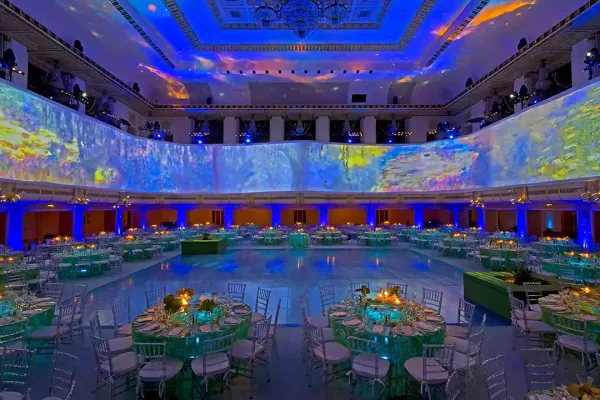
Traditional presentations rely on flat screens and static slides. Audiences have seen them thousands of times. 3D projection mapping breaks that pattern by turning any surface into a dynamic, three-dimensional visual environment. When a keynote speaker stands beside a building-scale projection that shifts from data visualizations to immersive brand landscapes, the message gains weight and memorability.
This technique works because it aligns with how we process information. Our brains are wired to notice movement, depth, and change. By mapping custom content onto angled surfaces, columns, or even a full dome, you create a spatial experience that reinforces key points without a single bullet point. For example, a product launch can use projection mapping to “build” the product on stage, layer by layer, as the presenter explains each feature. That visual narrative sticks.
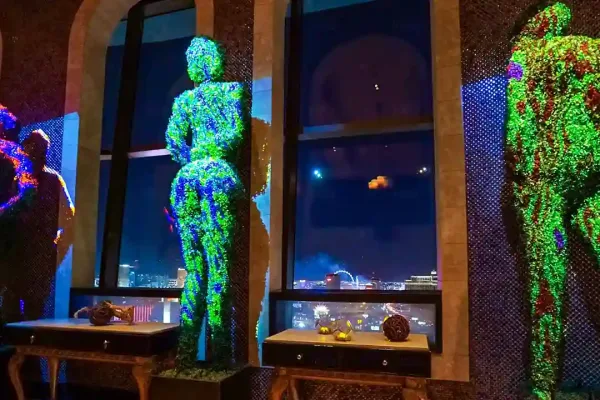
At Lumen & Forge, we’ve seen this firsthand. For a major sports brand’s NBA All-Star activation, we used building-scale projection mapping to turn a hotel facade into a dynamic Jordan Brand experience. The audience didn’t just watch a video—they were surrounded by the story. That same principle applies to corporate keynotes: the environment becomes part of the speech.
What a Lumen & Forge Production Actually Involves
Every Lumen & Forge project starts with your message. We don’t just show up with projectors. Our process is creative and technical, built on 15+ years of immersive installations.
Custom Content Creation – We design every pixel to serve your narrative. Our team builds 3D models, animations, and visual sequences that match your brand’s tone—whether it’s sleek data-driven graphics for a financial keynote or an abstract art piece for a product reveal. The content is then calibrated to the exact geometry of your space.
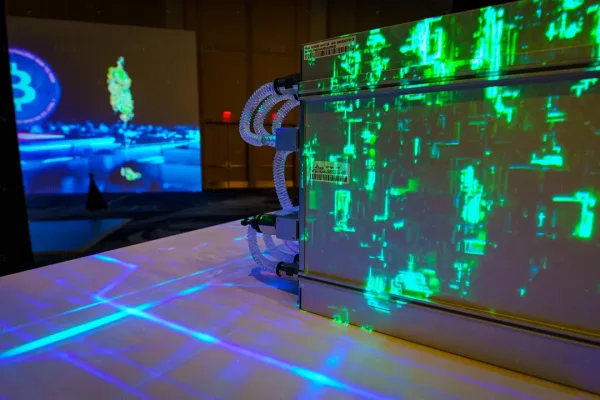
Projector and Media Setup – We use high-lumen laser projectors that can handle bright indoor or even outdoor environments. For a corporate keynote, we often blend multiple projectors to cover large surfaces seamlessly. Our media servers run real-time playback, so the content stays smooth and responsive.
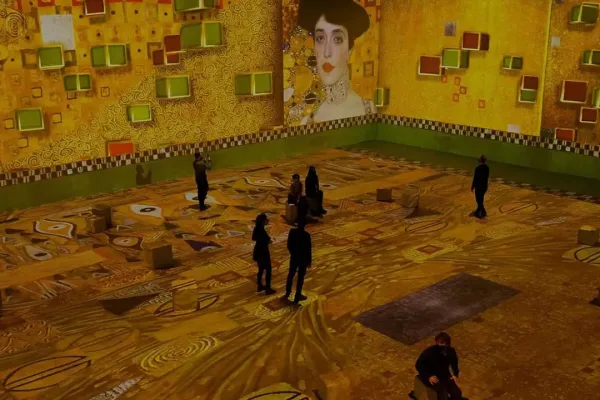
Surface Mapping – This is the core of projection mapping. We scan the venue’s architecture—columns, stages, curved walls, or a full 360° dome—and map the content precisely onto those surfaces. The result is a visual illusion that makes the building or set piece appear to move, transform, or come alive.
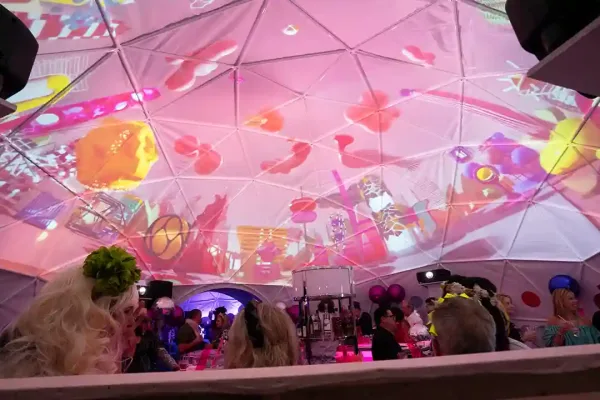
Dome Projection – For keynotes that demand total immersion, we offer dome projection. Our “Beneath the Blue” dome for National Geographic wrapped audiences in a 360° underwater world. For a corporate event, a dome can turn a product demo into a full-environment experience, where the audience is inside the story.
Interactive Installations – When the event includes networking or breakout sessions, we can add interactive elements. Using motion sensors or touch surfaces, attendees can control visuals on the fly. This keeps engagement high before and after the main keynote.
Our event design team coordinates all these elements, from initial concept to on-site execution. We handle the technical load so your team can focus on the presentation itself.
Practical Planning Notes for Organizers
Planning a 3D projection mapping production requires thinking beyond standard AV. Here are key considerations based on our experience.
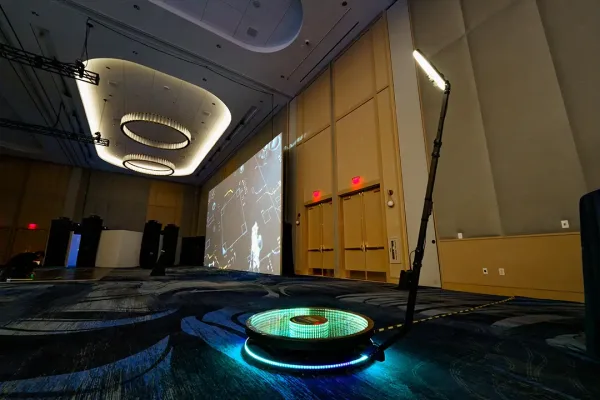
Space and Sightlines – The best projection mapping uses the venue’s architecture. Look for large, flat or gently curved surfaces—walls, ceilings, stages, or custom-built structures. For a keynote, ensure every seat has an unobstructed view of the mapped area. If using a dome, plan for audience positioning inside or around it. We often recommend a site survey to identify the best surfaces and sightlines.
Timeline – A typical production takes 4–6 weeks from concept to show. This includes content creation, technical design, and on-site installation. For large-scale projects (like a building facade), allow 8–10 weeks. On-site setup usually requires 2–3 days for rigging, calibration, and rehearsals. Rushing this step risks technical glitches, so plan ahead.
Indoor vs. Outdoor – Indoor venues offer controlled lighting and weather, making projection mapping more predictable. Outdoor events, like the Tropicana facade projection (the world’s-largest video game screen), require weatherproofing, higher brightness projectors, and contingency plans for ambient light. Indoor is generally simpler and more cost-effective for corporate keynotes.
Rough Budget Scale – Costs vary widely based on complexity. A single-surface projection for a keynote (e.g., a 20-foot wall) with custom content starts around $30,000–$50,000. Multi-surface or dome productions can range from $75,000 to $150,000 or more, depending on content length and projector count. We provide detailed quotes after scoping the venue and creative goals.
Conclusion
3D projection mapping turns a corporate event or keynote from a passive listen into an active experience. It’s a proven way to make your message stick, backed by real projects that have captivated audiences from Las Vegas to NBA All-Star. If you’re ready to explore how this can elevate your next event, contact us at Lumen & Forge. We’ll help you scope the project, from creative concept to final show.
Frequently asked questions
How does 3D projection mapping compare to traditional AV or LED walls for a corporate keynote?
What's the typical timeline for producing a 3D projection mapping show for a corporate event?
Can 3D projection mapping work in a ballroom with bright ambient lighting or chandeliers?
Do you create custom content for our corporate branding and product launches, or do we supply the visuals?
What's the minimum room size or audience capacity needed for 3D projection mapping at a corporate keynote?