

3D Projection Mapping for Galas & Award Shows | Lumen & Forge
{{actual_date_posted}}
3D Projection Mapping Transforms Galas and Award Shows
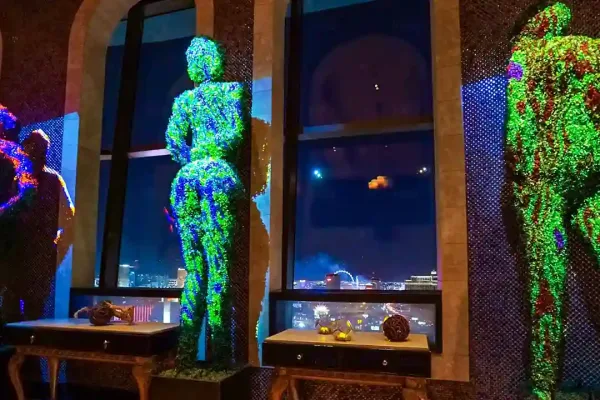
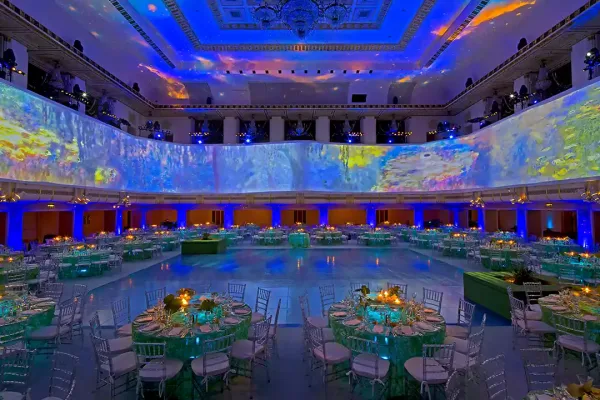
Every gala or award show carries a moment that must land—a host’s entrance, a lifetime achievement tribute, the reveal of a winner. But in a ballroom or convention hall, the physical stage is often static. The real opportunity lies in making that space breathe with the narrative. 3D projection mapping turns walls, ceilings, and even entire rooms into living canvases, letting you shift from red-carpet glamour to a quiet documentary segment to a dance-floor explosion without changing a single set piece.
Why 3D Projection Mapping Works for Galas and Award Shows
Award shows and galas share a core challenge: they need to hold attention across multiple tones—formal announcements, emotional speeches, high-energy performances. Traditional staging relies on heavy physical sets, banners, and lighting that take days to build and can’t adapt mid-event. 3D projection mapping solves this by turning any surface into a dynamic display. You can map a sponsor’s logo onto a 40-foot wall, then dissolve it into a starfield for a memorial reel, then wrap the entire room in a branded pattern for the after-party—all in real time, with no physical changes.
This flexibility is especially valuable for Las Vegas venues, where galas often compete with the Strip’s own spectacle. Instead of fighting for attention, you command the room. For example, our work on the world’s-largest video game screen on the Tropicana facade showed how projection can dominate a massive canvas. For an indoor gala, the same principle applies: you control the entire visual environment, from the ceiling to the floor, creating an immersive experience that feels bespoke to each moment.
Another advantage is scale. A single projector can cover a 30-foot wall, and multiple projectors can wrap an entire dome. This means you can accommodate any room size—from an intimate 200-person dinner to a 2,000-person awards ceremony—without the cost and labor of custom-built scenery. The visual impact is instant, and because the content is digital, you can revise it up to the day of the event.
What a Lumen & Forge Production Involves
A typical gala or award show production from Lumen & Forge starts with a creative brief. We work with your team to identify key moments: the opening sequence, each award category, the keynote speech, the entertainment. From there, we design custom 3D content that aligns with your brand or theme. This might include animated logos, visual narratives for honorees, or abstract environments that reinforce the mood of each segment.
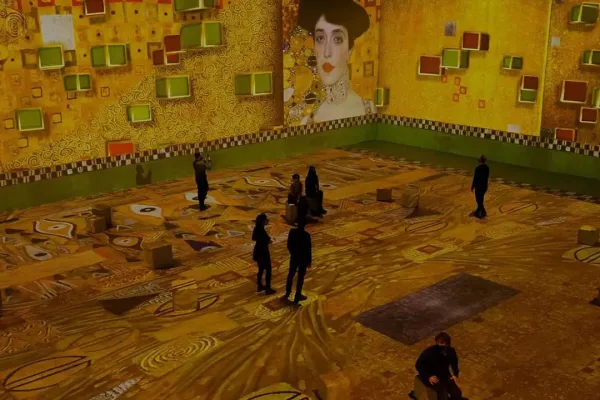
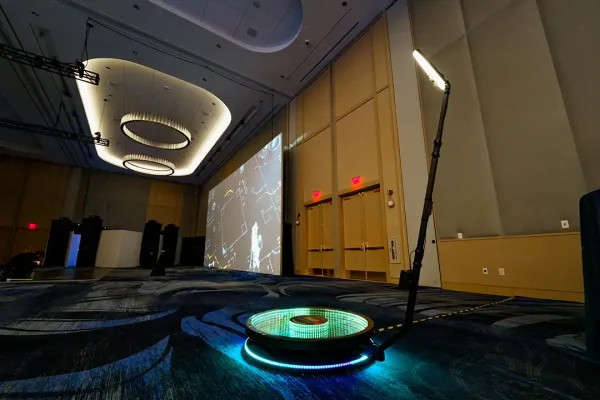
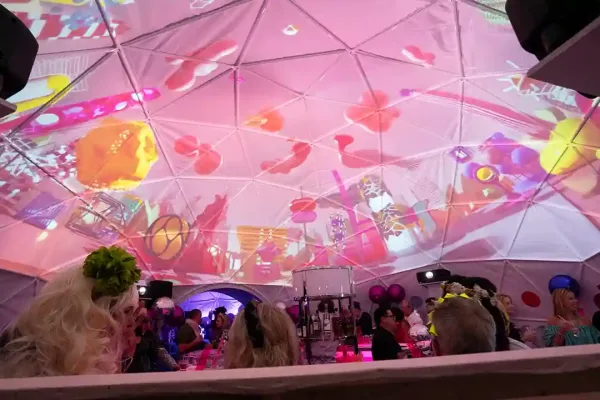
On the technical side, we begin with a site survey. We measure every surface that will be mapped—walls, columns, ceilings, even the stage floor. For a ballroom, we might map the entire perimeter, turning the room into a seamless 360-degree canvas. For a dome, such as the 360° dome projection we built for National Geographic’s “Beneath the Blue,” we calibrate multiple projectors to create a single, uninterrupted image that surrounds the audience. The same approach works for a gala where the event design calls for a central dome or a curved backdrop.
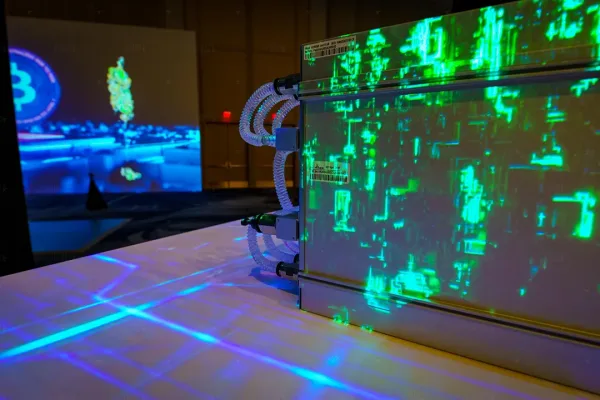
Hardware selection depends on the space and budget. We use high-lumen laser projectors for indoor events where ambient light is controlled, and weatherproof units for outdoor galas. Each projector is precisely aligned using 3D mapping software, which accounts for the geometry of the surface—corners, curves, columns—so the image appears flat and sharp, not distorted. The media server runs the show, sequencing content to match the event timeline, often triggered by a stage manager or automated cues.
For award shows, we often integrate live camera feeds. For example, when a winner walks to the stage, we can project their name and a live close-up onto a 40-foot wall behind the podium, eliminating the need for a separate video screen. This keeps the audience focused on the stage while the projection amplifies the moment. We also handle audio-visual synchronization, so the sound and visuals hit together during a drumroll or a dramatic reveal.
Our work on Nike Air Jordan at NBA All-Star involved building-scale projection that turned a facade into a dynamic retail experience. For a gala, we scale that same approach to a room interior, ensuring every guest has an optimal view. The result is a production that feels both high-tech and seamless—guests rarely notice the projectors, only the transformation.
Practical Planning Notes for Organizers
If you’re considering 3D projection mapping for your gala or award show, here are key factors to address early in planning.
Space and Sightlines. The most important variable is the room’s geometry. We need clear sightlines from the projectors to the mapped surfaces. This means no chandeliers, columns, or large centerpieces blocking the beam. For indoor venues, we often mount projectors on trusses or ceiling rigs. For outdoor events, we use ground-based units with weather covers. We also consider the audience’s sightlines: the best projection surfaces are those visible from every seat, like the rear wall or a ceiling wrap. Avoid mapping a surface that only half the room can see.
Timeline. A typical gala production requires 4 to 8 weeks for content creation, depending on complexity. On-site installation takes 1 to 3 days, with a full rehearsal the day before the event. We recommend booking your production team at least 3 months out to secure the best projectors and crew, especially during peak gala season in Las Vegas (October through May).
Indoor vs. Outdoor. Indoor spaces give us full control over ambient light, so we can achieve higher contrast and brighter images. Outdoor galas require higher-lumen projectors and careful management of sunset timing—projection is most effective after dusk. We also account for wind, dust, and temperature. For outdoor award shows, we often use rear-projection screens or map onto building facades, as we did for the Tropicana screen.
Rough Budget Scale. Budgets vary widely based on room size, number of projectors, and content complexity. A single-wall projection for a 300-person gala might start around $15,000 to $25,000. A full-room 360-degree dome projection for a 1,000-person awards show can range from $50,000 to $100,000 or more. These figures include hardware, installation, content creation, and on-site support. We provide a detailed quote after a site survey and creative brief.
We also recommend building in a contingency for last-minute changes. Award shows often have surprises—a new sponsor, a late honoree—and digital content can be updated quickly. Our media servers allow us to swap sequences in minutes.
Conclusion
3D projection mapping turns a gala or award show from a static dinner into a living experience. It gives you the power to shift the room’s mood instantly, highlight key moments, and leave guests talking about the production long after the last award is handed out. At Lumen & Forge, we’ve spent over 15 years mastering this craft, from projection mapping on building facades to dome projection for immersive storytelling. We bring that expertise to every gala and award show we produce, whether it’s a small dinner or a stadium-scale ceremony. To discuss your event’s goals and space, visit Lumen and Forge and explore our event design services. Ready to start planning?
Frequently asked questions
What makes 3D projection mapping especially effective for galas and award shows compared to traditional AV?
How far in advance should we book 3D projection mapping for a gala or award show?
What space or venue requirements does 3D projection mapping have for galas and award shows?
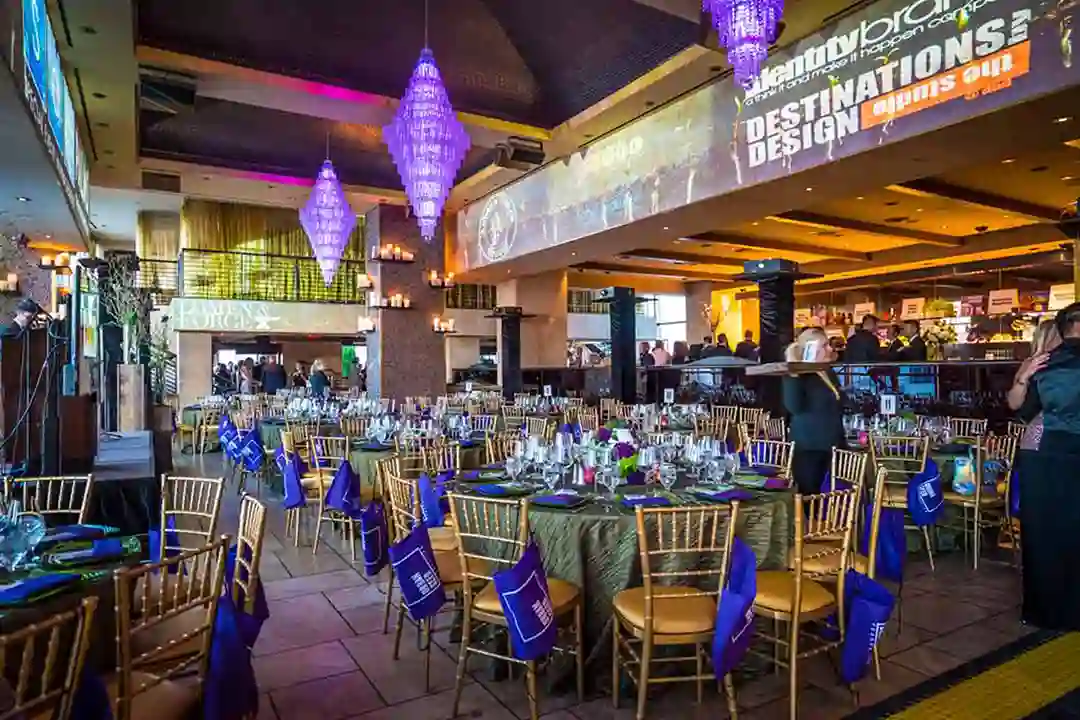
Can 3D projection mapping incorporate our branding, logos, or product during the show?
Do you handle everything turnkey—equipment, crew, setup, and teardown?