

3D Projection Mapping for Retail & Storefront Displays
{{actual_date_posted}}
3D Projection Mapping for Retail & Storefront Displays
In a retail landscape where every footstep is a decision, your storefront has seconds to stop a passerby. Static signage blends into the urban fabric, but a building that breathes, moves, and tells a story in three dimensions rewrites the rules of engagement. We’ve spent over 15 years turning architecture into canvas, and for retail, that canvas is your most powerful sales tool.
Why 3D Projection Mapping Works for Retail & Storefront Displays
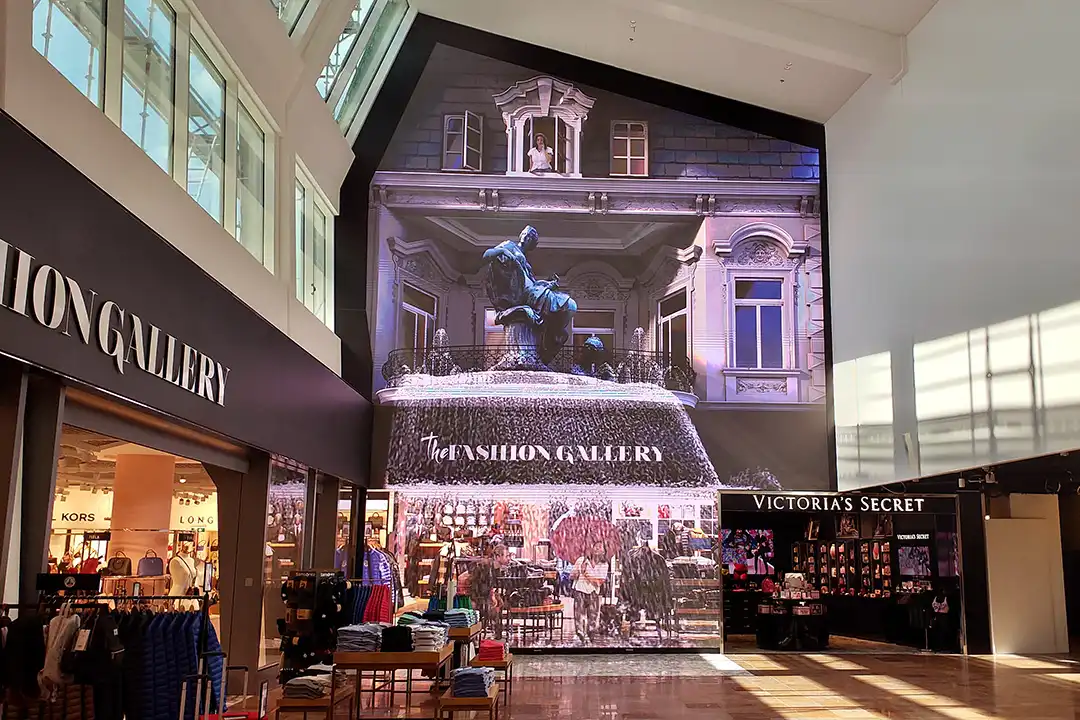
Traditional retail displays fight for attention in a sea of noise. A window mannequin or a printed banner is passive—it waits to be seen. Projection mapping transforms that dynamic into an active, magnetic experience. When a storefront becomes a living surface—where products appear to float, logos morph into landscapes, or seasonal themes unfold in real time—the psychology shifts from “looking at” to “being inside.”
This isn’t just spectacle for its own sake. It’s about creating a memorable brand encounter that drives conversion. We’ve seen it firsthand: the world’s-largest video game screen on the Tropicana facade wasn’t just a technical feat—it was a retail beacon that pulled crowds and kept them engaged. For storefronts, that same principle applies at any scale. A boutique can use a single window to showcase a new collection with animated textures and lighting, while a flagship store can wrap an entire facade in a narrative that changes hourly. The result is a display that feels exclusive, current, and impossible to ignore.
From a practical standpoint, projection mapping offers flexibility that physical installations can’t match. You can update a campaign overnight, test different visuals for different times of day, or tie the display to social media feeds. It’s a digital layer on your physical storefront, and that combination is what makes it uniquely effective for retail.
What a Lumen & Forge Production Involves
Every retail projection begins with a conversation about the space and the story. We start by surveying the storefront—measuring every angle, noting surface textures, and understanding how natural light and pedestrian traffic flow around it. This isn’t a one-size-fits-all process. A historic brick facade demands different mapping than a glass curtain wall, and a sidewalk with heavy foot traffic requires different safety and sightline considerations.
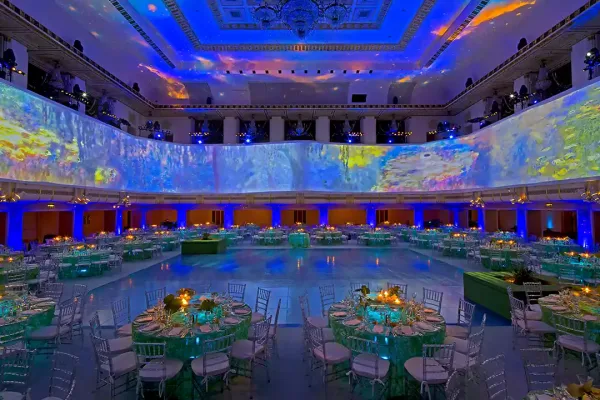
Once we know the canvas, our creative team develops custom content. This is where the brand’s identity meets technical artistry. For a retail launch, we might animate a product’s journey from raw material to finished good, or create a visual narrative that changes with the seasons. The content is designed to exploit the three-dimensionality of the surface—columns become spinning sculptures, windows become portals, and flat walls gain depth. We’ve done this for clients like Nike during NBA All-Star, where building-scale projection turned a facade into a dynamic court, and for National Geographic’s “Beneath the Blue” dome projection, where the entire space became an immersive ocean. For retail, the same principles apply: the surface is your stage.
On the technical side, we select projectors based on brightness, resolution, and throw distance. Outdoor storefronts in Las Vegas glare require high-lumen projectors and careful rigging to avoid washout. Indoor retail displays, like those in malls, allow for tighter setups but demand silent operation and thermal management. We then map every pixel of the content to the specific geometry of the surface using advanced software. This accounts for curves, edges, and even moving elements like doors or awnings. The result is a seamless illusion that feels built into the architecture.
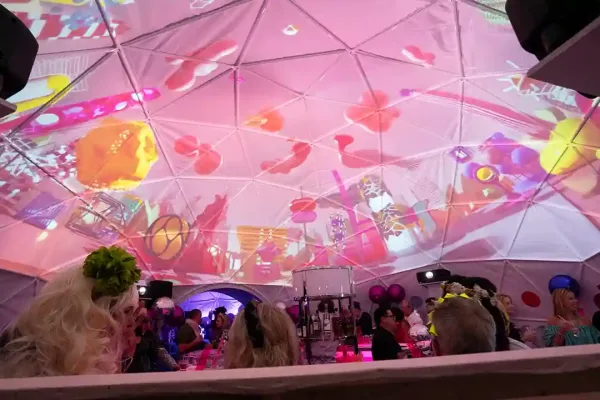
Our event design team also handles the integration: power distribution, media servers, and fail-safes so the show runs reliably during operating hours. We test the mapping at night, during rain, and under streetlights to guarantee consistency. For domes or curved storefronts, we use specialized optics and multi-projector blending to maintain sharpness across the entire surface. Every production is a custom engineering solution, but the goal is always the same: make the technology invisible so the story shines.
Practical Planning Notes for Retail Organizers
Before you dive into creative, think about the space and sightlines. The best projection mapping is wasted if pedestrians can’t see it. For a storefront, the ideal viewing zone is about 10 to 50 feet away, with a clear line of sight from the sidewalk. Avoid placing key visuals behind pillars, trees, or street furniture. If your storefront is recessed, consider angling the projection or using a curved surface to capture attention from multiple directions. We always recommend a site visit to map where people actually stop and look.
Timeline is critical. A typical retail projection mapping project—from initial consultation to live display—takes 4 to 8 weeks for a single storefront. This includes content creation (the biggest variable), hardware procurement, mapping and testing on site, and a final dress rehearsal. If you’re planning a seasonal campaign, start the conversation at least 10 weeks out. For larger installations like a building facade, add another 4 weeks for permitting and rigging. We can compress this for tight deadlines, but quality content takes time to craft.
Indoor versus outdoor matters more than you might think. Outdoor storefronts face direct sun, temperature swings, and wind. Projectors need weatherproof housings, and the media server should be in a climate-controlled area. Indoor displays, like those in a mall atrium, have controlled lighting but may have restrictions on rigging or noise. We’ve done both, and the key is planning for the environment from day one. For example, a glass storefront might require rear-projection film to avoid glare, while a brick facade needs surface preparation to ensure the image stays sharp.
Budget scale varies widely. A single-window projection with one projector and custom content can start around $15,000 to $30,000. A multi-surface storefront with several projectors and complex animation falls in the $50,000 to $150,000 range. Full building-scale projections, like our Tropicana work, are six figures and up. These are rough estimates—each project is unique. The cost includes content, hardware, installation, and on-site support. For recurring campaigns, we can design a system that allows you to swap content easily, reducing long-term costs.
Retail is about creating moments that matter. A projected storefront isn’t just a display—it’s an invitation to step inside and experience the brand in a new dimension. We’ve been doing this for over 15 years, from the Strip to storefronts across the country. Ready to see what your facade can become? Contact us at Lumen & Forge, and let’s scope your project together.
Frequently asked questions
What makes 3D projection mapping especially effective for retail storefront displays?
How do lighting conditions and ambient light affect 3D projection mapping on a storefront?
What surfaces or structures can you project onto for a retail storefront?
Can 3D projection mapping incorporate our branding, logos, or products?
How far in advance should we book 3D projection mapping for a retail storefront display?