

3D Projection Mapping for Sporting Events & Fan Zones
{{actual_date_posted}}
3D Projection Mapping Transforms Sporting Events and Fan Zones
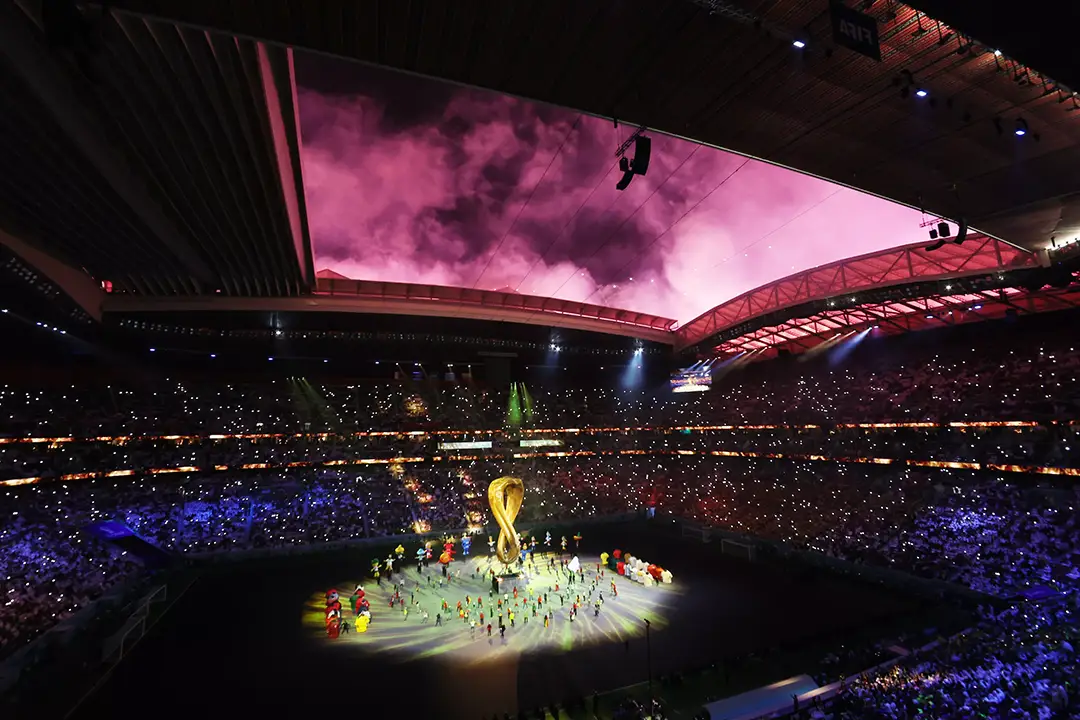
When the crowd roars, the building should too. For sporting events and fan zones, the challenge isn't just gathering people—it's turning a parking lot, concourse, or stadium plaza into an extension of the game itself. 3D projection mapping does exactly that, turning static surfaces into dynamic, story-driven canvases that amplify the energy before, during, and after the final buzzer.
Why 3D Projection Mapping Is Especially Effective for Sporting Events and Fan Zones
Sporting events and fan zones are about collective emotion—the anticipation before tip-off, the explosion after a goal, the shared identity of a team. 3D projection mapping taps directly into that. Unlike flat screens or static signage, projection mapping wraps architecture in motion, making a facade, dome, or stage feel alive. It creates a spectacle that doesn't compete with the game but elevates it.
Consider the scale: a fan zone might have thousands of people moving through, with attention spans split between food trucks, merchandise, and the main event. Projection mapping holds the space. It can transform a blank wall into a countdown clock, a player highlight reel, or an interactive game where fans control the visuals. It’s a tool for storytelling that works even when no one is on the field—building hype during pregame, celebrating milestones during halftime, and extending the experience long after the game ends.
For organizers, the return is measurable. A projection-mapped fan zone becomes a destination, drawing people in and keeping them there. It generates social media content organically, as fans film the visuals and share them. And because the mapping is custom, it can reflect the specific team, league, or sponsor identity in ways that off-the-shelf signage never can.
What a Lumen & Forge Production Actually Involves
Every project starts with a conversation. We ask: What’s the moment you want to create? For a pregame show, it might be a 60-second sequence that builds from a blackout to a full-color explosion of team logos and stats. For a fan zone, it might be an interactive floor that responds to footsteps or a dome that drops viewers into a 360-degree replay of the game-winning shot.
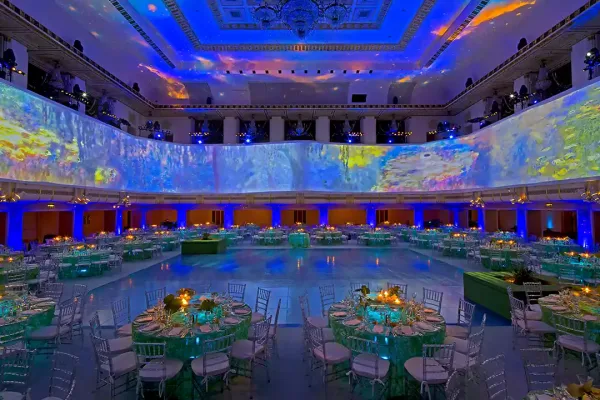
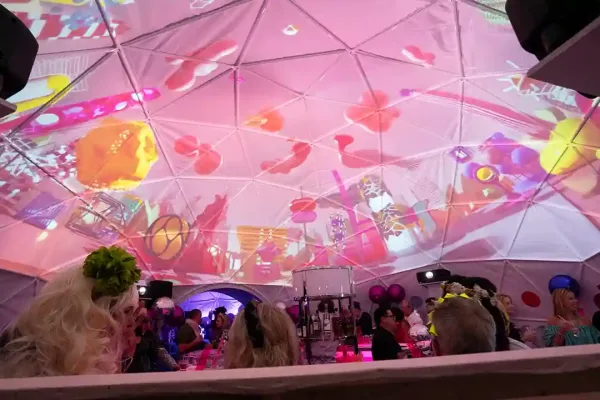
Creative development begins with custom content. Our team writes and animates every frame—no stock footage, no generic loops. We match the team’s colors, typography, and motion style, and we design for the specific surface. A building facade, a dome, a stage, or a series of columns each require different visual logic. For example, with dome projection, we map content to the full interior surface, creating an immersive environment that surrounds the audience. That’s what we did for the "Beneath the Blue" 360° dome for National Geographic, where the ocean came alive around viewers—a principle that applies just as powerfully to a fan zone where you want to drop fans into the middle of a stadium atmosphere.
On the technical side, we handle projector selection, positioning, and media server setup. For outdoor fan zones, we use high-brightness projectors capable of overcoming ambient light. For indoor spaces, we can work with lower-lumen units but still achieve rich color and detail. We map the surface using photogrammetry or laser scanning to ensure every pixel lands exactly where it should. Then we test, calibrate, and run the show—whether it’s a single night or a multi-day tournament.
We also integrate sound and lighting when needed. The full effect comes from synchronizing the visuals with the audio system and any stage lighting. A goal celebration, for instance, might trigger a cascade of mapped light across the entire fan zone, timed to the PA system’s roar. This is where our event design expertise comes in—we don’t just deliver a video file; we deliver a complete sensory experience.
Practical Planning Notes for Organizers
If you’re considering projection mapping for a sporting event or fan zone, start with the space. Measure sightlines: where will the audience stand? How far back will they be? This determines projector placement and lens selection. For fan zones, we often work with wide-angle lenses to cover large surfaces from a single position. For domes, we use multiple projectors with blending software to create a seamless image.
Timeline matters. A typical custom projection mapping project takes 4 to 6 weeks from concept to execution. That includes creative development, content production, technical planning, and on-site installation. For larger builds—like a full building facade—allow 8 to 12 weeks. We’ve done projects on tighter schedules, but quality scales with time. The world's-largest video game screen on the Tropicana facade, for example, required months of planning to map a 200-foot-wide surface with precise alignment.
Indoor vs. outdoor is a key decision. Outdoor fan zones face sun, wind, and rain. We use weather-resistant projectors and enclosures, and we plan for backup power and cooling. Indoor spaces are more controlled, but you still need to account for ambient light from other sources. For either, we recommend a test run at least a week before the event to confirm alignment and brightness.
Budget scale varies widely. A single-projection setup on a small stage might start around $20,000 to $30,000 for a one-night event. A multi-projector dome or building-scale installation can range from $50,000 to $150,000 or more, depending on surface complexity, content length, and duration. We’re transparent about costs and can help you scope the right solution for your audience size and goals.
Finally, think about the audience experience. Projection mapping works best when it’s part of a journey—a moment of discovery as fans round a corner and see the facade come alive, or a shared experience inside a dome where everyone looks up together. We design for those moments, not just for the technical specs.
For example, at the NBA All-Star event, we created building-scale projection for Nike Air Jordan. The surface became a giant sneaker, with animation that moved across the entire facade. Fans didn’t just see it—they felt the energy of the brand and the game combined. That’s the power of projection mapping when it’s done right.
Whether you’re planning a single game, a tournament, or a multi-day fan festival, the same principles apply. Start with the story, build for the space, and test thoroughly. The result is a fan zone that doesn’t just host people—it commands their attention.
Ready to turn your next sporting event into an unforgettable experience? Contact us at Lumen & Forge. We’ll help you scope the project, from creative concept to final installation. Let’s build something that makes the crowd roar twice—once for the game, and once for the show.
Frequently asked questions
What drives the cost of 3D projection mapping for sporting events and fan zones, and what's a realistic budget range?
How far in advance should we book 3D projection mapping for a sporting event or fan zone?
Does 3D projection mapping work outdoors for fan zones, and how does ambient light affect it?
What surfaces or structures can we project onto at a sporting event or fan zone?
Can 3D projection mapping incorporate our branding and be interactive for fans?