

3D Projection Mapping for Weddings and Private Events
{{actual_date_posted}}
How 3D Projection Mapping Transforms Weddings and Private Events
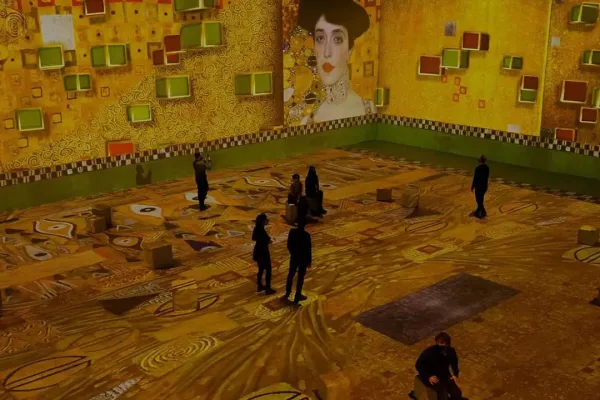
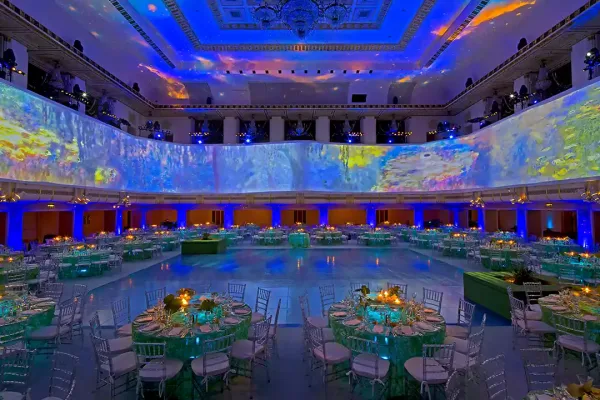
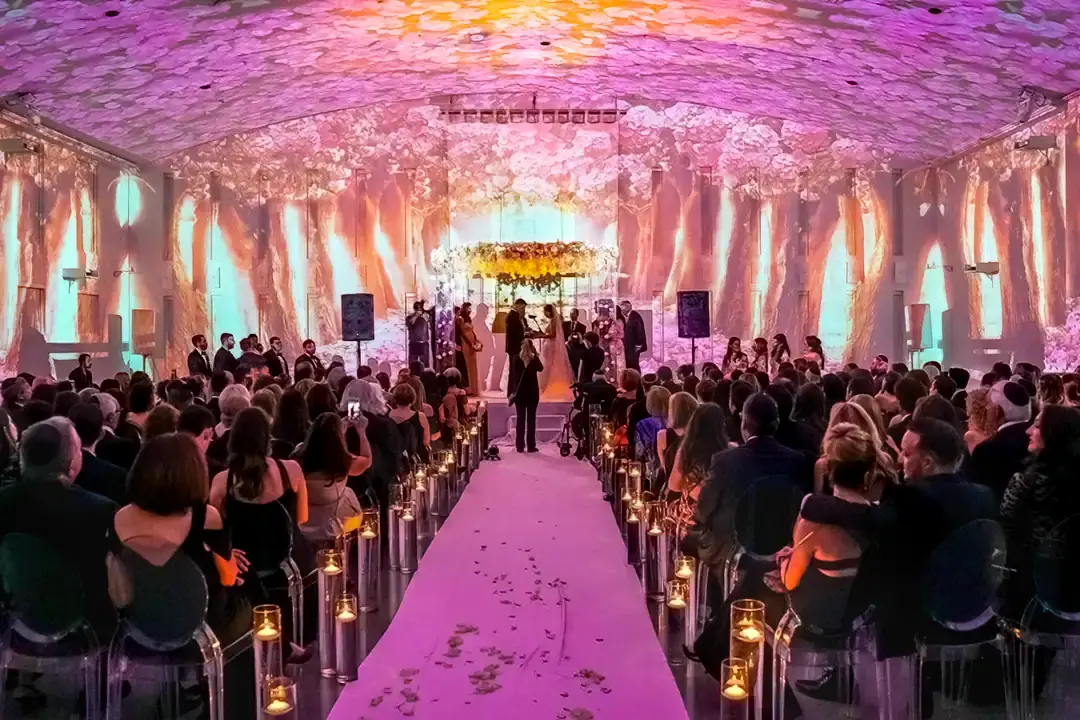
Most wedding and private event spaces look the same after the linens and florals are set. The real opportunity is to turn the entire venue—walls, ceilings, floors, even a dance floor—into a living canvas that changes with the mood of the evening. With 3D projection mapping, you’re not just decorating a room; you’re building an environment that tells your story, from the first dance to the final toast. At Lumen & Forge, we’ve spent over 15 years creating these immersive experiences, and we’ve seen how a custom projection can turn a standard ballroom into something no one will forget.
Why 3D Projection Mapping Works So Well for Weddings and Private Events
Traditional decor is static. You choose a color palette, hang some drapes, and hope the lighting feels right. Projection mapping changes that entirely. It allows you to animate surfaces—like a blank wall or a ceiling—with moving visuals that can shift from a soft, romantic pattern during dinner to a high-energy, geometric light show for dancing. This flexibility is especially valuable for weddings and private events where the timeline has distinct phases: a cocktail hour, a seated dinner, and a dance party. With projection mapping, one space can feel like three different rooms without moving a single chair.
Another advantage is scale. We’ve mapped entire building facades, like the world’s largest video game screen on the Tropicana, and we bring that same technical precision to indoor spaces. For a wedding reception, that might mean covering a 40-foot wall with a custom animation of the couple’s love story, or projecting a starry sky onto the ceiling that twinkles in sync with the music. The result is a deeply personal experience that feels far more immersive than a standard photo backdrop or uplighting.
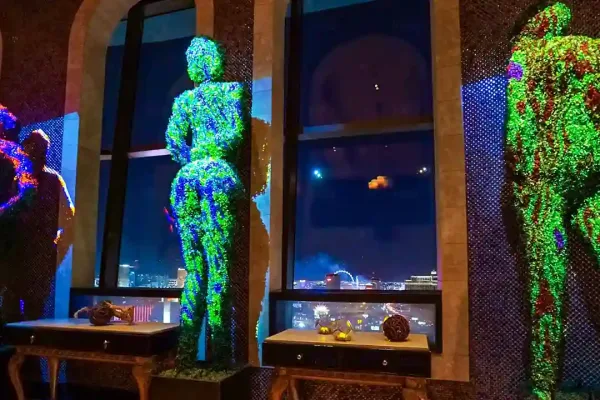
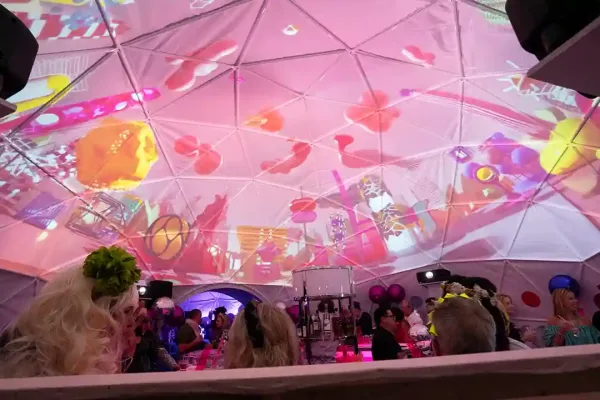
Private events—galas, milestone birthdays, corporate retreats—also benefit from this technology. You can project a company’s logo as a dynamic 3D sculpture, or create a branded environment that reinforces the event’s theme. Because projection mapping works with any surface, you can turn a plain white tent into a forest, a cityscape, or an abstract art installation. It’s not just decoration; it’s storytelling at scale.
What a Lumen & Forge Production Actually Involves
Every project starts with a conversation about the space and the story you want to tell. We don’t have a one-size-fits-all package. For a wedding, we might create custom content that includes the couple’s names, dates, and personal motifs—like a favorite travel destination or a shared hobby. For a private event, we design visuals that align with the brand or theme, from subtle motion graphics to full narrative sequences. This content is built in-house by our creative team, who specialize in 3D animation and visual effects.
Technically, the setup begins with a site survey. We measure the surfaces we’ll map—walls, columns, domes, or even the floor—and create a 3D model of the space. This allows us to pre-visualize exactly how the projections will look before we install any gear. Then we bring in projectors, often multiple units for a seamless blend, and calibrate them to the millimeter. For indoor events, we typically use high-lumen laser projectors that are bright enough to compete with ambient light, so your photos and videos still look stunning.
If the venue has a dome structure—like a planetarium or a temporary inflatable dome—we can also create full dome projection experiences. We did this for National Geographic’s "Beneath the Blue" project, wrapping an entire 360-degree dome with underwater imagery. For a private event, a dome can become a immersive lounge where guests feel transported to another world. The same principles apply: custom content, precise mapping, and a setup that feels seamless to the audience.
We also handle the audio and lighting integration, so the projection mapping syncs with the sound system and any other effects. This is where our experience with large-scale installations, like the Nike Air Jordan projection for NBA All-Star, comes into play. We know how to coordinate multiple systems to create a single, unified experience. On event day, our team arrives early to rig the projectors, run cables, and do a full rehearsal. We stay through the entire event to monitor and adjust as needed, ensuring everything runs without a hitch.
Practical Planning Notes for Organizers
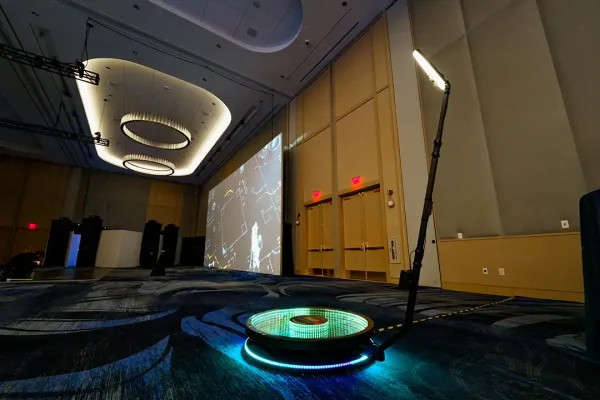
Space and sightlines are the first consideration. Projection mapping works best on large, flat or gently curved surfaces that are free from obstructions. A ballroom with high ceilings and blank walls is ideal. If the room has columns or chandeliers, we can work around them—sometimes by projecting onto the columns themselves or using them as part of the design. For outdoor events, we need to account for wind, dust, and ambient light. We’ve done outdoor projections on building facades, but for a tented reception, we recommend a dark or neutral-colored interior surface to get the best image quality.
Timeline is critical. We typically need at least one full day for setup, including rigging projectors, running power and data cables, and calibrating the mapping. For complex setups with multiple surfaces or a dome, we may need two days. We’ll work with your event planner to schedule this around other vendor arrivals and rehearsals. The content itself takes two to four weeks to produce, depending on the complexity. Custom animations with 3D elements take longer than simple motion graphics, so we start the creative process early.
Indoor versus outdoor affects both the equipment and the budget. Indoor spaces are easier to control for light and weather, so we can use a wider range of projectors. Outdoor events require weatherproofed gear and higher brightness to overcome sunlight or streetlights. Budget scale for a private event projection mapping production typically starts in the low five figures for a single-wall mapping with custom content, and scales up for multiple surfaces, domes, or complex animations. The cost includes design, content creation, equipment, installation, and on-site support. We provide a detailed quote after the site survey and creative brief.
We also recommend planning for power and data early. Projectors need dedicated circuits, and we often run network cables for playback control. Your venue’s electrical capacity should be confirmed before the event. If you’re using a dome, we’ll need clearance for the structure itself, which can range from 20 to 40 feet in diameter. We handle all the logistics for the projection equipment, but the venue’s team should know we’ll be bringing in heavy cases and ladders.
Finally, think about the guest experience. Projection mapping is most impactful when it’s integrated into the flow of the evening. A reveal during the first dance, a transition from dinner to dancing, or a surprise moment during a toast can all be enhanced with mapped visuals. We’ve seen guests stop mid-conversation to watch a wall transform, and that’s the kind of moment you want to create. We’ll help you plan the timing so the projections feel like a natural part of the event, not a separate show.
If you’re considering projection mapping for your wedding or private event, the key is to start the conversation early. We can help you decide which surfaces to map, what content to create, and how to fit it into your overall event design. Every space is different, and every story deserves a unique treatment.
To learn more about how we can transform your next event, contact us at Lumen & Forge. We’ll walk you through the possibilities, from a single wall to a full dome, and give you a clear sense of timeline and budget. Let’s make your event unforgettable
Frequently asked questions
What drives the cost of 3D projection mapping for weddings and private events, and what's a realistic budget range?
How far in advance should we book 3D projection mapping for a wedding or private event?
Does 3D projection mapping work outdoors for weddings or private events, or only indoors?
Can 3D projection mapping incorporate our wedding branding, logos, or personal visuals?
What makes 3D projection mapping especially effective for weddings and private events compared to standard projection?