

Interactive Projection Mapping for Concerts & Music Festivals
{{actual_date_posted}}
Interactive Projection Mapping for Concerts & Music Festivals
Concerts and music festivals are no longer just about sound. The audience expects a visual experience that matches the energy of the performance. Interactive projection mapping offers a way to turn any stage, facade, or dome into a living canvas that responds to the music and the crowd in real time. This isn’t about static visuals; it’s about creating a dynamic environment that pulls the audience deeper into the show.
Why Interactive Projection Mapping Works for Live Music
Music is inherently emotional, and the right visuals amplify that emotion. With interactive projection mapping, the visuals can shift with the beat, react to the lead vocalist’s movements, or change color based on the crowd’s energy. This creates a feedback loop between the performer and the audience, making every show feel unique.
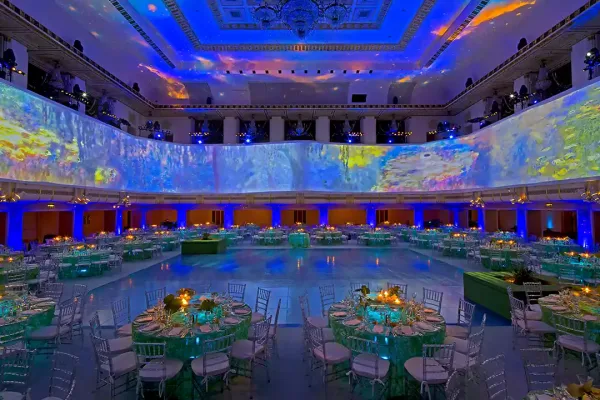
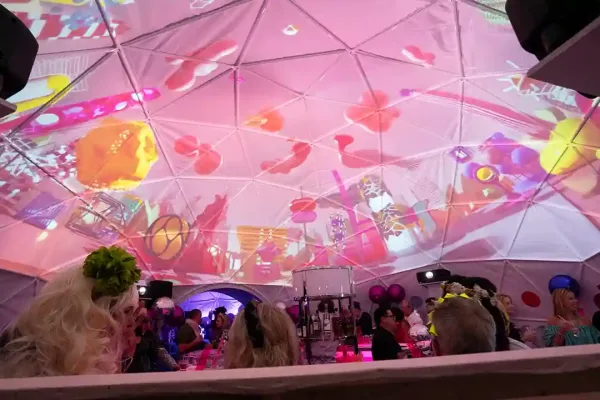
At Lumen & Forge, we’ve seen how this technology transforms a standard concert into a shared, visceral experience. For example, at the NBA All-Star weekend, we used building-scale projection for Nike Air Jordan, where the visuals pulsed with the rhythm of the event. The same principle applies to music festivals: a dome projection can envelop the audience in a 360-degree visual landscape that syncs with the set, or a stage facade can become a towering, animated sculpture that reacts to the bass drop. The result is a show that people remember and share, which is exactly what festival organizers want.
What a Lumen & Forge Production Involves
Every project starts with a conversation about the artist’s vision and the venue’s constraints. Our Lumen and Forge team then designs a custom solution that blends creative content with precise technical execution.
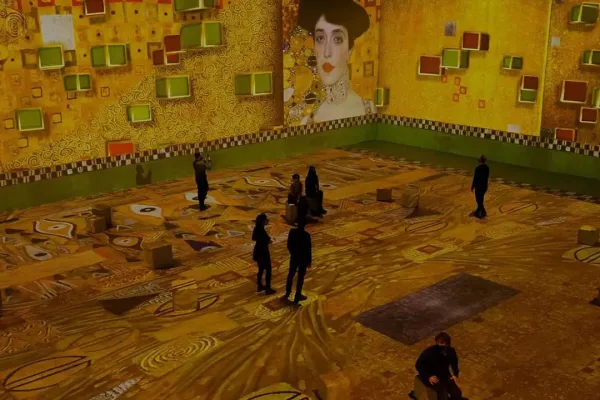
First, we create the visual content. This isn’t off-the-shelf footage. We design original animations, generative graphics, or interactive elements that match the music’s tone. For a festival like the one where we produced the "Beneath the Blue" 360° dome for National Geographic, the content was a fully immersive underwater journey. For a concert, it might be abstract patterns that evolve with the song structure or real-time data visualizations from the crowd’s smartphones.
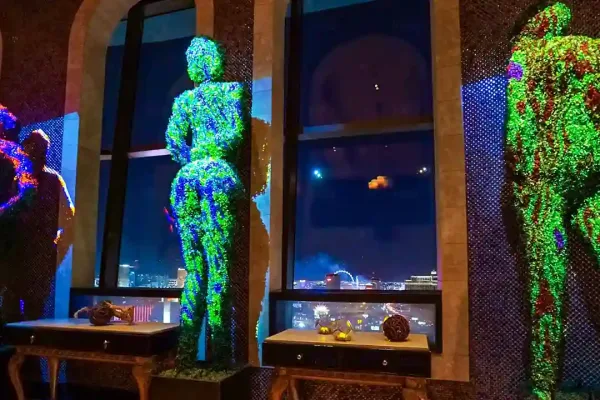
Next comes the hardware and setup. We use high-lumen projectors, media servers, and precise projection mapping software to map the visuals onto any surface. This could be a flat stage screen, a curved dome, or an irregular building facade. For the world’s-largest video game screen on the Tropicana facade, we mapped content across a massive, complex surface. For a festival, we might map a stage set with multiple angles or set up a dome projection that covers the entire audience. The key is calibration: every pixel must align perfectly with the surface, and the system must respond to live inputs with zero latency.
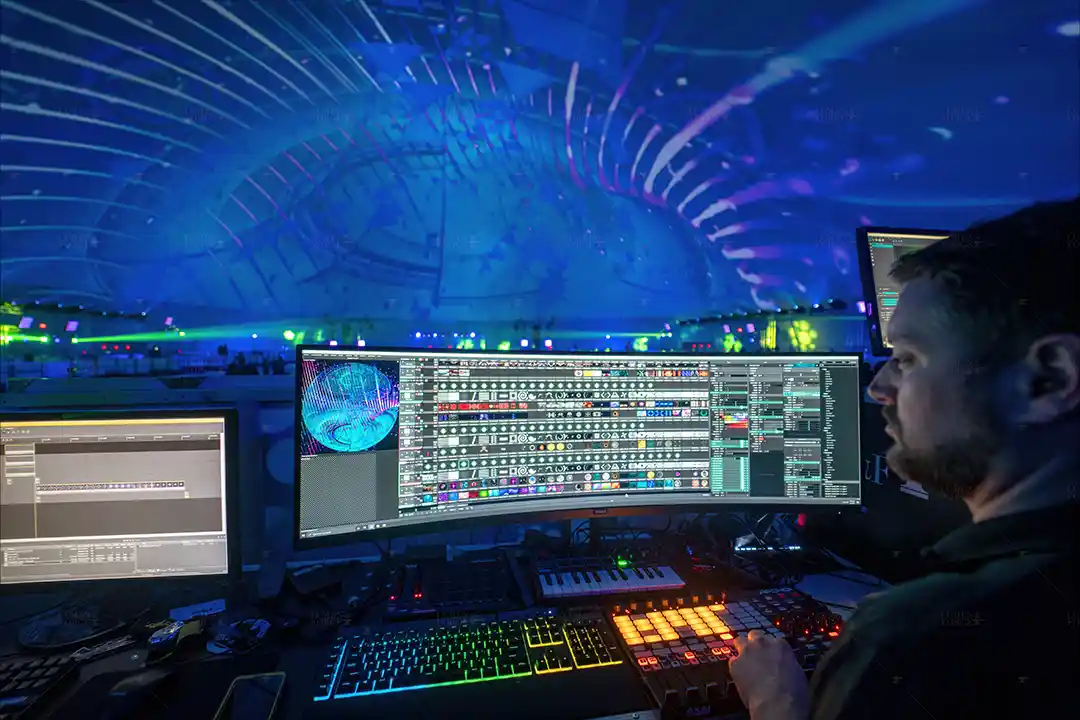
Finally, we integrate interactivity. This means connecting sensors, cameras, or MIDI triggers from the soundboard. The visuals can change based on the volume, pitch, or even the crowd’s movement. The technical team runs tests during soundcheck to ensure everything syncs flawlessly, so the artist can focus on the performance.
Practical Planning Notes for Organizers
If you’re considering interactive projection mapping for your concert or festival, here are key factors to plan for.
Space and Sightlines: The projection surface must be visible from the audience’s perspective. For a stage, ensure the mapping doesn’t block sightlines to the performers. For a dome, the structure itself becomes the visual, so you need enough clearance for a 360-degree view. We recommend a site visit to measure the space and test sightlines before committing to a design.
Timeline: A typical production takes 8-12 weeks from concept to execution. This includes content creation, hardware procurement, and on-site installation. For large festivals, we often begin planning six months in advance. The installation itself can take 2-5 days, depending on the complexity of the surface and the number of projectors.
Indoor vs. Outdoor: Outdoor venues require weatherproofing for projectors and media servers. Bright sunlight can wash out projections, so we recommend evening shows or shaded areas. Indoor venues offer more control over lighting, but you must account for ceiling height and power availability. For example, the Tropicana facade was an outdoor installation that required high-luminance projectors and protective enclosures.
Rough Budget Scale: A basic interactive projection setup for a single stage starts around $30,000, covering a few projectors, a media server, and custom content. A full-scale dome projection or multi-surface installation can range from $75,000 to $250,000 or more, depending on the size and interactivity level. This includes design, equipment, installation, and on-site support. We can provide a more precise estimate after reviewing your venue and goals.
For a deeper dive into how we approach these projects, explore our event design services.
Interactive projection mapping gives you the power to turn every concert into a one-of-a-kind spectacle. The audience doesn’t just watch—they become part of the show. To start planning your project, contact us at Lumen & Forge. We’ll help you scope the visuals, the tech, and the budget so your next performance is unforgettable.
Frequently asked questions
How far in advance should we book interactive projection mapping for a concert or festival?
Does interactive projection mapping work outdoors at a music festival, and how do lighting conditions affect it?
Can interactive projection mapping respond to the audience in real time during a concert?
What surfaces or structures can we project onto at a concert or festival?
What makes interactive projection mapping more effective than an LED wall for a live music event?