

Interactive Projection Mapping for Holiday & New Year’s Eve Shows
{{actual_date_posted}}
How Interactive Projection Mapping Elevates Holiday & New Year’s Eve Shows
Holiday and New Year’s Eve events face a unique challenge: how to create a moment that feels both timeless and fresh, year after year. Static decorations or pre-recorded light shows can lose their impact quickly. Interactive projection mapping offers a solution that turns every attendee into a participant, making each celebration feel alive and personal.
Why Interactive Projection Mapping Works for Holiday and New Year’s Eve
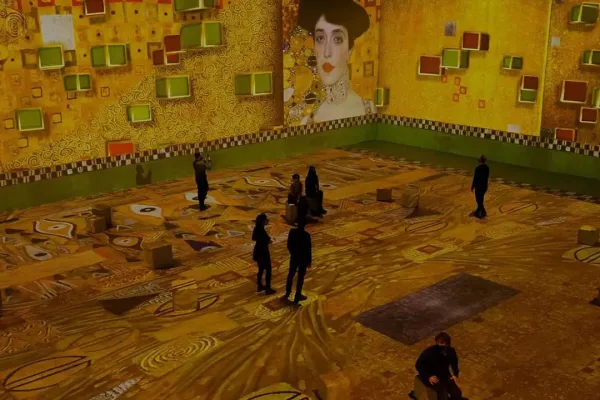
Interactive projection mapping transforms surfaces—from building facades to domes—into responsive canvases. For a New Year’s Eve countdown, this means the crowd’s collective energy can directly influence the visuals. A wave of hands might trigger cascading fireworks, or a group cheer could shift the color palette from winter blues to celebratory golds. This real-time feedback loop keeps audiences engaged for longer periods, a critical factor when you’re asking people to stand outside in December.
The holiday season also offers natural thematic hooks: falling snow that swirls away from a child’s touch, or a menorah that lights up as people gather around it. These moments are not just decorative—they create shared memories. At Lumen & Forge, we’ve seen how a simple interactive element, like a touch-sensitive projection of gift boxes that open when approached, can turn a standard plaza into a destination. For New Year’s, the interaction can be more dramatic: a countdown clock that only accelerates when the crowd’s noise reaches a certain decibel level, or a virtual ball drop that responds to smartphone flashlights.
This approach also solves a practical problem: repeat attendance. A static holiday show might be a one-time draw, but an interactive one evolves with each visitor’s actions. A family returning on New Year’s Eve will see different visuals based on how the crowd interacts, making the experience feel unique every time.
What a Lumen & Forge Interactive Production Involves
Every interactive projection mapping show we build starts with custom content creation. For holiday and New Year’s events, this means designing visual assets that are both festive and responsive. Our team develops animations in-house—think drifting snowflakes that track hand movements, or fireworks that burst in patterns based on sound input. These aren’t off-the-shelf templates; they are tailored to the specific venue and audience.
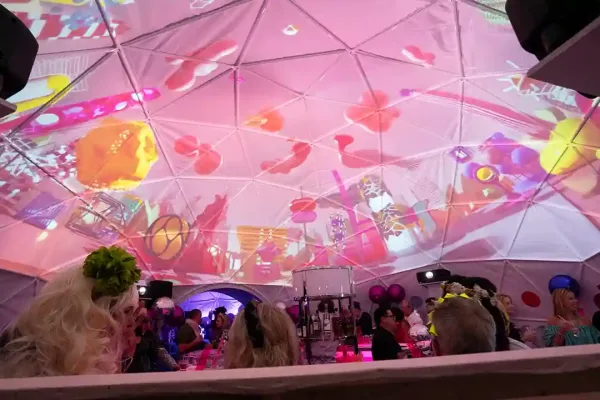
On the technical side, the setup begins with precise surface mapping. Whether we’re projecting onto a historic hotel facade or inside a 360° dome, we capture the geometry of the space and align the projectors to account for every angle and texture. For a dome, this is especially critical—the curved surface demands calibrated blending and edge alignment to maintain immersion. Our dome projection work for projects like “Beneath the Blue” for National Geographic taught us how to handle complex surfaces with zero distortion.
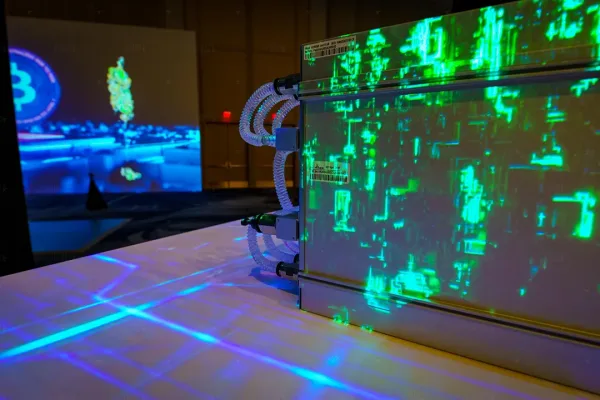
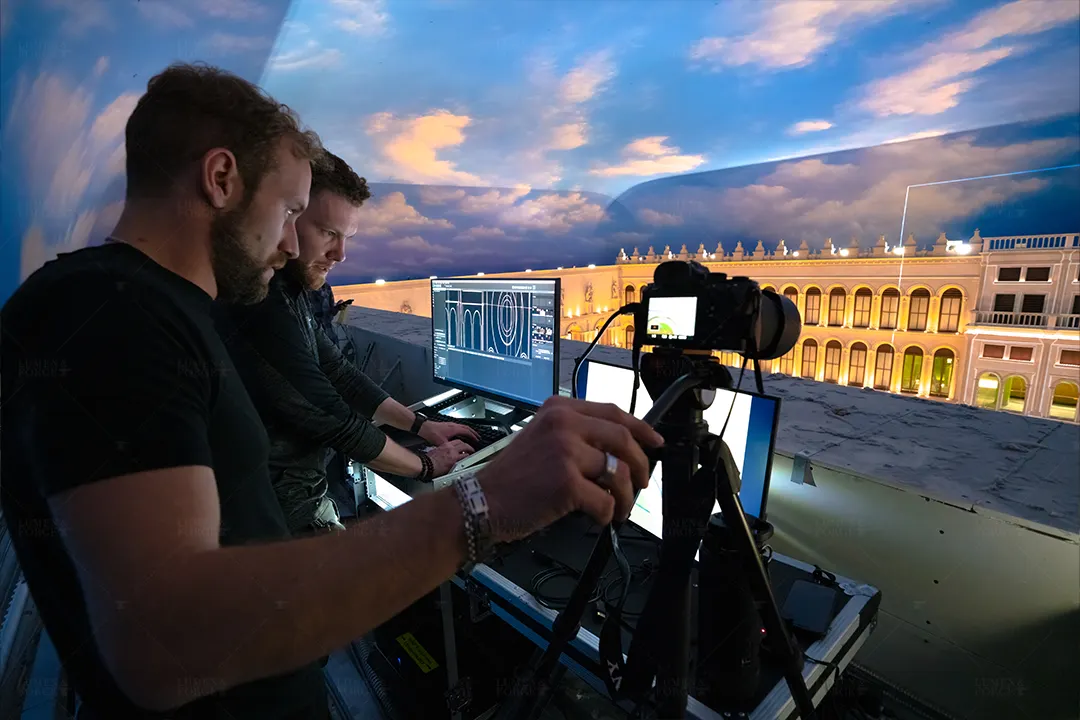
The interactive layer relies on sensors and cameras that feed data into our media servers. For a New Year’s Eve show, we might use depth-sensing cameras to track crowd movement, or microphones to capture audio levels. This data is processed in real time, triggering specific visual responses. The hardware includes high-lumen projectors (often 20,000+ lumens for outdoor use), custom mounting rigs, and backup systems to ensure reliability during a live countdown.
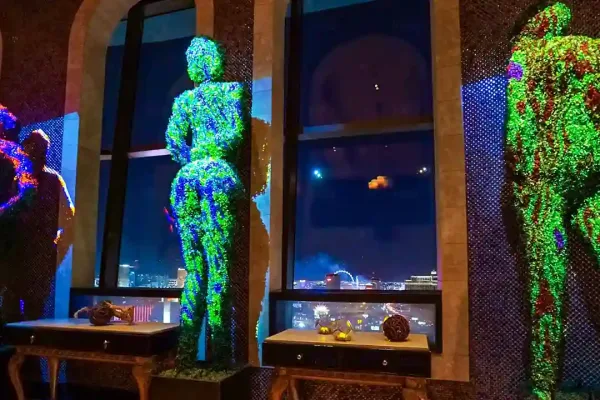
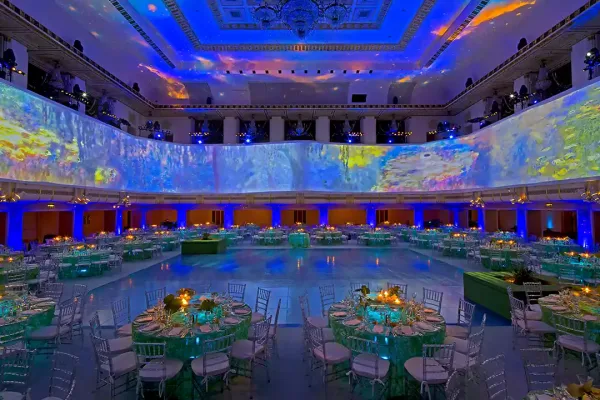
We also handle the full event design integration. This includes coordinating with lighting and sound teams to ensure the projection mapping syncs with music cues or pyrotechnics. For a building-scale show, like our work on the Tropicana facade, we mapped a 100,000-square-foot surface with multiple projectors, creating a seamless canvas that responded to the crowd below. That level of scale is achievable for holiday events too, but it requires early planning and a dedicated technical crew.
Practical Planning Notes for Holiday and New Year’s Eve Organizers
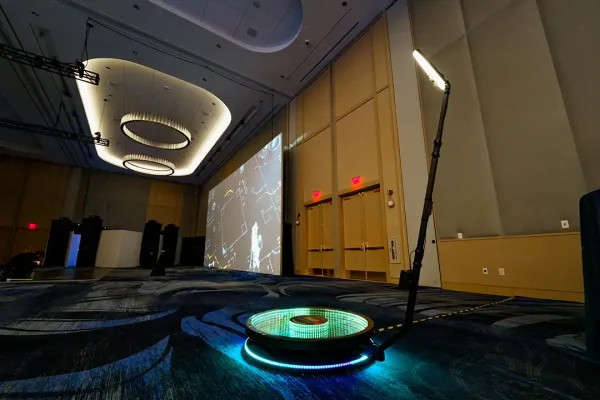
Space and sightlines are the first considerations. For outdoor shows, you need a clear projection surface—ideally a flat or gently curved facade, or a dome structure. Avoid surfaces with heavy texture or reflective glass, as they scatter light. For indoor domes, ensure the structure is dark enough to prevent ambient light from washing out the projections. We recommend a minimum ceiling height of 20 feet for dome setups to allow for comfortable viewing.
Timeline is critical. For a New Year’s Eve event, start planning at least four months out. This allows for custom content creation (6–8 weeks), equipment sourcing (2–4 weeks), and on-site testing (1–2 weeks). The week of the event, we typically need 3–5 days for installation, calibration, and rehearsals. For large-scale building projections, like the Nike Air Jordan activation at NBA All-Star, we had a crew of 12 working around the clock for five days.
Indoor vs. outdoor considerations differ significantly. Outdoor shows are weather-dependent—rain or wind can damage projectors or distort visuals. We use weatherproof housings and redundant power sources. Indoor shows offer more control but require careful ventilation for projectors, which generate heat. Budget-wise, a single-surface interactive projection mapping installation for a holiday event typically ranges from $50,000 to $150,000, depending on scale and complexity. Full dome productions can start at $100,000 and go higher for custom interactivity.
For organizers, the key is to define the interaction early. Will it be touch-based, motion-based, or sound-based? This dictates the sensor type and the content design. We’ve found that sound-based interaction works best for large crowds—it’s intuitive and doesn’t require participants to learn a new interface. Motion-based interaction is better for smaller, intimate spaces where individuals can see their direct impact.
Finally, always plan for a backup. For live events, we run two media servers in parallel, with automatic failover. We also keep spare projectors on site. A New Year’s Eve countdown has zero room for error, and our Lumen & Forge team has the experience to ensure the show goes on regardless.
Interactive projection mapping for holiday and New Year’s Eve shows isn’t just about flashy visuals—it’s about creating a shared, responsive experience that makes the moment unforgettable. From custom content to precise technical execution, every element works together to transform a passive audience into active participants. If you’re planning a celebration that needs to stand out, we can help scope the project from concept to final countdown. Contact us to discuss your venue and timeline.
Frequently asked questions
What makes interactive projection mapping especially effective for Holiday & New Year's Eve shows?
How far in advance should we book interactive projection mapping for a Holiday or New Year's Eve event?
Does interactive projection mapping work outdoors for New Year's Eve celebrations?
Can interactive projection mapping incorporate our branding or holiday themes?
What's the most cost-effective way to use interactive projection mapping at a Holiday or New Year's Eve show?