

Interactive Projection Mapping for Museum & Gallery Exhibits
{{actual_date_posted}}
Interactive Projection Mapping Transforms Museum & Gallery Exhibits
Museum and gallery visitors no longer want to just look—they want to touch, move, and shape the story. Interactive projection mapping turns static displays into responsive environments where every gesture becomes part of the narrative. For institutions looking to captivate modern audiences, this technology offers a way to deepen engagement without replacing the artifacts themselves.
Why Interactive Projection Mapping Works for Museum & Gallery Exhibits
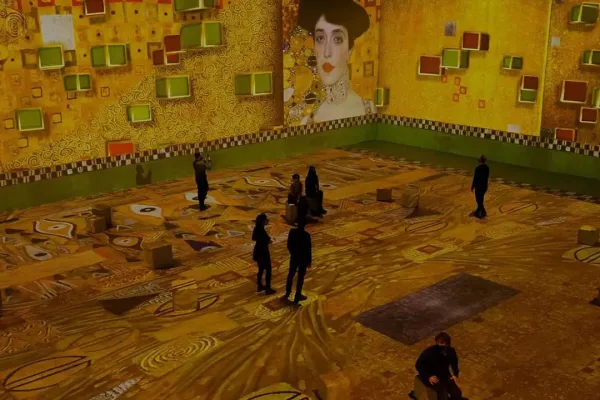
Traditional exhibits rely on text panels and glass cases, which can create a barrier between the visitor and the content. Interactive projection mapping breaks that barrier by letting visitors trigger animations, reveal hidden layers, or watch a landscape shift as they walk by. In a gallery, this means a painting can come alive with context—brushstrokes moving in time, historical figures stepping out of the frame—while the original work remains untouched.
For museums, the payoff is twofold: visitors spend more time at each station, and they remember the experience long after they leave. A natural history exhibit, for example, can let a child “stir” a prehistoric sea with their hand, watching creatures react in real time. This isn’t a gimmick; it’s a way to make complex ideas tangible. At Lumen & Forge, we’ve seen how Lumen and Forge projects turn passive viewing into active discovery, especially when the content is tailored to the venue’s specific mission.
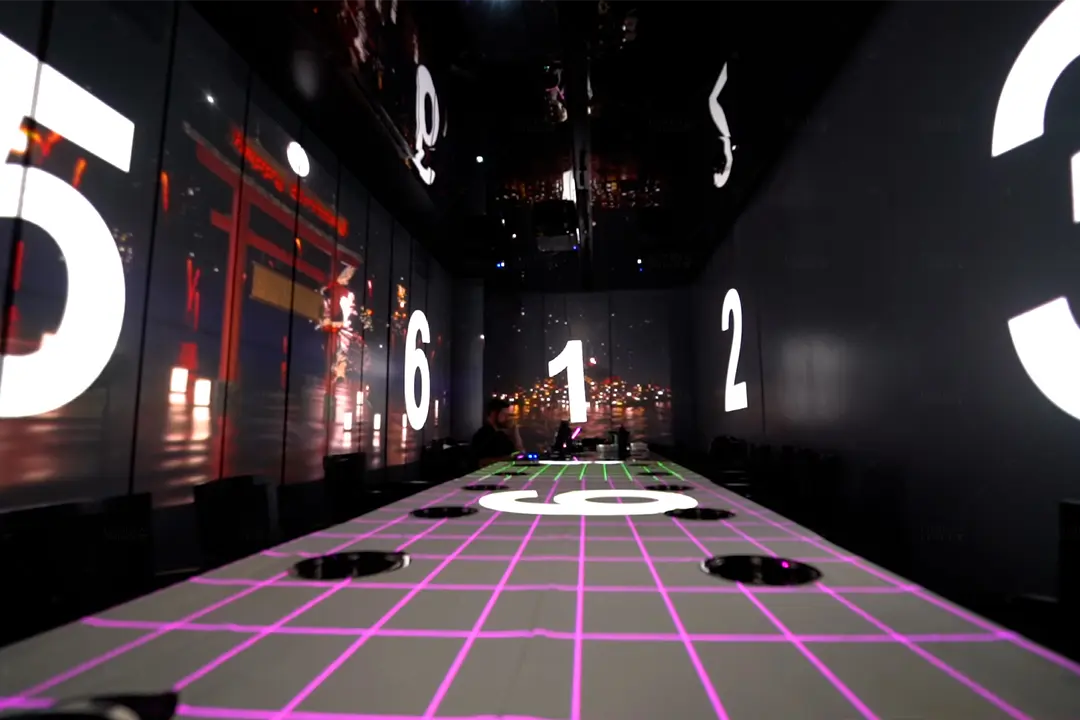
The technology also scales to fit any space. A single wall can become an interactive timeline, or a whole room can respond to foot traffic. Unlike a fixed video loop, interactive projection mapping adapts to the audience, ensuring no two visits are the same. That variability keeps people coming back—and sharing their experiences online.
What a Lumen & Forge Production Involves
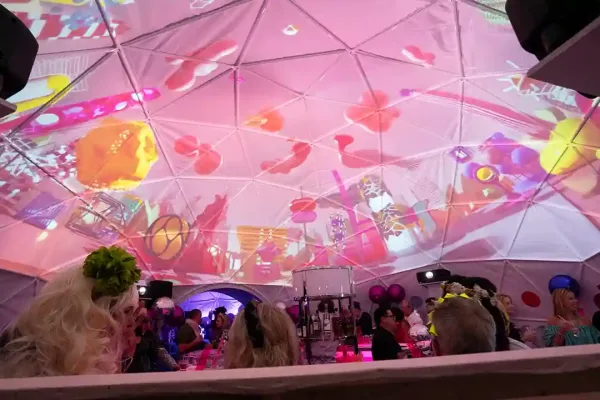
Every interactive projection mapping installation for a museum or gallery starts with a creative brief. We work with curators to identify the story they want to tell and the moments where interaction adds value—not just flash. For the “Beneath the Blue” 360° dome for National Geographic, that meant mapping a full ocean ecosystem onto a curved surface where visitors could trigger shark migrations or coral growth by pointing at specific zones. The dome itself becomes the canvas, and the audience becomes the narrator.
Technically, the process begins with a site survey. We measure the projection surface—whether it’s a flat gallery wall, a curved ceiling, or a full dome projection—to understand its geometry and lighting conditions. Then we build custom content in-house: 3D models, particle systems, and interactive triggers designed to respond to sensors like depth cameras, touch pads, or motion detectors. The hardware setup includes projectors with precise alignment, often stacked or blended to cover large areas without visible seams.
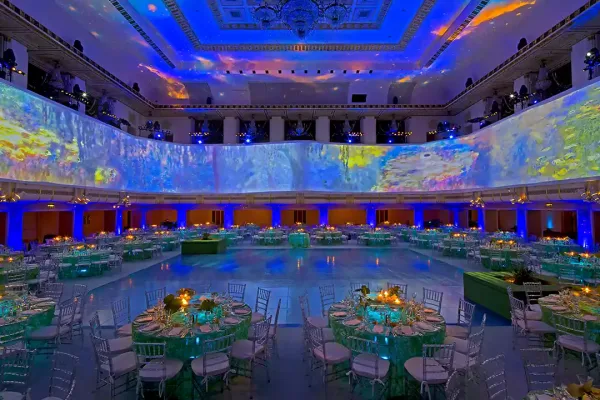
Surface mapping is where the magic happens. We calibrate each projector to the exact contours of the wall or dome, so the image follows the architecture perfectly. For a gallery, this might mean mapping onto a textured stone column or a curved alcove. The result is that the light seems to emanate from the surface itself, not from a projector. Our team also handles the media server configuration, ensuring the system runs reliably for hours—critical for museums that operate seven days a week.
Interactive elements are tested on-site with real visitors before launch. We adjust sensitivity, timing, and content flow based on how people actually behave. A gesture that works in a studio might need recalibration in a dimly lit gallery with reflective floors. This iterative approach is why our installations feel intuitive, not frustrating.
Practical Planning Notes for Organizers
Space and sightlines are the first considerations. For a projection mapping installation, you need at least 10–15 feet of throw distance from projector to surface, though short-throw lenses can reduce that in tight galleries. Avoid placing interactive zones where visitors will cast shadows onto the projection area—a common pitfall. Domes require a central viewing point, so seating or standing areas must be arranged around the perimeter. We recommend a site visit with our team to map these constraints early.
Timeline is another factor. A typical interactive projection mapping project for a museum takes 8–12 weeks from concept to opening. Content creation—especially custom 3D animation or real-time graphics—is the longest phase. Hardware procurement and installation add another 2–3 weeks. For temporary exhibits, we can compress this to 4–6 weeks using pre-built interactive modules, but custom work always requires lead time. Plan your event design calendar accordingly.
Indoor versus outdoor matters for equipment. Gallery spaces with controlled lighting are ideal because ambient light washes out projected images. If your exhibit is in a lobby with skylights, we’ll specify high-brightness projectors (10,000+ lumens) and dark surfaces. Outdoor installations, like the world’s-largest video game screen on the Tropicana facade, require weatherproof housings and higher brightness still. Budget for these differences: indoor interactive setups typically range from $30,000 to $150,000 depending on complexity and size, while outdoor or dome projects can exceed $200,000. This includes content, hardware, installation, and a one-year warranty on equipment.
We also recommend planning for maintenance. Projectors need lamp replacements every 2,000–5,000 hours, and interactive sensors may need recalibration after heavy use. Factor in a small annual budget for upkeep.
Interactive projection mapping doesn’t replace the art or artifacts—it amplifies them. When done right, it turns a visit into a conversation. If you’re ready to explore what this technology can do for your museum or gallery, contact us to scope your project. We’ll walk through your space, your story, and the best way to bring it to life.
Frequently asked questions
What makes interactive projection mapping especially effective for museum and gallery exhibits?
How far in advance should we book interactive projection mapping for a museum or gallery exhibit?
What surfaces or structures can you project onto in a museum or gallery setting?
Can interactive projection mapping incorporate our branding, logos, or exhibit themes?
How do lighting conditions and ambient light affect interactive projection mapping in a gallery?