

Interactive Projection Mapping for Nightlife & Club Installations
{{actual_date_posted}}
Interactive Projection Mapping Transforms Nightlife and Club Installations
Nightlife spaces face a constant challenge: how to keep a crowd engaged past 2 AM when the lighting rig feels predictable and the DJ needs something more than a strobe. Interactive projection mapping turns every wall, ceiling, and dance floor into a living canvas that responds to movement, sound, and touch. This isn’t just decoration—it’s a new layer of experience that makes your venue the place people talk about the next morning.
Why Interactive Projection Mapping Works for Nightlife and Club Installations
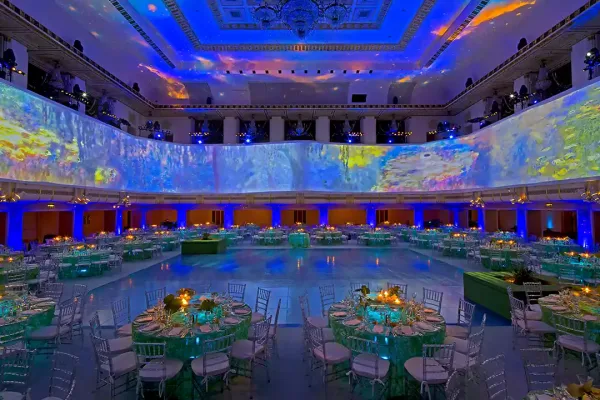
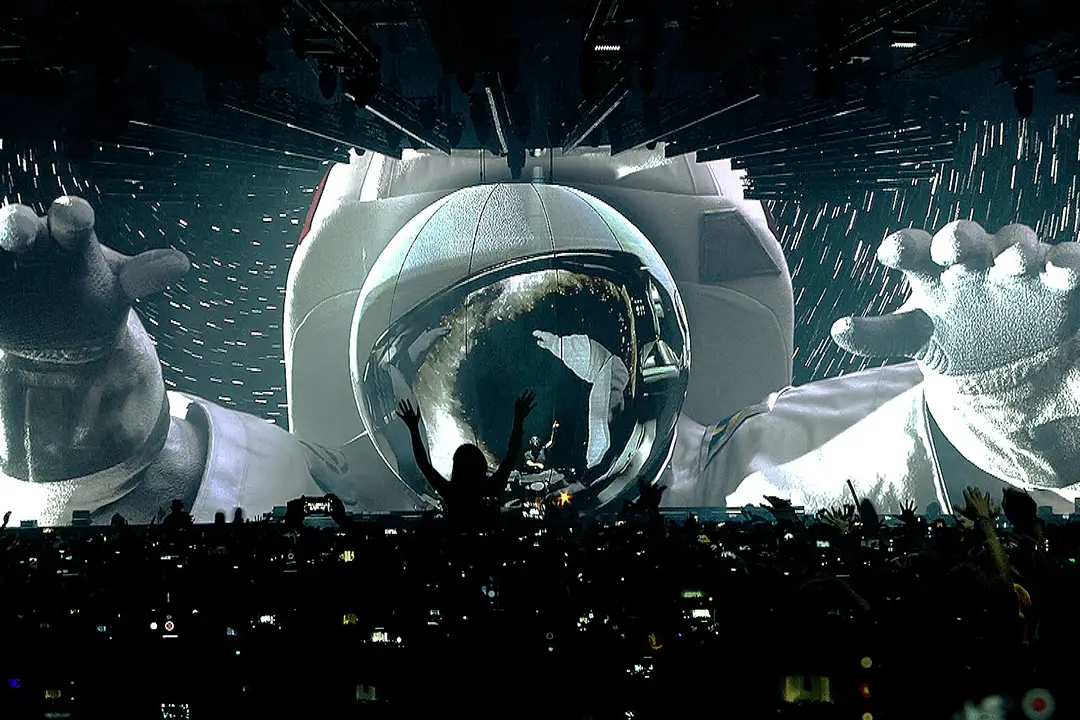
Standard club lighting creates a mood, but it’s static. You might have a color wash that shifts every thirty seconds, or a laser pattern that loops. Interactive projection mapping changes the game by making the environment reactive. When a dancer steps onto a mapped floor, visuals ripple outward from their feet. When the bass drops, the walls pulse in sync. This immediacy turns passive viewers into active participants.
For nightlife, the key is energy retention. A crowd that feels part of the show stays longer, buys more drinks, and shares more content on social media. Our work at Lumen and Forge has shown that interactive elements create natural photo and video moments—people film themselves reacting to the visuals, which becomes free promotion for your venue. Unlike a one-time event, a club installation runs night after night, so the content needs to feel fresh each time. We design systems that cycle through different visual themes or react to real-time audio input, ensuring no two nights look exactly the same.
There’s also a practical advantage: projection mapping covers large surfaces without the physical clutter of screens or LED panels. A single projector can turn an entire wall into a dynamic display, keeping sightlines clear and the dance floor open. This is especially valuable in tight club layouts where every square foot matters.
What a Lumen & Forge Production Involves
Every club installation starts with a conversation about the space and the vibe you want to achieve. We don’t drop in a generic template. Our creative team listens to your music policy, your crowd demographics, and your brand identity, then builds custom content that fits. For a techno-focused club, that might mean abstract geometric patterns that shift with the beat. For a more upscale lounge, it could be subtle organic textures that respond to slow movements.
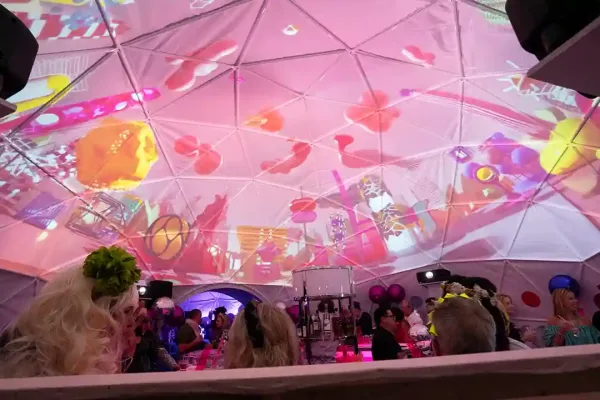
On the technical side, we handle the full chain. We select projectors based on brightness, throw distance, and ambient light conditions—most clubs require high-lumen laser projectors to compete with existing lighting. We map the surfaces using photogrammetry or LiDAR scans, ensuring every contour of the architecture is accounted for. If your venue has a dome, we specialize in dome projection that wraps the entire ceiling in seamless visuals, a technique we refined on projects like the "Beneath the Blue" 360° dome for National Geographic. For flat walls or irregular facades, we use projection mapping software that warps and blends multiple projectors into one cohesive image.
Interactivity requires sensors. We integrate depth cameras, pressure-sensitive floors, or audio-reactive microphones that feed data into our media servers. The system processes that input in real time—often with less than 50 milliseconds of latency—and adjusts the visuals accordingly. We also coordinate with your existing lighting and sound teams, because the projection should complement, not compete with, the DJ’s setup. Our event design service includes full integration planning, so everything works from opening night.
We’ve done this at scale. For the NBA All-Star weekend, we mapped the entire facade of the Tropicana—the world’s largest video game screen at the time—with interactive elements that responded to crowd movement. That same principle scales down for a club: the technology is the same, just sized for an intimate room. Every installation includes ongoing content updates, because a club that runs the same loop for six months will lose its edge.
Practical Planning Notes for Organizers
Space and sightlines come first. Walk your venue with a projection mapping specialist and identify the best surfaces: blank walls, ceilings, columns, or even the floor. Avoid areas with heavy ambient light from exits or bar tops, as that will wash out the projection. Think about where your crowd stands—if the dance floor is in the center, the walls around it are prime real estate. For domed ceilings, ensure there’s enough height to avoid head obstruction; we typically recommend at least 12 feet of clearance.
Timeline varies by complexity. A single-wall installation with basic interactivity can be designed, content-created, and installed in four to six weeks. A multi-surface system with custom content and full sensor integration might take eight to twelve weeks. Factor in at least one week for on-site calibration and testing, because club environments have unpredictable variables like smoke machines, strobe lights, and crowd density that can affect tracking accuracy.
Indoor vs. outdoor matters for equipment. Indoor clubs are easier to control for temperature and humidity, so we can use standard laser projectors. Outdoor or partially covered venues require weatherproof enclosures and higher brightness ratings to compete with moonlight or streetlights. Our Tropicana facade work was fully outdoor, using industrial-grade projectors that ran 12 hours a night for weeks without failure.
Budget scale: A single-wall interactive setup with one projector and basic sensors starts around $25,000 to $40,000, including content creation and installation. A full-room system with multiple projectors, dome projection, and advanced interactivity can run $100,000 to $250,000 or more, depending on surface area and content complexity. Ongoing content updates cost extra, typically $5,000 to $15,000 per new theme. These numbers are rough estimates—every venue is different, and we provide detailed quotes after a site visit.
Interactive projection mapping for nightlife isn’t a trend; it’s a new baseline for what a great club experience can be. The technology is proven, the creative possibilities are endless, and the payoff is a venue that feels alive every single night. Ready to make your space move with the crowd? Contact us to scope your project—we’ll walk through your layout, your vision, and your budget, and show you what’s possible.
Frequently asked questions
What makes interactive projection mapping worth the investment for a club versus traditional screens or lighting?
How far in advance should we book interactive projection mapping for a club installation or nightlife event?
What space or venue requirements does interactive projection mapping have for a club?
Can interactive projection mapping respond to the crowd in real time during a club night?
Do you handle everything turnkey—equipment, crew, setup, and teardown—for a club installation?