

Interactive Projection Mapping for Product Launches That Captivate
{{actual_date_posted}}
Interactive Projection Mapping for Product Launches That Captivate
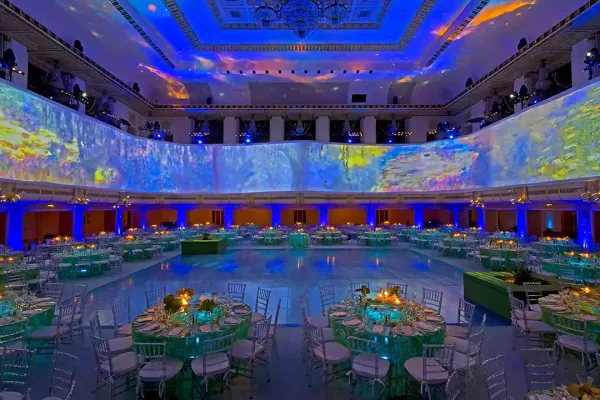
A product launch is a single moment of truth. You have one chance to turn a reveal into an experience that people remember, share, and talk about long after the lights come up. Static stages and flat screens can't match the visceral impact of interactive projection mapping, where the product itself becomes a living canvas that responds to touch, motion, or sound. Done right, it transforms a launch from a presentation into an event that defines a brand.
Why Interactive Projection Mapping Works for Product Launches
Interactive projection mapping turns a passive audience into active participants. When a guest waves their hand and the product's surface ripples with data or color, they are no longer just watching—they are part of the story. This engagement creates a memory that a standard video loop cannot. For automotive, consumer electronics, or luxury goods, the ability to let attendees explore product features through gesture or touch on a mapped surface can replace a dozen slides.
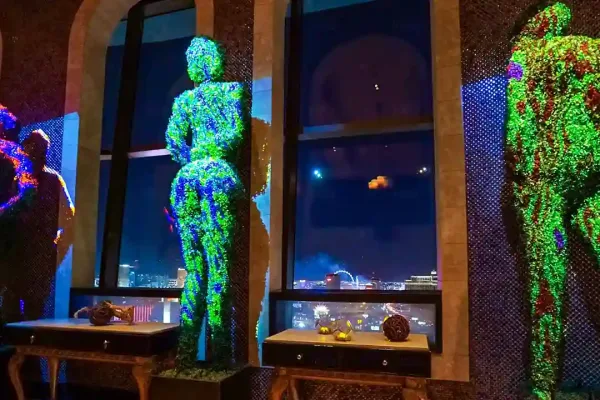
Consider the scale of what's possible. At the Tropicana, we built the world's largest video game screen on a full facade, turning an entire building into a playable interface. That same principle scales down to a product reveal: a car, a sneaker, a phone. The product becomes the screen, and the audience becomes the controller. For Nike Air Jordan's NBA All-Star launch, we used building-scale projection mapping to turn a venue into a kinetic tribute to the brand. Interactive projection mapping takes that further, letting attendees trigger animations, change colors, or reveal hidden details by simply stepping into a zone.
This technology also solves a common launch problem: maintaining attention. In a world of constant notifications, a static reveal can feel flat. Interactive projection mapping creates a dynamic loop where every interaction yields a new visual response. It keeps the product at the center but makes the experience feel fresh each time someone engages. The result is longer dwell times, more social sharing, and a stronger brand connection.
What a Lumen & Forge Interactive Production Involves
Every interactive projection mapping production begins with custom content. We don't use templates. For a product launch, we start by understanding the product's story—its key features, design language, and the emotion you want to evoke. Our creative team then builds a visual narrative that can respond to interaction. This might mean a car that "breathes" when touched, or a shoe that reveals its construction layers as a guest steps closer.
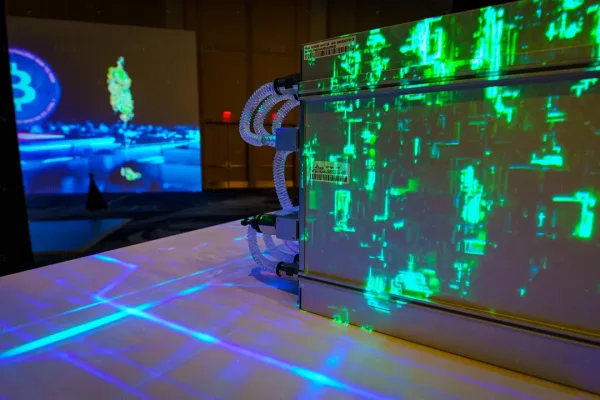
On the technical side, we deploy high-lumen projectors and precision media servers. The projectors are positioned to cover the mapped surface without casting shadows on the interaction zone. Our projection mapping software calibrates the image to the exact geometry of the product, whether it's a curved car body, a complex sneaker silhouette, or a textured packaging box. We then integrate sensors—depth cameras, infrared trackers, or capacitive touch—to capture audience input in real time.
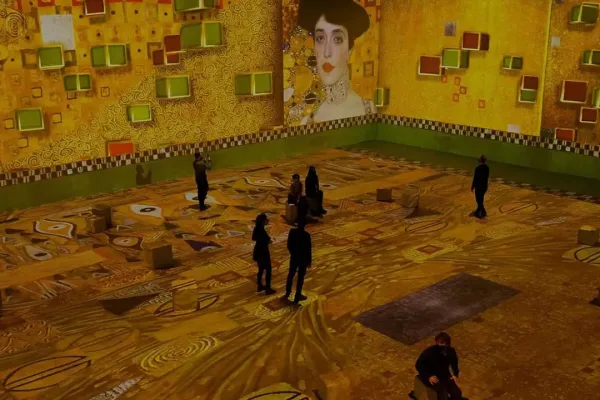
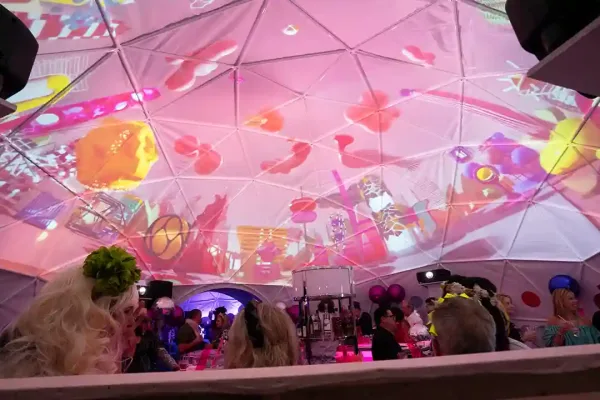
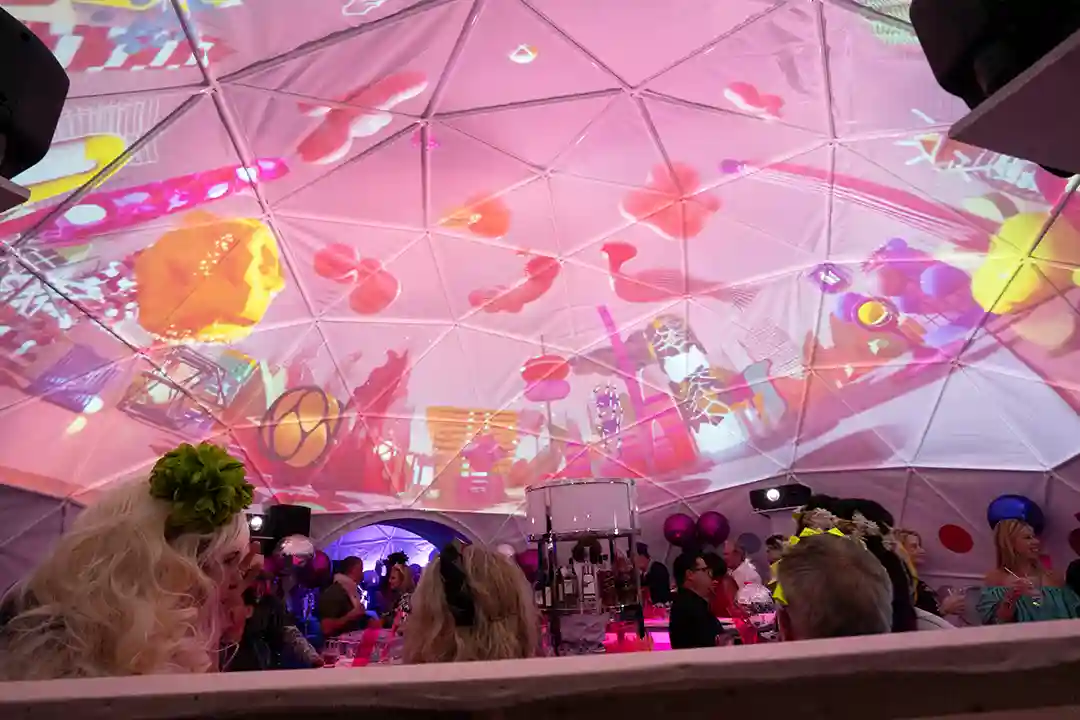
For launches that want a fully immersive experience, we often recommend a dome projection environment. In a 360° dome, the product sits in the center while the entire interior surface becomes a responsive canvas. For National Geographic's "Beneath the Blue," we turned a dome into an underwater world where guests could influence marine life with their movements. For a product launch, that same approach can place attendees inside the product's ecosystem—imagine standing inside a virtual engine or surrounded by the materials of a new watch. Our event design team works with your production team to ensure the dome or mapped space integrates seamlessly with the overall event flow, from registration to the moment of reveal.
The production process typically takes four to eight weeks from concept to show day. We handle everything: content creation, hardware specification, on-site installation, and programming the interactive logic. Our team of projectionists, software developers, and designers works alongside your event producers to ensure the technology enhances the story without overwhelming it. The result is a launch that feels less like a presentation and more like a discovery.
Practical Planning Notes for Organizers
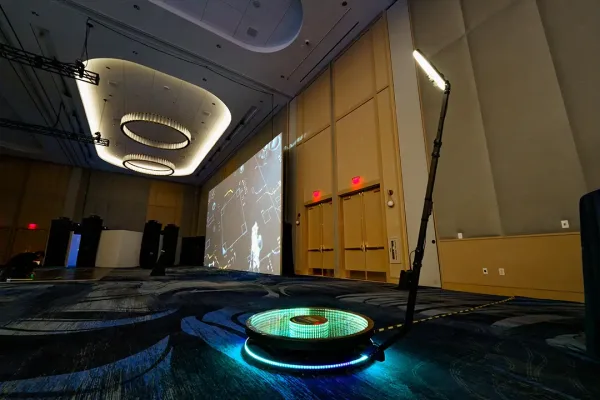
Space and sightlines are the first consideration. For a product on a pedestal, allow a minimum of 15 feet between the product and the nearest audience to give projectors room to throw a clean image without distortion. If you want guests to interact directly with the product surface, ensure a clear zone around it where sensors can track movement. For dome installations, you need a clear floor space of at least 30 feet in diameter and a ceiling height of 15 feet or more to accommodate the structure and projection throw.
Timeline is critical. We recommend starting the conversation at least eight weeks before your event. This allows for content development, hardware procurement, and a full dry run. For complex interactive setups, we often build a prototype in our Las Vegas studio to test the interaction logic before shipping to your venue. This reduces risk and ensures the reveal runs flawlessly.
Indoor versus outdoor matters significantly. Indoor spaces offer controlled lighting, which is essential for projection mapping to maintain contrast and brightness. Outdoor launches require high-lumen projectors and careful management of ambient light—dawn or dusk events work best. We have extensive experience in both environments, including the Tropicana facade work which was fully outdoor. Budgets vary widely based on scale. A single-product interactive station with one projector and sensor runs in the range of $15,000 to $30,000. A full dome experience with multiple interactive zones can scale to $100,000 or more, depending on content complexity and hardware requirements. We always provide a detailed scope and transparent pricing during the proposal phase.
Finally, consider the flow of your event. Interactive projection mapping works best when it's the focal point of the reveal moment. We advise against placing it in a high-traffic bar or buffet area where people might crowd the sensors. Instead, create a dedicated theater or activation zone with clear signage and a host to guide the first interaction. Once one person engages, others will naturally follow.
Interactive projection mapping is not a gimmick—it is a proven tool for creating product launches that resonate. When a guest walks away having touched the product's story, they carry that memory with them. That is the goal.
Ready to discuss your next launch? Contact us at Lumen & Forge to scope your project. We'll walk through the creative possibilities, technical requirements, and budget to make your reveal unforgettable.
Frequently asked questions
What makes interactive projection mapping especially effective for product launches compared to traditional AV?
How far in advance should we book interactive projection mapping for a product launch?
What space or venue requirements does interactive projection mapping have for a product launch?
Does Lumen & Forge create custom content for our product launch, or do we supply visuals?
Can interactive projection mapping be updated or re-run for multi-day product launches?