

Interactive Projection Mapping for Retail Storefront Displays
{{actual_date_posted}}
Interactive Projection Mapping for Retail Storefront Displays
Retail storefronts face a brutal challenge: grabbing attention in a split second while every other brand on the block is shouting louder. Interactive projection mapping turns that problem into an advantage by making your storefront a living, responsive canvas. When a passerby’s movement triggers a cascade of digital imagery across your glass facade, you’re not just advertising—you’re creating a moment that stops traffic and pulls people through the door.
Why Interactive Projection Mapping Works for Retail
Static signage is invisible to the modern shopper. Interactive projection mapping changes that by turning your storefront into an experience. When we mapped the Tropicana facade for what became the world’s largest video game screen, we saw firsthand how dynamic, responsive visuals can turn a building into a destination. For retail, the principle is the same: a window display that reacts to people walking by—with motion, color changes, or product reveals—generates curiosity and dwell time. And dwell time is the first step to a sale.
This approach works because it leverages a basic human instinct: we can’t ignore something that responds to us. A Lumen & Forge interactive display might let shoppers “swipe” through a virtual catalog on a glass storefront, or trigger a product animation by stepping on a pressure mat. The result is a retail experience that feels personal and memorable, not passive. For brands launching new products or seasonal campaigns, this creates a natural social-media moment—people film the interaction, share it, and your storefront becomes free advertising.
Beyond foot traffic, interactive projection mapping solves a practical retail problem: flexibility. A single projector and media server can switch from a holiday campaign to a new collection launch in minutes. No vinyl decals to scrape off, no printed banners to store. The content is as adaptable as your marketing calendar.
What a Lumen & Forge Interactive Projection Mapping Production Involves
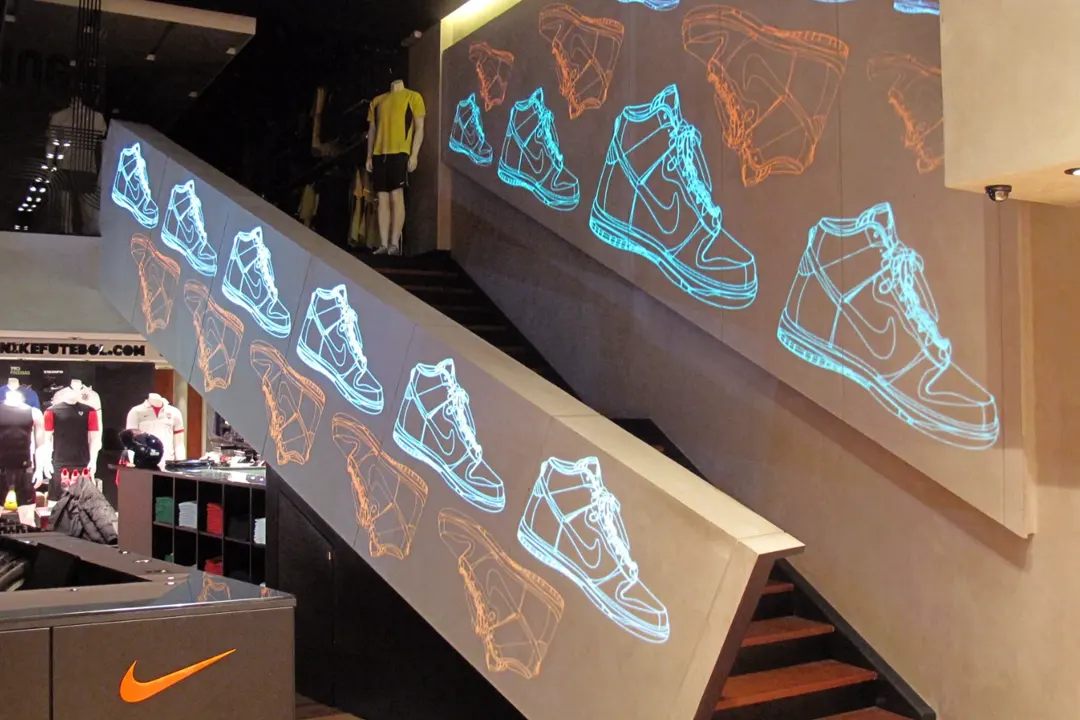
Every retail projection mapping project starts with the space. We walk the storefront, measure sightlines, and assess ambient light. For indoor installations, we can work with existing windows or walls; for outdoor storefronts, we account for sun glare and weather. Our team then designs custom content that matches the brand’s identity—lifestyle imagery, product close-ups, abstract motion, or narrative sequences. The creative is built specifically for the surface, whether it’s a flat glass panel or a curved architectural feature.
On the technical side, we spec projectors based on brightness, throw distance, and resolution. For a typical storefront window, a single high-lumen laser projector can cover a 10-by-15-foot area with crisp, bright imagery. We pair that with a media server running real-time playback and interactive triggers. Those triggers can be anything: a camera-based motion sensor, a floor pressure pad, or a simple touch interface. The projection mapping software warps the content to fit the glass perfectly, so the image looks painted onto the surface, not projected onto it.
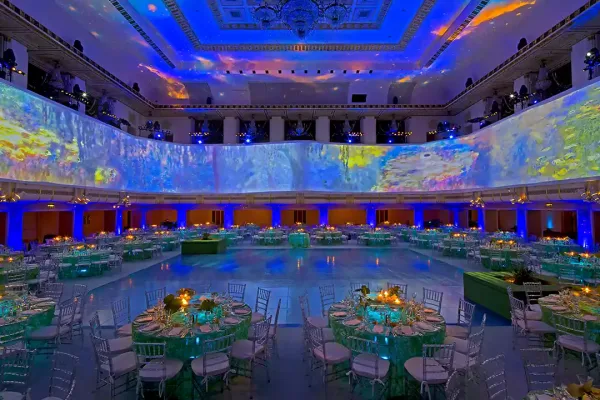
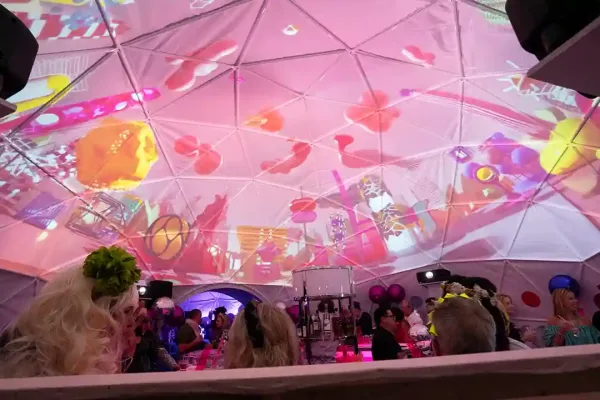
For larger installations—like a building-scale projection—we use multiple projectors blended together. Our work for Nike Air Jordan at NBA All-Star required six projectors to cover an entire facade, with content that tracked player movements in real time. For retail, a similar approach can turn an entire storefront into a canvas that responds to foot traffic or even live social feeds. If the storefront includes a dome projection element, like a suspended hemisphere inside the window, we map content onto the curved surface for a 360-degree effect that draws the eye from across the street.
Sound design often completes the experience. A subtle audio track synced to the visuals—played through a small speaker near the window—adds an extra layer of immersion without overwhelming the street. The entire system runs on a simple schedule, turning on at store open and off at close, or triggered by motion to conserve power.
Practical Planning Notes for Retail Storefront Displays
Space and sightlines are the first considerations. A storefront projection needs a clear projection path—no awnings, columns, or signs blocking the beam. For indoor installations, the projector can sit behind the window, hidden from view. For outdoor setups, we mount the projector in a weatherproof enclosure on the building facade or on a pole across the street. The ideal viewing distance is 10 to 30 feet from the window, so if your storefront faces a wide sidewalk or plaza, you’ve got a natural audience.
Timeline-wise, a typical retail installation takes four to six weeks from concept to launch. The first week is creative development and storyboarding. Weeks two and three involve content production and technical design. Week four is installation and calibration, with a day or two for testing and adjustments. For seasonal campaigns, we recommend starting the process at least eight weeks out to allow for revisions and approvals.
Indoor versus outdoor matters for equipment choice. Outdoor projectors need IP-rated housings and higher brightness—typically 10,000 lumens or more—to compete with sunlight. Indoor installations can use lower-lumen projectors and don’t need weather protection. Both setups require careful event design to ensure the interactive elements feel intuitive. A motion sensor that’s too sensitive will trigger false responses; one that’s too subtle will miss pedestrians. We tune these in the field.
Budget scale varies widely. A single-window interactive display with one projector, custom content, and motion sensors typically starts around $15,000 to $30,000. A multi-projector facade installation covering a full storefront can range from $50,000 to $150,000, depending on complexity and content length. Ongoing maintenance and content updates add a monthly retainer, usually $1,000 to $3,000. For brands running multiple seasonal campaigns, a long-term lease on the hardware can lower upfront costs.
One final note: power and data. Every installation needs a dedicated circuit and network connection for the media server. We handle all cabling discreetly, but storefront managers should plan for a small equipment closet or shelf near the display area.
Interactive projection mapping gives retail storefronts a way to compete with digital-native brands and online experiences. It turns a passive window into an active invitation. If you’re ready to explore what that looks like for your space, contact us at Lumen & Forge. We’ll walk your storefront, discuss your campaign goals, and deliver a proposal that maps directly to your budget and timeline.
Frequently asked questions
What makes interactive projection mapping more effective for retail storefronts than a standard digital sign or LED wall?
Can interactive projection mapping work on a glass storefront window, and how does daylight affect it?
How far in advance should we book interactive projection mapping for a retail storefront campaign?
What's the most cost-effective way to use interactive projection mapping for a retail storefront on a limited budget?
Do you handle everything turnkey—equipment, crew, setup, and teardown—for a retail storefront display?