

Interactive Projection Mapping for Trade Shows & Conventions
{{actual_date_posted}}
Interactive Projection Mapping for Trade Shows & Conventions
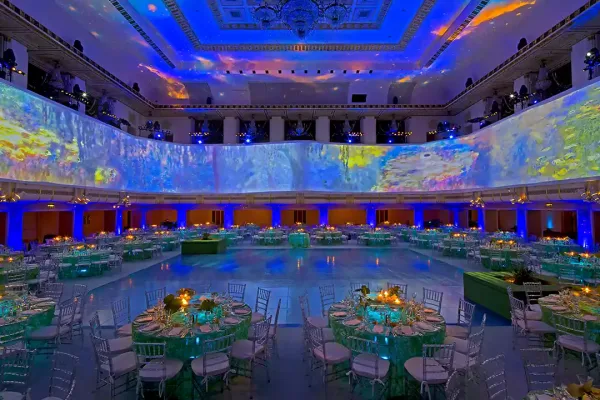
Trade show floors are a battlefield of competing messages, where a static booth or a flat screen rarely holds attention beyond a glance. The real opportunity lies in creating a moment—a shared experience that stops foot traffic and sparks conversation. Interactive projection mapping turns your exhibit into a living, responsive environment, making your brand the one attendees remember.
Why Interactive Projection Mapping Works for Trade Shows and Conventions
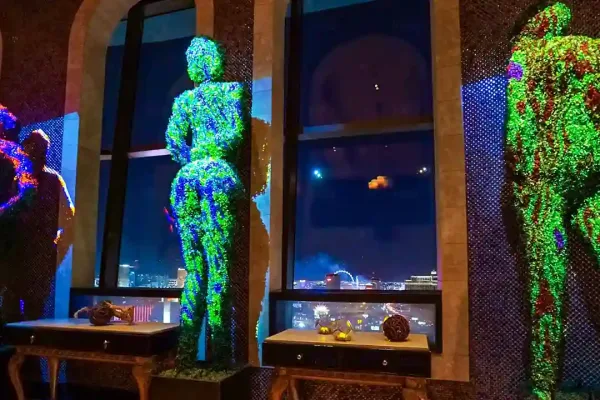
Trade shows and conventions are sensory overload zones. Attendees walk past hundreds of booths, scanning for something that feels new. Interactive projection mapping cuts through the noise by making your space react to them—via motion, touch, or even voice. This isn’t passive video; it’s a dialogue. When a visitor steps into a mapped surface and their movement triggers a visual cascade or reveals product details, they become part of the story. That engagement is far more memorable than a brochure or a looping video.
For example, at a major automotive convention, we mapped a full vehicle with interactive graphics that changed color and displayed specs when a person approached. The booth drew crowds for hours, not because of the car, but because people wanted to “play” with it. This is the core advantage: interactivity transforms a display into a destination. It drives dwell time, generates social media shares, and creates a natural lead-capture opportunity—attendees are more willing to give contact info after a positive, immersive experience.
Moreover, interactive projection mapping is inherently flexible. You can adapt the same hardware setup for different conventions by swapping out the content, keeping your investment reusable. For trade shows and conventions, this means a consistent, high-impact presence without starting from scratch each time. At Lumen & Forge, we’ve seen this work across industries—from tech launches to hospitality expos—where the ability to update visuals in real time keeps the experience fresh.
What a Lumen & Forge Interactive Projection Mapping Production Involves
Every project begins with a conversation about your goals: Are you launching a product? Building brand awareness? Driving foot traffic? From there, we design a custom solution that blends creative vision with technical precision. A typical production for a trade show or convention involves several layers.
Creative Development: Our team crafts original content tailored to your brand and the event’s audience. This might include 3D animations, data visualizations, or narrative sequences that respond to movement. For instance, for a healthcare conference, we created a projection that let attendees “dissect” a digital model of a medical device by waving their hands—making complex information intuitive and engaging. The content is never generic; it’s built for your specific message.
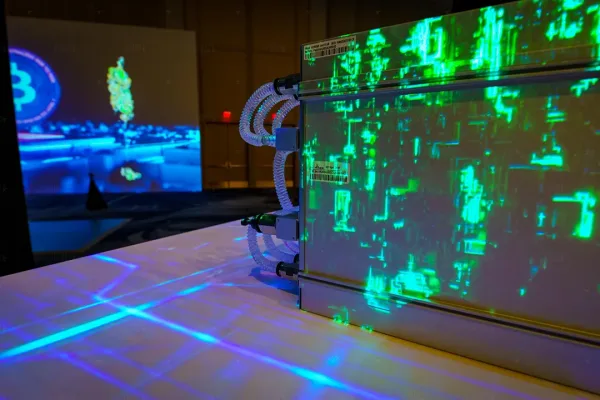
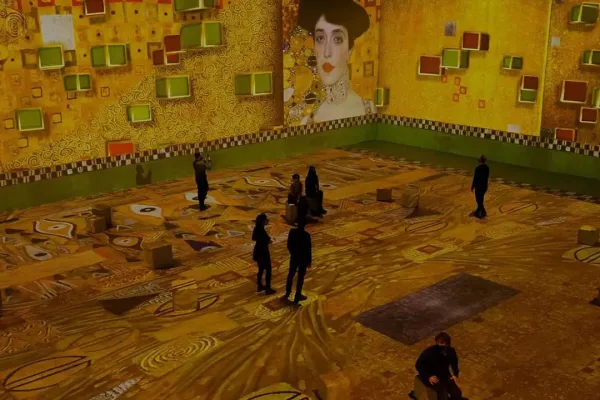
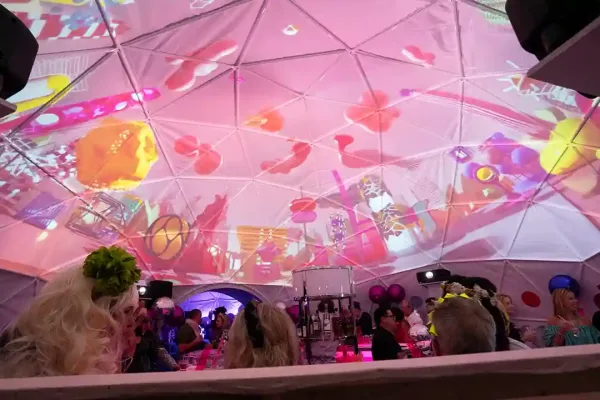
Technical Setup: We use high-lumen projectors and custom media servers to ensure brightness and clarity even in bright convention halls. Surface mapping is critical—we calibrate the projection to align perfectly with your booth’s walls, floors, or objects. For a recent tech trade show, we mapped a 30-foot curved wall, turning it into a seamless interactive canvas that responded to gestures from up to 15 feet away. When a dome is part of the plan, dome projection creates an immersive 360° environment, ideal for product demos or brand storytelling that envelops the viewer.
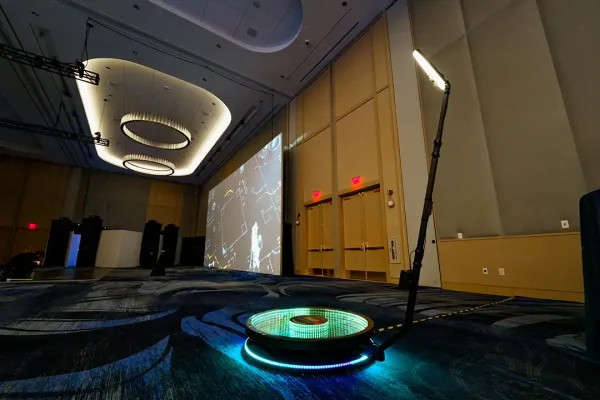
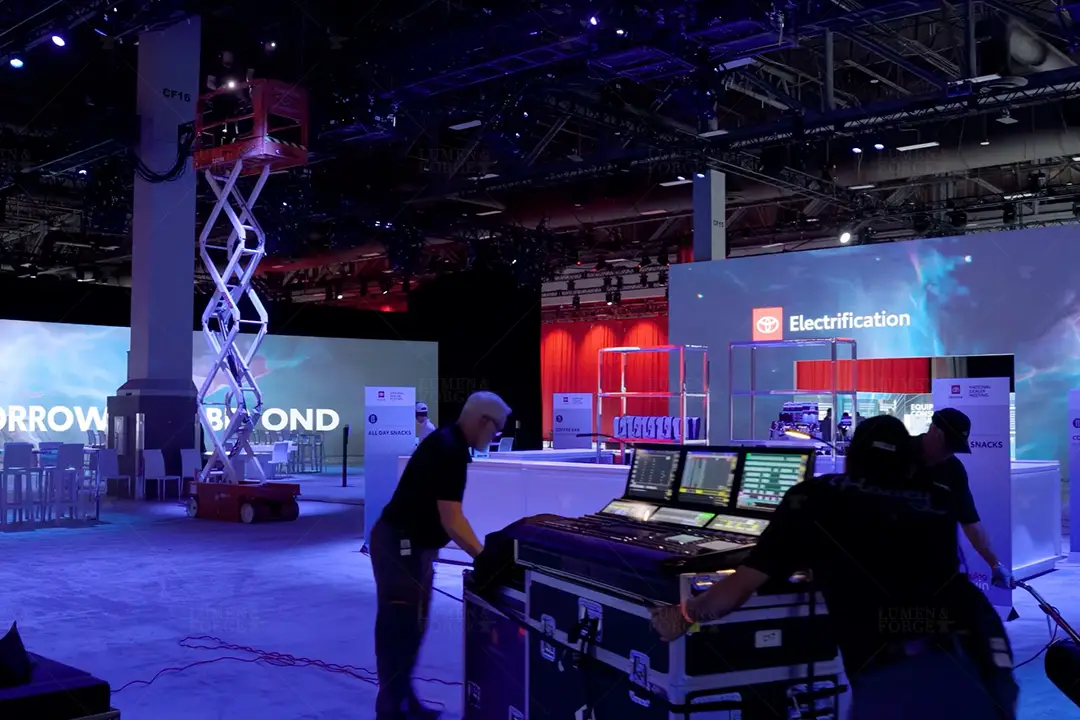
Integration: We handle all hardware, software, and on-site installation. This includes mounting projectors, running cables, testing interactivity, and providing technical support throughout the event. Our team has managed builds for complex setups—like the world’s largest video game screen on the Tropicana facade—so we’re comfortable with tight deadlines and challenging spaces. For conventions, we often work with modular structures that can be set up in a single day, minimizing disruption to your schedule. We also coordinate with event organizers to ensure power, rigging, and sightlines are addressed.
Finally, we document the experience with high-quality video and photos, giving you assets for post-event marketing. Every production is a turnkey service: you focus on your attendees, we handle the technology. To explore how this could look for your booth, visit our event design page for examples of past work.
Practical Planning Notes for Trade Show and Convention Organizers
Planning an interactive projection mapping installation requires thinking beyond the usual booth logistics. Here are key considerations based on our experience across dozens of events.
Space and Sightlines: Interactive mapping works best when attendees have clear, unobstructed views of the projection surface and room to move. For a 20x20 booth, we recommend a minimum of 10 feet of clearance in front of the mapped area. Avoid placing pillars or tall displays that block the projection. If using floor projection, ensure the surface is non-reflective and clean. We’ll advise on optimal placement during the design phase, but early communication with the venue about ceiling height and rigging points is critical.
Timeline: Start planning at least 8-12 weeks before the event. This allows time for creative development, content production, hardware sourcing, and a dry run. For large-scale installations—like a 360° dome—add 4-6 weeks for fabrication and testing. On-site setup typically takes one to two days, depending on complexity. We’ve managed last-minute builds for NBA All-Star events, but earlier planning gives more flexibility for customization.
Indoor vs. Outdoor: Indoor convention halls are ideal because we control lighting and weather. Outdoor spaces require weatherproofed projectors and enclosures, plus higher brightness to compete with sunlight. For indoor events, we use projectors rated at 15,000 lumens or more for standard surfaces; for outdoor, we scale up to 30,000 lumens. We’ll assess the venue’s ambient light levels during a site visit to ensure visibility.
Budget Scale: Interactive projection mapping for trade shows typically ranges from $15,000 to $50,000 for a standard booth installation, depending on surface size, content complexity, and interactivity type. A full dome experience can start at $75,000. This includes design, hardware rental, installation, technical support, and teardown. For smaller budgets, we can scale back to a single interactive wall or a floor projection. The investment often pays for itself in lead generation and brand recall—clients report 3-5x more engagement compared to static displays.
Interactive projection mapping is not a gimmick; it’s a strategic tool for making your trade show presence unforgettable. At Lumen & Forge, we’ve built these experiences for brands like National Geographic and Nike, and we’re ready to help you stand out. Contact us to start scoping your next convention installation. We’ll walk through your goals, the venue, and what’s possible within your timeline and budget.
Frequently asked questions
What makes interactive projection mapping especially effective for trade shows and conventions?
How do lighting conditions and ambient light affect interactive projection mapping at a convention center?
What surfaces or structures can we project onto for our trade show booth?
How quickly can interactive projection mapping be installed and struck on event day?
Can interactive projection mapping incorporate our branding, logos, or product visuals?