

Interactive Projection Mapping for Weddings & Private Events
{{actual_date_posted}}
Interactive Projection Mapping for Weddings & Private Events
Every wedding or private event carries a singular promise: to create a moment no one forgets. But the challenge is real—how do you make a venue feel entirely yours, without building from scratch or relying on the same tired decor? Interactive projection mapping offers a solution that transforms any space into a living, breathing canvas, turning walls into waterfalls, ceilings into starfields, and floors into dance floors that respond to every step. At Lumen & Forge, we’ve spent over 15 years crafting these experiences, and we’ve seen firsthand how this technology turns an ordinary evening into an extraordinary story.
Why Interactive Projection Mapping Works for Weddings & Private Events
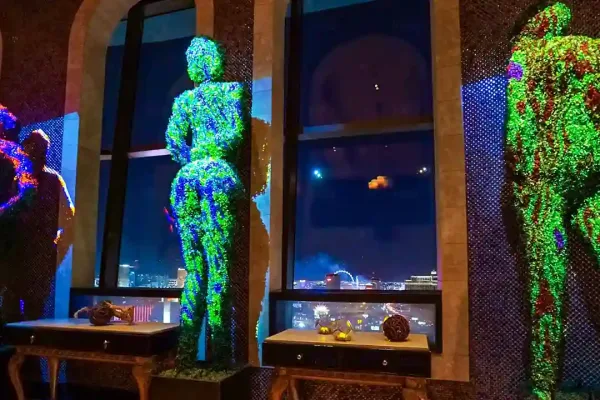
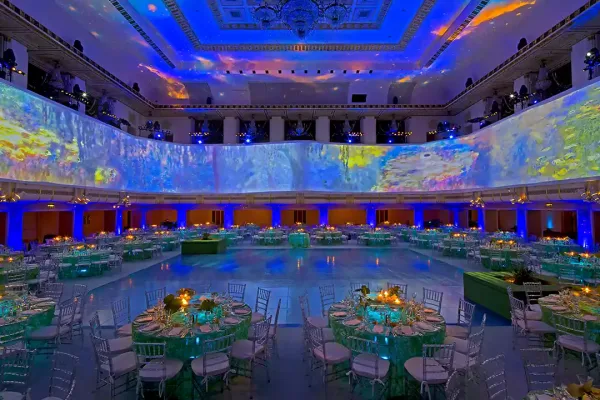
Traditional event design often relies on static elements: floral arrangements, uplighting, and rented furniture. These are beautiful, but they don’t change. Interactive projection mapping brings the environment to life. Imagine a reception where the tabletop transforms with each course—a subtle ripple as guests touch the surface, or a custom monogram that animates during the first dance. For private galas or milestone birthdays, you can map a guest’s name onto a wall, triggered by their arrival, or create a custom backdrop that shifts from a forest to a city skyline as the night progresses.
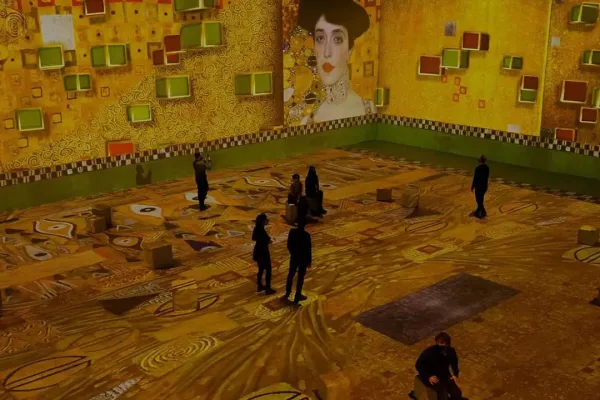
The real power here is engagement. Unlike a passive video loop, interactive projections invite participation. Guests become part of the art. At a wedding, this might mean a dance floor where footsteps leave trails of light, or a photo booth that projects a couple’s history onto a 20-foot wall. For private events, it’s about brand storytelling or personal narrative—think of a CEO’s retirement party where their career milestones animate across the room. This isn’t just decoration; it’s a shared experience that creates conversation and memories.
We’ve seen this work in venues across Las Vegas, from intimate ballrooms to sprawling outdoor estates. The technology adapts to the space, not the other way around. And because it’s interactive, the energy of the room drives the show. The result is an event that feels alive, not staged.
What a Lumen & Forge Production Involves
A production with Lumen & Forge begins not with equipment, but with your vision. Every project is custom, so our first step is a deep creative consultation. We learn the story you want to tell—whether it’s a couple’s journey, a brand’s legacy, or a theme like “under the sea” or “midnight in Paris.” From there, we design custom content: animations, graphics, and interactive triggers that align with your palette, music, and tone. This is where our event design expertise comes into play, blending creative direction with technical precision.
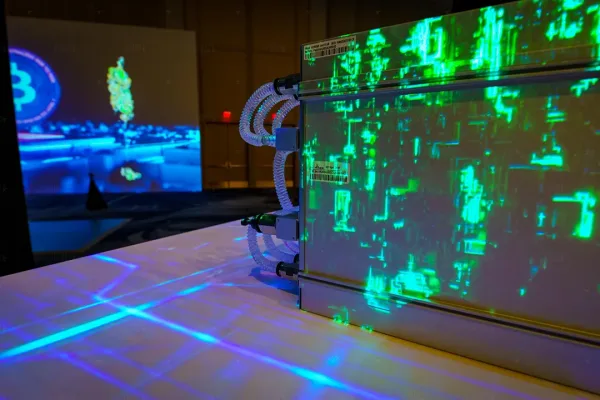
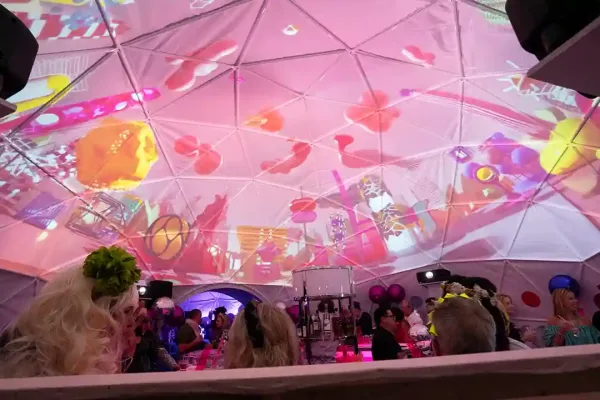
On the technical side, we deploy a range of tools. For weddings, we often use high-lumen projectors and surface mapping to turn walls, ceilings, and even furniture into projection surfaces. Our projection mapping process involves scanning the venue’s architecture to ensure every beam, column, or curve aligns perfectly with the visuals. For private events that need a wow factor, we can bring in a 360° dome—like the one we built for National Geographic’s “Beneath the Blue” exhibit—creating a fully immersive environment where guests are surrounded by imagery. Domes are especially powerful for cocktail hours or lounges, offering an intimate escape from the main event.
The interactive layer is where we differentiate. We use sensors, cameras, or touch-based systems to track movement or input. For a dance floor, this might mean pressure-sensitive pads that trigger light patterns. For a wall, it could be a motion sensor that activates visuals as guests walk by. We calibrate everything to respond in real time, with zero lag. The setup typically requires a few hours to a full day, depending on complexity, and we handle all cabling, rigging, and testing. Our team stays on-site throughout the event to manage the show, ensuring everything runs smoothly from the first toast to the last dance.
Practical Planning Notes for Organizers
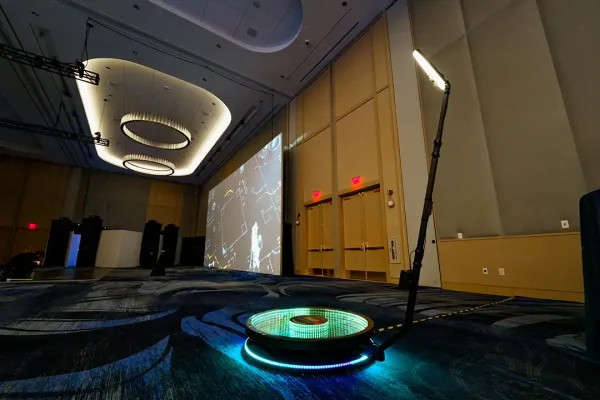
If you’re considering interactive projection mapping for your wedding or private event, here’s what you need to know. First, space and sightlines matter. Projectors need clear throw distances, so we’ll assess your venue early. High ceilings and flat, light-colored walls are ideal, but we can work with textured surfaces or low ceilings using short-throw lenses. For outdoor events, we use weatherproof projectors and consider ambient light—dusk or nighttime setups work best. Domes require a clear area of about 30 to 50 feet in diameter, so factor that into your floor plan.
Timeline is critical. We recommend starting the conversation at least 8 to 12 weeks before your event. This allows time for content creation, which is the most labor-intensive phase. Custom animations can take weeks to produce, especially if they involve multiple scenes or interactive elements. For weddings, we often coordinate with the band or DJ to sync visuals with music cues. For private events, we align with your event planner to integrate the projection into the flow of the evening—think grand entrances, speeches, or cake cutting.
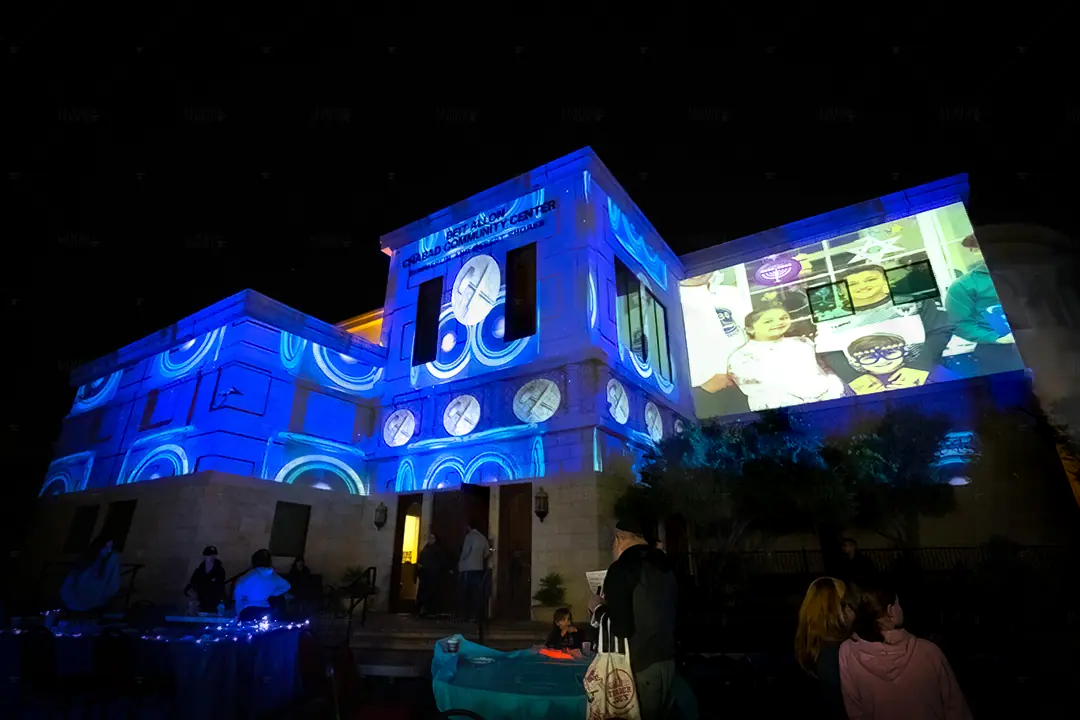
Indoor versus outdoor considerations are distinct. Indoors, we have full control over lighting and sound, making it easier to achieve vivid projections. Outdoors, we account for wind, temperature, and power sources. We’ve done both extensively, including building-scale work like the Tropicana facade—the world’s largest video game screen—and the Nike Air Jordan projection for NBA All-Star. For weddings, we often recommend a hybrid approach: a main projection inside for the reception, and a smaller outdoor setup for the ceremony or cocktail hour.
Budget scale varies widely. A single interactive wall projection for a wedding might start around $8,000 to $15,000, covering custom content, two projectors, and on-site support. A full-room mapping with multiple surfaces and interactivity can range from $25,000 to $50,000. Adding a dome or 360° experience pushes higher, often $40,000 and up, due to the structure and specialized dome projection gear. These are rough estimates; every project is scoped individually. We provide detailed proposals with no hidden fees, and we’re transparent about what’s achievable within your budget.
Finally, trust the process. Interactive projection mapping is a tool, not a gimmick. When done right, it amplifies the emotion of your event without overwhelming it. We’ve seen shy guests light up on a dance floor that responds to their movements, and we’ve watched parents tear up at a wedding where their child’s photo montage animated across the room. That’s the goal: to make your event unforgettable, not because of the technology, but because of how it made everyone feel.
Ready to explore what this could look like for your wedding or private event? Contact us at Lumen & Forge. We’ll walk through your vision, your venue, and your timeline, and show you how interactive projection mapping can turn the ordinary into the extraordinary. No hype, just results.
Frequently asked questions
What drives the cost of interactive projection mapping for a wedding or private event, and what's a realistic budget range?
How far in advance should we book interactive projection mapping for our wedding or private event?
Does interactive projection mapping work outdoors, or only indoors?