


3D Projection Mapping That Makes Real Surfaces Move
3D Projection Mapping That Makes Real Surfaces Move
A window swings open on a solid wall. A car seems to drive across the front of a hotel. Stone crumbles into light and rebuilds itself a second later. None of it is really moving, and that is the point.
We create depth illusions for brand launches, holiday shows and private events, on existing buildings and on structures we build for the show. If you have a surface and an audience in mind, tell us about your project.
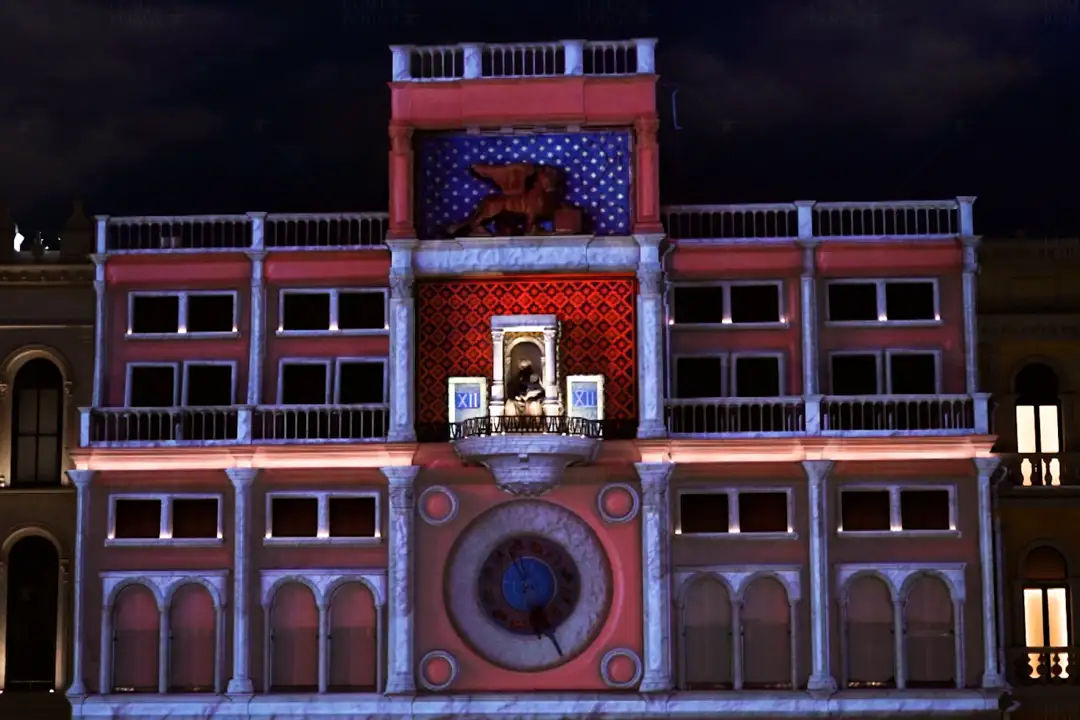
How 3D projection mapping creates depth on a real surface
3D projection mapping turns any surface or object into a live canvas, and the content is made for that one object alone. Because every frame is calibrated to the contours and geometry of the surface, the light can suggest movement, depth and transformation that a flat screen cannot.
The defining detail is the audience's position. An illusion is drawn for a point of view, and a projection that looks perfect from one angle may distort from another. That is why we fix the primary viewing area early, design the content to hold from there, and test the sightlines from several angles before show night.
What we handle on a depth illusion show
- A model of the surface. We photograph and laser-scan the target, whether it is a facade, a dome or a stage set, so our artists work on a precise 3D model. Our guide on why 3D scans matter in projection mapping explains the capture methods.
- Content drawn for one object. Custom content is mapped to the surface to create the optical illusion. Our animation and visual storytelling team builds it in-house.
- A viewing plan. We identify where the audience will stand. For a building facade that means a clear zone at least 50 to 100 feet away; for a storefront, the ideal viewing zone is about 10 to 50 feet.
- Virtual alignment. We build a 3D model of the room and line up the projectors virtually before any hardware goes in.
- Clear beam paths. The projectors need an open line to every mapped surface, so chandeliers, columns and large centerpieces stay out of the beam.
- A surface, if you need one. We can work with an existing surface or fabricate a new one from scratch.
Walls, objects and built structures each need a different trick
Walls and facades. Here the content plays against the architecture: windows become portals, columns turn into spinning sculptures and flat walls gain depth. Shows that trace columns, arches and carved detail are covered on 3D architectural mapping, and whole-building takeovers on building projection mapping.
Products and objects. On a smaller canvas the illusion is about the product itself, so it can appear to float or a pair of sneakers can seem to leap off a stage. Shoes, bottles and packaging have their own page on object projection mapping.
Stage sets and fabricated pieces. When there is no surface to borrow, we design one around the illusion and map pillars, walls, stages or custom set pieces. Viewing distance shapes the build: if people will be inches from a wall, the image needs higher pixel density and careful lens choices, while viewers 30 feet away let each projector cover more area.
Design pitches on scale models are covered by architectural projection visualization. For multi-projector shows at city scale, see large scale projection mapping. Illusions driven by live feeds are on real-time projection mapping, and floating figures on holographic projection. Storyboards and 3D modeling sit with projection content creation.
3D projection we have delivered
- The Venetian Holiday Spectacular, Las Vegas. Inside The Venetian Resort, we mapped the St. Marks Clock Tower with custom holiday content timed to live music. A 32k lumen 4K Christie Boxer projector and our custom media server animated the tower through a 17-minute show.
- Don Julio on the Stratosphere, Las Vegas. In February 2024, during the Super Bowl, we transformed the Stratosphere tower into a Don Julio tequila bottle. We used 63 high-powered projectors of 30,000 lumens each, and the show ran for 4 nights.
- Playa Playground at AREA15, Las Vegas. For a New Year's Eve fundraiser, our team engineered and built a 50-foot pyramid of steel struts and fiberglass panels. Four Barco UDX W32 projectors, each delivering 32K lumens and 4K resolution, covered every side.
- US Marines annual ball. Each year our 3D projection turned a luxury home into a tribute to the Corps. Two projectors faced the house and a third lit the surrounding trees, and we spent hours blending the image for clean 3D visuals.
Questions buyers ask before booking
It works best for people in the primary viewing area, so we plan the show around where most of your audience will be. During the site survey we check sightlines from several spots, because an effect that lands from one place can look distorted from another.
Outdoor facades perform best after dark, when ambient light is low. Daytime projection is possible, but it demands far brighter equipment and controlled sightlines.
No. We can map an existing wall, building or stage, or fabricate a structure from scratch when the venue has nothing suitable.
Yes. Because the content is digital, we can build in interactive triggers, audience-movement reactions and music synchronization.
Didn’t find what you were looking for?
Our team is happy to walk you through your project and answer anything else
Plan your 3D illusion
Send us photos or the address of your surface, your dates, and where your audience will stand. We'll come back with what the illusion can do from that spot. You can see every surface we work on under projection mapping services, or contact our team to start.